

Clinically reviewed by Dr. Ponlawat Pitsuwan, Physician, Doctor Bangkok.
Last reviewed: November 2026
Bangkok’s heat and humidity create near-perfect conditions for fungal skin infections. Sweat trapped in skin folds, wet shoes, and crowded gyms all raise your risk. Most mild infections respond to topical antifungal treatment within a few weeks, but infections that spread, persist past two weeks of treatment, or affect someone with diabetes or a weakened immune system need a clinical assessment, not another tube of cream.
If a rash has appeared somewhere dark and airless on your body after a week in Bangkok, the city’s climate is almost certainly a factor. The question is whether it clears with over-the-counter cream or needs something stronger. Here is what to look for and when to come in.
Bangkok’s rainy season, running roughly May through October, keeps outdoor humidity consistently high. Add the temperature swing between air-conditioned offices and the heat outside, and your skin stays damp far longer than it would in a drier climate. That cycle is exactly what fungi need.

How Heat and Sweat Feed Fungal Infection in Humid Weather
When sweat sits against skin for hours, it softens and breaks down the outer skin barrier. Once that barrier weakens, dermatophytes (the fungi behind ringworm, jock itch, and athlete’s foot) and Candida can establish quickly.
The repeated cycle of sweating outside and cooling down without drying off properly is the specific problem in Bangkok. You do not need to be unhygienic or unwell. You just need a commute, a gym session, or an afternoon on foot, and the skin surface stays damp long enough for a fungal infection to take hold.
Areas Most at Risk
Groin and Inner Thighs
Tinea cruris, commonly called jock itch, is a dermatophyte infection of the groin. It tends to appear as a red, scaly rash with a clearly defined edge. It is itchy, often worse after exercise, and spreads outward in a rough arc. Tight synthetic shorts, long commutes, and anything that keeps the groin warm and damp will trigger it in otherwise healthy people.
Under the Breasts and Skin Folds
Skin that presses against other skin traps moisture and heat with no airflow. Candida thrives in these spots. A Candida rash in a skin fold tends to look red and raw, sometimes with small separate spots nearby called satellite papules. This distinguishes it from a simple heat rash. The abdomen, under the breasts, and the armpits are the most common sites.
Pityriasis versicolor is worth knowing about because it confuses many people new to Bangkok. It appears as pale or slightly discoloured patches, usually on the chest, upper back, or shoulders. Many people assume it is a tan line or sun damage. It is neither. It is caused by an overgrowth of a yeast that normally lives on the skin, triggered by heat and sweat. It does not itch much but will not fade without antifungal treatment.
Feet in Wet Shoes
Tinea pedis, athlete’s foot, is extremely common among people who train regularly in Bangkok, wear closed shoes in the heat, or use shared changing rooms. It typically appears between the toes as white, peeling skin, sometimes with cracks or blistering. Fungal nails, where the nail thickens and discolours, often follow untreated tinea pedis. Pool decks, gym showers, and wet locker rooms are the highest-risk surfaces.

Intertrigo vs Fungal Infection: Getting the Diagnosis Right
Intertrigo is skin inflammation caused by friction and moisture in a skin fold. It is not a fungal infection on its own. The problem is that it almost always develops a secondary infection, usually Candida, sometimes a dermatophyte, and occasionally bacterial. The distinction matters because the treatment differs.
A dermatophyte infection needs a topical azole antifungal such as clotrimazole or miconazole, applied consistently for the full course. Candida intertrigo also responds to azoles but sometimes needs an antifungal powder or barrier cream as well to keep the area dry.
There is a third condition worth knowing: erythrasma. This is a bacterial infection that appears in the same skin fold locations and looks nearly identical to tinea or Candida. A Wood’s lamp test, which makes erythrasma glow a characteristic coral-red colour, can distinguish it in a clinic setting. Treating erythrasma with antifungal cream alone will not work. If you have been treating a skin fold rash for more than two weeks without improvement, you may have the wrong diagnosis, not the wrong product.
The Steroid Cream Problem in Bangkok Pharmacies
This is the detail that is easiest to miss. Combination tubes containing both a corticosteroid and an antifungal are freely available in Thai pharmacies. For a short-term inflammatory condition they may help. For an active fungal infection, the steroid component can suppress visible redness while allowing the fungus to spread unchecked, a pattern known as tinea incognita.
If you bought a cream at a Bangkok pharmacy and the rash improved briefly then returned larger or in a new shape, check the tube. If it contains both a steroid and an antifungal, that combination may be why it is not resolving. Stop the steroid component and get a clinical assessment. Doctor Bangkok can assess the rash, confirm what it is, and prescribe the correct preparation the same day.
Daily Habits That Help
Prevention in Bangkok is not complicated but it does require consistency. Change out of damp workout clothes immediately. If you sweat heavily during a commute, consider a second set of clothes at the office. Use a separate, dry towel for skin folds and feet, and wash towels at high temperatures.
For anyone who sweats heavily in skin folds, an antifungal body wash used a few times a week during the rainy season can reduce fungal load on the skin surface before an infection takes hold. Keep feet dry between the toes after every shower. Talcum powder or antifungal powder in shoes helps if you wear closed footwear all day.
If you are on antibiotics for another condition, your risk of a Candida skin infection rises. The same applies if you are taking long-term steroids, have diabetes, or have recently had a long-haul flight. Antibiotic courses raise the risk of Candida skin infection by disrupting the skin and gut flora that normally keep yeast in check. These are not minor caveats. For more on preventing fungal infections in humid weather, including wound care in Bangkok’s climate, that page has practical guidance.
Gym, Pool and Muay Thai Camp Hygiene
Bangkok’s Muay Thai training community is large and active. Skin-to-skin contact during clinch work, shared equipment, and communal shower areas all create direct routes for fungal transmission. Wearing flip-flops in shared showers is not optional if you want to avoid tinea pedis.
After training, shower immediately and dry completely before dressing. Pay particular attention to feet, the groin, and any skin folds. Do not share hand wraps. Wash your own wraps after every session. If you develop a rash anywhere within a few days of starting training, do not assume it is friction alone.
Chlorinated pool water is not fully protective against tinea pedis. The pool deck and changing room floor remain high-risk surfaces. Wet shoes left in a locker are a growth environment on their own.
When to Stop Self-Treating and See a Doctor
Two weeks of consistent over-the-counter topical treatment with no improvement is the clear signal to get a clinical assessment. So is a rash that is spreading despite treatment, one that has blistered or broken the skin, or one associated with fever or significant pain. If you are diabetic, immunocompromised, or on long-term corticosteroids, skip the over-the-counter phase entirely and get a diagnosis first.
Oral antifungals are more effective than topical creams for nail infections, widespread tinea, or any infection that has not responded to topical treatment. A doctor needs to prescribe these, and oral antifungals carry a risk of liver toxicity and drug interactions, so a clinical assessment before starting them is important. The assessment is straightforward: a visual examination, sometimes a quick bedside skin scraping, and in some cases a Wood’s lamp check. The whole process takes a few minutes.
If you are not close to a clinic, the walk-in clinic in Bangkok on Sukhumvit Soi 13 is open 24 hours, or a doctor can come to your hotel or condo in Bangkok within one hour. You do not need to navigate a Thai hospital for a skin rash. If you have travel insurance, Doctor Bangkok works with cashless treatment arrangements so you do not need to pay out of pocket and claim back later.
Need a same-day assessment? If you have a rash that is not clearing, spreading, or in a skin fold you cannot get dry, Doctor Bangkok can help today. Our walk-in clinic on Sukhumvit Soi 13 is open 24/7, or a doctor can come to your hotel or condo anywhere in Bangkok within one hour. We examine the rash, confirm the diagnosis, and prescribe the right treatment on the spot, including oral antifungals if needed. No referral, no hospital registration. Contact Doctor Bangkok to book or arrange a home visit now.
Frequently Asked Questions
Dr. Ponlawat Pitsuwan
Physician, Doctor Bangkok
a private medical clinic in central Bangkok open 24/7, with a doctor-on-call service that reaches your hotel or condo within one hour. He sees expats, residents, and medical tourists for skin infections, general medicine, and travel health concerns, with a focus on straightforward, evidence-based care in plain language.
References
- Havlickova B, Czaika VA, Friedrich M. Epidemiological trends in skin mycoses worldwide. Mycoses. 2008;51(Suppl 4):2-15.
- Centers for Disease Control and Prevention. Fungal diseases: types of fungal diseases.
- Bhambri S, Del Rosso JQ, Bhambri A. Pathogenesis of Candida albicans infection following antibiotic therapy: a review. J Clin Aesthet Dermatol. 2008.
- Mistiaen P, van Halm-Walters M. Intertrigo and common secondary skin infections. Am Fam Physician. 2005;72(5):833-838.
- Kreijkamp-Kaspers S et al. Oral antifungal medication for toenail onychomycosis. Cochrane Database Syst Rev. 2017.
The information in this article is for educational purposes only and does not constitute medical advice. It should not be used to self-diagnose or replace a consultation with a qualified physician. If you have concerns about your health, contact a licensed medical professional. For appointments at Doctor Bangkok, visit doctorbangkok.co.th.
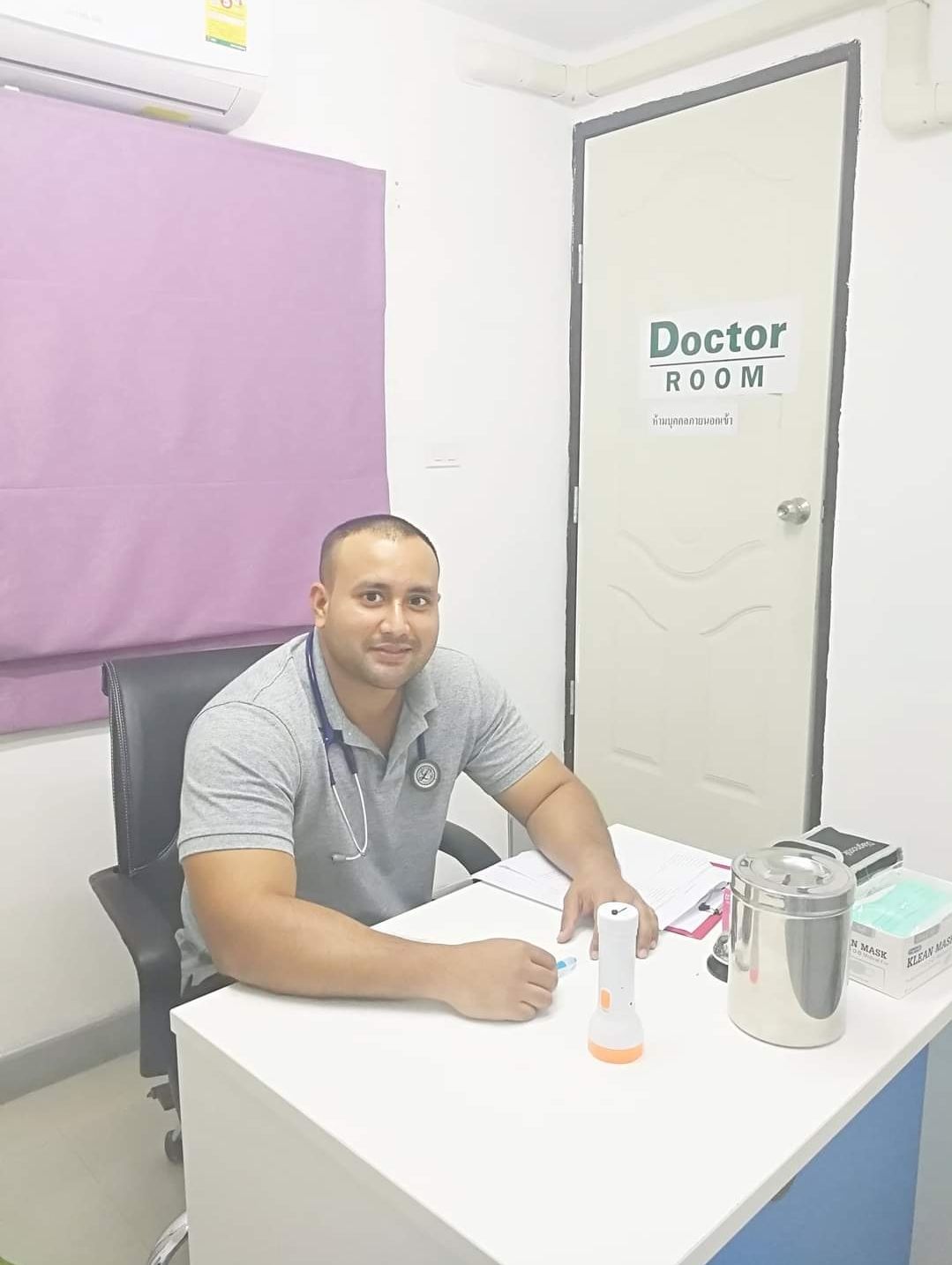
Dr. Ponlawat Pitsuwan is a physician at Doctor Bangkok, a private clinic in central Bangkok. He sees expats, residents, and medical tourists for general medicine, wellness consultations, and IV therapy. His focus is straightforward, evidence-based care delivered in plain language.