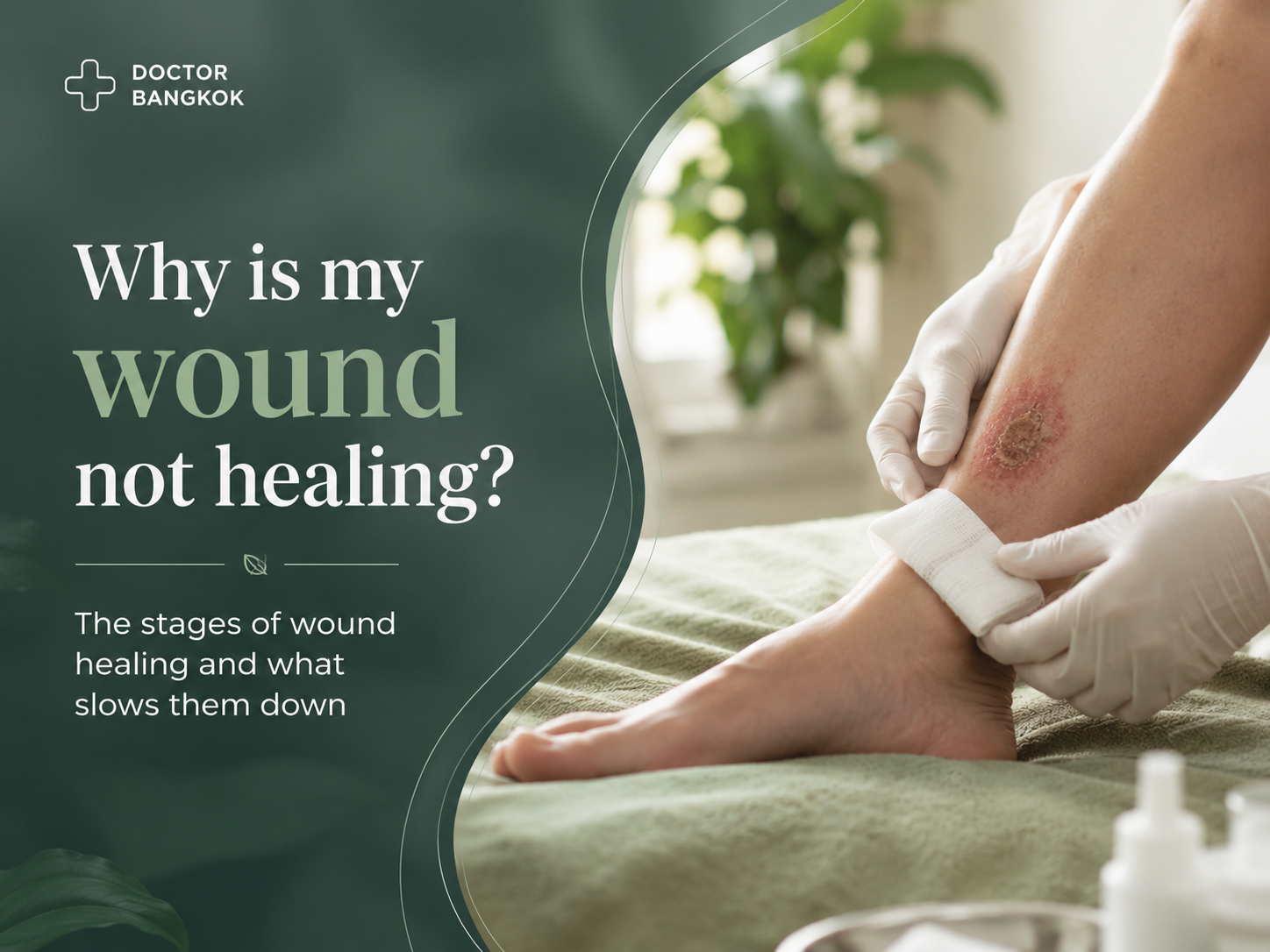

Clinically reviewed by Dr. Ponlawat Pitsuwan, Physician, Doctor Bangkok. Last reviewed: June 2026
Wounds are classified by how the skin breaks: lacerations tear, abrasions graze, punctures penetrate, and avulsions tear tissue away. Most minor wounds can be cleaned and dressed at home. But wounds that are deep, gaping, heavily contaminated, or caused by an animal bite need same-day medical assessment. When in doubt, get it checked.
You have a wound. Maybe it just happened, maybe it has been a day or two and something does not look right. You are trying to figure out whether it needs a doctor or whether you can manage it at home. That is exactly the right question to be asking.
Bangkok adds complexity that generic first-aid guides ignore. The roads, the heat, the animal encounters, the tropical humidity. I see motorbike road rash almost every week at Doctor Bangkok. I see puncture wounds from nails, coral, and animal bites. I see burns from motorbike exhausts and infected cuts that patients tried to manage alone for too long. Knowing what type of wound you have changes what you need to do next.

Wound classification: how doctors categorise wounds
When I look at a wound, I am thinking about two things before anything else. Is the skin broken? And how did it happen?
Open wounds have broken skin. Closed wounds do not. A bruise is a closed wound. A cut is open. That distinction matters because open wounds carry infection risk and may need closure. Everything in this article focuses on acute wounds from injury, not the slow-developing wounds linked to diabetes or poor circulation.
Lacerated wounds: what they are and how they are treated
A laceration is a jagged, irregular tear in the skin. Think of a wound from broken glass, a fall onto rough ground, or a motorbike handlebar. The edges are uneven, sometimes with bruised tissue around them.
The biggest decision is closure. There is a window of roughly six hours for wounds on the limbs and trunk, and up to twelve to twenty-four hours for facial wounds, where we can stitch cleanly. After that, the infection risk rises and we often leave the wound to heal from the inside out. That takes longer and can leave a worse scar.
If your laceration is longer than two to three centimetres, gaping open, on your face, over a joint, or bleeding that does not settle after ten to fifteen minutes of firm pressure, come in the same day. Do not wait until morning.

Abrasion wounds: how to clean and dress a graze
An abrasion is surface skin scraped away, usually across a wide area. Road rash from a motorbike fall is the most common wound I treat. Bangkok road surfaces mean dirt, gravel, and diesel are ground into the wound on impact.
The single most important thing with an abrasion is cleaning. Debris left inside causes permanent scarring and skin discolouration. Thorough cleaning needs to happen within hours, not the next day. Home rinsing with tap water is fine for a small, superficial graze. For anything covering a palm-sized area or larger, come in.
Tropical heat and humidity accelerate infection in open abrasions. Wound hygiene matters more here than in cooler climates.
Avulsion wounds: when skin or tissue is torn away
An avulsion is when a piece of skin, or deeper tissue, is actually separated from the body. Severe road rash can cause partial avulsions. In extreme cases, a large section of skin is completely stripped from the underlying tissue. These are rare but serious.
Any wound where tissue is visibly missing needs urgent medical care. Even small avulsions need professional assessment to decide whether the wound can be closed directly, needs a skin graft, or must heal on its own.
Puncture wounds: infection risk, tetanus, and treatment
A puncture wound is a small, deep hole from a sharp object: a nail, needle, thorn, or tooth. The surface looks minor. That is the danger.
The entry hole may be tiny, but bacteria and debris travel inward and get trapped. The wound closes at the surface while infection develops underneath. I see this most often with nail injuries and animal bites.
Tetanus is a real concern with puncture wounds. The bacteria live in soil and on contaminated surfaces throughout Thailand. Adults need a booster every ten years. For deep or dirty wounds, you need a booster within the last five years. Many expats I see are overdue without knowing it.
For animal bites, the situation is more serious. Bangkok has an active rabies risk. Any scratch, bite, or saliva contact from a dog, cat, or bat requires immediate medical assessment for rabies post-exposure treatment. Do not wait to see if symptoms develop.
Contusion wounds: bruising, swelling, and when to see a doctor
A contusion is a bruise. No skin break, but blood vessels beneath the surface have ruptured from blunt force. Most contusions resolve on their own with rest, ice, and elevation.
A large collection of blood under the skin is called a haematoma. It feels like a firm or fluid-filled lump and may need draining if it is large or painful. See a doctor if the swelling is severe, if there is significant pain over a bone, or if the lump grows or becomes very hard.
Open wounds: types, treatment, and when to seek urgent care
Any wound where the skin surface is broken is an open wound. Lacerations, abrasions, avulsions, and punctures all fall here. The concern with all of them is the same: bleeding, contamination, and infection.
Watch the fluid your wound produces. Clear or faintly pink fluid is normal. Thick, cloudy, or foul-smelling discharge means infection is developing and you need to be seen. Seek urgent care for uncontrolled bleeding, visible fat or deeper tissue in the wound, loss of sensation around the wound, or wounds over joints or on the face.
Penetrating wounds: stab wounds, surgery, and internal injury risk
A penetrating wound enters a body cavity. This includes stab wounds and gunshot wounds. These are different from surface wounds because of the risk to internal organs and major blood vessels.
Stab wounds: emergency care and what to do
Go to the emergency department immediately. Do not remove any object that is still in the wound. Do not probe the wound. Apply pressure around it and go straight to the emergency room. A wound that looks small on the surface may have reached an organ. Internal bleeding can develop without obvious external signs.
Cut wounds: when to stitch and when to dress
A clean cut from a knife or glass has straight edges, which makes closure easier. The rule I use: if you can hold the wound edges together easily, the wound is less than two centimetres, and it is not over a joint, a steri-strip may hold. If the edges pull apart, if it is on the face, or if it is deeper than the skin surface, come in for assessment.
Burn wounds: degrees, treatment, and dressing options
Burns are classified by depth. Superficial burns are red, dry, and painful, like mild sunburn. Partial thickness burns go deeper and blister. Full thickness burns destroy all skin layers and may look pale, waxy, or feel painless.
The motorbike exhaust pipe burn is extremely common in Bangkok. These are typically small but partial thickness, and they need proper management to prevent infection and scarring. Burns covering a large body area, or any burn to the face, hands, feet, genitals, or joints, should be seen urgently. Any burn with blistering larger than a palm should be seen the same day.
Flap wounds: what they are and how they are repaired
A flap wound is when a section of skin is partially torn away but remains attached at one edge. The tissue is still connected but lifted. These are common in falls and motorbike injuries.
The attached skin may survive if blood flow is preserved. Treatment involves cleaning, repositioning the flap, and securing it. If the flap does not survive, a skin graft may be needed. Do not trim or remove the flap yourself, even if it looks loose. Let a doctor assess whether it is still viable.
Signs a wound is infected: what to watch for
This is the part that matters most if you are managing a wound at home. Infection in Bangkok can develop faster than in cooler climates. Heat and humidity are not your friend here.
Watch for increasing redness spreading beyond the wound edges, warmth, swelling, cloudy or bad-smelling discharge, wound edges separating after they were together, and fever or chills. Any of these after forty-eight hours means the wound needs a doctor, not more home dressing changes.
Bangkok-specific wound risks
Motorbike road rash is the injury I see most often at our wound care clinic. It combines abrasion, contamination, and sometimes partial avulsion in one wound. Bangkok streets carry high contamination risk and need proper irrigation, not just a rinse at home.
Animal encounters are another frequent reason expats visit Doctor Bangkok. Stray dogs and cats are common. Rabies risk is real and current in Bangkok. Any animal bite or deep scratch needs same-day medical assessment, not monitoring at home.
The tropical environment accelerates infection in a way patients from cooler countries often underestimate. A wound that might stay clean for several days at home in Europe can show signs of infection within twenty-four to forty-eight hours here. Check your wound daily and act early.
If you have a wound that needs professional cleaning, closure, dressing, or a tetanus check, Doctor Bangkok offers same-day wound care in central Bangkok with English-speaking physicians. We are BTS accessible and see expats, residents, and visitors for all types of acute wound management, from road rash and puncture wounds to burns and lacerations. Walk in or book online at doctorbangkok.co.th/wound-care-bangkok/
Do I need a tetanus shot after a wound in Bangkok?
If your last tetanus booster was more than ten years ago, you need one for any wound. For deep, dirty, or puncture wounds, you need a booster within the last five years. Many expats I see are overdue without realising it. Come in and we will check your vaccination history and advise you.
How do I know if my wound needs stitches or can be dressed at home?
If the wound is longer than two to three centimetres, gaping open, over a joint, on your face, or still bleeding after fifteen minutes of firm pressure, get it seen the same day. The closure window is short, roughly six hours for most wounds. Waiting overnight may mean the wound can no longer be closed cleanly.
What are the signs that a wound has become infected?
Spreading redness around the edges, warmth, swelling, cloudy or foul-smelling discharge, and fever are all signs of infection. In Bangkok, heat and humidity can accelerate this. Any wound that is worsening after forty-eight hours needs a doctor, not more home dressing changes.
I got road rash from a motorbike accident in Bangkok. What should I do?
Come in rather than trying to clean it yourself. Bangkok road surfaces contaminate wounds with grit, gravel, and bacteria that need proper irrigation to remove. Left in the skin, debris causes permanent discolouration and scarring. We also check your tetanus status and apply an appropriate dressing for tropical conditions.
Can a puncture wound from a nail, coral, or animal tooth close safely on its own?
Not safely without assessment. Puncture wounds trap bacteria deep inside while the surface closes over. Animal bites carry specific risks including rabies in Bangkok, and coral punctures introduce unusual organisms. Get any puncture wound from a dirty object or animal seen the same day.
What should I do if I am bitten by a dog or cat in Bangkok?
Wash the wound immediately with soap and water for at least fifteen minutes, then go straight to a clinic. Bangkok has an active rabies risk and post-exposure treatment must start as soon as possible after a bite. Do not wait to see if the animal seems healthy.
Dr. Ponlawat Pitsuwan
Physician, Doctor Bangkok
a private medical clinic in central Bangkok. He sees expats, residents, and visitors for acute [wound care and management](https://doctorbangkok.co.th/wound-care-bangkok/), including wound cleaning and dressing, tetanus assessment, and post-injury follow-up. His focus is straightforward, evidence-based care delivered in plain language.
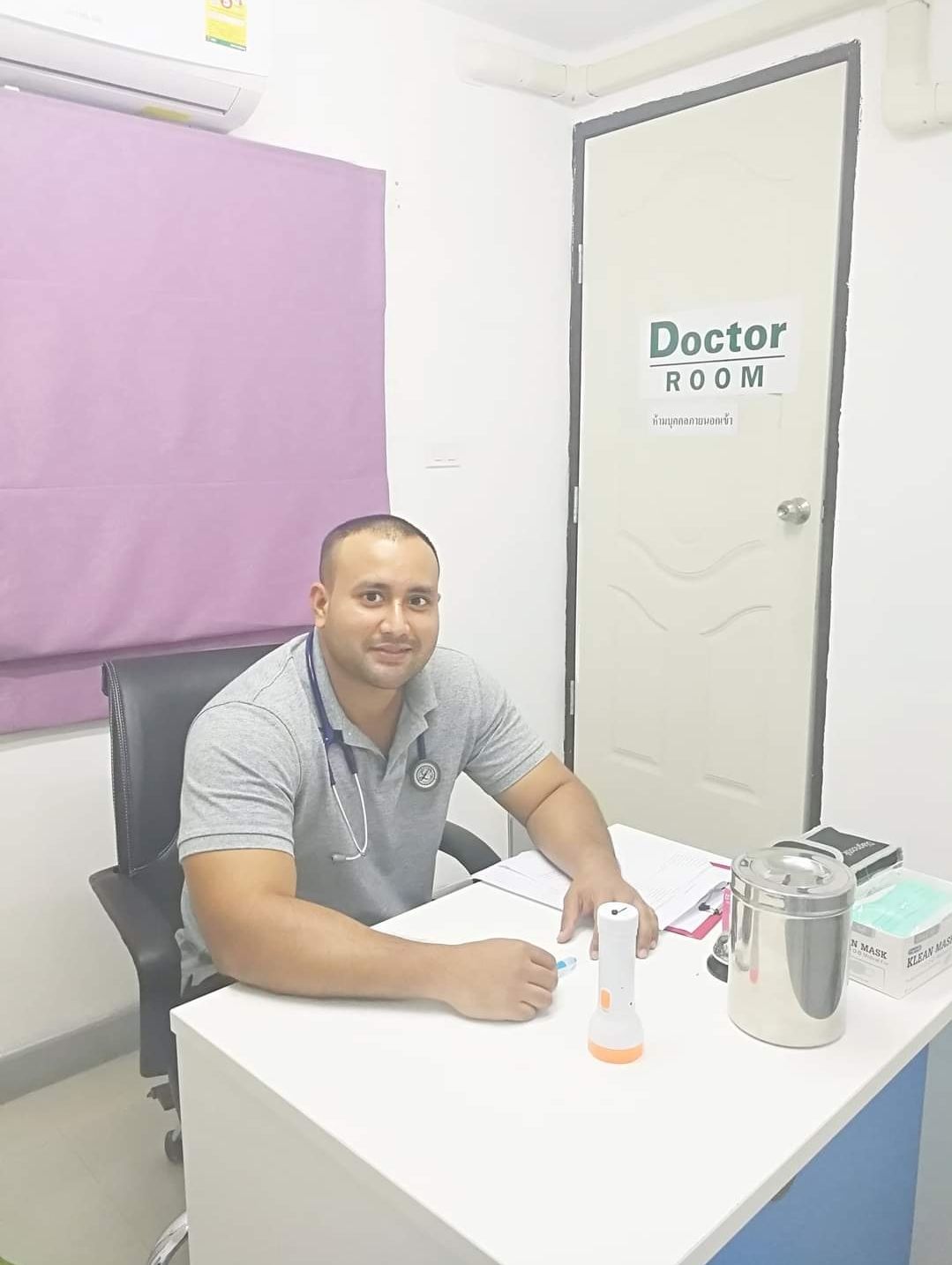
Dr. Ponlawat Pitsuwan is a physician at Doctor Bangkok, a private clinic in central Bangkok. He sees expats, residents, and medical tourists for general medicine, wellness consultations, and IV therapy. His focus is straightforward, evidence-based care delivered in plain language.