Clinically reviewed by Dr. Ponlawat Pitsuwan, Physician, Doctor Bangkok. Last reviewed: June 2026
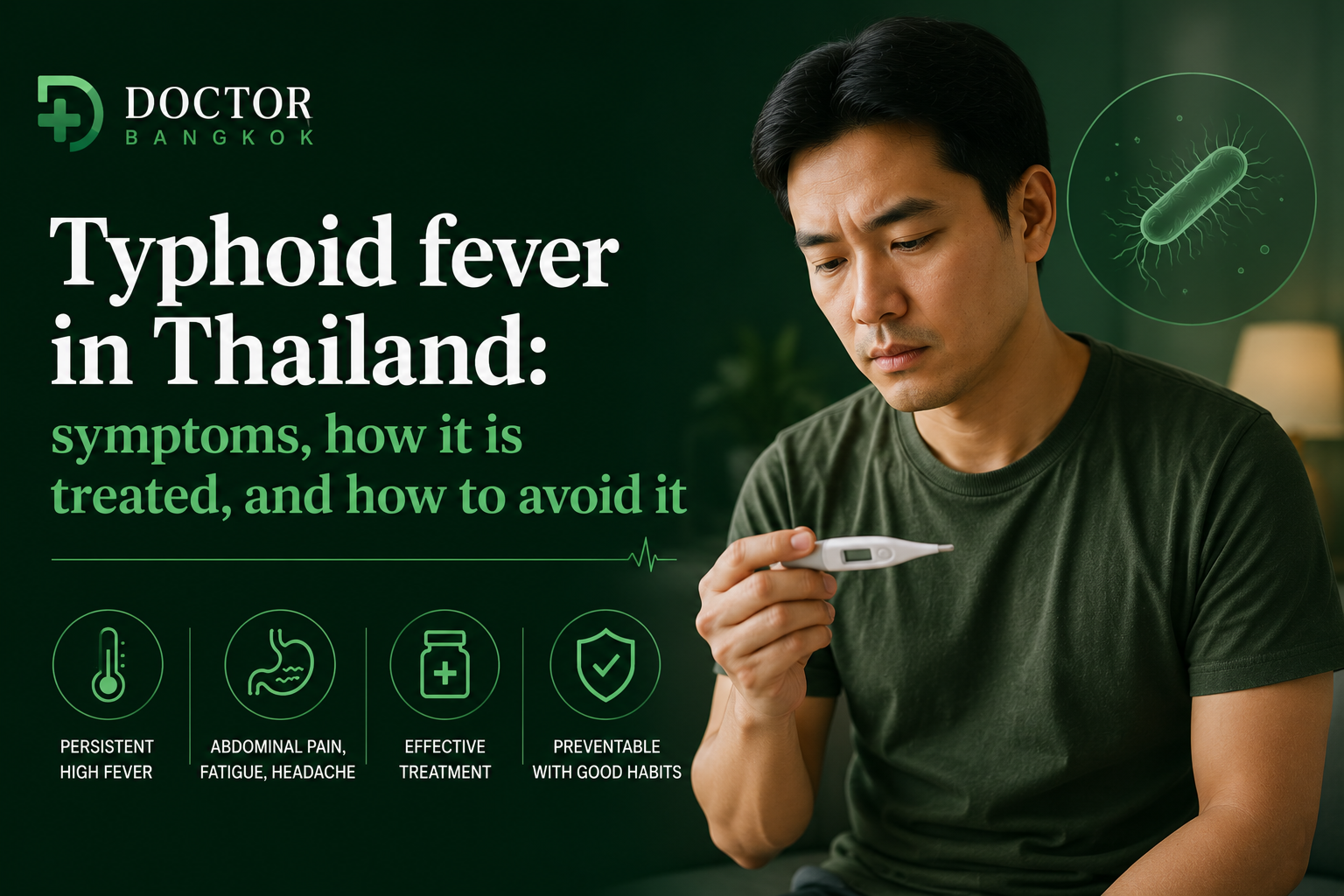
Typhoid fever is a bacterial infection spread through contaminated food and water. In Bangkok, it is uncommon but not rare, and expats who eat adventurously or drink unfiltered water are at real risk. Most cases are treated with a course of antibiotics, but resistance is a growing problem across Asia. If you have had a high fever for more than three days, get tested, not tomorrow.
If you are sitting in Bangkok with a fever that has been climbing for several days and you have been eating street food, I understand why you are worried. Typhoid is one of those infections that sounds dramatic but is also easy to dismiss early on, because the first few days feel like a bad flu. By the time people come to see me, they have often already been unwell for a week.
The good news is that typhoid is very treatable when caught early. What complicates things in Thailand right now is antibiotic resistance, which means not every antibiotic will work, and picking the right one matters. This guide covers what to expect, when to come in, what we test for, and how treatment works at a private clinic in Bangkok.

Typhoid fever symptoms — what to watch for in Bangkok
The fever is the thing that brings most people in. It comes on gradually and tends to get higher each day rather than spiking and dropping like a viral infection. By day three or four, it can reach 39 to 40 degrees Celsius. Most patients also feel deeply tired, lose their appetite, and get a headache that does not shift.
Abdominal discomfort and bloating are common. Some people get constipation early on, followed later by looser stools. A slower pulse than you would expect for that level of fever is something I sometimes notice on examination.
One symptom worth knowing about is rose spots, a faint pinkish rash on the chest or abdomen. It is easy to miss, especially on darker skin tones, and many patients never notice it at all. Do not rule out typhoid because you do not have a rash.
How is typhoid fever diagnosed in Bangkok?
When you come in with a persistent fever, I am working through a list of possibilities: dengue, typhoid, leptospirosis, scrub typhus, and others. A blood test is the first step.
The main test is a blood culture. We take a blood sample and check whether the bacteria grows from it. It is the most reliable method we have. Results take around two days, and if I have a strong clinical suspicion, I may repeat it.
You may have heard of the Widal test. It is still used across Thailand, and some clinics rely on it heavily. I use it as supporting information only. False positives are common in areas where typhoid circulates regularly, and false negatives happen early in the illness. A positive Widal result is a reason to do a blood culture, not a reason to start treatment.
At Doctor Bangkok, we run both and also check your full blood count and liver function, which often show patterns consistent with typhoid. We have results back quickly so we can make a decision the same day.

Typhoid fever treatment: antibiotics, resistance, and duration
Here is where it gets important. Typhoid is curable with antibiotics, but not all antibiotics work anymore.
Fluoroquinolones, once the standard treatment across Asia, no longer reliably work against many strains of the bacteria circulating in this region. I do not start patients on fluoroquinolones for typhoid without resistance testing to back that choice. The preferred options now are azithromycin for straightforward cases, or ceftriaxone by injection for more severe illness.
This is why self-medicating with leftover antibiotics is genuinely risky. Not just ineffective, but dangerous, because it can mask symptoms while a resistant infection gets worse underneath.
When I start treatment, I choose an antibiotic based on what we know about local resistance patterns, then adjust once the blood culture result tells me exactly what the bacteria responds to. Most uncomplicated cases improve within four to six days of starting the right antibiotic, and a full course is usually around seven days. If your fever has not started coming down by day five of treatment, something needs reassessing.
A small number of people become carriers after recovering. They clear the infection but continue shedding the bacteria in their stool for months without feeling unwell. If you handle food for others or work in food service, follow-up stool testing after finishing antibiotics is strongly recommended.
Typhus fever vs typhoid fever: what is the difference?
I get asked this regularly, and the confusion is understandable. The names sound nearly identical. But these are completely different infections.
Typhoid comes from contaminated food and water. Typhus comes from insect bites: in Thailand, the form that matters is scrub typhus, spread by chigger mites. If you have spent time in forested or rural areas of Thailand, scrub typhus belongs on the list of possibilities.
Both cause high fever, headache, and sometimes a rash, which is exactly why they get confused. The treatment is different. Typhoid needs an antibiotic chosen based on resistance testing. Scrub typhus responds well to doxycycline. If you come in with fever and a rash after time outdoors, I will test for both.
When to seek urgent care — serious complications of typhoid
Most cases of typhoid, treated early, do not become serious. But untreated typhoid can lead to life-threatening complications.
The most serious is intestinal perforation, where the infection damages the bowel wall and causes sudden, severe abdominal pain. This is a surgical emergency. Internal bleeding is another possibility. Both can develop after several weeks of untreated illness.
If you are being treated for typhoid and you suddenly develop severe abdominal pain, a dramatic spike in fever, or you feel much worse very quickly, do not come to a clinic. Go to a hospital emergency department.
For ongoing fever assessment and treatment before things reach that point, our fever treatment service is the right first step.
Typhoid fever prevention — vaccination and food safety in Bangkok
Vaccination is available and worth considering, particularly if you are new to Thailand or travel within the country. There are two options: an oral vaccine taken as capsules over several days, and an injectable vaccine given as a single shot. Both offer partial protection, not complete immunity. Food and water hygiene still matters.
On the Bangkok street food question, I want to be honest rather than alarmist. Typhoid is relatively uncommon in central Bangkok compared to rural Thailand. Fully cooked, freshly served, hot food from a busy stall carries low risk. The higher-risk items are raw produce, cut fruit left sitting out, and drinks or ice made from tap water. Bangkok tap water is not safe to drink unfiltered.
If you are living here long-term and eating broadly, ask about vaccination at your next health check. The injectable version is a single visit and takes about two weeks to provide protection.
Concerned about a fever that has lasted more than two or three days in Bangkok? That is exactly what we are here for. At Doctor Bangkok, our English-speaking physicians can assess your symptoms, run same-day blood tests including blood culture and dengue screening, and start treatment if needed. We are centrally located and BTS accessible. Book an appointment at doctorbangkok.co.th or walk in during clinic hours.
FAQ: Typhoid fever in Bangkok
Can I get typhoid fever from eating street food in Bangkok?
Yes, it is possible, but the risk depends on what you eat. Hot, freshly cooked food from high-turnover stalls is low risk. Raw salads, cut fruit sitting out, and anything made with tap water or ice from unknown sources carry higher risk. Typhoid is less common in central Bangkok than in rural Thailand, but it does happen.
What is the difference between typhoid fever and typhus fever?
They are completely different infections despite the similar names. Typhoid comes from contaminated food and water. Typhus comes from insect bites, specifically mites in the case of scrub typhus, which is the relevant form in Thailand. Both cause fever and rash, but the treatment differs, so getting the right diagnosis matters.
How long does typhoid treatment take?
With the right antibiotic, most patients start feeling better within four to six days. A full course is usually around seven days. If your fever is not coming down by day five of treatment, the antibiotic choice or the diagnosis itself needs reassessing.
Is the Widal test reliable for diagnosing typhoid?
Not on its own. The Widal test produces too many false positives in areas where typhoid circulates regularly, and it can miss the infection early on. Blood culture is the standard I rely on. A positive Widal result warrants follow-up testing, not a treatment decision by itself.
I recovered from typhoid. Am I still contagious?
Possibly. A small number of people continue shedding Salmonella Typhi in their stool after recovering, even when they feel completely well. If you handle food for others or work in food service, follow-up stool testing after completing antibiotics is strongly recommended.
Can I treat typhoid with antibiotics I already have at home?
No. Fluoroquinolone resistance is high across Asia, which means common antibiotics may not work and could mask your symptoms while the infection progresses. The right antibiotic needs to be chosen based on resistance testing. Self-treatment here is genuinely risky.
Do I need a typhoid vaccine if I already live in Bangkok?
It is worth discussing. Vaccination offers partial protection and makes sense if you travel within Thailand or eat adventurously. Both oral and injectable options are available. Ask about it at your next health check or during a travel medicine consultation at Doctor Bangkok.
Dr. Ponlawat Pitsuwan
Physician, Doctor Bangkok
Aprivate medical clinic in central Bangkok. He sees expats, residents, and medical tourists for fever assessment, infectious disease concerns, travel medicine, and general medical consultations. His focus is straightforward, evidence-based care delivered in plain language.

Dr. Ponlawat Pitsuwan is a physician at Doctor Bangkok, a private clinic in central Bangkok. He sees expats, residents, and medical tourists for general medicine, wellness consultations, and IV therapy. His focus is straightforward, evidence-based care delivered in plain language.