
Clinically reviewed by Dr. Ponlawat Pitsuwan, Physician, Doctor Bangkok. Last reviewed: September 2026
Stem cell research is controversial for three distinct reasons: the destruction of embryos to harvest embryonic stem cells, the clinical risks of unproven commercial treatments, and poorly regulated clinics exploiting patients in countries with loose oversight. Not all stem cell therapy is ethically equal. Most treatments offered in Bangkok today use adult-derived or cord-derived cells, not embryonic ones — but that does not make every clinic or product safe.
Patients ask me about stem cell therapy several times a month. Usually they have already found a clinic online and want to know if it is legitimate. That question is harder to answer than it sounds, and the reason comes down to why this field is still controversial, even in 2025.
The controversy is not one debate. It is three running at the same time: an ethical debate about embryos, a clinical debate about safety and evidence, and a regulatory debate about who is allowed to sell what to whom. If you are in Bangkok and considering any kind of stem cell treatment, you need to understand all three before you book anything.

The Three Types of Stem Cells — and Why Only One Is Truly Controversial
Not all stem cells come from the same place, and the ethical weight behind each type is very different.
Embryonic stem cells come from a human blastocyst, an early-stage embryo about five days old. To harvest these cells, the embryo is destroyed. This is the source of the core ethical debate, and it is why embryonic stem cell research has faced political and religious opposition for decades.
Adult stem cells are harvested from living donors, usually from bone marrow or fat tissue. No embryo is involved. Mesenchymal stem cells, often called MSCs, are the most common type used clinically. Umbilical cord-derived MSCs come from donated cord tissue after birth, which most people find ethically unproblematic.
Induced pluripotent stem cells, or iPSCs, are adult cells reprogrammed to behave like embryonic cells. They avoid embryo destruction entirely. But reprogramming involves genetic modification, and that introduces its own safety concerns, including cancer risk. The ethical problem shifted; it did not disappear.
The Embryo Question — the Core of the Controversy
Whether a five-day-old embryo deserves moral protection is a question science cannot answer for you. It depends on your beliefs about when human life begins.
For many religious traditions, personhood begins at fertilisation. Destroying a blastocyst is therefore morally equivalent to ending a human life. For others, a five-day cluster of cells with no nervous system does not yet carry that status. Neither position is irrational. They simply start from different premises.
This debate drove US federal funding restrictions on embryonic stem cell research in the early 2000s and shaped policy across many countries. It also pushed scientists toward developing iPSCs as a workaround. In 2025, most commercially offered stem cell treatments do not involve embryonic cells at all — but the historical controversy still colours how the entire field is perceived.

Why Is Stem Cell Research Still Controversial in 2025 — the Regulation Gap
Even if you set the embryo debate aside, a second controversy remains: who is allowed to offer stem cell therapy, under what standards, and to whom?
This is where things get complicated, especially in Southeast Asia. Thailand passed a ministerial decree in 2026 formally classifying MSCs and other advanced cell therapies as Advanced Therapy Medicinal Products, or ATMPs, under the Drug Act. This requires Thai FDA registration and GMP-compliant manufacturing for any cell product sold as a therapy. It resolved years of ambiguity, but it also confirmed that before this decree, the regulatory picture was unclear enough for clinics to operate in grey areas.
In the United States, the FDA confirmed its authority to regulate unapproved stem cell clinics through a Supreme Court ruling in October 2025. These regulatory moves signal that the industry had a serious exploitation problem that governments are now actively trying to address. For patients, the gap between what is approved and what is being sold commercially is still real.
Stem Cell Tourism and What It Means If You Are in Bangkok
Bangkok draws patients from across Asia, Europe, and Australia looking for treatments that are either unavailable or unaffordable at home. Stem cell therapy is near the top of that list. Private clinics here offer far lower prices, and some offer genuine, protocol-driven treatments. But stem cell tourism also brings the full spectrum of what is available globally, from evidence-based to completely unproven.
The ISSCR, the International Society for Stem Cell Research, has stated clearly that marketing stem cell interventions before they have been rigorously evaluated is an ethical violation. Patient exploitation through false promises or inadequate informed consent is a documented problem in this space.
If you are considering stem cell therapy in Bangkok, the most important step before booking is an independent medical consultation with a doctor who has no financial stake in which clinic you choose. At Doctor Bangkok, that is exactly what we offer. We do not sell stem cell therapy. We help you understand what you are being offered, whether it is supported by evidence, and what questions to ask before you commit to anything.
Clinical Safety Controversies — Beyond the Ethics of Embryos
The clinical controversy is separate from the embryo debate and, in my view, more immediately relevant to patients in Bangkok right now.
Pluripotent stem cells, including embryonic cells and iPSCs, carry a documented risk of tumour formation. This is one reason iPSC-based therapeutic transplants are not yet considered safe for widespread clinical use. Even MSC-based treatments, which are far more commonly offered commercially, have a limited evidence base for most of the conditions they are marketed for.
The FDA has documented serious adverse events from unapproved stem cell treatments, including severe infections, immune reactions, and blindness. These are not theoretical risks. They have happened to real patients who trusted clinics that prioritised sales over safety. Long-term efficacy data for most commercial applications simply does not exist yet.
What a Responsible Pre-Treatment Consultation Looks Like
Before you pay a deposit to any clinic, get clarity on a few specific things. Ask whether the cell product is registered with the Thai FDA and manufactured under GMP-compliant conditions. Ask whether the treatment is approved or investigational, and if it is investigational, which ethics board has approved the protocol. Ask for the informed consent documentation before the day of treatment, not on arrival.
At Doctor Bangkok, we see patients at this stage regularly. We can review what a clinic is offering, flag red flags in the paperwork, and give you an honest clinical view of whether the evidence supports what you are being sold. You can read more about our approach on our stem cell therapy Bangkok page. Coming in with the documents and a list of questions is far better than arriving at a treatment clinic with uncertainty.
GMP compliance, ethics board approval, Thai FDA registration of the specific product, and transparent informed consent are the minimum. If a clinic cannot produce all four, that is your answer.
Thinking about stem cell therapy in Bangkok and not sure what you are being offered is legitimate? Doctor Bangkok provides independent pre-treatment consultations with no financial relationship to any treatment provider. Our only job is to give you an honest clinical view before you decide. We are centrally located and BTS accessible. Book a consultation and bring the paperwork — we will go through it with you.
Frequently Asked Questions
Dr. Ponlawat Pitsuwan
Physician, Doctor Bangkok
a private medical clinic in central Bangkok. He sees expats, residents, and medical tourists for general medical consultations, health assessments, and pre-treatment advisory consultations including independent evaluation of stem cell therapy options. His focus is straightforward, evidence-based care delivered in plain language.
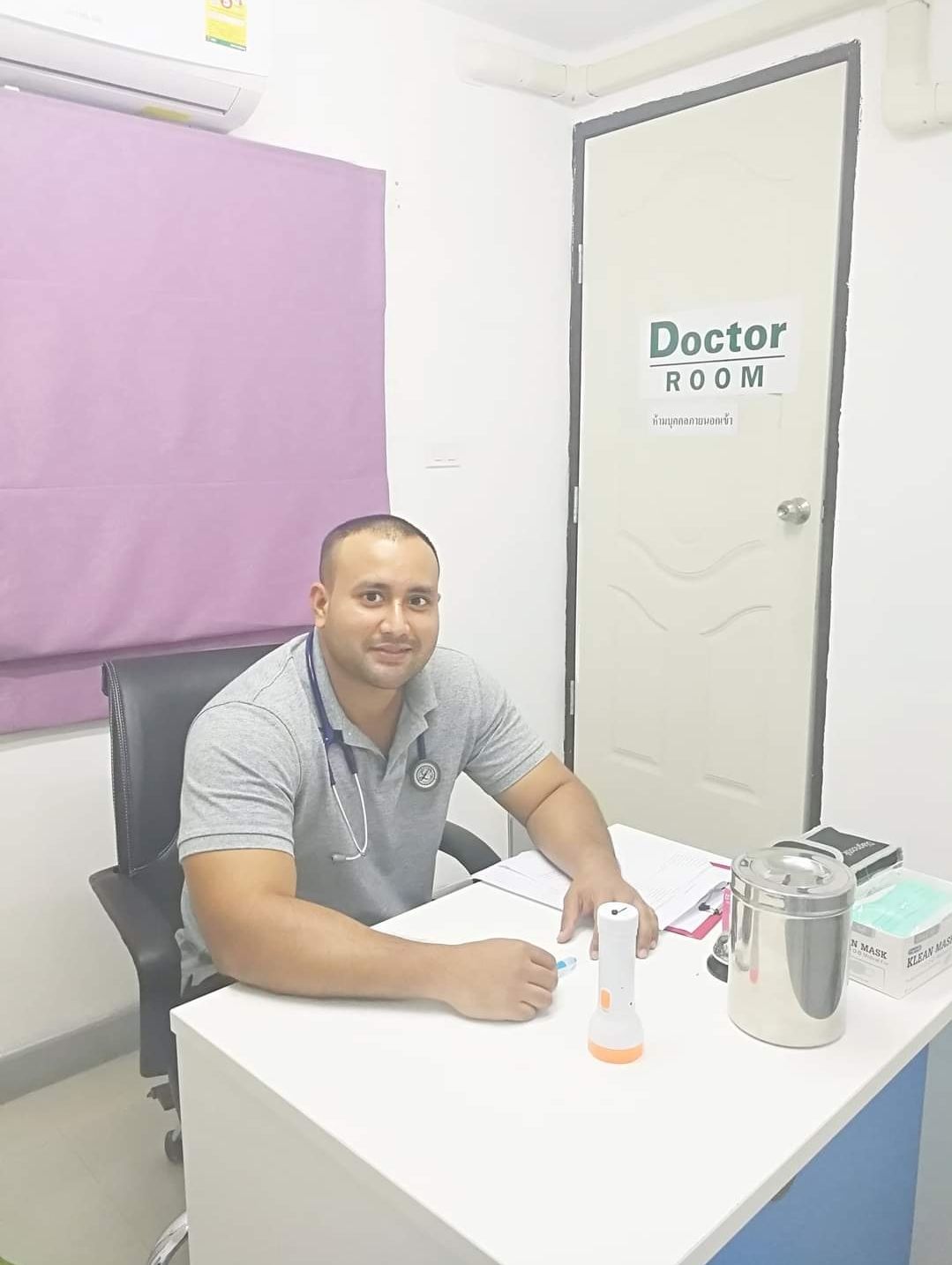
Dr. Ponlawat Pitsuwan is a physician at Doctor Bangkok, a private clinic in central Bangkok. He sees expats, residents, and medical tourists for general medicine, wellness consultations, and IV therapy. His focus is straightforward, evidence-based care delivered in plain language.