
Clinically reviewed by Dr. Ponlawat Pitsuwan, Physician, Doctor Bangkok.
Last reviewed: September 2026
The embryonic stem cell ethics debate centres on one question: does a human embryo, at the earliest stage of life, have the same moral status as a person? People hold genuinely different views, shaped by religion, culture, and science. For most expats seeking stem cell therapy in Bangkok today, the debate is largely academic because reputable clinics use cell sources that do not involve embryo destruction at all.
I get this question more than you might expect. A patient books a stem cell consultation, does some reading the night before, and walks in wanting a straight answer: is this ethical? It is a fair question.
Here is the short version. The ethical debate around embryonic stem cell research is real, long-running, and genuinely unresolved. But what most private clinics in Bangkok actually offer today does not involve embryonic stem cells at all. Understanding the debate still matters, because it shapes how clinics are regulated, how cells are sourced, and what questions you should be asking before you agree to any treatment.

What Embryonic Stem Cells Are, and Why the Ethics Debate Exists
Around five days after fertilisation, a human embryo forms a small structure called a blastocyst. Inside it is a cluster of cells that can become almost any cell type in the body. Extracting them creates embryonic stem cells. It also destroys the blastocyst.
That destruction is the root of the controversy. Everything else flows from one question: what is the moral status of a five-day-old embryo?
The Three Main Ethical Positions, Simplified
Most people land in one of three places, not two.
The first says the embryo is a full human person from fertilisation. Destroying it for research is morally equivalent to ending a life. This view is most common in traditions with strong Abrahamic religious influence, and it is the most restrictive.
The second says the early embryo has some moral value, but not the same as a born person. Research may be acceptable under strict conditions, particularly when embryos come from IVF clinics and would otherwise be discarded. This is the middle ground where most Western bioethics frameworks currently sit.
The third holds that a blastocyst has no morally significant status yet. On this view, potential medical benefits outweigh the objection. Some secular and Buddhist-influenced ethical traditions are more comfortable here, which is relevant for patients navigating healthcare in Thailand.

The Core Arguments For and Against Embryonic Stem Cell Research Ethics
Those who support this research point to its medical potential. These cells can, in theory, be guided to become heart muscle, neurons, or insulin-producing cells. For degenerative conditions, that matters.
Supporters also raise what is sometimes called the doomed embryos argument. IVF generates more embryos than are ever implanted. Many are frozen indefinitely or eventually discarded. If destruction is inevitable, why not allow research that could benefit patients?
Those who oppose it raise the complicity principle. Benefiting from an act you consider wrong makes you morally responsible, even if you did not perform it yourself. On this view, accepting therapies derived from embryo destruction is ethically compromised regardless of the outcome.
There is no resolution most people agree on. This debate has been running for decades and will continue.
Cultural Perspectives, and Why Asia Looks Different
The Western debate has been shaped heavily by Christian ethics, particularly Catholic teaching, which holds that personhood begins at fertilisation. But this is not a universal view.
Buddhist traditions, central to Thai culture, do not typically assign the same moral weight to the earliest-stage embryo. Consciousness and karmic status involve more complex considerations than a single moment of conception. This does not mean Buddhism endorses unrestricted research, but the moral framework looks different.
Some bioethicists now call for approaches that recognise cultural pluralism rather than applying a single Western standard globally. For expats living in Bangkok and seeking care within a Thai healthcare system, that context is worth understanding before you walk into any clinic.
Alternatives to Embryonic Stem Cells, Including What Bangkok Clinics Actually Use
This is where the debate becomes most relevant to you practically.
Induced pluripotent stem cells, known as iPSCs, are adult cells that have been reprogrammed back to a state where they can become many different cell types. They behave similarly to embryonic stem cells but do not require embryo destruction. They carry far fewer ethical objections, though questions around consent and commercialisation still apply.
Adult stem cells, including mesenchymal stem cells from bone marrow or fat tissue, are already mature and more limited in range. They sidestep the ethics debate almost entirely.
Umbilical cord mesenchymal stem cells, or UC-MSCs, are collected from cord tissue after a birth, with no harm to mother or baby. They are ethically uncontroversial and are the cell type used most often in reputable Bangkok private clinics today. If a clinic offering you stem cell therapy in Bangkok cannot tell you clearly which cell type they use and where it comes from, that is a problem.
How Thailand Regulates Stem Cell Therapy
Thailand’s regulatory framework for stem cell therapy is still developing. The Thai FDA oversees stem cell products under an advanced therapy medicinal products framework. This sets manufacturing and safety standards but does not yet have the same reach as equivalent EU or US regulations.
The International Society for Stem Cell Research publishes guidelines that many responsible clinics follow voluntarily. These cover sourcing, consent, and clinical evidence requirements. A clinic that follows those guidelines is a positive sign.
The practical point: the legal and ethical landscape in Thailand is not the same as in Europe or North America. That is not necessarily a reason for alarm, but it is a reason to ask more questions and work with a clinic that gives you real answers.
What to Ask Before Choosing a Stem Cell Clinic in Bangkok
Treat this like any other medical decision. Ask until you are satisfied, and walk away if you are not.
Ask what cell type is being used and from what specific source. Ask whether the supplier is GMP-certified, meaning they meet pharmaceutical-grade manufacturing standards. Ask to see the informed consent document before you agree to anything, and read it carefully. Ask what happens if you have a reaction or complication.
Red flags include vague answers about cell sourcing, pressure to commit quickly, guarantees of results, and consent documents that are thin or hard to follow. At Doctor Bangkok, we work with patients as an independent clinical advisor before they commit to any provider, helping them understand what the treatment involves and which questions a credible clinic should answer without hesitation. You can learn more at our stem cell therapy Bangkok page.
How Doctor Bangkok Approaches Stem Cell Guidance
We do not perform stem cell therapy directly. What we do is provide an honest, evidence-based consultation so patients understand what they are being offered before they sign anything.
That distinction matters. Stem cell tourism, where patients travel to access treatments not approved in their home countries, is a real and growing pattern in Southeast Asia. Some clinics make extraordinary claims with limited clinical evidence behind them. Others are genuinely credible, using ethically sourced UC-MSCs with proper consent and follow-up.
Our role is to help you tell the difference. If you are considering stem cell treatment in Bangkok, book a consultation with us first. We will review what you have been offered, explain it in plain language, and flag anything that does not look right.
Thinking about stem cell therapy in Bangkok and want an independent clinical opinion first? Doctor Bangkok offers straightforward medical consultations for expats and medical tourists. We will explain what you are being offered, help you ask the right questions, and tell you honestly what the evidence supports. Speak to one of our English-speaking physicians before you commit to any treatment.
FAQ
Dr. Ponlawat Pitsuwan
Physician, Doctor Bangkok
a private medical clinic in central Bangkok. He sees expats, residents, and medical tourists for general medical consultations, health checks, and pre-treatment clinical guidance including stem cell therapy evaluation. His focus is straightforward, evidence-based care delivered in plain language.
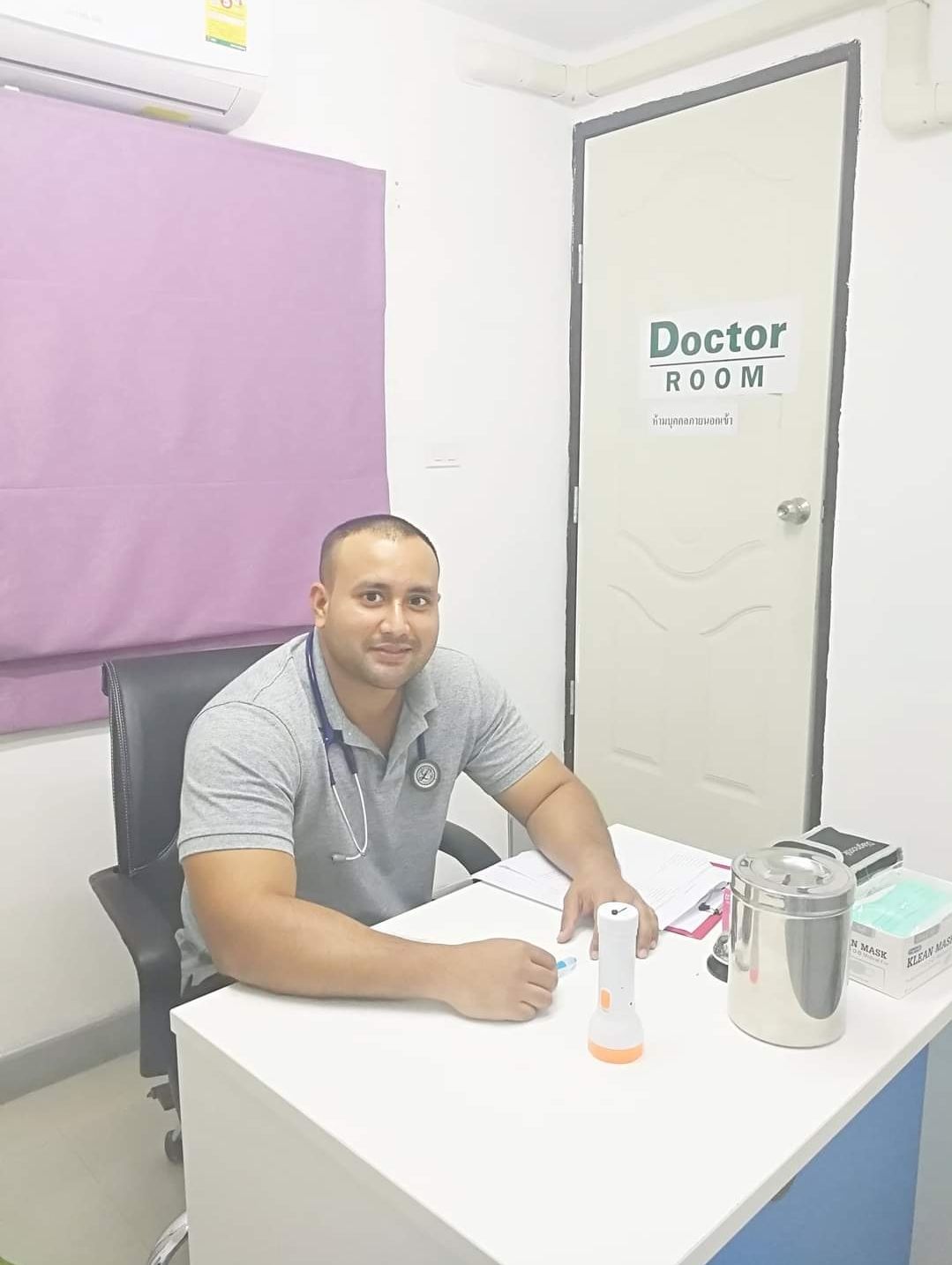
Dr. Ponlawat Pitsuwan is a physician at Doctor Bangkok, a private clinic in central Bangkok. He sees expats, residents, and medical tourists for general medicine, wellness consultations, and IV therapy. His focus is straightforward, evidence-based care delivered in plain language.