
Clinically reviewed by Dr. Ponlawat Pitsuwan, Physician, Doctor Bangkok. Last reviewed: September 2026
Stem cell IV infusion delivers living mesenchymal stem cells directly into your bloodstream. These cells travel to areas of inflammation, release growth factors, and support tissue repair. At Doctor Bangkok, every infusion starts with a physician consultation and baseline blood tests. This is not a standard IV drip. It is a regenerative therapy that requires clinical assessment before you book.
I get asked about stem cell IV infusion at least a few times a week now. Most patients arriving at our Sukhumvit clinic have already done their reading. They have a short window in Bangkok and want a straight answer: is this right for me, and can I do it here?
The honest answer is: sometimes yes, sometimes not yet. This is one of the more significant therapies we offer, and it is not something to walk into without a proper pre-treatment assessment. Here is exactly what the therapy involves, what we check before you go ahead, and what to expect on the day and after.

What a Stem Cell IV Infusion Actually Does
The cells used are called mesenchymal stem cells, or MSCs. The most commonly used source is umbilical cord tissue from a layer called Wharton’s Jelly. These are donor cells, not your own.
Once infused, MSCs circulate through the bloodstream and are drawn toward areas of inflammation and tissue stress. When they arrive, they release growth factors and signalling molecules that prompt your body’s own repair processes. They do not permanently take up residence in tissue. Their main job is to send signals, not become new cells.
This is where stem cell IV therapy differs from a regular drip. A vitamin or NAD+ IV feeds your existing cells. A stem cell infusion introduces a biological signal that activates repair processes your body would not otherwise prioritise. The anti-inflammatory and immune-modulating effects of MSCs are among the better-documented findings in regenerative medicine research, though outcome data for specific conditions is still developing, and I will not overstate what the evidence currently supports.
What Stem Cell IV Infusion Is Used For
Most patients come in for one of three reasons: longevity and anti-ageing, recovery support after illness or injury, or systemic inflammation that has not responded to standard treatment.
Anti-ageing is the most common goal. Patients in their 40s and 50s want better energy, reduced joint discomfort, and improved skin quality. The evidence here is moderate. Some patients report meaningful improvement. Others notice less. Individual response varies significantly, and I say this to every patient before they commit.
Immune support is the second most common reason. MSCs affect how your immune system responds to chronic stress and inflammation. This is relevant for patients with persistent fatigue or long-COVID symptoms. Autoimmune conditions require careful, case-by-case assessment before we proceed.
Tissue repair after orthopaedic injury or post-surgical recovery is a third application. For localised joint or tissue concerns, a direct injection to the site is often more appropriate than an IV route. We discuss this at consultation.

IV Infusion vs. Direct Injection: Which Route Fits Your Goals
The answer depends on what you are trying to achieve.
IV infusion delivers cells systemically. They circulate everywhere, which suits patients with whole-body goals: general inflammation, fatigue, longevity, immune support. Direct injection places cells into a specific area, such as a joint or tendon, delivering a higher local concentration where you actually need it.
Many patients benefit from both over time. The decision is based on your goals, your baseline bloods, and your overall health picture. We work that out at the consultation, not before.
Cell Quality: What to Ask Any Clinic Before You Commit
This is the section most Bangkok clinic pages leave out, and it is the most important one.
Not all stem cells are equal. Passage number matters: cells cultured through three rounds of expansion retain strong regenerative capacity. Higher passage numbers can mean reduced potency. Ask the clinic what passage number their cells are at.
Viability at the time of infusion matters just as much. Ask for the viability certificate for your specific batch. Reputable clinics can produce this. A figure of 90% or higher is the standard benchmark.
Ask whether the cell bank is GMP-compliant, meaning it meets pharmaceutical-grade manufacturing standards. Ask whether cells are fresh or frozen. Fresh cells have no exposure to DMSO, the preservative used in cryopreservation, and tend to show higher viability on the day. Frozen cells are more logistically flexible, but some patients notice mild transient effects from DMSO, including a brief garlic taste or light nausea.
At Doctor Bangkok, we walk every patient through the source, passage number, and viability data for their specific batch. If a clinic cannot answer these questions, that is a problem.
Stem Cell IV Infusion in Bangkok: What the Thai FDA Framework Means for You
Stem cell therapy in Thailand is permitted as an investigational advanced therapy under Thai FDA oversight, administered under physician supervision and in compliance with Ministry of Public Health guidelines. It is legal and regulated, but it does not carry the same classification as an approved pharmaceutical drug.
Practically, this means you should ask any clinic whether they operate within this framework, whether their cell source is licensed, and whether they provide post-treatment documentation. Reputable clinics produce this paperwork without hesitation.
Investigational status also means long-term outcome data is still accumulating. The safety profile of allogeneic MSCs is broadly favourable in published literature. But honest clinicians acknowledge this is not a therapy backed by decades of randomised controlled trial data. You deserve to know that before spending significant money on it.
Who Is a Good Candidate, and Who Should Wait
Good candidates are generally healthy adults with no active serious illness, realistic goals, and a willingness to complete pre-treatment blood testing. There are no shortcuts on that last point.
There are situations where I advise waiting or declining. Active cancer or recent cancer treatment is a contraindication. Patients on strong immunosuppressants need a careful risk-benefit conversation first. Recent major surgery is a reason to wait until the post-operative period has fully passed.
Pregnancy, active systemic infection, and severe organ dysfunction are also situations where we do not proceed. A clinic that tells you stem cell infusion is right for everyone is not being clinically honest.
What to Expect Before, During, and After Your Infusion at Doctor Bangkok
Before your infusion, you have a physician consultation. We review your health history, your goals, and your baseline bloods. The panel includes a full blood count, liver and kidney function tests, inflammatory markers, and infectious disease screening for HIV and hepatitis B and C. For longevity-focused patients, we often add hormones and metabolic markers.
On the day, the infusion takes around 60 to 90 minutes. You sit comfortably while cells are delivered intravenously at a controlled rate. Most patients feel nothing beyond the sensation of a standard drip. Some notice mild warmth or light fatigue in the hours afterward.
After the infusion, avoid alcohol for at least 48 hours, stay well hydrated, and avoid prolonged exposure to Bangkok’s midday heat for the rest of the day. If you are flying in as a medical tourist, plan to stay at least 24 to 48 hours post-infusion before your flight. Strenuous exercise should wait 48 hours. Most patients return to normal activity the following morning.
Effects develop gradually over four to twelve weeks. If you are expecting to feel different by the next morning, that is not how this works. The biological signals take time.
How Stem Cell IV Infusion Compares to Exosome Therapy and NAD+ IV
Patients ask about these three options often, so it is worth being direct about how they differ.
NAD+ IV therapy restores a coenzyme central to cellular energy production. It is a well-supported metabolic intervention. Exosome therapy delivers the signalling packets that MSCs release, without the cells themselves. It is a lighter intervention with a similar mechanism.
Stem cell IV infusion delivers the whole cell, which produces a broader and more sustained effect. For patients with significant systemic inflammation or more ambitious longevity goals, full MSC infusion is the stronger option. For those newer to regenerative medicine or weighing costs, exosome therapy or NAD+ can be a starting point or a complement to a stem cell protocol.
These are not competing choices. Many patients use a combination over time, and we build that plan around your specific bloodwork and goals.
Considering stem cell IV infusion in Bangkok? Doctor Bangkok offers English-speaking physician consultations, pre-treatment blood testing, and transparent cell quality documentation before any infusion proceeds. The clinic is centrally located on Sukhumvit and accessible by BTS. Whether you are an expat resident or a medical tourist with a short window in the city, we will give you a clear clinical picture of whether this therapy is right for you. Contact us to book a consultation.
FAQ
Dr. Ponlawat Pitsuwan
Physician, Doctor Bangkok
a private medical clinic in central Bangkok. He sees expats, residents, and medical tourists for regenerative medicine consultations, stem cell IV infusion, IV drip therapy, and general health assessments. His focus is straightforward, evidence-based care delivered in plain language.
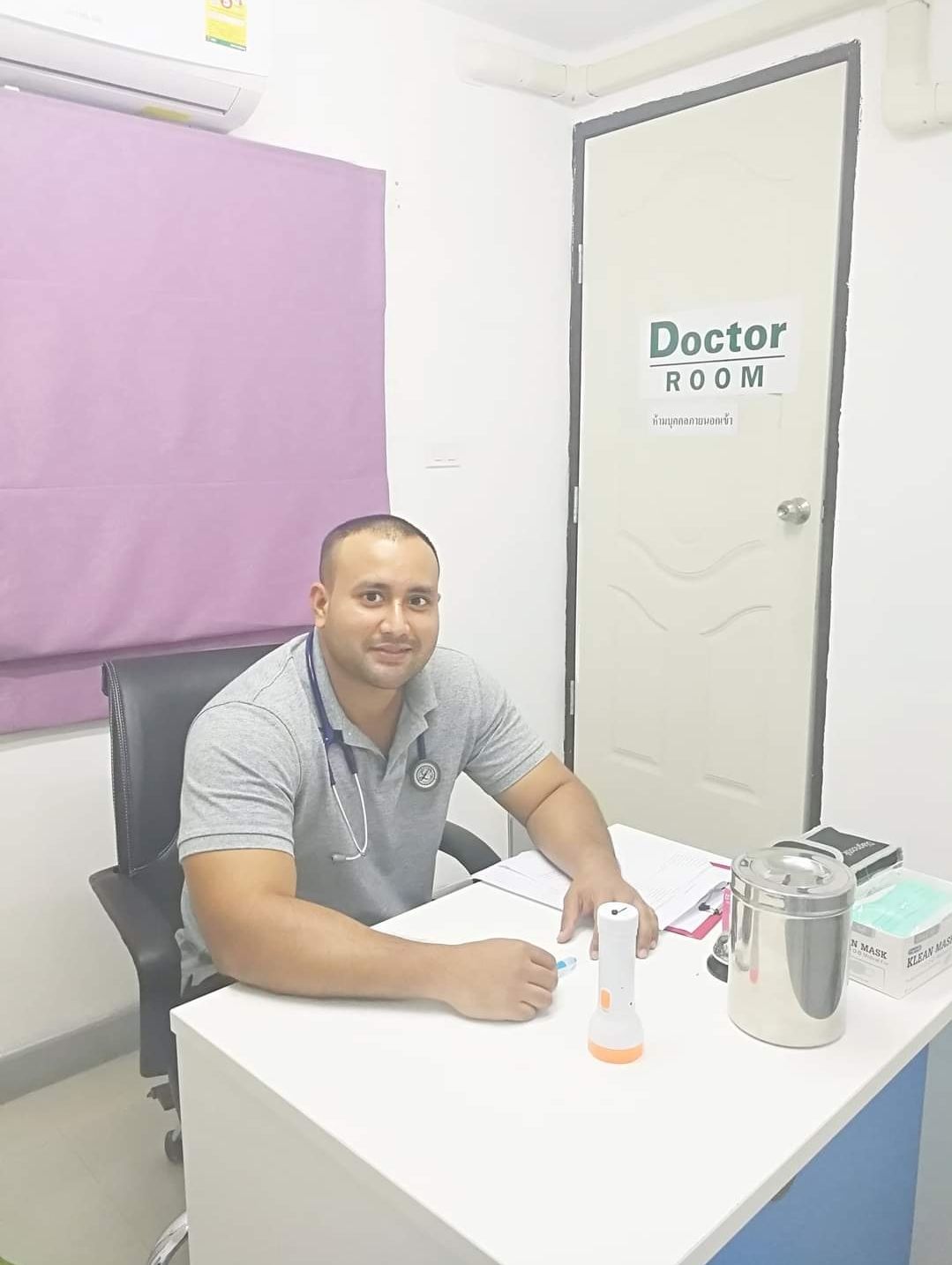
Dr. Ponlawat Pitsuwan is a physician at Doctor Bangkok, a private clinic in central Bangkok. He sees expats, residents, and medical tourists for general medicine, wellness consultations, and IV therapy. His focus is straightforward, evidence-based care delivered in plain language.