
Clinically reviewed by Dr. Ponlawat Pitsuwan, Physician, Doctor Bangkok. Last reviewed: September 2026
Stem cell therapy is not universally safe or unsafe. Safety depends on the cell source, how much the cells are processed, the administration route, and whether the clinic operates under proper regulatory oversight. In Thailand, treatments using your own unprocessed cells carry a lower risk profile than donor-cell or heavily manipulated preparations. The biggest safety risks come not from the therapy itself but from unregulated providers making promises no evidence supports.
At least twice a month, someone sits across from me having already paid a deposit somewhere. They found a clinic online, liked what they read, and now they want me to confirm it is fine. Sometimes it is. Sometimes it is not.
Stem cell therapy sits in a complicated place right now. Some applications are well-established and genuinely safe. Others are experimental. And a few clinics in Bangkok are selling treatments that sit somewhere between hope and deception. If you are researching this, you deserve a straight answer about what the evidence shows, what the risks are, and how to tell a legitimate provider from one that will take your money and little else.

What "Safe" Actually Means Here
When patients ask me whether stem cell therapy is safe, they usually mean one of three things. Will the procedure itself hurt me? Could something go wrong weeks or months later? And is this even legal?
Those are three separate questions with three different answers. Short-term procedural safety, long-term biological risk, and regulatory compliance do not always line up. A clinic can run a clean IV line and still be offering you an experimental product with no long-term safety data. Understanding the difference is where you start.
Safety Differs by Cell Type and Source
Not all stem cell therapy is the same. The risk profile changes significantly depending on what cells are used and where they come from.
Autologous therapy uses your own cells, usually taken from fat tissue or bone marrow. Because the cells are yours, immune rejection is less likely. Unmanipulated autologous preparations generally carry the lowest risk profile. The picture changes when cells are heavily processed in a lab before being given back to you. Even your own cells can trigger a response after significant manipulation.
Allogeneic therapy uses donor cells, which may come from umbilical cord blood or other sources. These carry a higher risk of immune rejection. In some cases, donor cells can attack your own tissue. This is called graft-versus-host disease, or GvHD, and in serious cases it can be life-threatening. Mesenchymal stem cells are often described as low-immunogenicity, but that means lower risk, not zero risk.
Some clinics also offer exosome preparations, which contain secreted signals from stem cells rather than the cells themselves. No living cells are involved. The risk profile is generally lower, though the evidence base is still developing.

What the Real Risks Are
The most common short-term effects are mild. Injection site soreness, some swelling, a low-grade fever, brief fatigue. These usually settle within a few days and reflect a normal immune response, not something going wrong.
Less common but possible: prolonged inflammation, allergic reactions, or a stronger immune response than expected. These are manageable when a qualified physician is monitoring you. They become dangerous when no qualified physician is involved at all.
The rare but serious risks include abnormal cell division after administration, and immune rejection in allogeneic cases, which can escalate to GvHD. These are not theoretical. There are documented cases in the medical literature, mostly linked to unregulated providers or heavily manipulated cell products given outside any clinical oversight.
Is Stem Cell Therapy Legal and Regulated in Bangkok?
Thailand classifies stem cell products as biologicals under the Thai FDA. The Ministry of Public Health licenses facilities that can lawfully process and administer these treatments. Laboratories handling stem cells for clinical use are expected to meet Good Manufacturing Practice standards, and the best facilities operate under PIC/S-certified conditions.
For experimental applications, an Institutional Review Board, known as an IRB, should be approving and overseeing the protocol. If a clinic is offering a stem cell treatment for a condition with no established evidence base, that should be registered as a clinical trial. Most are not.
That gap between what clinics call "treatment" and what regulators call "experimental" is where patients get hurt. Hematopoietic stem cell transplantation for blood disorders has a clear regulatory pathway and strong evidence behind it. Wellness and anti-aging applications are a different story. Legal does not mean proven, and in Bangkok right now, these two things are not the same.
The Problem with Stem Cell Tourism
Bangkok attracts medical tourists for good reasons: high clinical standards, English-speaking physicians, and significantly lower costs than Western markets. But the same factors that make Bangkok an attractive destination also make it attractive for operators who should not be operating.
Stem cell tourism has produced serious documented harms. Patients have developed tumours, suffered immune crises, and in some cases died. The source is almost always the same: a provider offering guaranteed outcomes, using non-certified cell products, with no physician oversight and no follow-up plan.
This is not a reason to avoid Bangkok. It is a reason to be specific about where you go.
Red Flags When Choosing a Stem Cell Clinic in Bangkok
If a clinic cannot tell you where the cells come from, that is a problem. If they cannot produce documentation of GMP or PIC/S lab certification for the cell product, that is a problem. If the physician treating you is not licensed with the Thai Medical Council, that is a problem.
Other red flags: outcome guarantees for conditions with no established stem cell evidence, pressure to commit before a consultation, vague answers about IRB oversight, and package pricing that bundles stem cells with other treatments in ways that obscure what you are actually receiving.
A legitimate clinic will welcome your questions. They will give you written informed consent documentation before anything begins. They will tell you honestly when something is experimental.
How Stem Cell Therapy Compares to Exosome Therapy and PRP
Patients often ask whether they should consider exosome therapy or platelet-rich plasma, known as PRP, instead. These are not identical alternatives, but it is a fair question.
PRP uses components drawn from your own blood. It has the longest evidence record of the three, particularly for joint conditions and some skin applications, and its risk profile is well understood. Exosome therapy does not involve living cells and generally carries lower complexity than stem cell preparations, though the evidence base is still maturing. Full stem cell therapy sits at the more complex end of the spectrum, with the most factors that need to be right before any benefit is real.
Which is appropriate for you depends on what you are trying to treat, your medical history, and an honest conversation with a physician about what the evidence actually supports for your specific situation.
Questions to Ask Before You Agree to Treatment
Walk into any consultation with these questions ready. Is this treatment approved or experimental? If experimental, is there IRB oversight and is it registered as a clinical trial? Where do the cells come from, and what is the GMP certification of the laboratory? Is the treating physician licensed with the Thai Medical Council? What is the monitoring plan after treatment? What are my options if I experience an adverse reaction?
If any of these questions are deflected, answered vaguely, or met with sales pressure rather than clinical information, leave. You are not being difficult. You are being responsible.
At Doctor Bangkok, we will not proceed with a stem cell consultation unless we can answer every one of those questions in writing. That is the minimum standard, not something exceptional.
How We Approach This at Doctor Bangkok
Our approach starts with screening, not selling. Before any regenerative medicine discussion goes further, we run a blood panel, review your medical history, and assess whether the treatment you are asking about has credible evidence for your specific condition.
We are honest when the evidence is limited. We are honest when we think a different treatment is more appropriate. And if we refer you for a procedure we do not administer directly, we will tell you exactly what to look for in the provider who does.
If you are in Bangkok weighing up stem cell therapy, start with a consultation at Doctor Bangkok. Not because we will tell you yes, but because we will give you an accurate picture of what the evidence shows for your situation before you make a decision that affects your health.
Thinking about stem cell therapy in Bangkok? Before you commit to anything, speak with a physician who will give you a straight clinical assessment. At Doctor Bangkok, we offer medical consultations for patients evaluating regenerative medicine options, including honest guidance on what the evidence supports and what red flags to watch for. We are centrally located in Bangkok, BTS accessible, and English-speaking. Book a consultation before you make any decisions.
FAQ
Dr. Ponlawat Pitsuwan
Physician, Doctor Bangkok
a private medical clinic in central Bangkok. He sees expats, residents, and medical tourists for general medical consultations, health assessments, and guidance on regenerative medicine and wellness treatments. His focus is straightforward, evidence-based care delivered in plain language.
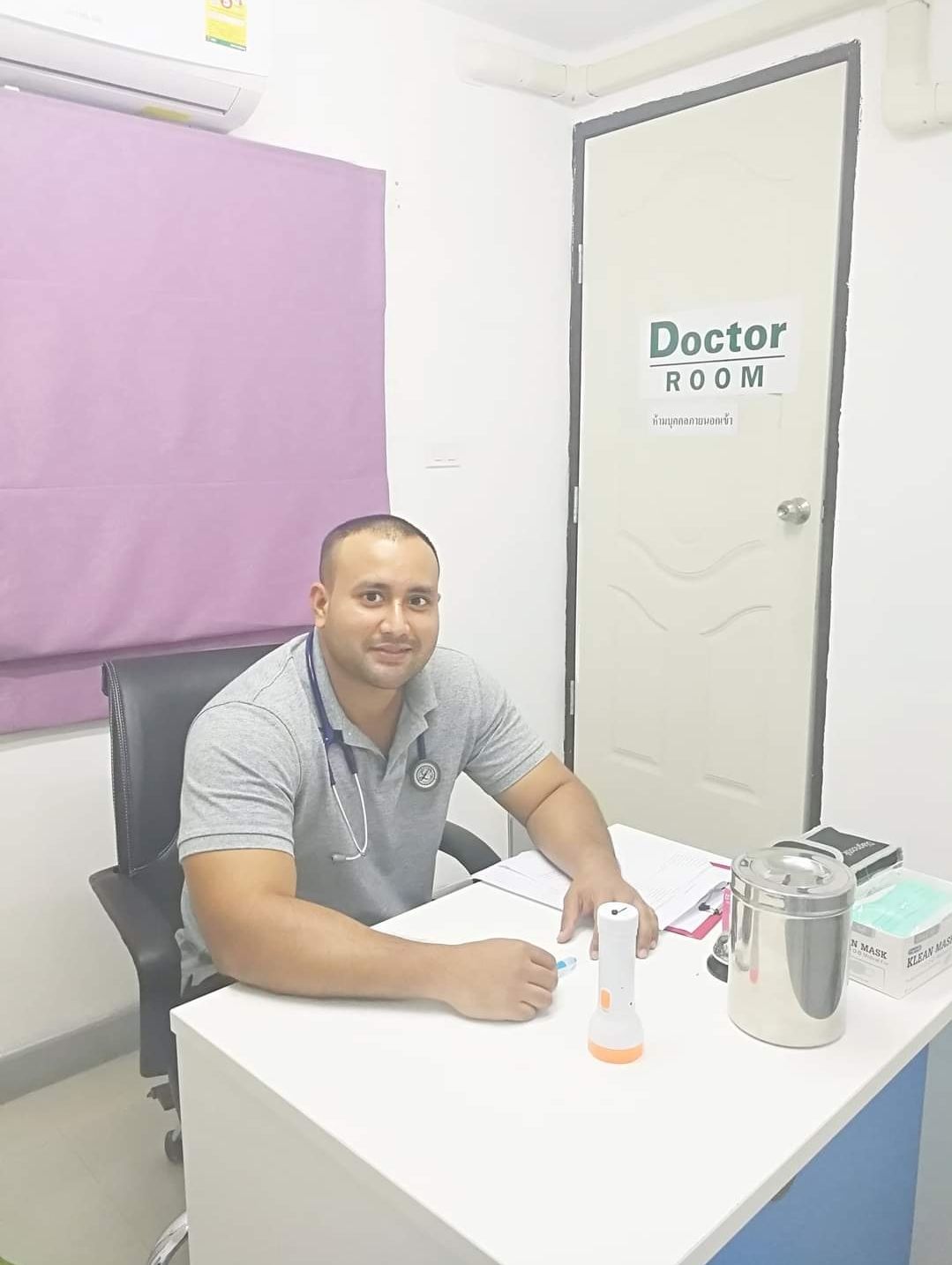
Dr. Ponlawat Pitsuwan is a physician at Doctor Bangkok, a private clinic in central Bangkok. He sees expats, residents, and medical tourists for general medicine, wellness consultations, and IV therapy. His focus is straightforward, evidence-based care delivered in plain language.