
Clinically reviewed by Dr. Ponlawat Pitsuwan, Physician, Doctor Bangkok.
Last reviewed: October 2026
Adipose derived stem cells are regenerative cells harvested from your own body fat through a minimally invasive procedure. They are used in clinical settings for joint pain, wound healing, certain inflammatory conditions, and cosmetic rejuvenation. No adipose stem cell product currently holds FDA approval for general use in the US, but treatment is available in Bangkok under Thailand’s own regulatory framework, supervised by a licensed physician.
A lot of patients come to me after spending hours online trying to work out whether this therapy is real medicine or clever marketing. That is a fair question. The honest answer is: it depends on what condition you have and what the evidence actually shows.
If you are an expat or visitor in Bangkok weighing this up, here is what you actually need to know.
Adipose derived stem cells, often called ADSCs, are taken from your own fat tissue. Because they come from you and go back into you, this is called autologous cell therapy. The procedure is less invasive than most people expect, and the science behind it has been building steadily for two decades.
What Are Adipose Derived Stem Cells
Your fat tissue is not just storage. It contains a large population of stem cells sitting within a cellular mixture called the stromal vascular fraction, or SVF. When fat is removed and processed, SVF is what comes out. It contains ADSCs alongside other cells that regulate inflammation and support tissue repair.
ADSCs belong to a category called mesenchymal stem cells. They can develop into several cell types including bone, cartilage, fat, and muscle. They also release signals that prompt healing in surrounding tissue. That combination of direct repair and signalling is why they attract serious clinical interest.
Why Fat Is a Preferred Source of Stem Cells
Fat tissue is abundant and easy to access. A small amount from the abdomen or thigh yields far more stem cells than an equivalent amount of bone marrow. Bone marrow harvest involves a needle into bone, usually under sedation, and more recovery time.
With fat, the procedure is done under local anaesthetic, takes under an hour, and most patients are back to normal the next day. Lower risk, easier to tolerate, and the yield is better.
Adipose Stem Cells vs Bone Marrow Stem Cells
| Feature | Adipose Derived Stem Cells | Bone Marrow Stem Cells |
|---|---|---|
| Harvest method | Mini-liposuction, local anaesthesia | Needle into bone, sedation usually required |
| Pain level | Mild soreness 1 to 2 days | Moderate to significant, longer recovery |
| Cell yield per gram | High | Lower |
| Invasiveness | Low | Moderate to high |
| Clinical evidence | Strong for joint and skin applications | Strong for blood and immune conditions |
| Same-day treatment | Usually yes | Less commonly |
For the regenerative and cosmetic indications most patients ask about at Doctor Bangkok, adipose is the more practical and better-tolerated source. Bone marrow stem cells remain the standard for blood and immune system conditions, which is a different clinical context entirely.
How Adipose Stem Cells Are Collected and Processed
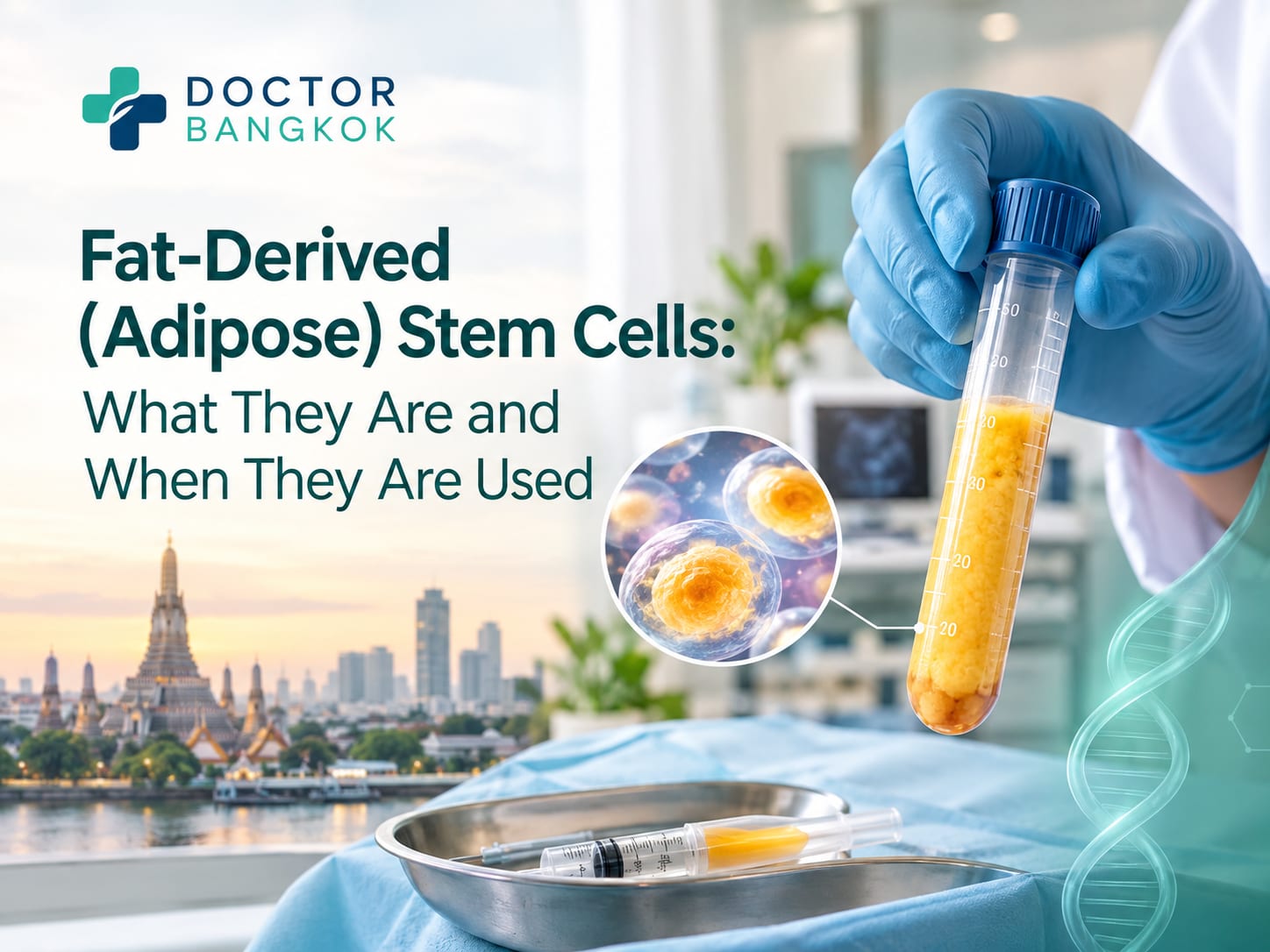
Fat is removed through a small incision using a thin tube. Usually between 30 and 100 millilitres are collected from the abdomen, inner thigh, or flank. The harvest site is numbed with local anaesthetic. It is not a full surgical procedure.
Once collected, the fat is processed to separate the SVF. This can be done on the same day, giving you same-day SVF therapy. Alternatively, cells can be sent to a certified laboratory where ADSCs are isolated and expanded over days to weeks, returning in higher purity and more precise doses.
A technique called cell-assisted lipotransfer, or CAL, combines the enriched cell fraction with fat grafting. This is most often used in cosmetic applications. Your physician will recommend the right approach for your specific indication.
When Are Adipose Derived Stem Cells Used
The indications with the strongest evidence are joint pain from osteoarthritis, chronic wounds, and perianal fistulas in Crohn’s disease.
For osteoarthritis, multiple controlled studies show meaningful reductions in pain and improved function, particularly in the knee and hip at moderate disease stage. Wound healing applications are also well-supported, especially in diabetic foot ulcers and non-healing surgical wounds.
The most regulatory-advanced indication globally is Crohn’s perianal fistulas. An allogeneic ADSC product called darvadstrocel has received approval in the EU, UK, Japan, and Israel for this condition.
Cosmetic and skin rejuvenation uses are well-established in clinical practice. ADSCs stimulate collagen production, improve skin texture, and support volume restoration combined with fat grafting. Anti-ageing applications are one of the most common reasons patients in Bangkok enquire about this therapy.
Earlier-stage research covers cardiovascular support, autoimmune conditions, and neurological applications. The evidence there is promising but not yet at the same level. Be cautious about any clinic promoting ADSCs as a cure for conditions where the science is still early.
Regulatory Status: Are Adipose Derived Stem Cells FDA Approved
This is the question I hear most often. No adipose-derived stem cell product is currently FDA-approved in the United States for general clinical use.
Darvadstrocel, the allogeneic ADSC product for Crohn’s perianal fistulas, is approved in the EU and other markets. It also holds Regenerative Medicine Advanced Therapy designation from the FDA, which accelerates its review pathway. That is not the same as full approval, but it signals the FDA takes the clinical potential seriously.
Thailand operates under the regulatory authority of the Thai Ministry of Public Health, which has its own framework for advanced therapy medicinal products. Clinics offering adipose stem cell therapy in Bangkok, including our stem cell therapy service, operate under Thai law, not the FDA. That does not mean the therapy is unregulated. It means the oversight structure is different.
A physician-led consultation that explains what the evidence does and does not support is essential before you commit to anything.
Safety Profile and Who Is a Good Candidate
Because ADSCs come from your own body, immune rejection risk is essentially zero for autologous treatment. Serious adverse events are rare in published literature. The most common issues are temporary soreness at the harvest site, minor bruising, and occasional mild inflammation at the injection site.
Good candidates are adults in reasonable health with a specific, evidence-supported indication. Active cancer, serious blood clotting disorders, active infection, and uncontrolled autoimmune disease are all reasons to pause or reconsider. Pregnancy and certain immunosuppressant medications also affect suitability.
The biggest mistake I see is patients who have already paid deposits elsewhere without any baseline blood work or a real clinical consultation. That is the situation to avoid.
Adipose Stem Cells vs Exosome Therapy
Exosome therapy is increasingly offered alongside or instead of ADSC treatment, and patients regularly ask me what the difference actually is.
Exosomes are tiny particles secreted by stem cells. They carry the signalling molecules that trigger repair in surrounding tissue. In exosome therapy, you receive those particles without the cells themselves. Products can be standardised, stored, and administered without a harvest procedure.
The limitation is that the evidence base is still developing and the regulatory picture is even less defined than for ADSCs. For patients who are not suitable for a harvest procedure, exosome therapy may be worth discussing. For most indications, the evidence currently favours ADSCs over exosomes alone.
What to Expect at Doctor Bangkok
The process starts with a physician consultation. We review your medical history, the condition you want to treat, and whether ADSC therapy is actually supported by evidence for your specific situation. Not every patient who enquires is a suitable candidate, and I would rather tell you that upfront.
If you are suitable, we arrange pre-procedure screening including blood tests before any harvest is scheduled. The harvest and processing are conducted under physician supervision. You go home the same day.
We provide a full treatment summary you can share with your doctor at home. Remote follow-up is available for patients returning abroad. For expats and medical tourists, that continuity matters. Doctor Bangkok is centrally located and BTS accessible, so you are not dealing with difficult transport after a procedure. English-speaking physicians throughout. If you want to understand more about how adipose stem cell treatment is approached here, the consultation is the right starting point.
Ready to find out if adipose derived stem cell therapy is right for you? At Doctor Bangkok, our physicians review your case, explain what the evidence actually supports for your condition, and tell you honestly whether this is the right step. We see expats, residents, and medical tourists at our central Bangkok clinic. English-speaking care, same-day appointments available. Contact us to book your consultation.
FAQ
Dr. Ponlawat Pitsuwan
Physician, Doctor Bangkok
a private medical clinic in central Bangkok. He sees expats, residents, and medical tourists for regenerative medicine consultations including adipose derived stem cell therapy, as well as general medical care and health assessments. His focus is straightforward, evidence-based care delivered in plain language.
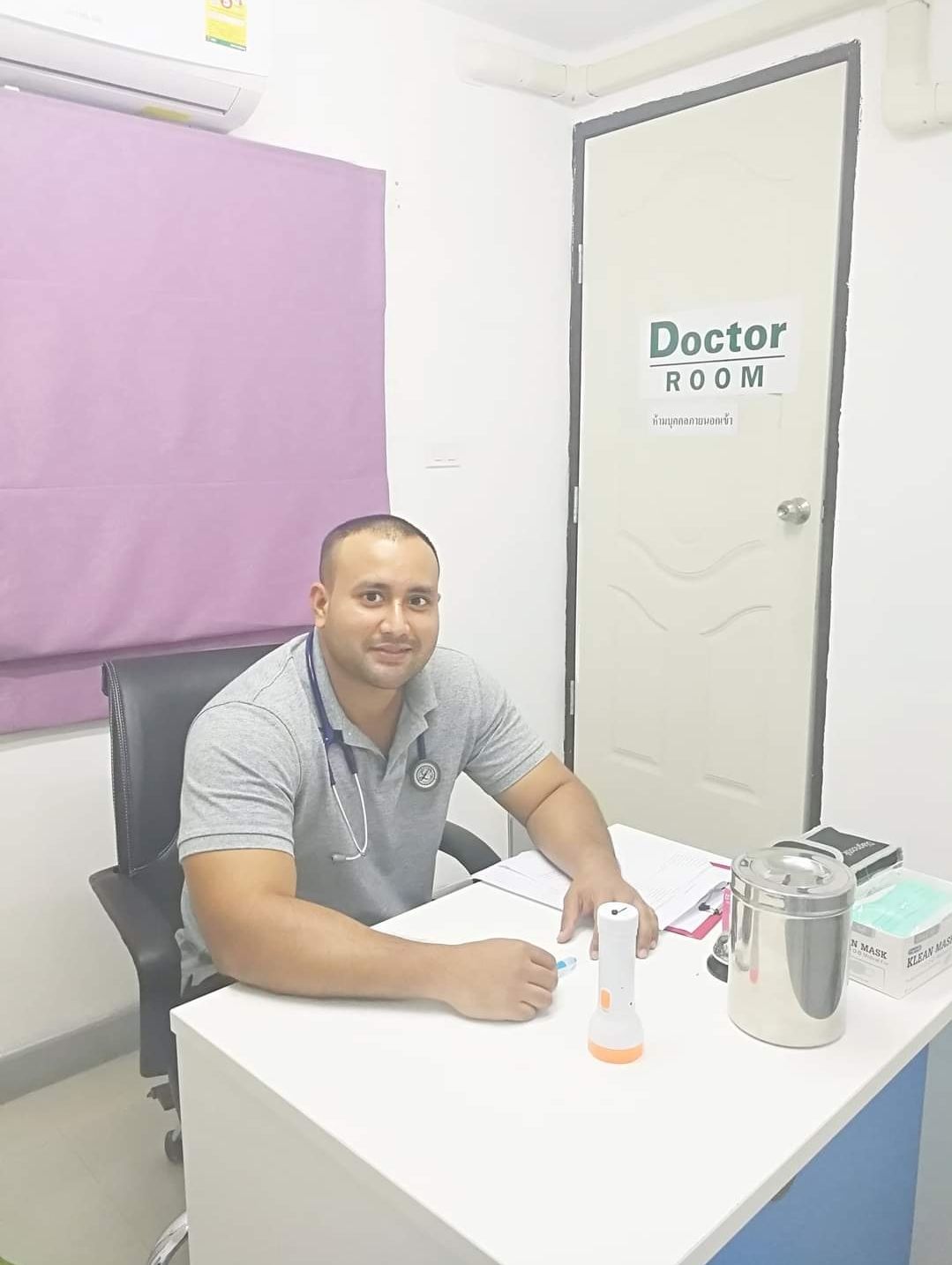
Dr. Ponlawat Pitsuwan is a physician at Doctor Bangkok, a private clinic in central Bangkok. He sees expats, residents, and medical tourists for general medicine, wellness consultations, and IV therapy. His focus is straightforward, evidence-based care delivered in plain language.