

Clinically reviewed by Dr. Ponlawat Pitsuwan, Physician, Doctor Bangkok. Last reviewed: August 2026
Pancreatitis pain sits in the upper abdomen, usually just below the breastbone, and often spreads through to the back. It tends to start suddenly, feels deep and constant, and gets worse after eating or drinking alcohol. Nausea almost always comes with it. These symptoms need a doctor, not a wait-and-see approach.
Upper abdominal pain that hits hard after a meal is one of the most common reasons expats come into my clinic looking worried. They have usually been Googling for an hour and landed somewhere between "probably nothing" and "this sounds serious." When that pain also pushes through to the back, pancreatitis belongs on the list.
The pancreas is an organ most people forget exists until it causes trouble. When it becomes inflamed, it tends to make itself known in a very specific way. This article covers exactly where that pain sits, what it feels like, and what to do about it here in Bangkok.

Exactly Where Is the Pain in Pancreatitis?
The pain is almost always in the upper abdomen. It starts in the area right below where your ribs meet in the middle, the soft triangle just beneath your breastbone. That is ground zero.
From there, the pain often spreads to the upper-left portion of your abdomen. Some people feel it dead centre, across the whole upper belly. A smaller number feel it mainly on the right side, though that pattern overlaps more with gallbladder pain.
The lower abdomen is rarely where pancreatitis hurts. If your pain is below your belly button, something else is more likely going on. Location is one of the first things I ask about when a patient comes in with severe abdominal pain.
What Does Pancreatitis Pain Actually Feel Like?
Patients describe it as deep and boring, not sharp like a cut. It sits inside you rather than on the surface. Some describe a band-like tightening that wraps from the front of the abdomen around to the mid-back, like a belt pulled too tight.
In acute pancreatitis, the pain comes on fast and stays. It does not come in waves the way gallstone or kidney stone pain does. It builds and holds at a high level, often for hours. Eating makes it worse almost immediately. Lying flat does too.
Chronic pancreatitis pain is duller and harder to pin down. Some patients describe a low-grade ache in the upper abdomen or back, with flare-ups triggered by fatty food or alcohol. Between flare-ups, some people feel fine. Others carry a background ache that never quite goes away.

Why Does Pancreatitis Pain Radiate to the Back?
This is the one that catches people off guard. The pain starts in the abdomen but spreads through to the back, often into the mid-back or between the shoulder blades. It can feel like a pulled muscle. It is not.
The pancreas sits tucked up against the back wall of the abdominal cavity, behind the stomach. That position means inflammation there sends pain signals along nerve pathways shared with the mid-back. The back pain can feel just as strong as the abdominal pain, and sometimes stronger.
I see patients regularly who come in convinced they have a back injury, and a blood test tells a different story. If your back pain came on with nausea and started after a heavy meal or a night of drinking, do not assume it is muscular.
What Makes Pancreatitis Pain Worse or Better?
Eating makes it worse, especially fatty food. Alcohol does the same thing, which is why alcohol-related pancreatitis tends to flare after drinking.
Lying flat on your back tends to worsen the pain too. Most people with pancreatitis find some relief by sitting forward or curling into a foetal position. Leaning forward is almost reflexive in patients who are in real pain from this condition.
There is no food or position that reliably stops the pain once it starts. The only way to manage it properly is with medical treatment and, usually, fasting to rest the pancreas.
Acute Versus Chronic Pancreatitis Pain — How They Differ
| Feature | Acute Pancreatitis | Chronic Pancreatitis |
|---|---|---|
| Onset | Sudden, within hours | Gradual or recurring |
| Intensity | Severe | Mild to moderate, with flare-ups |
| Duration | Days | Weeks to months or persistent |
| Character | Deep, constant, gripping | Dull ache or episodic sharp pain |
| Back radiation | Common | Common, especially during flare-ups |
| After eating | Significantly worse | Often worse |
| Other signs | Nausea, vomiting, fever | Fatty stools, weight loss, diabetes risk |
One distinction that matters clinically: chronic pancreatitis can eventually affect digestion. Some patients develop oily, greasy stools, which is a sign the pancreas is no longer producing enough digestive enzymes. If you notice that pattern alongside long-standing upper abdominal discomfort, it needs to be investigated.
Conditions That Mimic Pancreatitis Pain
Upper abdominal pain has a long list of possible causes. Getting the diagnosis right matters because the treatment for each is completely different.
| Condition | Pain Location | Key Differences |
|---|---|---|
| Gallstones | Right upper quadrant | Colicky, comes in waves, often right shoulder tip pain |
| Peptic ulcer | Epigastric, central | Burning quality, may ease with antacids |
| Cardiac pain | Left chest, jaw, left arm | Pressure or tightness, exertion-related |
| Kidney stones | Flank, radiates to groin | Severe waves, blood in urine |
| Gastritis | Upper abdomen, central | Burning, linked to NSAID use or H. pylori |
| Pancreatitis | Epigastric, left upper quadrant | Deep, constant, radiates to back, worse after meals |
The back radiation and the link to eating are the most useful distinguishing features for pancreatitis. But a diagnosis cannot be made on symptoms alone. Blood tests are essential.
How Is Pancreatitis Diagnosed in Bangkok?
Blood tests come first. We measure two pancreatic enzymes, amylase and lipase, which rise when the pancreas is inflamed. Lipase is the more reliable of the two. An elevated result, combined with the right symptoms, strongly points toward pancreatitis.
Imaging confirms it. An abdominal ultrasound is usually the first scan ordered, partly because it also checks for gallstones, which are one of the most common triggers. A CT scan gives more detail about the pancreas itself if needed.
At Doctor Bangkok, I can assess your symptoms, run blood tests, and arrange imaging referrals from a single appointment. For expats who are not sure whether to go to a clinic or go straight to a hospital emergency room, a same-day consultation is usually the right first call for moderate symptoms. Severe or worsening cases need a hospital directly.
Red Flag Symptoms — When to Go to Emergency
Most pancreatitis cases fall somewhere between uncomfortable and very painful. But some become serious fast. Know the warning signs.
Go to a hospital emergency department immediately if your pain is severe and getting worse rapidly, if you have a high fever with chills, if your skin or eyes look yellow, if you are vomiting and cannot keep fluids down, or if you feel faint or confused. These can point to severe acute pancreatitis or infection, and both need hospital-level care urgently.
For pain that is significant but stable, with no fever and no jaundice, Doctor Bangkok is a sensible first step for assessment and blood tests. We will tell you honestly if you need to escalate, and we can help coordinate that if needed.
If you have upper abdominal pain that spreads to your back and you are not sure what is causing it, come in and let us find out properly. Doctor Bangkok offers same-day consultations, blood tests including amylase and lipase, and imaging referrals for abdominal pain assessment. Our English-speaking physicians are in central Bangkok and accessible by BTS. Book online or walk in.
Frequently Asked Questions
Dr. Ponlawat Pitsuwan
Physician, Doctor Bangkok
a private medical clinic in central Bangkok. He sees expats, residents, and medical tourists for abdominal pain assessment, general medical consultations, blood testing, and acute illness. His focus is straightforward, evidence-based care delivered in plain language.
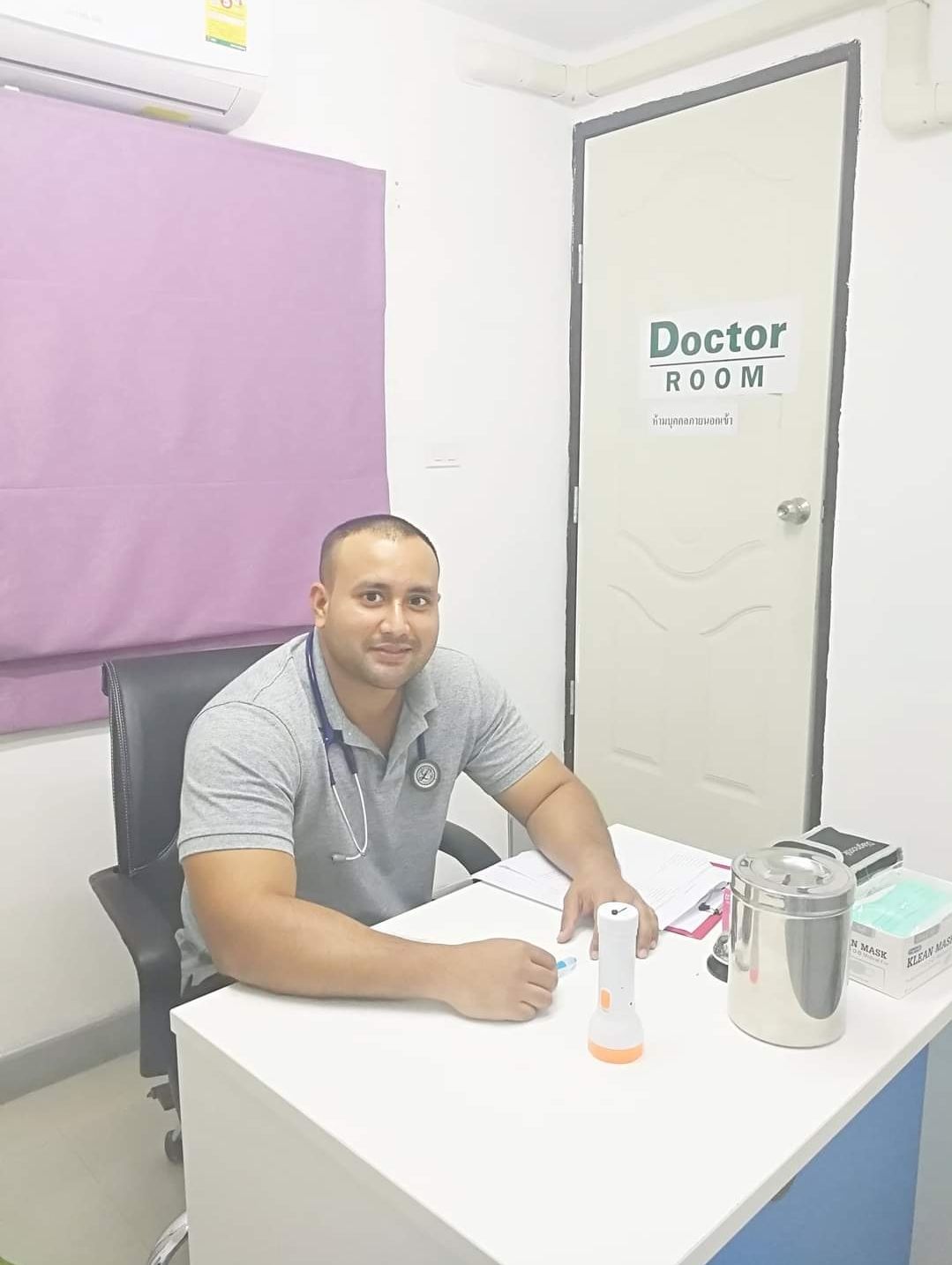
Dr. Ponlawat Pitsuwan is a physician at Doctor Bangkok, a private clinic in central Bangkok. He sees expats, residents, and medical tourists for general medicine, wellness consultations, and IV therapy. His focus is straightforward, evidence-based care delivered in plain language.