
Clinically reviewed by Dr. Ponlawat Pitsuwan, Physician, Doctor Bangkok. Last reviewed: August 2026
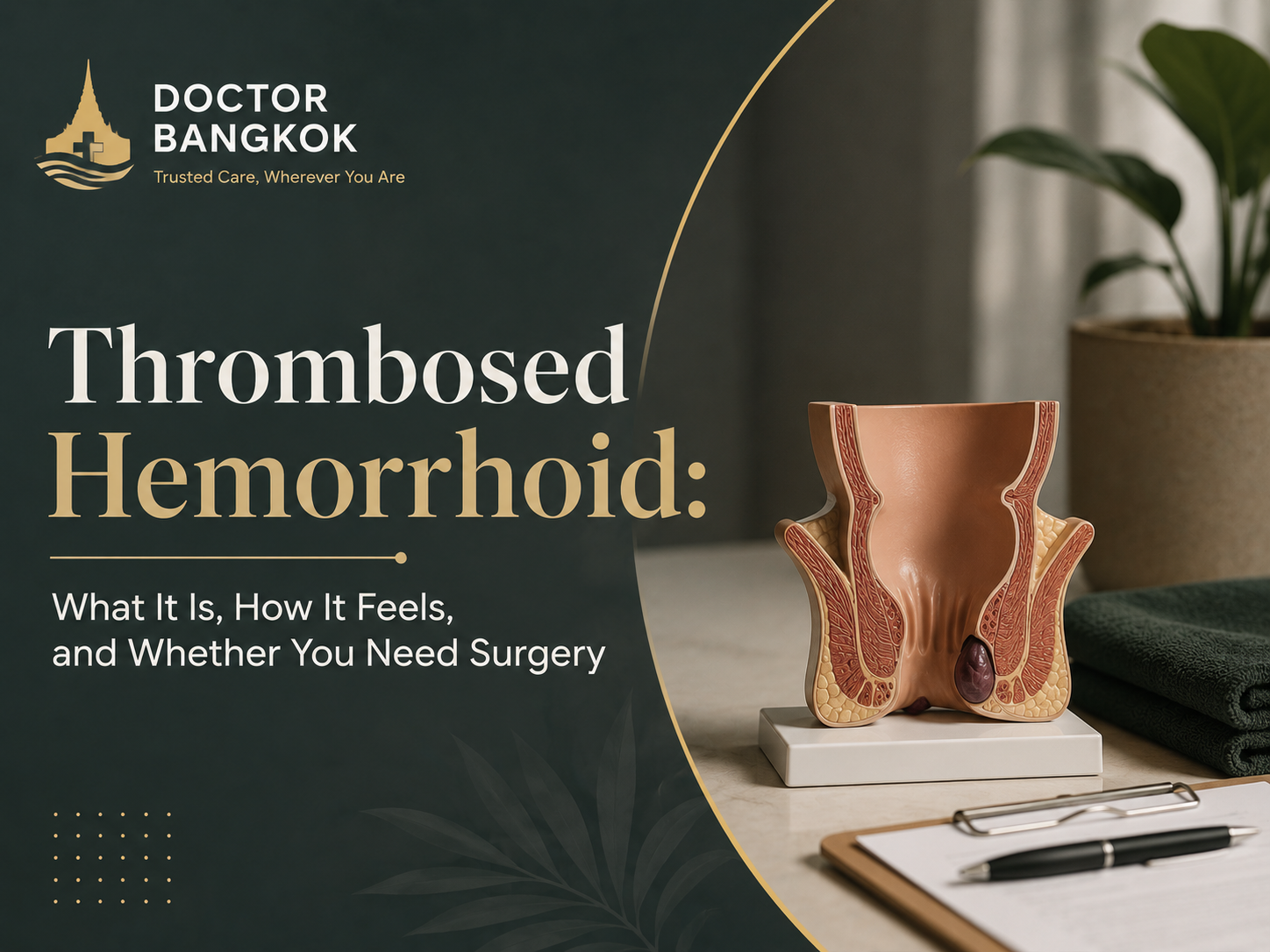
A thrombosed hemorrhoid is a blood clot that forms inside a hemorrhoid vein near the anus, causing a sudden, firm, painful lump. It is not life-threatening, but timing matters. Getting assessed within 72 hours of the lump appearing gives you the best chance of fast relief and a lower chance of it coming back.
You woke up this morning with a painful lump near your anus. Now you are Googling it between meetings. This is one of the most common reasons expats walk into the clinic unannounced, usually a day or two after hoping it would just go away. It did not go away. And now it hurts more than yesterday.
A thrombosed hemorrhoid is genuinely painful, but it is not dangerous. The catch is that timing affects how we treat it. If you are within the first three days of symptoms, there is a fast, simple procedure that can end this today. If you have been waiting longer, conservative treatment is likely the better path. Either way, a doctor needs to look at it first.

What a Thrombosed Hemorrhoid Actually Feels Like
Hemorrhoids are cushions of tissue and blood vessels that sit around the anal canal. Everyone has them. They only become a problem when they swell, prolapse, or clot.
A thrombosed hemorrhoid happens when blood pools inside one of these vessels and forms a solid clot. The tissue swells fast, stretches the sensitive skin around it, and causes intense, constant pain. The lump appears within hours. It is firm to the touch, often bluish or purple under the skin, and the pain does not ease when you sit, stand, or lie down.
This is different from the typical hemorrhoid most people know. That version may bleed a little, itch, or feel uncomfortable for a few days. A thrombosed hemorrhoid feels like a sudden event, not a gradual one.
Thrombosed Hemorrhoid vs. a Regular Hemorrhoid
The distinction matters because treatment is completely different. A regular external hemorrhoid may respond well to sitz baths, cream, and dietary changes over a week or two. A thrombosed one may need a minor procedure, and the window for that procedure is narrow.
Internal hemorrhoids sit higher inside the anal canal, where there are fewer nerve endings. They rarely cause sharp pain. External hemorrhoids sit lower, on skin that is densely packed with nerve endings. When a clot forms there, you feel it immediately and constantly.
If the lump you can feel is hard, rounded, and arrived suddenly with significant pain, that is almost certainly an external thrombosed hemorrhoid. That is something we can assess and treat at Doctor Bangkok on the same day, without a hospital referral.

The 72-Hour Rule — Why Timing Changes Everything
This is the part most patients do not know before they come in, and it changes the conversation completely.
Surgical excision works best within 72 hours of symptoms starting. After that point, the clot begins to soften and reorganise on its own, and the case for intervention weakens. Within this window, excision results in significantly faster pain relief and roughly half the recurrence risk compared to conservative management alone.
If you are on day one or day two, come in today. If you are already on day five or six and the pain is starting to ease, we may still want to examine you, but the treatment conversation will look different.
The biggest mistake I see is patients waiting four or five days out of embarrassment, then arriving at the clinic expecting the same procedure they read about online. By then, the window has passed.
Conservative Treatment Options
If you are past the 72-hour mark, or if your symptoms are mild, conservative management works well for many patients. It does take longer. Natural resolution typically takes several weeks, with pain peaking in the first 48 hours and then gradually easing.
Sitz baths — sitting in warm shallow water for 15 to 20 minutes several times a day — reduce swelling and ease discomfort. Stool softeners reduce the strain of bowel movements, which is often what makes mornings the worst part. Topical lidocaine-based creams provide short-term local relief. Prescription creams such as topical nifedipine or glyceryl trinitrate can help the clot resolve faster, but these need a doctor’s review before you use them.
Over-the-counter hemorrhoid creams from Bangkok pharmacies can reduce surface irritation but will not resolve the clot itself.
Surgery vs. Conservative Treatment — What the Evidence Says
Both approaches work. The question is how quickly you want to get better and how much you want to reduce the chance of it happening again.
Current evidence suggests surgical excision resolves symptoms in around four days on average, compared to several weeks with conservative management. Recurrence rates with surgical treatment are roughly half those seen with conservative care alone. That is a real difference in how quickly you get back to normal life.
Excision removes the entire hemorrhoid rather than just the clot. This matters because a simple incision that releases the clot but leaves the vein intact carries a higher chance of re-thrombosis. For patients past the 72-hour window, those with mild symptoms, or those on blood thinners, conservative management is appropriate and effective. A doctor should make that call after examining you.
What Happens at Your Appointment
The appointment is straightforward. Most patients come in expecting something complicated.
I take a short history: when the lump appeared, how the pain has changed, your bowel habits, any relevant medications. Then I examine the area. In some cases I use a small instrument called an anoscope to check for any internal component. The diagnosis is usually clear within a few minutes.
If excision is the right choice and you are within the treatment window, it can happen the same day. The area is numbed with local anaesthetic. The procedure takes around 15 to 20 minutes. You go home with aftercare instructions, pain relief, and stool softeners. Most patients tell me the relief is noticeable once the anaesthetic wears off.
At Doctor Bangkok, all consultations are in English. There is no language barrier to deal with when you are already in pain.
Could It Be Something Else?
Not every painful lump near the anus is a thrombosed hemorrhoid, and getting this wrong matters.
An anal fissure causes sharp, severe pain during and just after a bowel movement, usually with a small amount of bright red blood. The pain eases between movements. A thrombosed hemorrhoid hurts constantly regardless of bowel activity.
A perianal abscess is more serious. It causes throbbing pain, visible redness spreading around the skin, and often fever. If you have those signs alongside the lump, do not wait. That needs prompt assessment, not a scheduled appointment.
Anal skin tags, anal warts, and prolapsed internal hemorrhoids can all produce a visible lump in this area. None of them present with the same sudden, severe onset that a thrombosis does. If there is any doubt, let a doctor look at it.
Bangkok-Specific Advice for Expats and Travellers
Long-haul flights are a real trigger. Prolonged sitting, dehydration, and pressure on the pelvic veins during a flight create the right conditions for a clot to form. I see this pattern regularly after long trips from Europe, the US, or Australia. If you flew into Bangkok recently and now have this problem, the flight is likely part of the picture.
Bangkok’s food culture is genuinely spicy, and a high-chilli diet can irritate the anal canal and contribute to hemorrhoid flares in people already prone to them. If you have been eating more street food than usual since arriving, that may be a factor worth mentioning at your appointment.
As for flying home after treatment: most patients who have an excision can fly within a few days, once the acute pain is manageable. If you have a flight in the next 48 hours, say so at the start of the appointment. We will plan your care around your travel, including wound management and what to watch for on the plane.
Preventing It From Coming Back
Once a thrombosed hemorrhoid resolves, the goal is making sure it does not happen again. The recurrence rate without lifestyle changes is not trivial.
A high-fibre diet is the single most effective preventive measure, and it is easier in Bangkok than most cities. Papaya, guava, morning glory, and most Thai vegetable dishes are high in fibre. The problem is when expats default to the same processed diet they ate at home. Aim for 25 to 30 grams of fibre a day and drink enough water to match.
Avoid sitting on the toilet longer than necessary. Many patients admit to spending five to ten minutes on their phone during every bathroom visit. That prolonged pressure on the anal veins contributes directly to hemorrhoid development. Keep it brief.
If you travel long-haul regularly, stand and move every one to two hours on the flight. Stay hydrated. These are not complicated changes, but they make a measurable difference.
Sudden painful lump near your anus? The 72-hour window matters. Doctor Bangkok offers same-day consultations with English-speaking doctors in central Bangkok. We can assess, diagnose, and treat a thrombosed hemorrhoid in a single visit, with no referral needed and no language barriers. BTS accessible. Contact us to book your appointment today.
Is a thrombosed hemorrhoid an emergency — do I need to go to the hospital right now?
It is not life-threatening, so a hospital emergency room is not usually necessary. But the 72-hour window is real, and getting assessed quickly matters for your treatment options. The exception is fever, spreading redness around the area, or feeling systemically unwell, which would suggest a possible abscess and would warrant more urgent care.
Can I fly home after having this treated in Bangkok?
Most patients can fly within a few days of an in-clinic excision, once the acute pain is under control. If you have a flight within 48 hours, say so at the start of the appointment so wound management and aftercare can be planned around your travel. Long-haul sitting after a fresh excision is manageable with the right preparation.
Will it go away on its own without treatment?
Yes, the body can reabsorb the clot over time, but this typically takes several weeks, not days. Pain usually peaks in the first 48 hours and then gradually improves. If you are in significant discomfort, waiting is not your only option — excision within 72 hours resolves symptoms in a fraction of that time.
What actually happens during the in-clinic procedure?
The area is numbed with local anaesthetic. The procedure takes around 15 to 20 minutes. You go home the same day with pain relief, stool softeners, and clear wound care instructions. Most patients feel significant relief within hours of the anaesthetic wearing off.
What is the difference between a thrombosed hemorrhoid, an anal fissure, and a perianal abscess?
A thrombosed hemorrhoid is a firm, sudden-onset lump with constant pain that does not ease between bowel movements. An anal fissure causes sharp pain only during and just after defecation, usually with a small amount of bright red blood. A perianal abscess causes throbbing pain with fever and spreading redness, and that combination needs prompt assessment.
Do I need a referral to see a doctor about this at a private clinic in Bangkok?
No referral is needed. You can book a same-day or next-day appointment at Doctor Bangkok directly. The consultation, examination, and procedure if needed can all happen in a single visit, in English, without going through the Thai public hospital system.
Dr. Ponlawat Pitsuwan
Physician, Doctor Bangkok
a private medical clinic in central Bangkok. He sees expats, residents, and medical tourists for general medical consultations, minor procedures, and acute presentations including thrombosed hemorrhoids and perianal conditions. His focus is straightforward, evidence-based care delivered in plain language.
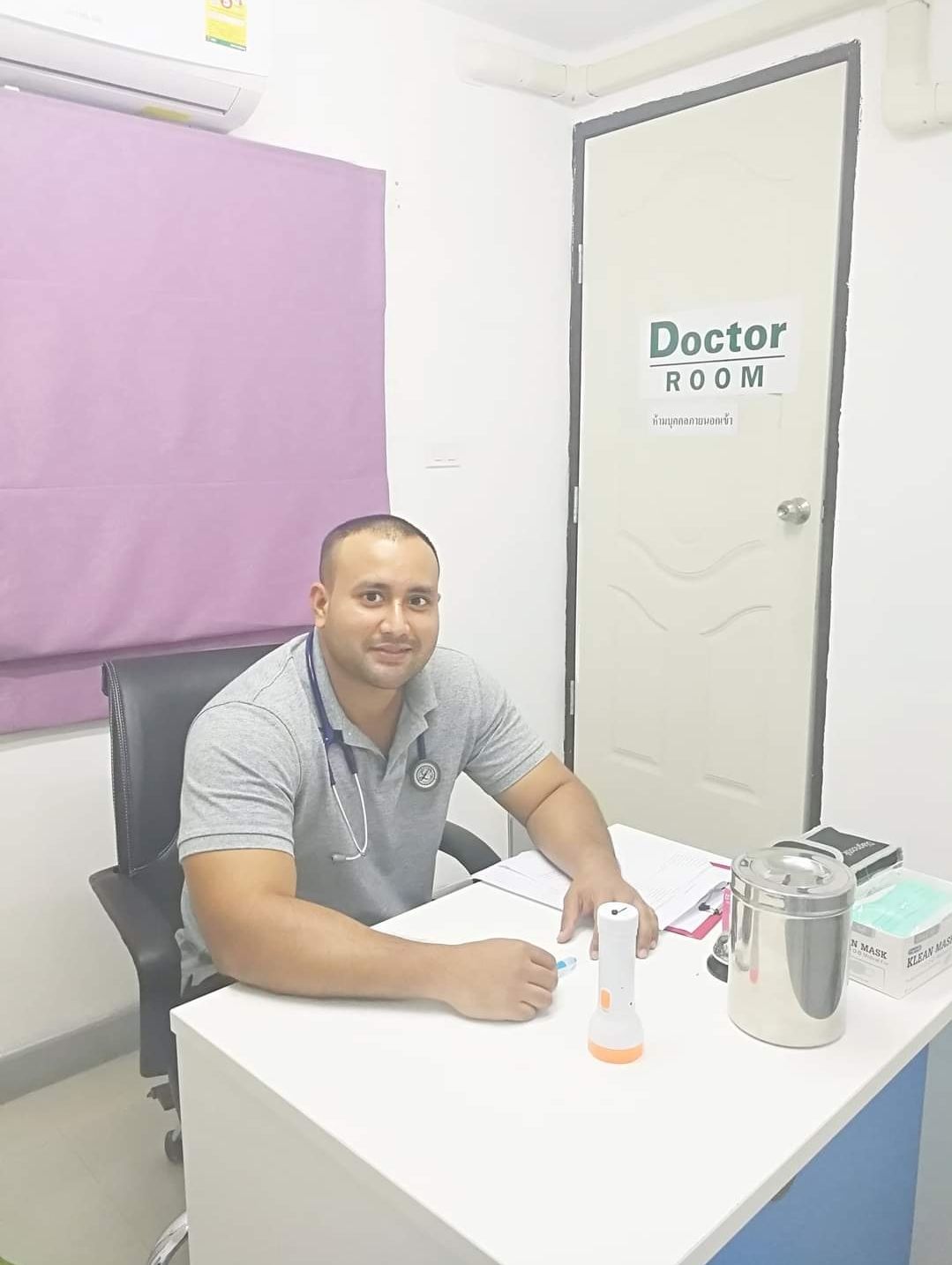
Dr. Ponlawat Pitsuwan is a physician at Doctor Bangkok, a private clinic in central Bangkok. He sees expats, residents, and medical tourists for general medicine, wellness consultations, and IV therapy. His focus is straightforward, evidence-based care delivered in plain language.