
Clinically reviewed by Dr. Ponlawat Pitsuwan, Physician, Doctor Bangkok. Last reviewed: August 2026
Yes, hemorrhoids bleed. Internal hemorrhoids are the most common cause of bright red blood on toilet paper or in the toilet bowl after a bowel movement. Most bleeding is not immediately dangerous, but first-time rectal bleeding always needs a clinical assessment to rule out other causes. If the blood is dark, mixed into the stool, or you also have pain, weight loss, or the bleeding has lasted more than a week, see a doctor today.
Someone notices blood on the toilet paper after a spicy street-food dinner, panics quietly for a few days, then Googles it on the BTS on the way to work. If that is you right now, here is what you need to know. Hemorrhoids are swollen veins around the rectum and anus. They bleed. That is often how people first notice them. The blood is usually bright red, appears on the toilet paper or in the bowl, and stops quickly.
But not all rectal bleeding is the same. The colour, timing, and pattern matter. The biggest mistake I see, especially among expats who have been here a while, is assuming every episode is just hemorrhoids without ever getting checked. Sometimes it is. Sometimes it is not. Here is how to tell the difference.

What Does Hemorrhoid Bleeding Actually Look Like?
The blood from hemorrhoids is almost always bright red. You will see it on the toilet paper, dripping into the bowl, or coating the surface of the stool. It does not mix into the stool. It usually stops within a minute or two.
That colour matters. Bright red blood comes from low in the rectum or the anal area, which is exactly where hemorrhoids sit. Blood that is dark red, maroon, or black and tarry is coming from higher up in the gut. That is a different situation entirely and needs urgent assessment. If you are unsure about the colour, that alone is a reason to get checked.
Internal vs External Hemorrhoids: Which One Bleeds More?
Internal hemorrhoids bleed more easily. They sit inside the rectum where there are no pain nerve endings. That is why many people notice blood but feel nothing at all. Straining during a bowel movement is enough to cause a bleed, especially with hard stools.
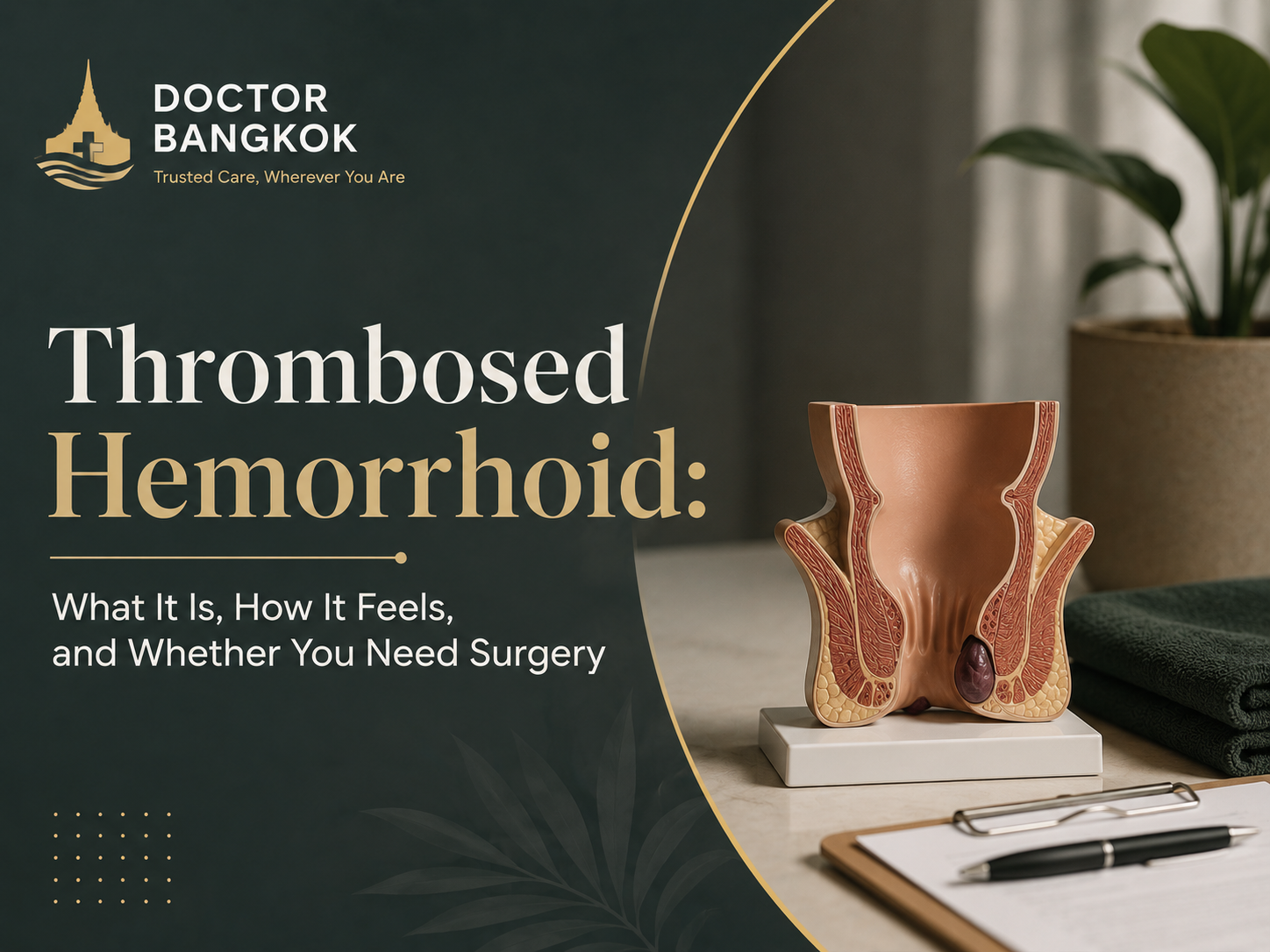
External hemorrhoids sit outside the anal opening. They are more likely to cause pain, itching, and swelling. They can bleed, but usually only if they crack or if a blood clot forms inside. A clot inside an external hemorrhoid is called a thrombosed hemorrhoid. It can be very painful and sometimes bleeds when the clot breaks through the skin.
The Hemorrhoid Grading Scale
Internal hemorrhoids are graded from one to four. Grade one stays inside and bleeds occasionally. Grade two bulges out during a bowel movement but goes back in on its own. Grade three has to be pushed back in manually. Grade four stays prolapsed outside all the time. Bleeding is most common in grades one and two.

Bangkok-Specific Triggers That Make Hemorrhoids Bleed
Bangkok’s heat is the first problem. Dehydration leads to harder stools, harder stools mean more straining, and straining is the single biggest driver of hemorrhoid bleeding. I see a clear uptick in new presentations in March and April when the temperature peaks.
Travel constipation is also real. Newly arrived expats often experience constipation in the first week or two from diet change, jet lag, and dehydration after a long-haul flight. That straining episode on arrival is often what triggers a first bleed. Alcohol makes things worse by dehydrating you and disrupting bowel habits.
I get asked about spicy food every week. There is no strong clinical evidence that capsaicin causes hemorrhoids to bleed. If bleeding reliably worsens after spicy Thai food, the more likely reason is loose stools irritating already-inflamed tissue, or a co-existing anal fissure, which is a small tear in the anal lining. The real risks here are low fibre intake and dehydration, not the chilli.
When Do Hemorrhoids Bleed in a Way That Needs Urgent Attention?
Most hemorrhoid bleeding settles within a few days with simple measures. Some patterns should not be ignored.
Dark blood, blood mixed into the stool, or black tarry stools point to a source higher in the gut and need same-day assessment. Bleeding that continues beyond seven days without improvement needs a clinical review. If you also have unexplained weight loss, a change in bowel habits lasting several weeks, or a strong family history of bowel cancer, do not wait.
Colorectal cancer is one of the most commonly misattributed diagnoses I see, because early symptoms closely resemble hemorrhoids. I am not saying every bleed is serious. It almost certainly is not. But a ten-minute consultation removes the uncertainty entirely.
Chronic low-level bleeding can also lower your red blood cell count over time without you realising it. You may feel tired or short of breath before you connect it to the bleeding. If you have had repeated episodes over several months, a blood count check is worth doing.
Other Symptoms That Go With Hemorrhoid Bleeding
Bleeding is often not the only symptom. Internal hemorrhoids at grade two and above frequently cause a feeling of incomplete emptying after a bowel movement.
Mucus discharge alongside blood is something I always want to assess. On its own, mucus can come from a prolapsing internal hemorrhoid. But mucus mixed with blood, especially if it persists, warrants investigation to rule out inflammatory bowel disease or a rectal polyp.
Pain with bleeding points away from a simple internal hemorrhoid. Internal hemorrhoids are essentially painless unless they prolapse and become trapped. Significant pain with bleeding is more likely to be a thrombosed external hemorrhoid or an anal fissure.
What You Can Do Right Now
For mild bleeding from a known internal hemorrhoid, several things help. Increase fibre through food or a supplement like psyllium husk. Drink more water, especially in Bangkok’s heat. Take warm shallow baths, called sitz baths, for ten to fifteen minutes after a bowel movement. Do not strain. Do not sit on the toilet longer than necessary.
Topical creams containing lidocaine or hydrocortisone are available at most Thai pharmacies without a prescription and can reduce swelling and discomfort. These measures work well for mild grade one and grade two hemorrhoids. They will not fix grade three or four hemorrhoids, and they will not stop bleeding from a source that is not hemorrhoidal.
Getting Assessed for Rectal Bleeding in Bangkok
If you have never had rectal bleeding assessed before, do not self-diagnose. I know it is tempting to assume the obvious when the blood is bright red and painless. But a short consultation removes the guesswork.
At Doctor Bangkok, a first visit for rectal bleeding involves a brief history and a physical examination. If needed, I may perform an anoscopy in the clinic, which is a brief look at the anal canal using a small scope. It takes only a few minutes and is not as uncomfortable as it sounds. In most cases the diagnosis is clear at that visit. If a colonoscopy is needed, I will coordinate a referral directly.
We are centrally located in Bangkok, BTS accessible, and English-speaking. You can book a same-day general medical consultation without waiting weeks for an appointment. Doctor Bangkok also provides itemised medical receipts for travel insurance reimbursement, which most international policies accept for acute new-onset rectal bleeding.
Noticing blood after a bowel movement and not sure what to do? Doctor Bangkok offers same-day general medical consultations for rectal bleeding assessment, including clinical examination and referral coordination if needed. We are English-speaking, centrally located in Bangkok, and BTS accessible. Medical receipts for travel insurance claims are provided on request. Book your consultation at doctorbangkok.co.th.
Frequently Asked Questions
Dr. Ponlawat Pitsuwan
Physician, Doctor Bangkok
a private medical clinic in central Bangkok. He sees expats, residents, and medical tourists for general medical consultations including rectal bleeding assessment, gastrointestinal symptoms, and health checks. His approach is straightforward, evidence-based, and in plain language.
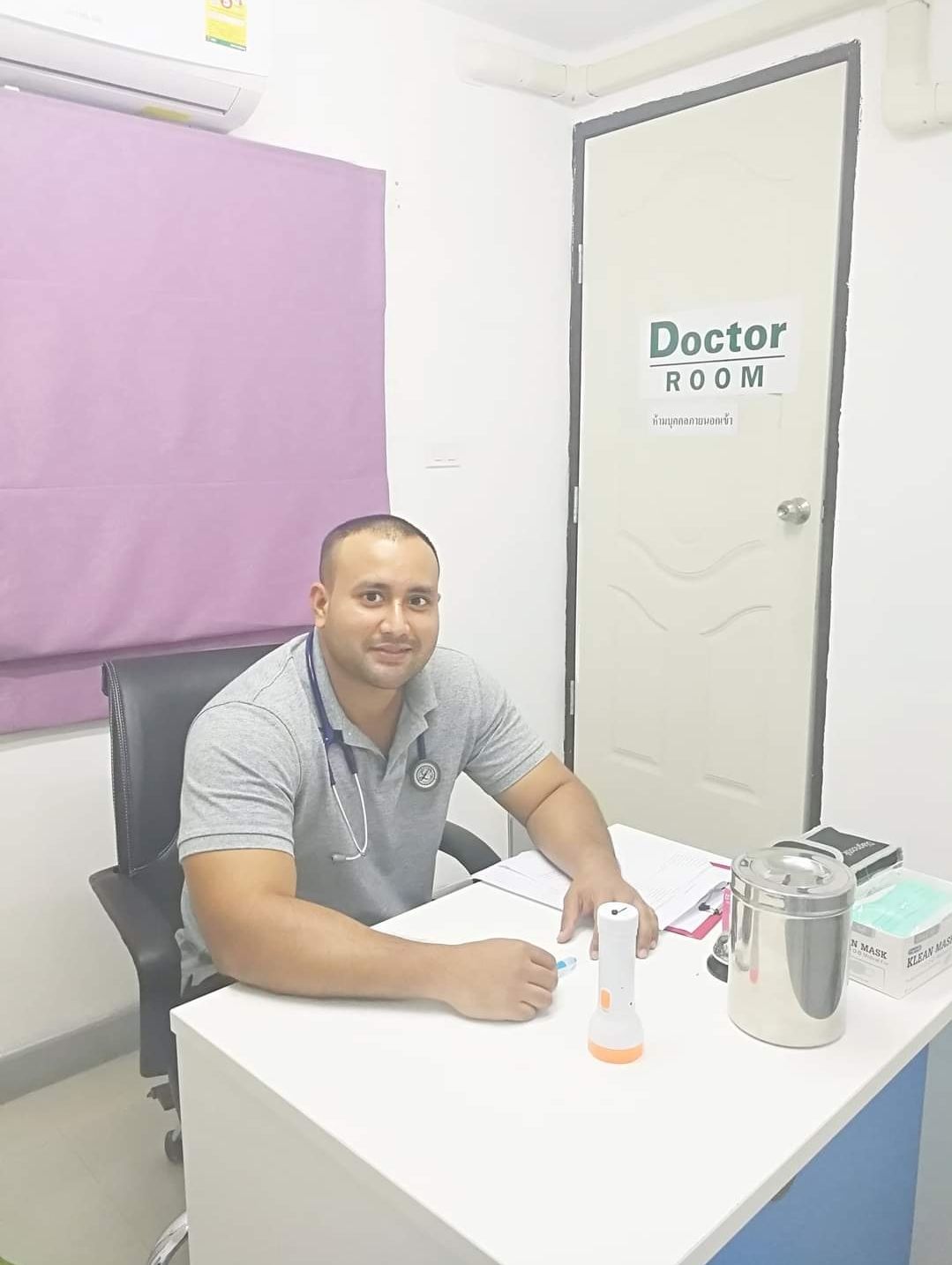
Dr. Ponlawat Pitsuwan is a physician at Doctor Bangkok, a private clinic in central Bangkok. He sees expats, residents, and medical tourists for general medicine, wellness consultations, and IV therapy. His focus is straightforward, evidence-based care delivered in plain language.