
Clinically reviewed by Dr. Ponlawat Pitsuwan, Physician, Doctor Bangkok. Last reviewed: August 2026
Septicemia means bacteria have entered your bloodstream. Sepsis is your body’s dangerous overreaction to any serious infection. Both are medical emergencies. The early signs include high fever or unusually low temperature, rapid heart rate, fast breathing, and confusion. If you have an existing infection and these signs appear together, get assessed the same day — do not wait to see if it passes.
A patient came in last week with a swollen leg wound from a motorbike graze three days earlier. He had a fever of 39.8°C, was shaking, and his wife said he had seemed confused at breakfast. He had put it down to the heat. It was not the heat. That combination — an infection, fever, and confusion — needs clinical assessment the same day, not tomorrow.
If you are reading this because something feels wrong and there is an infection in the picture, that instinct is worth acting on. Here is what you need to know.

Septicemia, Sepsis, and Blood Poisoning — What Is the Actual Difference?
These three terms confuse almost everyone, including people in healthcare.
"Blood poisoning" is a lay term, not a clinical diagnosis. People use it loosely to mean a serious infection that has spread, which is close enough for everyday conversation.
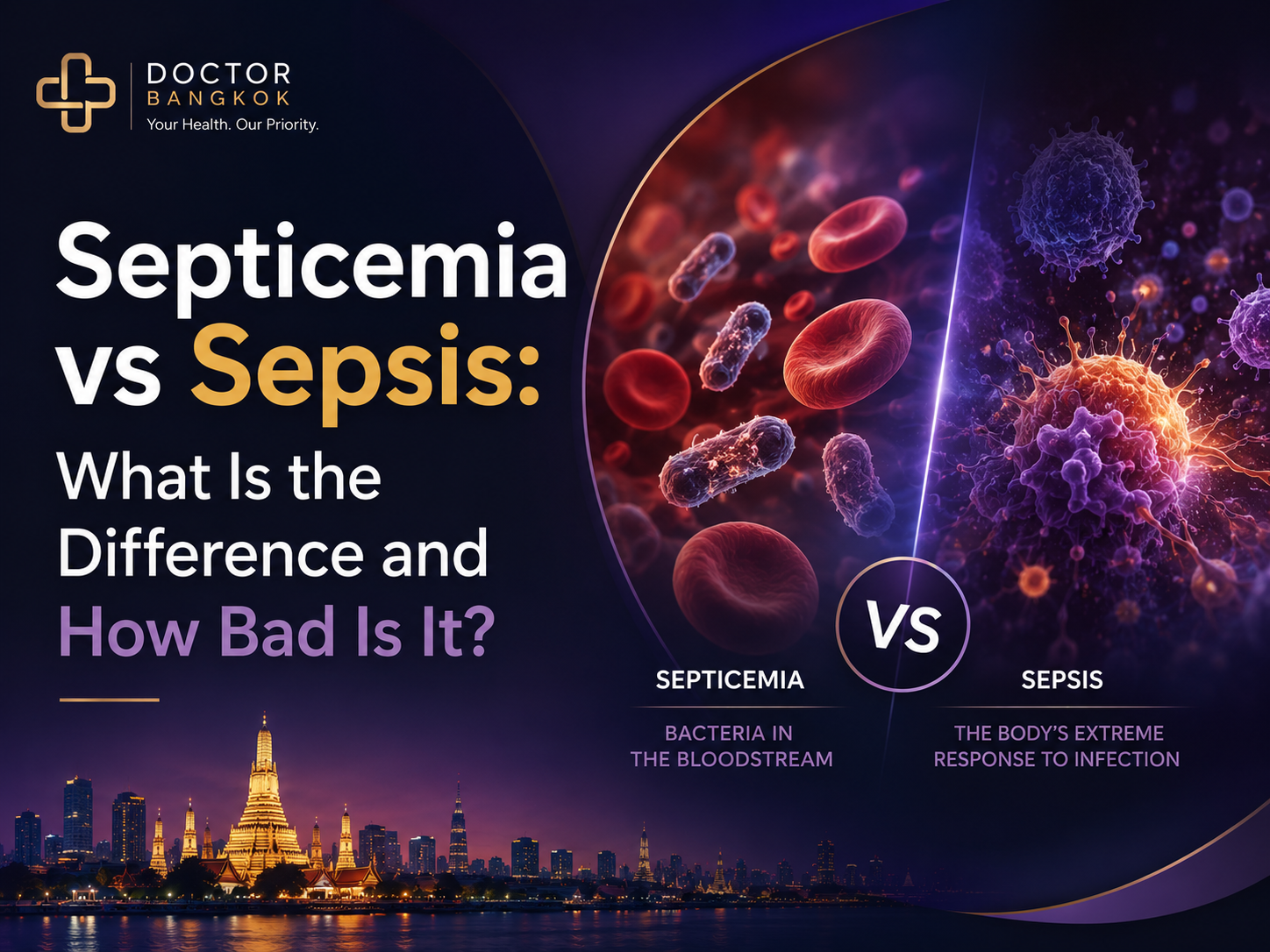
Septicemia specifically means bacteria are circulating in the bloodstream. When bacteria break out of a local infection — a wound, a UTI, a chest infection — and get into the blood, that is septicemia.
Sepsis is broader. It describes your body’s dangerous whole-body response to any serious infection, bacterial, viral, or fungal. You can have sepsis without confirmed bacteria in the blood. In modern clinical practice, sepsis has largely replaced "septicemia" as the preferred term, because the body’s response is what kills people, not the bacteria alone. Septic shock is the next stage: blood pressure drops severely, organs begin to fail, and survival rates fall fast. That is a hospital emergency room, not a clinic visit.
What Are the Signs of Septicemia You Need to Know?
The classic picture is a fever above 38.5°C, heart rate above 90 beats per minute, breathing faster than 20 breaths per minute, and a known or suspected infection somewhere in the body.
Confusion or disorientation is a serious sign. If someone seems unlike themselves, is slurring words, or cannot follow a simple conversation, that matters. In Bangkok’s heat, confusion is often blamed on dehydration or jet lag. Sometimes it is. But combined with a fast pulse and fever, it needs a doctor today.
Watch for skin changes too. Pale, clammy skin is a warning. A red streak running from a wound up toward the body is a clear sign that infection is spreading — go in immediately. Skin that looks blotchy, mottled, or starts turning grey means things have progressed and you need an emergency room, not a clinic.

Signs of Septicemia That Are Easy to Miss
Not everyone presents with a high fever. This is where people get into trouble.
Elderly patients sometimes run a subnormal temperature when severely infected. Below 36°C, with a fast heart rate and confusion, can be just as serious as a high fever. If a parent visiting Bangkok seems vague, cold-skinned, and has a fast pulse, do not wait.
In fit, younger adults, the early phase can feel like a bad flu — muscle aches, chills, a sense of feeling very unwell. In Bangkok, tourists often put this down to heat, bad food, or travel exhaustion. The key question is: is there also an infection somewhere? A skin wound, a UTI that started two days ago, a chest infection you were hoping would clear on its own?
One symptom alone is rarely enough to flag it. The combination is what matters.
What Infections Commonly Lead to Septicemia in Bangkok
Most cases start with a local infection that escapes control.
Urinary tract infections are one of the most common entry points. A UTI that is untreated, or treated with the wrong antibiotic, can travel to the kidneys and then into the bloodstream faster than people expect. Skin infections are the second big one in Bangkok. Motorbike scrapes, street food burns, insect bites that get scratched open — tropical humidity accelerates bacterial growth in open wounds in a way that patients from cooler climates are not used to. A wound that looks a bit red on Monday can be spreading visibly by Wednesday.
Bangkok-specific infections add another layer of risk. Leptospirosis, spread through floodwater contact, can escalate to systemic illness and multi-organ involvement. Dengue, while viral, can suppress your immune system and leave you vulnerable to secondary bacterial infections. In patients who are immunocompromised or leave gastroenteritis untreated long enough, food-borne illness can also be a route in.
Medical tourists here for elective procedures carry their own risk. Post-surgical wounds, urinary catheters, and IV lines are all potential entry points for bacteria.
Who Is Most at Risk of Septicemia in Bangkok?
Anyone can develop septicemia from a serious enough infection, but some patients are more vulnerable.
People whose immune systems are weakened by diabetes, HIV, cancer treatment, or long-term steroid use are at higher risk of a local infection escalating fast. I tell these patients to come in earlier than they think they need to. The elderly and very young children are also higher risk, as are patients who have had recent surgery or have been in hospital recently, where drug-resistant bacteria are more common.
Expats who delay care because they are unfamiliar with Bangkok’s medical system are a pattern I see regularly. The Bangkok heat accelerates infection in ways that are genuinely different from a temperate climate. What took a week to escalate at home can move faster here.
When to Go to Hospital vs When to See a Private Clinic First
This is the practical question most articles do not answer.
Go directly to a hospital emergency room, or call 1669, if someone has lost consciousness, has skin turning grey, blue, or heavily mottled, has not passed urine in many hours, or cannot be communicated with. These are signs of septic shock. A private clinic cannot manage this — you need an emergency team.
For everything else that worries you — high fever with an existing infection, shaking chills, confusion that is new but not severe, a wound that looks like it is spreading — come to a private clinic first. At Doctor Bangkok, we can run a full blood panel, check your white cell count and inflammatory markers, and assess you clinically within the hour. If results suggest you need hospital admission, we will tell you directly and help coordinate that.
The biggest mistake I see is people going home to monitor when they should have come in. Septicemia can move fast. An extra 12 hours of waiting is not low stakes.
How Septicemia Is Diagnosed and What Treatment Involves
Diagnosis starts with blood tests. A full blood count shows your white cell count, which tells us whether your immune system is fighting something serious. We also check inflammatory markers, kidney and liver panels, and serum lactate — a marker that tells us how well your body’s tissues are getting oxygen.
A blood culture is the definitive test to identify which bacteria are present and which antibiotics will work. This takes 24 to 72 hours. In hospital, treatment usually starts before cultures return, using broad-spectrum antibiotics, then adjusted once results come in.
At a clinic level, Doctor Bangkok can run the initial screening bloods and assess whether your picture is early septicemia or something less urgent. If you need IV antibiotics, fluid resuscitation, or hospital-level monitoring, we will tell you clearly and refer you to the right facility. Early, appropriate antibiotics make a direct difference to outcomes — this is not a condition where waiting to see how things go is a reasonable plan.
If you have a fever, a known infection, and something just feels wrong, do not wait. Doctor Bangkok is a private medical clinic in central Bangkok, BTS accessible, with English-speaking doctors. We see patients for fever assessment, blood tests, wound infection review, and general medical consultations — same day. If your results suggest you need hospital care, we will tell you directly and help you get there. Contact Doctor Bangkok to book or walk in.
What is the difference between septicemia, sepsis, and blood poisoning?
Blood poisoning is a lay term with no clinical definition. Septicemia specifically means bacteria are in the bloodstream. Sepsis is the body’s wider inflammatory response to serious infection and is the term modern medicine now uses most. They overlap significantly, and all three are serious.
Can a UTI or food poisoning turn into septicemia?
Yes, both can escalate if left untreated or treated incorrectly. In Bangkok, untreated UTIs, infected skin wounds, and food-borne illness are documented entry points. Tropical heat and humidity can accelerate how quickly a local infection spreads beyond what patients from cooler climates expect.
What are the first signs of septicemia I should not ignore?
Fever above 38.5°C or an unusually low temperature in an elderly person, heart rate over 90, fast breathing, and confusion or disorientation. A red streak tracking from a wound toward the body is a specific sign that infection is spreading and needs immediate attention.
Should I go to a private clinic or straight to hospital?
If someone has lost consciousness, has mottled or blue skin, or has not urinated in hours, go straight to a hospital emergency room or call 1669. For early signs like fever, chills, and an existing infection, come to Doctor Bangkok first — we can assess you, run blood tests, and refer to hospital if needed.
How is septicemia diagnosed and what blood tests are involved?
We start with a full blood count to check white blood cell count, inflammatory markers, kidney and liver function panels, and serum lactate. A blood culture identifies the specific bacteria and guides antibiotic choice, though this takes up to 72 hours. Clinical assessment and initial bloods guide treatment decisions before culture results return.
How quickly can septicemia develop from a minor infection?
Serious escalation can happen within 24 to 48 hours in some cases, and faster in immunocompromised patients. In Bangkok’s tropical climate, infected wounds and untreated UTIs can progress more quickly than patients expect. Early assessment is always safer than waiting.
Can dengue lead to septicemia?
Dengue is viral and does not directly cause bacterial septicemia, but severe dengue suppresses the immune system and can leave patients vulnerable to secondary bacterial infections. If you have had dengue and develop a new fever with signs of infection after the viral phase, come in for assessment rather than assuming it is still the dengue.
Dr. Ponlawat Pitsuwan
Physician, Doctor Bangkok
a private medical clinic in central Bangkok. He sees expats, residents, and medical tourists for fever assessment, serious infection evaluation, blood testing, and general medical consultations. His focus is straightforward, evidence-based care delivered in plain language.
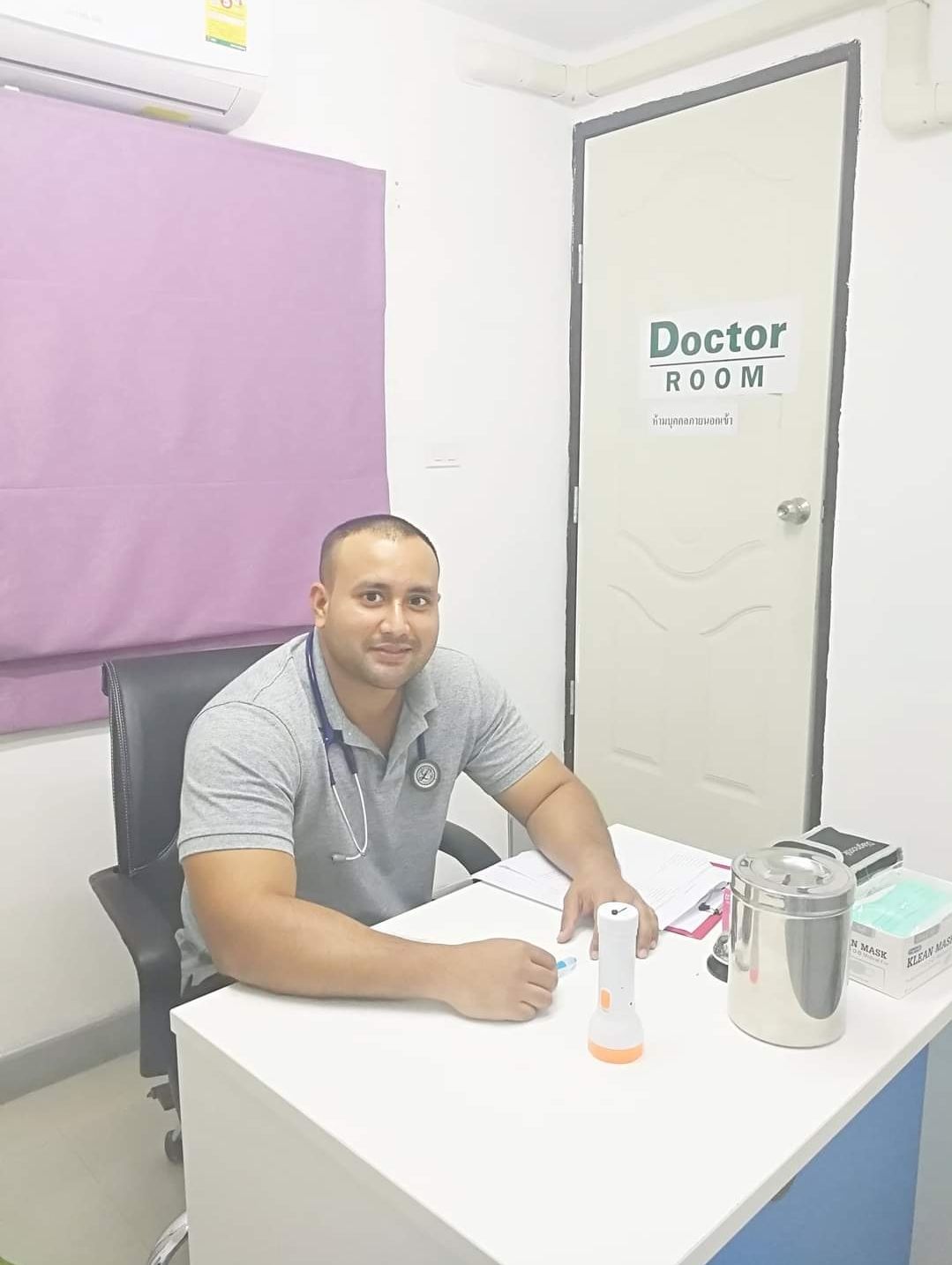
Dr. Ponlawat Pitsuwan is a physician at Doctor Bangkok, a private clinic in central Bangkok. He sees expats, residents, and medical tourists for general medicine, wellness consultations, and IV therapy. His focus is straightforward, evidence-based care delivered in plain language.