

Clinically reviewed by Dr. Ponlawat Pitsuwan, Physician, Doctor Bangkok.
Last reviewed: August 2026
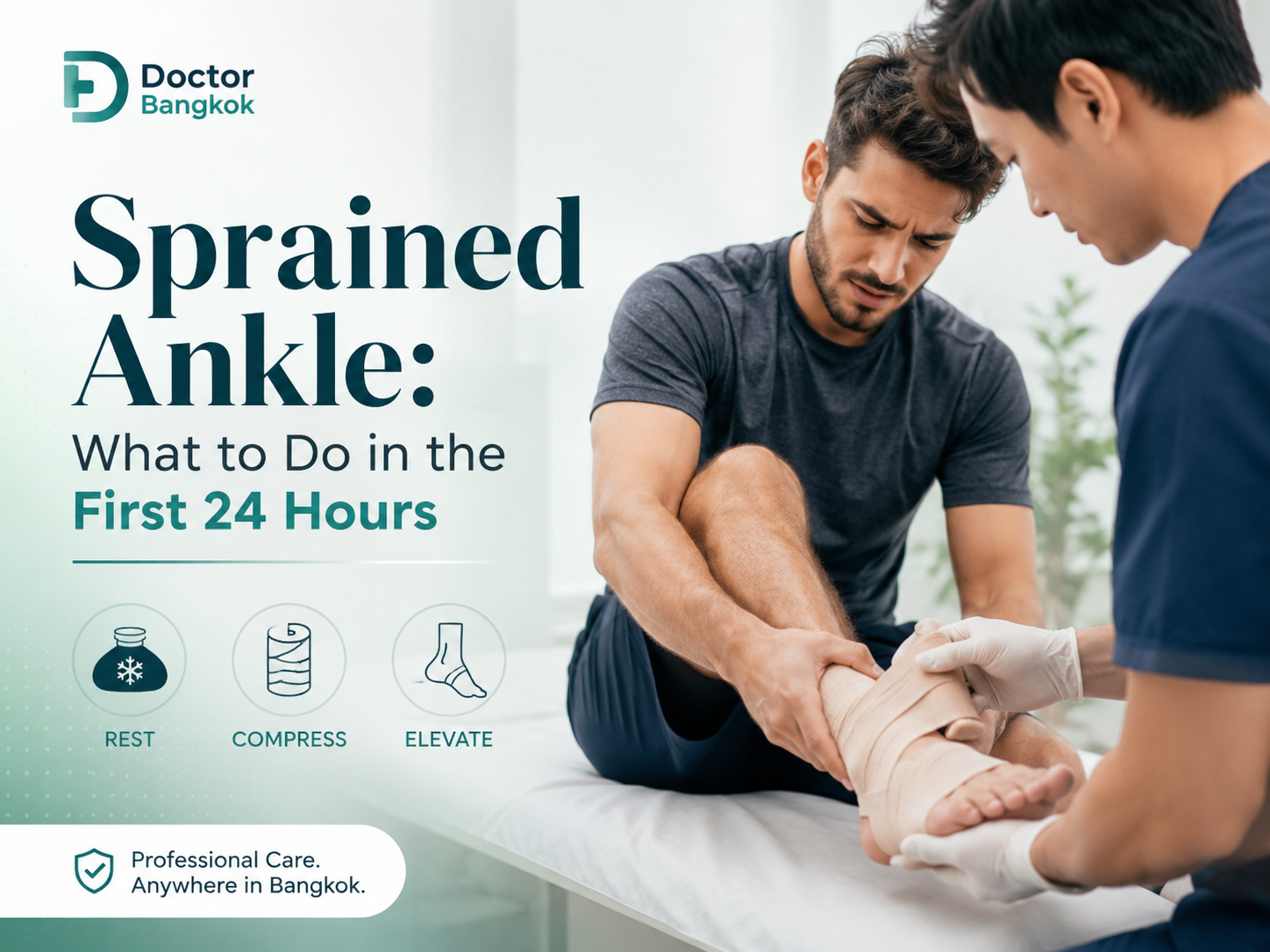
Most sprained ankles respond well to the PRICE method started within the first hour: protection, rest, ice, compression, and elevation. If you cannot take four steps without severe pain, or you feel tenderness directly on the bone, you need an X-ray to rule out a fracture. Doctor Bangkok can assess your ankle and arrange imaging the same day, with results in plain English.
Bangkok’s pavements will catch you out. A raised kerb at Asok, a wet tile outside a Sukhumvit convenience store, a pothole near Silom you did not see coming. I see sprained ankles every week, and most patients have already spent a day hoping it would sort itself out. Sometimes it does. Sometimes it does not, and by then the swelling is worse and they are limping through a trip or a commute wondering if something is actually broken.
Most ankle sprains heal well if you handle the first 24 hours correctly. What you do in that window, and whether you know when to get it checked, makes a bigger difference to your recovery than almost anything else. This guide covers first aid, how to read your symptoms, pain relief options available in Bangkok, and when to stop waiting and come in.

The PRICE Method: First Aid for a Sprained Ankle in the First 48 Hours
PRICE stands for protection, rest, ice, compression, and elevation. It replaces the older RICE method, with one practical addition: protecting the ankle from further movement in those first hours.
Protection means limiting weight on the ankle straight away. You do not need a cast. A firm ankle brace or strapping from a pharmacy provides enough support for most mild to moderate sprains.
Rest means stopping whatever caused the injury and avoiding anything that brings the pain back. A short, careful walk to get home or to a clinic is fine.
Ice the area for 15 to 20 minutes every two hours for the first 48 hours. Wrap the ice pack in a cloth. Never put ice directly on skin, especially in Bangkok’s humidity where skin reactions happen faster. Apply a crepe or elastic bandage firmly for compression, but not so tight that your toes go numb. Elevate the ankle above the level of your heart whenever you are sitting or lying down. This is the step most people skip, and it matters.
Is It a Sprain or a Fracture? The Ottawa Ankle Rules
This is the question I get asked most often, and there is a reliable clinical tool for it.
The Ottawa Ankle Rules help decide when an X-ray is needed. You need one if you cannot bear weight well enough to take four steps, even if it hurts. You also need one if pressing directly on the bony tip of either side of the ankle causes sharp bone pain, or if you have pain at the bony bump on the outer edge of your foot.
Bruising and swelling alone do not indicate a fracture. Ligament injuries bleed into the tissue and swell fast. The colour and size of swelling tells you nothing reliable about whether bone is involved. Bone tenderness and weight-bearing ability do.
If you are unsure, come in. Doctor Bangkok applies the Ottawa Rules as part of every standard ankle assessment, and imaging is arranged the same day if needed.

Sprained Ankle Grades: What Yours Probably Is
| Grade | What Happened | What It Feels Like | How Long to Heal |
|---|---|---|---|
| Grade 1 | Ligament stretched, fibres intact | Mild pain, minimal swelling, can walk | 1 to 2 weeks |
| Grade 2 | Partial ligament tear | Moderate pain, swelling, bruising, walking is difficult | 3 to 6 weeks |
| Grade 3 | Complete ligament rupture | Severe swelling, bruising, very unstable, may feel less pain initially | 3 to 6 months |
Most ankle sprains I see are grade one or two. Grade three injuries are less common but often mistaken for grade two, because the pain can briefly seem less severe once the ligament is fully torn.
If you twisted your ankle badly, heard a pop, and the ankle feels loose or unstable, do not assume it is minor. That pattern needs proper assessment.
Pain Relief in Bangkok: What You Can Get and What to Know
Thai pharmacies stock paracetamol and ibuprofen over the counter. Both are reasonable for ankle sprain pain. Paracetamol is the safer first choice if you have a sensitive stomach or are unsure about your medical history.
Oral anti-inflammatories like ibuprofen reduce pain and swelling. Short courses of three to five days are reasonable for most people. Daily use beyond that without medical advice is not.
Diclofenac gel is widely available in Bangkok pharmacies and a good option for localised pain. It works directly on the tissue with fewer effects on the stomach than tablets. For mild to moderate sprains, it is often enough.
If the pain is severe, or pharmacy options are not managing it, that is a signal the injury may be more significant. Come in for an assessment rather than taking more medication.
When to See a Doctor: Do Not Just Walk It Off
Walking off a sprained ankle works for mild grade one injuries where the ligament stretched but did not tear. It does not work for grade two or three.
See a doctor the same day if you cannot bear weight, if you feel tenderness directly on the bone, or if the ankle looks visibly deformed. See a doctor within 24 hours if swelling is severe and worsening, if bruising is spreading up the leg, or if the ankle feels unstable when you try to stand.
See a doctor within a few days if swelling has not reduced after 72 hours, if you are still limping after a week, or if this is a repeat injury on the same ankle. Repeated sprains suggest the ligament may not have healed properly before, and the joint may be developing chronic instability.
Doctor Bangkok offers walk-in ankle assessments in central Bangkok, with BTS access from Asok and Nana. We assess the injury, apply the Ottawa Rules, and arrange same-day imaging if the examination indicates it.
What Happens at a Sprained Ankle Consultation
Most patients are assessed within the first 20 minutes. I take a brief history: how it happened, where the pain is, whether you heard anything, whether you can bear weight.
Then a hands-on examination. I press along specific bony landmarks to apply the Ottawa Rules and check the surrounding tendons, including the peroneal tendons on the outer ankle and the Achilles at the back, because these are often involved in ankle injuries and easy to miss in self-assessment. I also check ankle stability manually to grade the severity.
If imaging is indicated, I refer for X-ray and results come back the same day. You leave with a clear diagnosis, a written management plan in English, and specific guidance on returning to activity.
Recovery and Getting Back on Your Feet
Resting completely and waiting for the pain to go is not the right approach for most sprains. Early movement within pain limits returns patients to normal faster than prolonged immobilisation.
For grade one sprains, gentle ankle circles and careful weight-bearing can start within the first two days. For grade two, a brace helps while you begin controlled range-of-motion work. For grade three, follow a physiotherapist’s programme.
Balance and coordination work is important for any sprain above grade one. Standing on one leg, progressing to less stable surfaces, retrains the ankle’s nerve-muscle feedback. Without it, the ankle stays vulnerable to reinjury even after the pain is gone. This is where most people cut corners, and where chronic instability begins.
If you run, play sport, or spend long hours on your feet, do not rush the return to full activity. Come back only when you can hop on the injured ankle without pain.
Twisted your ankle and not sure how bad it is? Doctor Bangkok offers same-day walk-in consultations for ankle injuries in central Bangkok, with BTS access from Asok and Nana. We assess your injury, apply the Ottawa Ankle Rules, and arrange X-ray referral if needed, all in plain English. No long waits, no language barrier. Walk in or book ahead at doctorbangkok.co.th.
FAQ
Dr. Ponlawat Pitsuwan
Physician, Doctor Bangkok
a private medical clinic in central Bangkok. He sees expats, residents, and medical tourists for acute injuries, wound care, musculoskeletal assessment, and general medical consultations. His focus is straightforward, evidence-based care delivered in plain language.
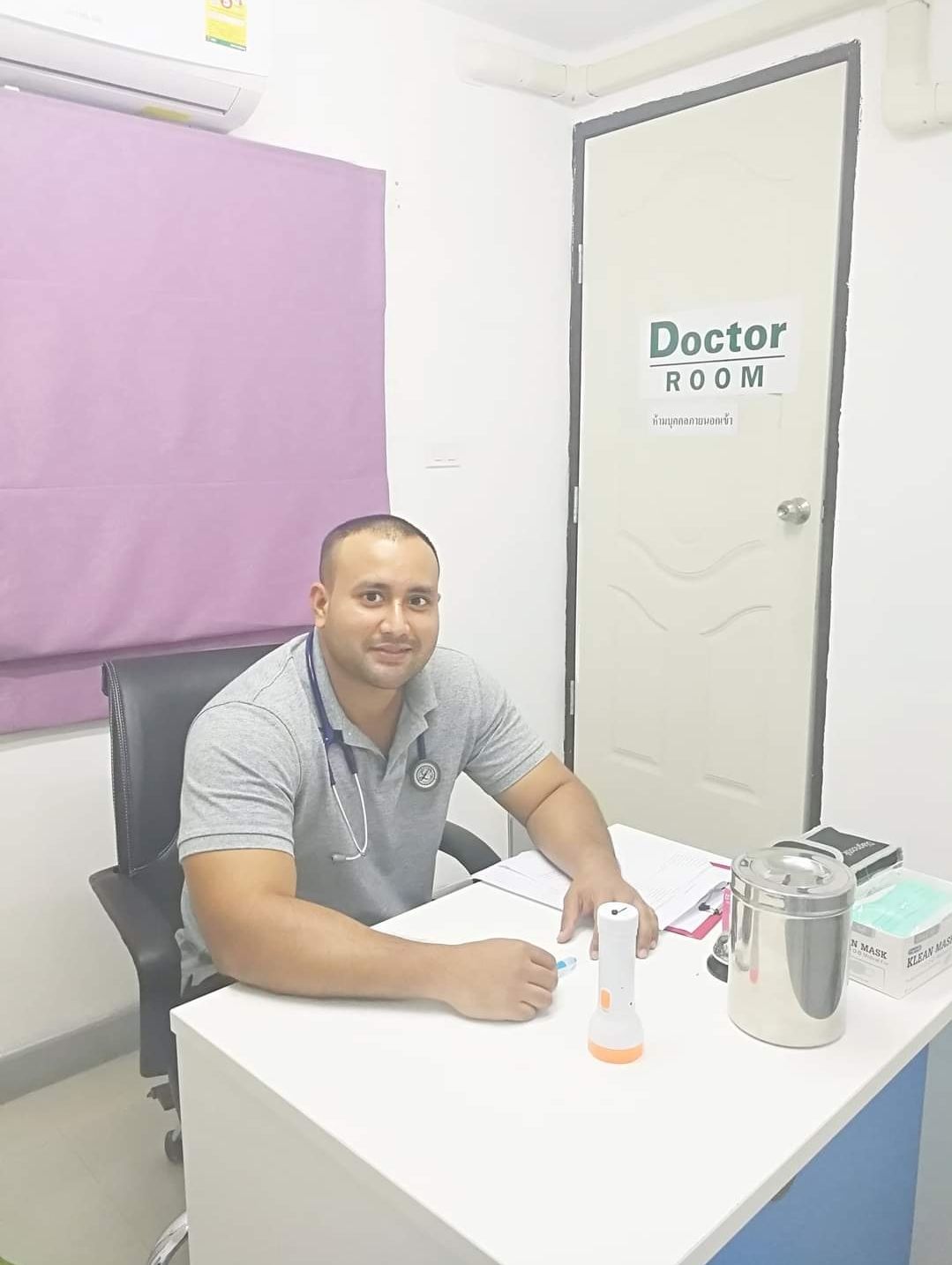
Dr. Ponlawat Pitsuwan is a physician at Doctor Bangkok, a private clinic in central Bangkok. He sees expats, residents, and medical tourists for general medicine, wellness consultations, and IV therapy. His focus is straightforward, evidence-based care delivered in plain language.