


Clinically reviewed by Dr. Ponlawat Pitsuwan, Physician, Doctor Bangkok.
Last reviewed: August 2026
Most sprained ankles take one to six weeks to heal, depending on how badly the ligaments are damaged. A mild sprain can feel fine in a week. A severe one can keep you off your feet for two to three months. The grade of your sprain, and whether you rehab it properly, determines almost everything about your recovery time.
Ankle sprains are one of the most common things I see at Doctor Bangkok, and most patients come in two or three weeks after the injury, still limping, wondering why it has not settled. They rested it, iced it, stayed off it. But nobody told them what to actually expect, or when slow healing stops being normal.
Bangkok does not make this easy. The pavements are uneven, kerbs appear out of nowhere, and if you are running near Lumpini Park or training Muay Thai, one bad step is all it takes. If you have rolled your ankle and you are trying to figure out whether to see someone or just wait it out, here is a real answer.

What Happens When You Sprain Your Ankle
The ankle is held together by several ligaments. The ones most commonly injured sit on the outside of the joint. When you roll your ankle inward, these ligaments get stretched or torn.
Not all sprains are the same. A stretch without a tear is very different from a full ligament rupture. The grade tells you how much damage there is, and that grade drives your recovery timeline more than anything else.
Sprained Ankle Recovery Time by Grade
Here is what I tell patients when they ask how long this is going to take.
| Grade | What It Means | Typical Recovery Time | Weight-Bearing | May Need |
|---|---|---|---|---|
| Grade 1 | Ligament stretched, not torn | 1 to 2 weeks | Almost immediately | Rest, compression, early exercises |
| Grade 2 | Partial ligament tear | 3 to 6 weeks | Limited at first, boot or crutches for 1 week | Ankle brace, physiotherapy |
| Grade 3 | Complete ligament rupture | 8 to 12 weeks | Non-weight-bearing initially | Walking boot, MRI, possible specialist referral |
| High Ankle Sprain (Syndesmosis) | Ligaments above the joint, between the two lower leg bones | 8 to 12 weeks or longer | Very limited | Often misdiagnosed, imaging usually needed |
High ankle sprains are less common but frequently missed, because they look like a regular sprain on the outside. The pain sits higher up the leg, above the ankle joint itself. Recovery takes significantly longer, and they do not respond well to standard sprain management. If your pain is above the ankle rather than around it, get a proper assessment.

Sprained Your Ankle in Bangkok? What to Do in the First 48 Hours
The first two days set the tone for your recovery. Rest, ice, compression, and elevation is still the right starting point for most sprains. Keep your foot above the level of your heart when you sit or lie down. Use an ice pack for fifteen to twenty minutes at a time, not directly on skin.
Bangkok-specific warning: do not try to walk it off by exploring the city, crossing wet market floors, or catching a connecting BTS at rush hour. I have seen Grade 1 sprains turn into Grade 2 injuries because someone pushed through it on day two. If you cannot put weight on it at all, stop and get it assessed.
A simple tubular bandage from a pharmacy works for compression. Elevation matters more than most people realise.
When Should You See a Doctor for a Sprained Ankle in Bangkok?
Most mild sprains do not need emergency care. But some signs mean you should come in rather than manage at home.
If you cannot take four steps without severe pain, if pressing directly on the bony point of either ankle causes sharp pain, or if the joint looks visibly deformed, you need an X-ray. Swelling alone does not tell us whether something is broken. You should also come in if the ankle feels unstable, like it might give way, or if it is still significantly swollen after two weeks of home care.
At Doctor Bangkok, we can assess your ankle the same day, advise on imaging, and put a management plan in place without the wait of a large Thai hospital.
Why Your Ankle Might Take Longer Than Expected to Heal
This is the part most guides skip. If your ankle still hurts at the three or four week mark and you were told it was a mild sprain, the injury may have been more than it appeared.
Two things commonly get missed: peroneal tendon injuries and osteochondral lesions. Peroneal tendons run along the outside of the ankle and can be damaged in the same fall that sprains the ligament. An osteochondral lesion means a small piece of cartilage on the ankle joint surface has been damaged. Both look like a sprain, feel like a sprain, and do not show up on a standard X-ray. Both explain why some ankles do not settle with rest and time.
If that sounds familiar, you need a proper reassessment, not more ice and patience.
How to Speed Up Recovery: Rehab Phases That Actually Matter
Rest gets the swelling down. Rehab gets you back to normal. Most patients skip the second part, and that is why they re-injure themselves.
In the first few days, protect the ankle and reduce swelling. Once you can bear weight without sharp pain, start gentle range-of-motion exercises: slow circles, alphabet tracing with your foot. After that, add strengthening: resistance band work, single-leg calf raises, gradual weight-bearing on slightly uneven surfaces.
The phase most people skip is balance and stability training. Standing on one leg, balance board work, and sport-specific movements belong here. Skipping this phase raises the risk of chronic ankle instability, where the ankle keeps giving way months or years later. If you do Muay Thai, run, or train at a gym, this phase is not optional.
How to Prevent Rolling Your Ankle Again
Once you have sprained your ankle, the re-injury risk is real. The ligament heals, but your ankle’s ability to sense position and react quickly takes longer to recover. That gap is when most re-injuries happen.
Bangkok has specific hazards worth naming. Uneven paving near BTS exits, wet floors around fresh markets, and motorbike drop-kerbs across Sukhumvit sois catch people out every day. Flip-flops offer almost no ankle support, and there is a genuine spike in ankle injuries after Songkran each year.
Wear supportive shoes on uneven ground. Use an ankle brace when you return to sport. Do not rush back to training until a clinician clears you. If your ankle keeps giving way weeks after it should have healed, come in. Chronic ankle instability is manageable, but it gets harder to treat the longer it is left.
Ready to get your ankle assessed? Doctor Bangkok offers same-day ankle assessments at our clinic in central Bangkok, a short walk from the BTS. Our English-speaking physicians can examine your ankle, advise whether imaging is needed, and give you a clear recovery plan the same day. Walk-ins are welcome. Contact us or book through doctorbangkok.co.th.
Is it okay to walk on a sprained ankle, or should I stay off it completely?
Complete rest is rarely the right answer. Early weight-bearing, as much as you can tolerate without sharp pain, speeds up healing for Grade 1 and mild Grade 2 sprains. Grade 3 sprains are different and need clinical guidance before you put full weight through the ankle. In Bangkok, the bigger risk is walking on uneven ground too early and re-injuring yourself before the ligament has had time to heal.
How do I know if my ankle is sprained or broken?
Swelling and bruising alone cannot answer that. The key signs that suggest a fracture are: you cannot take four steps, you have pain directly over the bony part of the ankle, or the joint looks deformed. If any of those apply, you need an X-ray. Doctor Bangkok can assess this the same day and advise on whether imaging is needed.
My ankle still hurts after two weeks. Is that normal?
For a Grade 2 or Grade 3 sprain, ongoing pain at two weeks is expected. For a sprain described as mild, or one that has not improved at all despite rest and compression, it is worth reassessing. Persistent pain can point to a missed co-injury like a peroneal tendon problem or cartilage damage, both of which need a different management approach.
Can I manage a sprained ankle in Bangkok without going to a hospital?
A genuine Grade 1 sprain can be managed at home for the first 48 hours with rest, ice, compression, and elevation. But home management is not the same as ignoring it. If you are still limping at the one-week mark, the pain is severe, or the ankle feels unstable, come in. A private clinic like Doctor Bangkok is far more straightforward than a large Thai hospital for something like this, and you leave with a clear plan rather than a long wait.
Will I need an X-ray or MRI for a sprained ankle?
Not necessarily. An X-ray is needed when there is a clinical reason to suspect a fracture, not for every ankle injury. MRI is usually reserved for Grade 3 sprains or cases where pain is not improving and a deeper injury needs to be ruled out. Your doctor makes that call after examining you. Most Grade 1 and Grade 2 sprains do not need imaging if the clinical picture is clear.
How long before I can return to sport after a sprained ankle?
Grade 1 sprains often allow a return to sport in one to two weeks with proper rehabilitation. Grade 2 sprains typically need four to six weeks before returning to full training. Grade 3 injuries can take three months or more. The benchmark is not just pain, but whether your ankle is stable and your balance has recovered. A clinician can help you assess both before you go back.
Dr. Ponlawat Pitsuwan
Physician, Doctor Bangkok
a private medical clinic in central Bangkok. He sees expats, residents, and medical tourists for musculoskeletal injuries, wound care, general medical concerns, and travel health. His focus is straightforward, evidence-based care delivered in plain language.
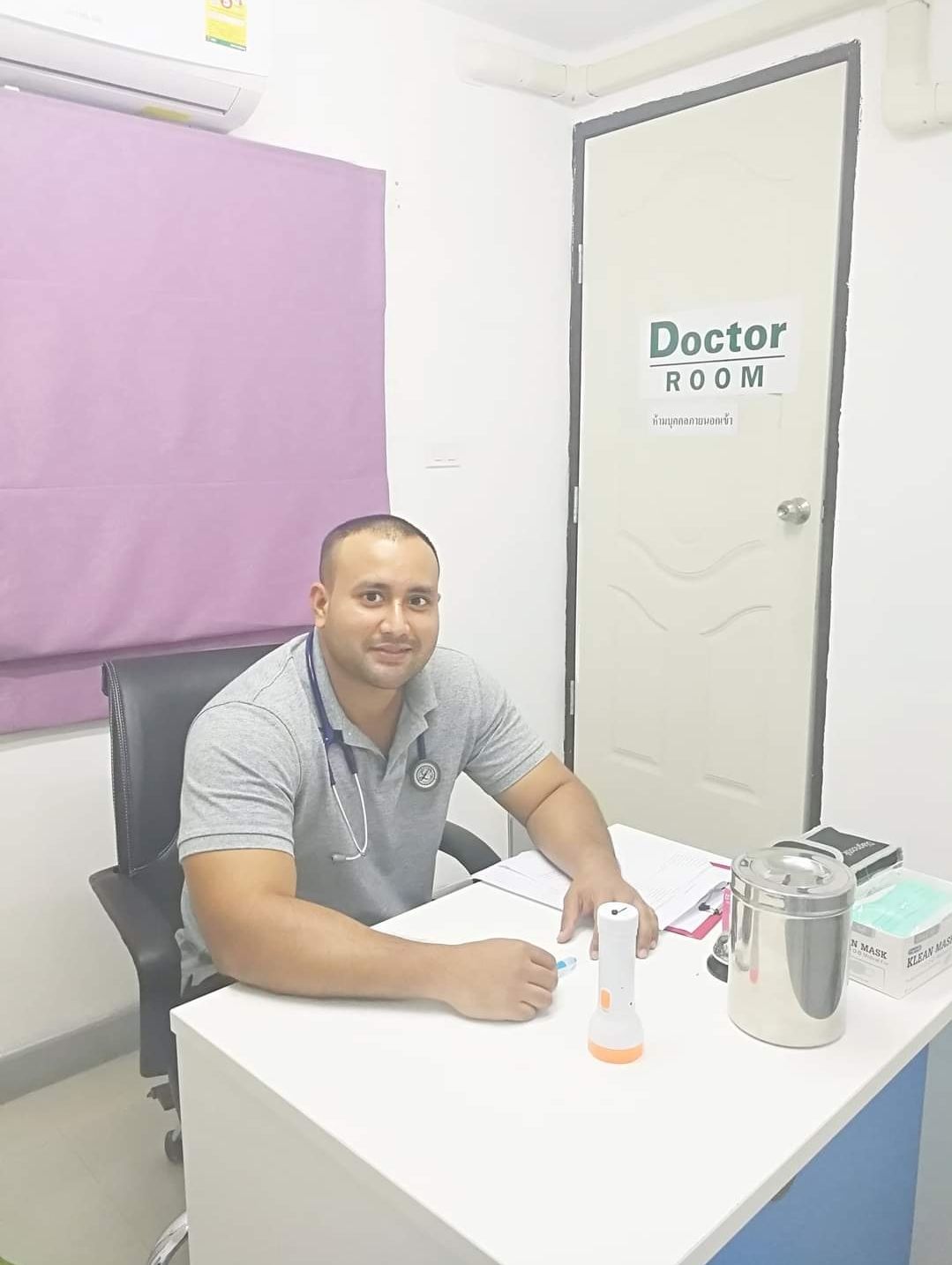
Dr. Ponlawat Pitsuwan is a physician at Doctor Bangkok, a private clinic in central Bangkok. He sees expats, residents, and medical tourists for general medicine, wellness consultations, and IV therapy. His focus is straightforward, evidence-based care delivered in plain language.