
Clinically reviewed by Dr. Ponlawat Pitsuwan, Physician, Doctor Bangkok. Last reviewed: August 2026
Most blocked sinuses clear within seven to ten days with saline rinses, steam, and rest. If your symptoms last longer than ten days, your fever is above 38.5°C, or you have facial swelling or eye pain, see a doctor. Bangkok’s pollution and humidity make sinus congestion more common here than almost anywhere else — and if you have been struggling since you arrived, there is usually a specific reason.
I see this three or four times a week. Someone comes in convinced they have a bad cold, but they have been dealing with blocked sinuses for two weeks and getting worse, not better. They tried a decongestant spray from Boots, it helped for a day, and now it feels worse than before. That pattern I recognise immediately.
Bangkok does something particular to your sinuses. The pollution, the humidity, the constant shift between outdoor heat and ice-cold air conditioning — it adds up. Many expats who never had sinus problems at home develop them within a few months of living here. This guide covers what works, what to buy at a local pharmacy, and when home remedies are not going to cut it anymore.

Is It Really Your Sinuses? Knowing What You Are Dealing With
Not every blocked nose is sinusitis. A plain blocked nose from allergies — allergic rhinitis — feels almost identical to a sinus infection but needs a completely different approach.
Here is a rough way to tell them apart. Allergic rhinitis usually gives you clear, watery discharge, sneezing, and itchy eyes. A viral sinus infection, which typically follows a cold, produces thicker mucus and a feeling of pressure across your face. Bacterial sinusitis tends to arrive after symptoms have already been going for more than ten days, with coloured discharge, facial pain, and sometimes a fever that comes back after you thought you were recovering.
The treatment is different for each one. Antihistamines work well for allergies and do little for a bacterial infection. Antibiotics, sometimes needed for bacterial sinusitis, are useless against allergies or a viral cold.
One thing worth flagging: what many people call a sinus headache is often a migraine. True sinus headaches rarely occur without congestion, facial pressure, and nasal symptoms alongside the pain. If your main symptom is head pain without much nasal involvement, talk to a doctor rather than assuming it is your sinuses.
Why Bangkok Makes Sinus Congestion Worse
On high-pollution days, Bangkok ranks among the worst cities in Southeast Asia for air quality. PM2.5 particles from traffic and industrial sources are fine enough to enter your nasal passages and irritate the lining directly. I see noticeably more sinus complaints during the dry season months when pollution peaks.
Dust mite allergy is also far more common here than people expect. Year-round humidity creates ideal conditions for dust mites to thrive in mattresses, carpets, and soft furnishings. Many expats develop a new dust mite allergy within their first year in Bangkok without ever knowing what is triggering their congestion.
Then there is the air conditioning problem. Cycling between hot, humid outdoor air and cold, dry indoor air multiple times a day dries out and irritates the nasal membranes. Your sinuses respond by producing more mucus, which thickens, drains poorly, and creates that familiar pressure and fullness.
If your congestion never fully clears, or is consistently worse at home and better when you leave, allergic rhinitis triggered by something in your environment is the most likely cause. Allergy testing can identify the trigger precisely.

How to Clear Your Sinuses at Home — What Actually Works
Saline Nasal Rinse
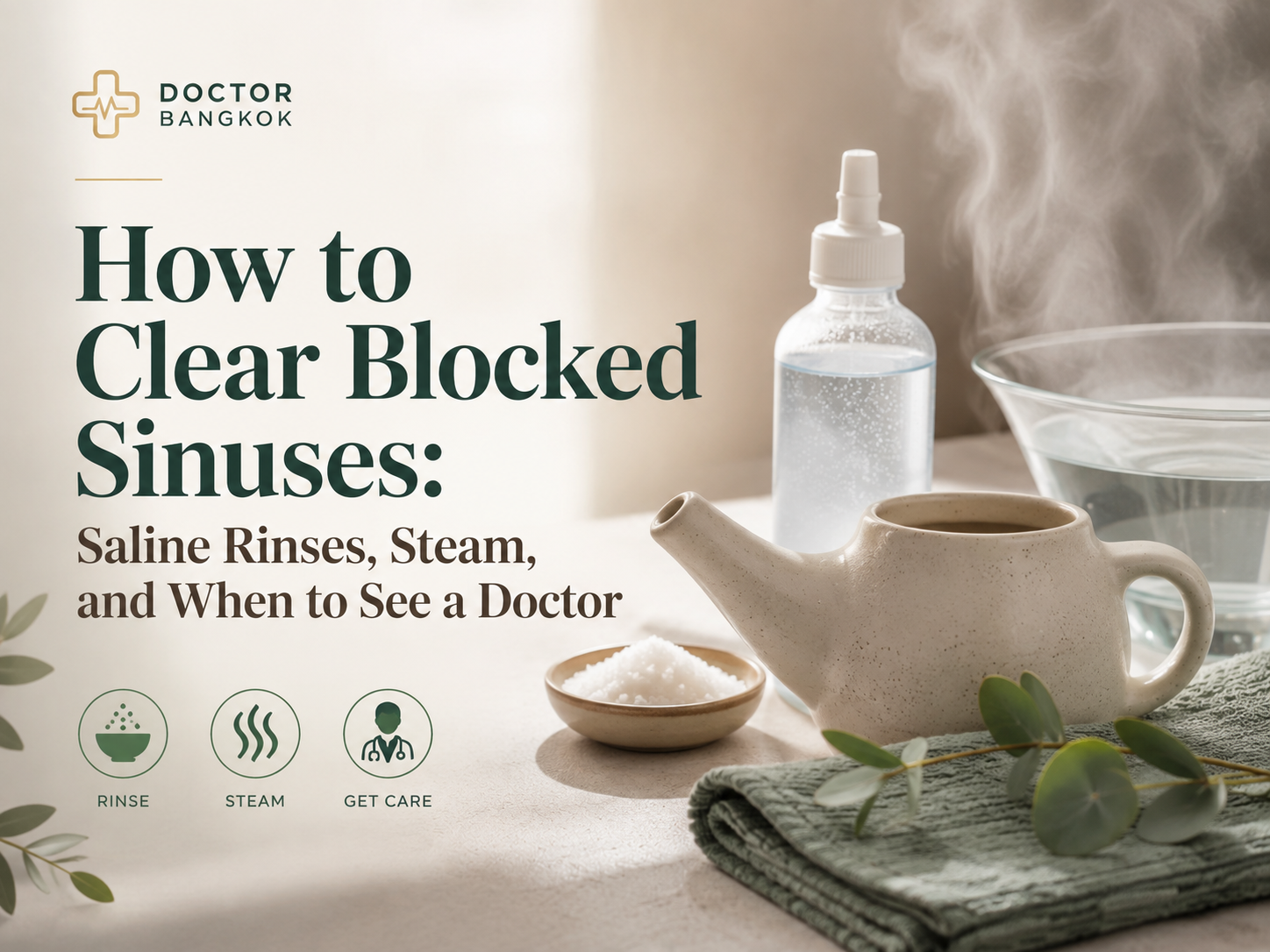
Saline irrigation is the single most effective home remedy for sinus congestion, and the evidence supporting it is strong. Rinsing your nasal passages with a salt water solution physically clears mucus and removes irritants like PM2.5 particles.
You can buy pre-made rinse kits at Boots, Watsons, or most local pharmacies in Bangkok. They come with pre-measured salt sachets and a squeeze bottle or nasal pot. Use them once or twice daily when congested. Most patients notice real improvement within two to three days.
One critical point for anyone in Bangkok: never use tap water for nasal irrigation. Tap water here may contain microorganisms that are harmless when swallowed but can cause serious infections when introduced directly into the nasal passages. Use bottled, distilled, or previously boiled and fully cooled water. This is not optional advice.
Steam Inhalation
Steam inhalation helps loosen thick mucus and temporarily reduces the feeling of pressure. Lean over a bowl of hot water with a towel over your head for ten minutes, or sit in a hot shower. Adding menthol or eucalyptus is optional — it creates a sensation of opening rather than actual airway widening, but many patients find it helpful.
Steam alone will not clear a sinus infection, but it does provide real short-term relief and makes drainage methods more effective when used first.
Warm Compress and Hydration
A warm face cloth held against your cheeks and forehead for a few minutes reduces sinus pressure noticeably. It is not a treatment, but it helps with discomfort while your body does the actual work.
Staying well hydrated is one of the most underrated parts of sinus recovery. Bangkok heat means you lose fluid quickly, and thick mucus drains poorly. Aim for two to three litres of water a day when you are congested.
Over-the-Counter Options in Bangkok — What to Use and What to Avoid
Thai pharmacies stock most of what you need. Saline sprays are available everywhere and safe to use as often as needed. Antihistamines like cetirizine and loratadine are widely available and work well if allergies are driving your congestion.
Decongestant nasal sprays containing oxymetazoline are where I see people get into trouble. They work fast, which is exactly the problem. Patients use them for a week, two weeks, sometimes longer, and then cannot stop — because stopping makes the congestion return worse than before. This is called rebound congestion, or rhinitis medicamentosa. It is a real pharmacological dependence on the spray, not a sign your original problem got worse. The rule is three days maximum, then stop regardless of how you feel, and switch to saline.
If you cannot read the Thai-language packaging on something at a Bangkok pharmacy, ask the pharmacist to point you to a plain saline spray or a cetirizine tablet. Most staff at Boots and Watsons branches on Sukhumvit speak enough English to help.
When to See a Doctor in Bangkok for Sinus Problems
Most sinus congestion does not need a doctor. But some does, and waiting too long makes it harder to treat.
Come in if your symptoms have not improved after seven to ten days. Come in if you have a fever above 38.5°C, facial swelling, severe pain around your eyes or cheeks, changes in your vision, or a stiff neck. These are not normal sinus symptoms, and some of them need same-day assessment.
Also come in if you have been using a decongestant spray for more than a week and cannot stop, if your symptoms keep returning every few weeks, or if you have had persistent congestion since arriving in Bangkok but never been checked for allergies. Nasal polyps — small growths inside the nasal passages that block airflow — are another cause of stubborn congestion that will not respond to any home remedy and need to be assessed in person.
At Doctor Bangkok, we see a lot of expats and medical tourists with sinus problems and upper respiratory infections. A consultation takes around twenty minutes. We can assess whether you have a viral or bacterial infection, prescribe treatment if needed, and arrange follow-up if your symptoms suggest something more than a straightforward case.
What a Doctor Can Prescribe Beyond Home Remedies
If home remedies and over-the-counter options have not worked, prescription-level treatments make a real difference.
Intranasal corticosteroid sprays are the most effective medication for persistent congestion driven by allergies or chronic sinusitis. They reduce inflammation in the nasal lining directly and are safe for daily long-term use under medical supervision. Unlike decongestant sprays, they do not cause rebound congestion.
If a bacterial sinus infection is confirmed, antibiotics are appropriate and typically produce improvement within two to three days. Antibiotics are not appropriate for viral infections or allergies, which is exactly why a proper assessment matters before starting them.
For patients with persistent or worsening symptoms, referral to an ENT specialist may be the right next step. Doctor Bangkok can arrange that referral and help you find the right specialist in the local system if needed.
Sinuses blocked for more than a week, symptoms getting worse, or not sure whether you are dealing with allergies or an infection? Doctor Bangkok can help. We are open 24 hours a day, seven days a week, at our clinic on Sukhumvit Soi 13 — two minutes on foot from BTS Nana. Hotel and home visits are available if you are too unwell to travel. Walk-ins are welcome, with English-speaking doctors on site at all times.
Frequently Asked Questions
Dr. Ponlawat Pitsuwan
Physician, Doctor Bangkok
a private medical clinic in central Bangkok. He consults expats, residents, and medical tourists for respiratory infections, sinus and allergy problems, and general medical care. His approach is evidence-based and delivered in plain language.
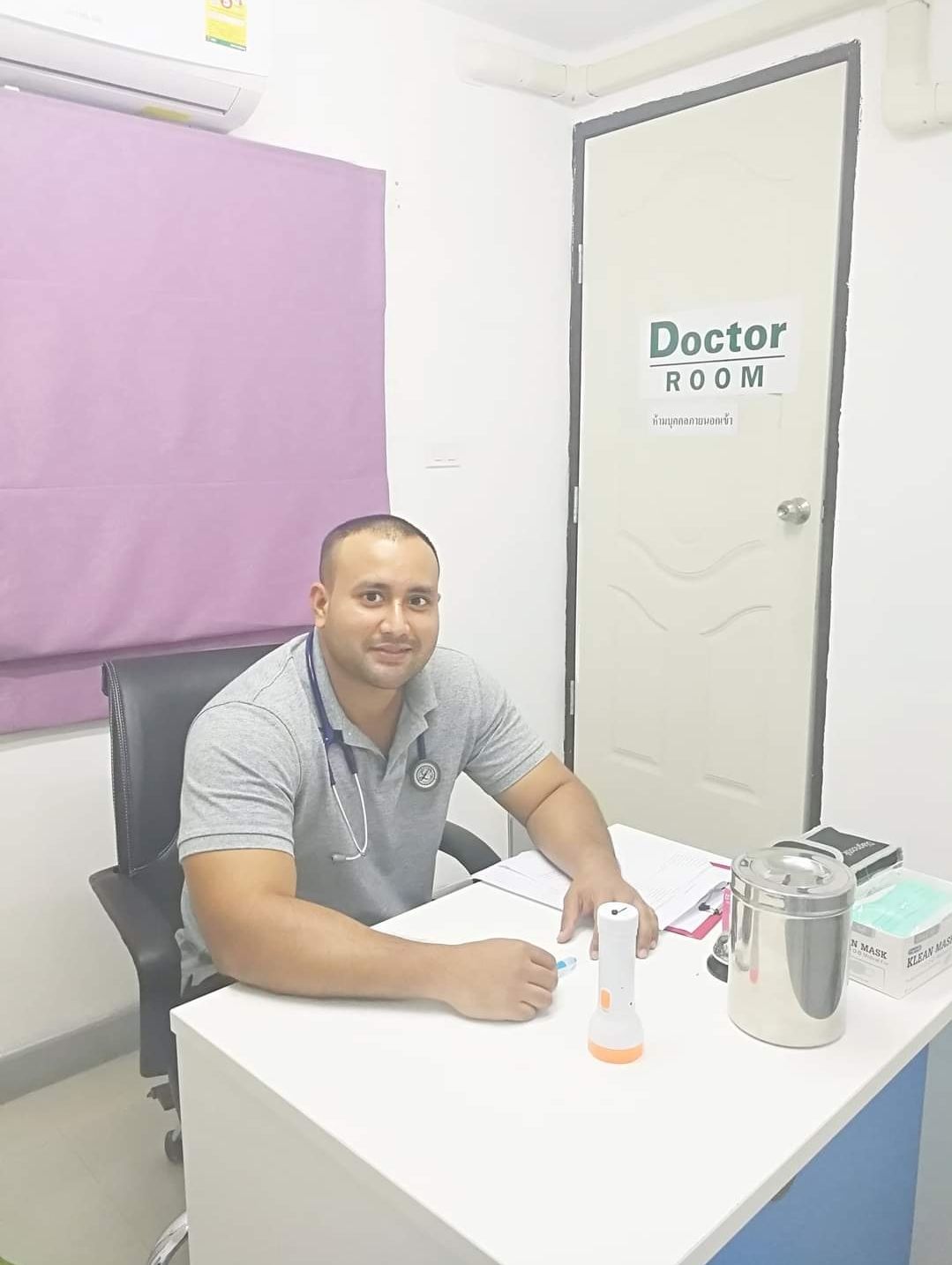
Dr. Ponlawat Pitsuwan is a physician at Doctor Bangkok, a private clinic in central Bangkok. He sees expats, residents, and medical tourists for general medicine, wellness consultations, and IV therapy. His focus is straightforward, evidence-based care delivered in plain language.