

Clinically reviewed by Dr. Ponlawat Pitsuwan, Physician, Doctor Bangkok. Last reviewed: August 2026
Most hernias are not immediately dangerous, but they do not get better on their own. A small, painless hernia can be monitored safely under medical supervision. But if a hernia becomes trapped or its blood supply is cut off, it becomes a surgical emergency. Knowing the difference could save your life.
I see this at least a few times a month. Someone notices a bulge in their groin or belly, Googles it, convinces themselves it is probably fine, and puts off seeing anyone for months. Then the pain changes, or the bulge stops going back in, and they come in worried. Sometimes they are right to be worried.
The honest answer to "is a hernia dangerous?" is: it depends on what stage it is at. Most hernias start out manageable. Some stay that way for years. Others turn into emergencies with very little warning. The point is that you cannot know which category yours is in without a proper assessment. If you are in Bangkok and you have a hernia you have not had looked at, that is the only thing that actually matters right now.

Types of Hernia and How Dangerous Each One Is
Not all hernias carry the same risk. An inguinal hernia, the kind that appears in the groin, is the most common type and usually the most forgiving. It can often be monitored if it is small and causing no symptoms. A femoral hernia, which sits just below the groin crease, is far more likely to become dangerous quickly. The channel it travels through is narrow, so it gets trapped more easily. Femoral hernias are more common in women and have a high rate of complications even when they seem minor.
An umbilical hernia sits at or near the belly button. These are common in adults who carry extra weight or have had multiple pregnancies. They are often painless for a long time but can still become stuck. A hiatal hernia is different because it is internal. Stomach tissue pushes through the diaphragm into the chest. You cannot see or feel a bulge. You get reflux, difficulty swallowing, or chest discomfort instead. It rarely becomes a surgical emergency, but it does need management.
Reducible, Incarcerated, Strangulated — What These Words Actually Mean
These three words tell you how serious a hernia is right now. A reducible hernia is one you can push back in, or that goes back in on its own when you lie down. This is the least dangerous stage. It still needs monitoring, but it is not an emergency.
An incarcerated hernia is stuck. The tissue has pushed through the gap in the muscle wall and cannot go back. You will feel a firm, tender lump that does not move. This needs prompt medical attention, not a wait-and-see approach.
A strangulated hernia is when the blood supply to the trapped tissue is cut off. This is the one that can kill you. Tissue starts to die, infection sets in, and without emergency surgery, the situation becomes critical fast. If you think this is happening, stop reading and go to a hospital now.

When Is a Hernia Dangerous Enough to Be Life-Threatening?
Strangulation is the dangerous end of the spectrum. Once blood flow stops, tissue can begin to die within hours. If bowel is trapped, its contents can leak into the abdomen, causing a serious infection throughout the body. This is not a slow process.
The reason people die from hernias is delay. They wait to see if the pain settles. They assume it is muscular. In Bangkok, some expats also worry about navigating a Thai hospital without English support, which adds another barrier. That delay is exactly what turns a surgical emergency into a crisis.
Red Flag Symptoms — Go to Emergency Care Now
If you have a hernia and any of the following happen, get to a doctor immediately. Sudden severe pain at the hernia site, especially if it was previously dull. A bulge that was soft and moveable but has become hard and will not go back in. Skin over the bulge turning red, purple, or dark. Nausea or vomiting alongside hernia pain. Fever combined with a painful hernia. An inability to pass gas or open your bowels.
These are signs of a hernia moving toward strangulation. At Doctor Bangkok, we can assess you quickly and make sure you get to the right level of care without delay. If the situation needs a surgical team, we get you there immediately.
Does Every Hernia Need Surgery Right Away?
No. A small, reducible, symptom-free hernia in an otherwise healthy adult can often be managed with watchful waiting. This is a legitimate clinical approach, but it means regular review by a doctor, not ignoring it and hoping for the best.
Surgery becomes the right choice when the hernia is growing, causing pain, or interfering with daily life. Femoral hernias almost always get repaired promptly because of their complication rate. Inguinal hernias in fit, active patients are often repaired electively rather than waiting for an emergency. Laparoscopic repair is the most common approach, using small incisions and surgical mesh. Recovery is generally faster than older open techniques.
What Happens If You Leave a Hernia Untreated in Bangkok
Bangkok’s pace does not help an untreated hernia. If you are active, working out, carrying luggage through airports, or sitting on long-haul flights, you are regularly increasing pressure inside your abdomen. That pressure pushes more tissue through the defect over time. Physical exertion in the heat adds to it.
The other issue is access. If your hernia strangulates on a Sunday night and you do not know which hospital to go to or how to describe your symptoms in Thai, that delay costs you. Expats who have already had their hernia assessed and have a clear care plan are in a much better position. They know where to go and what to tell the team when they arrive.
Getting Your Hernia Assessed at Doctor Bangkok
A hernia assessment at Doctor Bangkok starts with a physical examination. For most hernias, that is enough to confirm the type, check whether it is still reducible, and gauge how urgent the situation is. If the hernia is internal or unclear on examination, we arrange an ultrasound or CT scan and coordinate that quickly.
If you need a surgical referral, we handle it. We work with English-speaking surgical teams in Bangkok so you are not managing that alone. If you are not sure whether what you have is a hernia, come in anyway. A general medical consultation gives you a clear answer the same day. Doctor Bangkok is on Sukhumvit Soi 13, a short walk from BTS Nana, and no appointment is necessary.
Not sure whether your hernia needs attention? Doctor Bangkok offers walk-in medical consultations with English-speaking physicians on Sukhumvit Soi 13, a short walk from BTS Nana. We examine you, tell you exactly what you are dealing with, and arrange imaging or surgical referral if needed. Walk in any day of the week.
Frequently Asked Questions
Dr. Ponlawat Pitsuwan
Physician, Doctor Bangkok
a private medical clinic in central Bangkok. He consults with expats, residents, and medical tourists on general medical concerns, abdominal assessments, and urgent presentations including hernia evaluation and surgical referral. His approach is direct, evidence-based, and delivered in plain language.
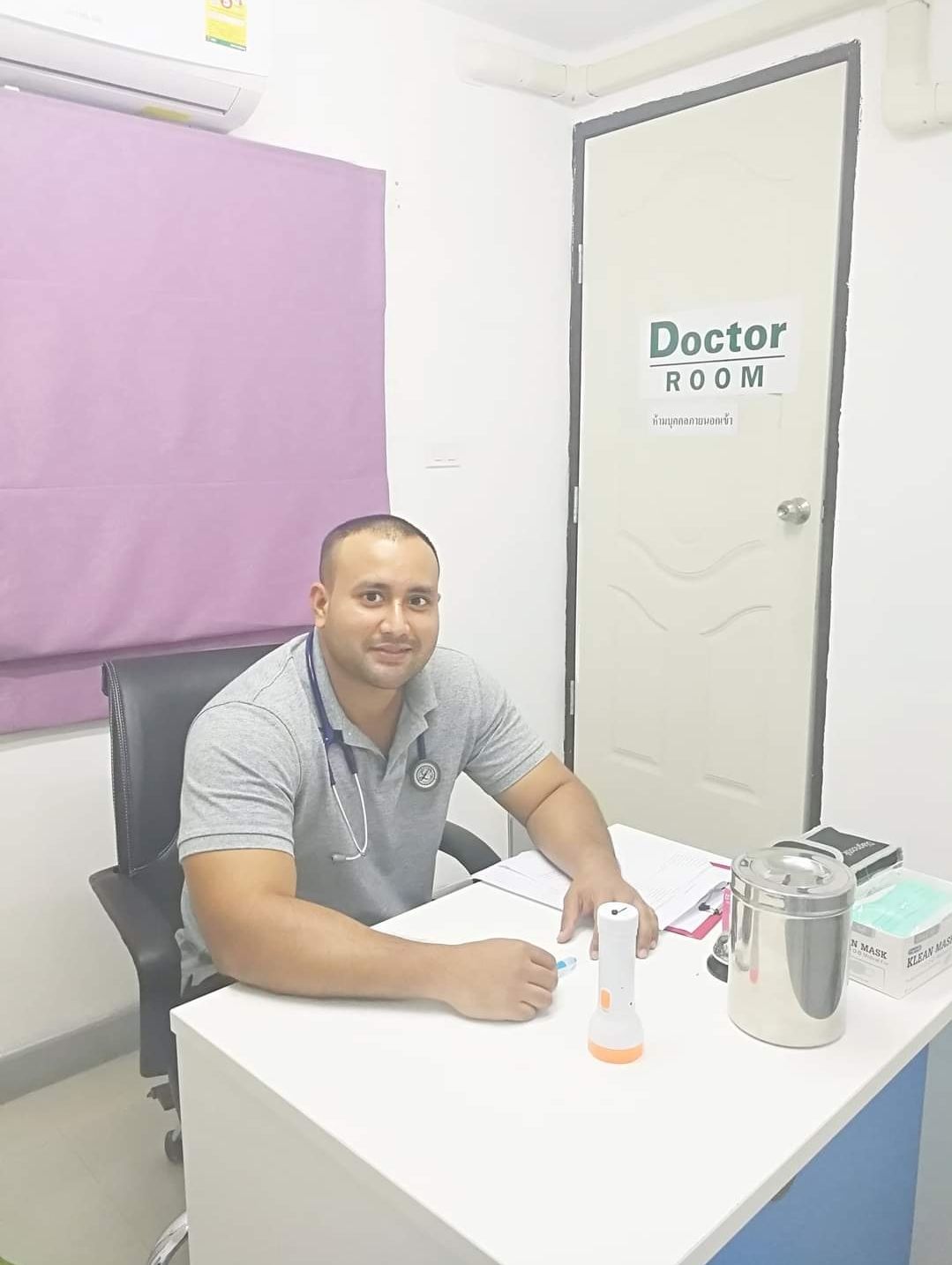
Dr. Ponlawat Pitsuwan is a physician at Doctor Bangkok, a private clinic in central Bangkok. He sees expats, residents, and medical tourists for general medicine, wellness consultations, and IV therapy. His focus is straightforward, evidence-based care delivered in plain language.