
Clinically reviewed by Dr. Ponlawat Pitsuwan, Physician, Doctor Bangkok. Last reviewed: August 2026
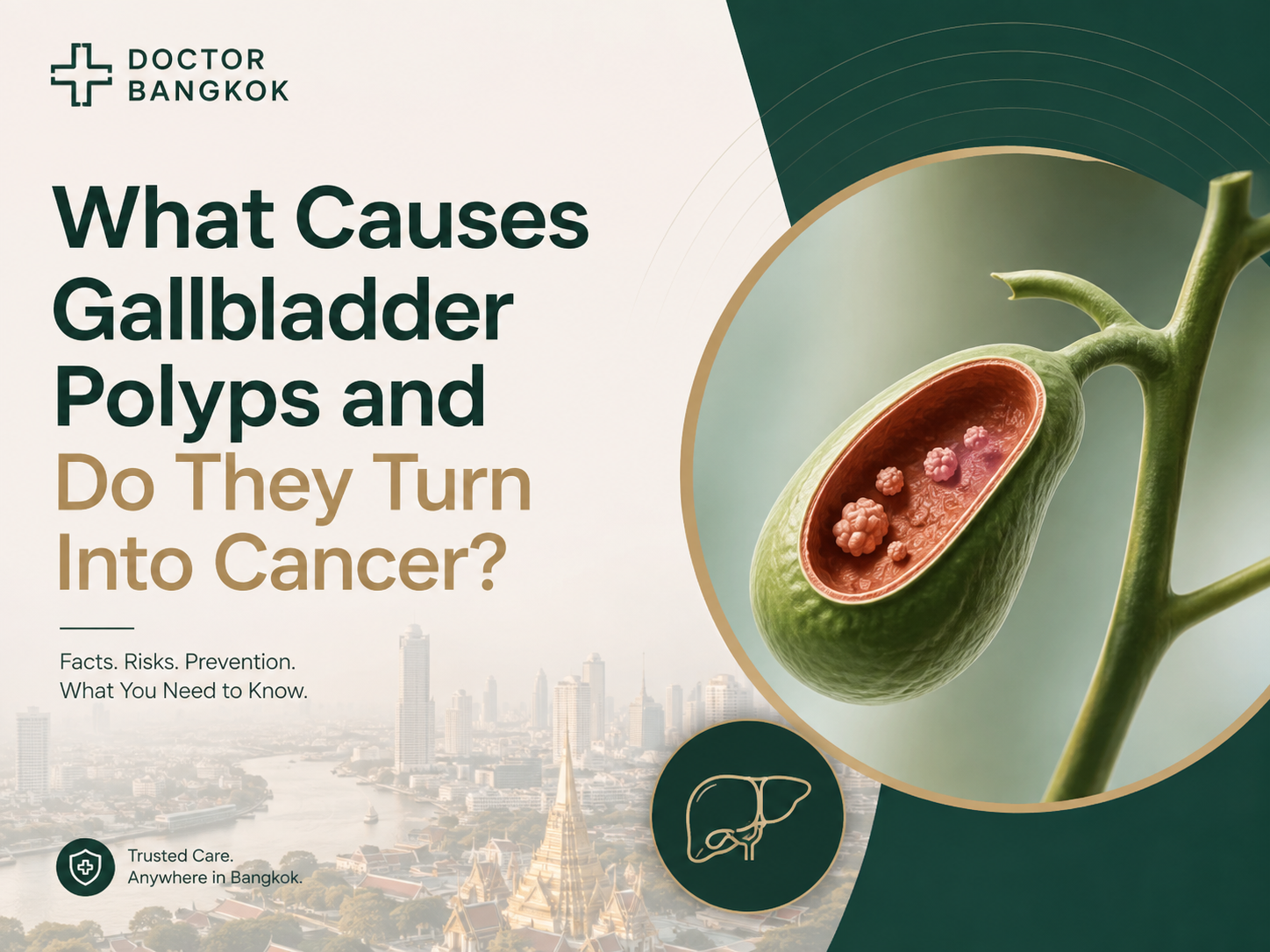
Gallbladder polyps are small growths on the inner wall of the gallbladder, most often found by chance during an abdominal ultrasound. The majority are benign and cause no symptoms. The main concern is size: polyps under 10mm are almost always harmless and need monitoring, while those over 10mm carry a higher cancer risk and usually need further assessment or surgery.
Most people find out they have a gallbladder polyp the same way. They come in for a routine health check, get an abdominal ultrasound, and the report comes back with something unexpected. No symptoms, no warning. Just a line at the bottom of the scan saying "polyp noted."
That moment sends most patients straight to Google, which is probably how you found this. The good news is that most gallbladder polyps are not dangerous. The less reassuring news is that a small number can turn cancerous over time. Knowing which type you have, and what to do about it, is what this article is for.

What a Gallbladder Polyp Actually Is
Your gallbladder is a small organ sitting just under your liver. It stores bile, which helps you digest fat. A polyp is a growth that protrudes from the inner wall.
Here is what most people do not hear: not all gallbladder polyps are the same. Some are not true polyps at all. They are cholesterol deposits that look like polyps on an ultrasound but have no cancer potential. These are called pseudopolyps. True polyps, including adenomas, are actual tissue growths and carry a small but real cancer risk.
This distinction changes how your case should be managed. A cholesterol pseudopolyp at 5mm is very different from a 9mm adenoma, even if both look similar on a scan.
What Causes Gallbladder Polyps, by Type
The cause depends on the type.
Cholesterol polyps are the most common, making up the large majority of all cases. They form when cholesterol accumulates in the gallbladder wall, linked to high blood cholesterol, poor fat metabolism, and a diet heavy in saturated fat. These are the pseudopolyps mentioned above, and they are almost always benign.
Inflammatory polyps develop as a reaction to long-term irritation or infection of the gallbladder wall. Adenomyomatosis, a thickening of the gallbladder wall, falls into a similar category. Both are also benign.
Adenomatous polyps, or adenomas, are true glandular growths. Their exact cause is less well understood, but they are the type most closely associated with cancer risk. They are far less common than cholesterol polyps, and they are the ones your doctor watches most carefully.

Who Is Most at Risk of Gallbladder Polyps
The honest answer is that risk comes from several directions at once.
Age over 50 raises your risk. So does obesity, type 2 diabetes, and metabolic syndrome, the cluster that includes high blood pressure, high blood sugar, and excess abdominal fat. High cholesterol directly drives the most common type. A family history of gallbladder disease also matters.
Two risk factors that most resources skip: viral hepatitis, particularly hepatitis B, has been linked to a higher rate of gallbladder polyps. Hepatitis B prevalence is significantly higher across Southeast Asia than in Western countries, so this is genuinely relevant if you are living or spending time in Bangkok. Higher estrogen levels, whether from hormone replacement therapy, oral contraceptives, or pregnancy, also appear to raise risk in women.
None of these mean you will definitely develop a polyp. They do mean that regular abdominal screening makes more sense for you.
Do Gallbladder Polyps Cause Symptoms?
Most do not. The majority are found incidentally during a scan done for something else entirely.
When symptoms do occur, they tend to show up as pain in the upper right side of the abdomen, just under the ribs. This often follows a fatty meal, when the gallbladder contracts to release bile and the polyp causes irritation. Nausea or a feeling of fullness can also occur.
The problem is that these symptoms are identical to gallstone symptoms. Without an ultrasound, there is no way to tell which is the cause. If you are getting regular pain after eating and you are in Bangkok, that is worth getting checked rather than waiting it out.
How Gallbladder Polyps Are Diagnosed in Bangkok
The standard tool is an abdominal ultrasound. It is non-invasive, takes around 20 to 30 minutes, and gives your doctor a clear image of the gallbladder wall and any growths on it.
At Doctor Bangkok, abdominal ultrasound is available as part of health screening packages or as a standalone appointment if you have a specific concern. If you have already had a scan elsewhere and want someone to review the results with you, we can do that too.
For borderline cases where a polyp is close to 10mm or has features that raise concern, a specialist may recommend endoscopic ultrasound. This is a more detailed scan carried out by a gastroenterologist and gives a clearer picture of whether a polyp looks suspicious. We can refer you directly from our clinic if that step is needed.
When Does a Gallbladder Polyp Become Worrying?
Size is the most important factor. Polyps under 6mm are very unlikely to be cancerous and need only basic monitoring. Polyps between 6mm and 9mm sit in a middle zone where closer surveillance is appropriate. At 10mm or above, the risk rises enough that surgery is usually recommended.
Size is not the only thing that matters. A polyp that grows more than 2mm between scans is a concern regardless of its current size. A sessile polyp, one with a broad flat base rather than a narrow stalk, looks more suspicious. If you are over 50 and have gallstones alongside a polyp, your doctor will take a more cautious approach.
Gallbladder cancer is rare in absolute terms. But the gallbladder is one of the harder sites to detect cancer early, which is exactly why the monitoring thresholds exist.
What Happens After a Polyp Is Found
If your polyp is under 6mm with no suspicious features, the usual plan is a follow-up ultrasound in 12 months. If it is stable, annual monitoring continues for a few years.
For polyps between 6mm and 9mm, most guidelines suggest rescanning every six months to track growth. If the polyp stays stable over two to three years, the interval can be extended.
Watchful waiting sounds passive, but it is genuinely good medicine here. Most people never need anything beyond a repeat scan.
If your polyp is already at or above 10mm, do not sit on that finding. A surgical referral for laparoscopic cholecystectomy, keyhole removal of the gallbladder, is the standard recommendation at that size. The procedure is routine, recovery is typically quick, and the gallbladder is not an organ you need to live well without.
Can Diet and Lifestyle Reduce Your Risk?
There is moderate evidence that improving your diet can reduce cholesterol polyp formation. Cutting back on saturated fat, processed food, and fried food is a good start. Those things are easy to overconsume in Bangkok, where eating out daily is the norm.
Managing your cholesterol through diet or medication, maintaining a healthy weight, and limiting alcohol all reduce the conditions that drive the most common type of polyp.
To be direct: no lifestyle change will eliminate a polyp that already exists, and there is no proven supplement or remedy that removes them. But for people at higher risk, improving metabolic health is still worthwhile. It protects more than just the gallbladder.
If an ultrasound has picked up a gallbladder polyp, or if you have not had an abdominal scan in a while and recognise any of the risk factors above, Doctor Bangkok can help. We offer abdominal ultrasound, health screening, and general medical consultations with English-speaking physicians at our central Bangkok clinic, accessible by BTS. Bring your existing scan results or start fresh. We will work through it with you.
I found out I have a gallbladder polyp on an ultrasound in Bangkok. What should I do next?
Start by checking the size on your report. Under 10mm with no other concerning features means monitoring, not panic. Bring the report to Doctor Bangkok or your treating physician, confirm the size and shape of the polyp, and get a follow-up ultrasound scheduled. Do not ignore the finding, but do not rush into anything either.
Can gallbladder polyps go away on their own?
Cholesterol pseudopolyps can occasionally shrink if you significantly improve your diet and reduce blood cholesterol, but this is not guaranteed. True adenomatous polyps do not resolve on their own. Either way, monitoring with repeat ultrasound is still needed, because symptoms alone will not tell you whether a polyp is changing.
What size gallbladder polyp is dangerous?
The key threshold is 10mm. Below that, cancer risk is low and monitoring is the standard approach. At or above 10mm, surgery is usually recommended. Rapid growth, a flat base rather than a stalk, or the combination of a polyp with gallstones also raises concern regardless of size.
Do gallbladder polyps need surgery?
Most do not. Surgery is considered when a polyp reaches 10mm or above, when it grows more than 2mm between scans, or when it causes symptoms. The procedure is laparoscopic cholecystectomy, keyhole surgery to remove the gallbladder. It is routine and widely available in Bangkok. Doctor Bangkok can assess your situation and refer you to a surgeon if that step is needed.
Are gallbladder polyps more common in certain people?
Yes. Risk is higher in people over 50, those with obesity, diabetes, high cholesterol, or metabolic syndrome, and people with a family history of gallbladder problems. Women on hormone replacement therapy or oral contraceptives may also have a higher risk. In Southeast Asia, a history of hepatitis B is an additional factor worth raising with your doctor.
Can a gallbladder polyp be mistaken for something else on an ultrasound?
Yes. Gallstones and gallbladder polyps can look similar on a basic scan. The key difference is that polyps do not move when you change position, while gallstones do. An experienced sonographer will check for this. If there is any doubt, a repeat scan or specialist referral is the right call.
Dr. Ponlawat Pitsuwan
Physician, Doctor Bangkok
a private medical clinic in central Bangkok. He sees expats, residents, and medical tourists for general medical consultations, health screening, and review of abdominal imaging findings. His approach is evidence-based and delivered in plain language.
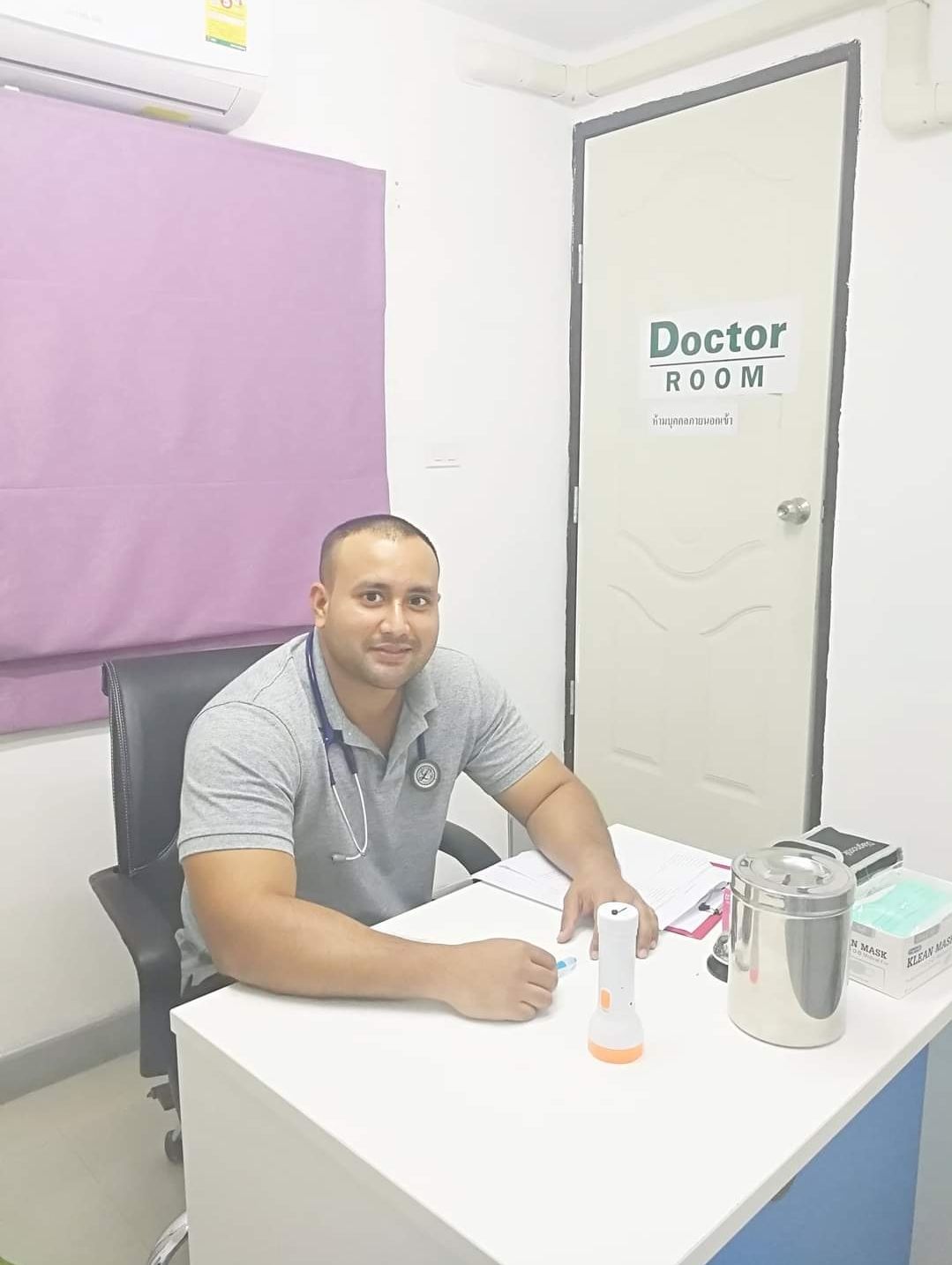
Dr. Ponlawat Pitsuwan is a physician at Doctor Bangkok, a private clinic in central Bangkok. He sees expats, residents, and medical tourists for general medicine, wellness consultations, and IV therapy. His focus is straightforward, evidence-based care delivered in plain language.