
Clinically reviewed by Dr. Ponlawat Pitsuwan, Physician, Doctor Bangkok. Last reviewed: August 2026
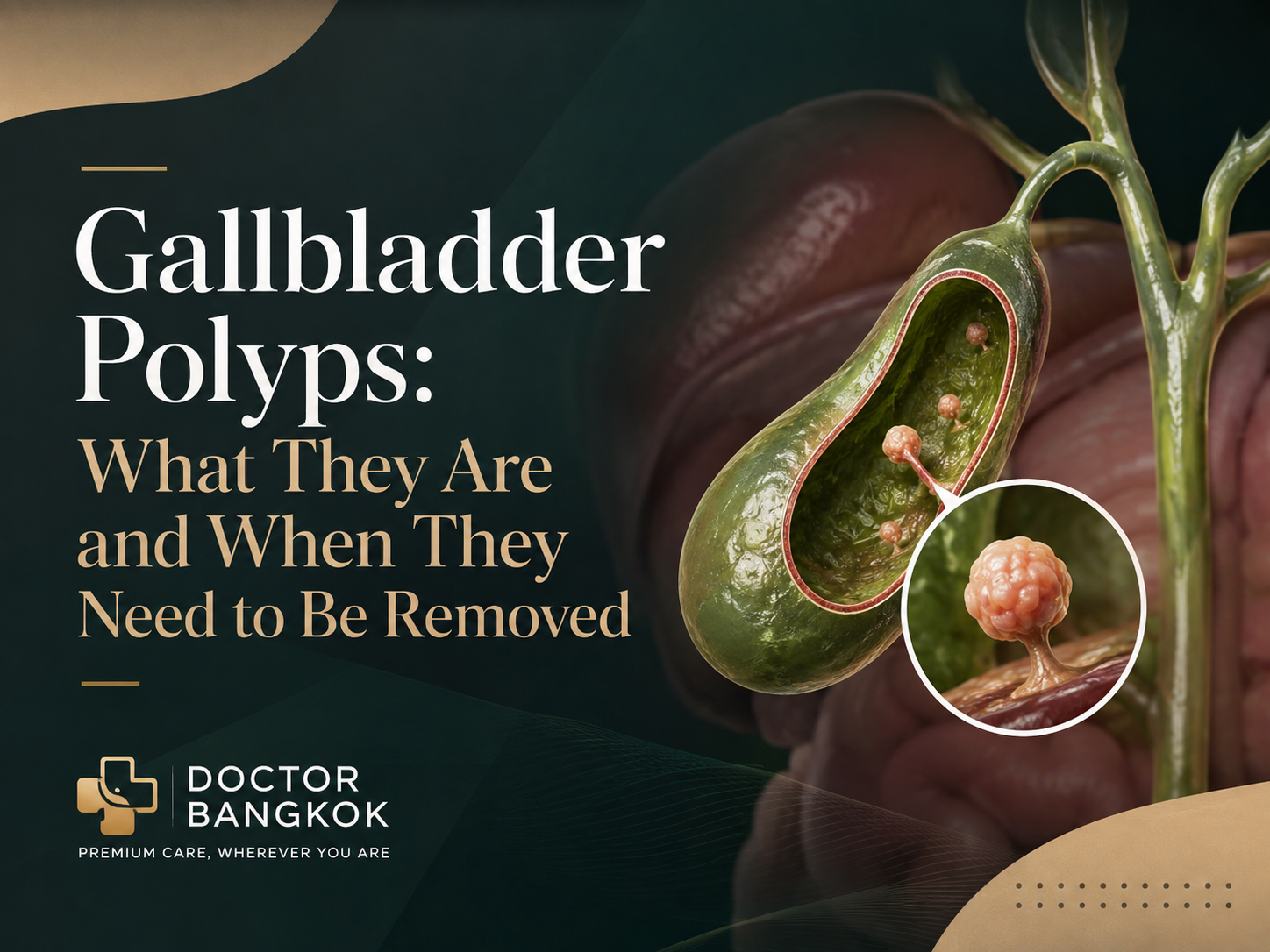
A gallbladder polyp is a small growth on the inner wall of the gallbladder. Most are benign cholesterol deposits that need monitoring, not treatment. The key factors are size, shape, and your personal risk profile. Polyps under 5mm with no risk factors rarely need any follow-up. Polyps at or over 10mm generally need a surgical conversation.
A lot of patients come to me after a routine scan in Bangkok, holding a report they cannot fully read, with the words "gallbladder polyp" underlined. Most of them are worried. Most of them do not need to be, at least not urgently.
That said, not all polyps are the same. Some carry real cancer risk if left unmonitored. Others are essentially harmless cholesterol deposits that may even disappear on the next scan. The difference matters, and so does knowing what to do next.

Types of Gallbladder Polyp — Why the Distinction Matters
"Gallbladder polyp" is not one diagnosis. It covers several different types of growths, and the type changes almost everything about management.
The most common type is the cholesterol polyp, sometimes called a pseudopolyp. These are deposits of cholesterol on the gallbladder wall, not true tissue growths. They have no capacity to become cancer and can disappear on their own. Under 10mm, they are essentially harmless.
Adenomatous polyps are a different story. These are true benign tumours made of glandular tissue, and they carry genuine malignant potential. They are far less common than cholesterol polyps, but they are the ones that justify surgical removal when size or risk thresholds are crossed.
A sessile polyp, one with a flat base rather than a stalk, is always watched more closely than a pedunculated polyp, which grows on a narrow stalk and is generally lower risk. The shape tells us almost as much as the size.
What Symptoms You May or May Not Have
The honest answer: most gallbladder polyps cause no symptoms. They are found because someone had an abdominal ultrasound for a completely different reason.
When symptoms do occur, they tend to feel like a dull ache or pressure under the right ribcage, sometimes after a fatty meal. Some patients describe mild bloating or nausea. None of these symptoms confirm a polyp on their own, and none of them alone mean surgery. They are reasons to investigate, not panic.
If your polyp was found incidentally and you have no pain, that is the most common and reassuring scenario.

Gallbladder Polyp Size Rules — What 5mm, 10mm, and 15mm Actually Mean
Size is the strongest single predictor of risk. The blunt "10mm rule" you may have read about online is only part of the picture.
Polyps at 5mm or under with no additional risk factors generally need no follow-up at all. Polyps between 6mm and 9mm move into a monitoring category, with repeat ultrasound at six months, then annually for up to two years. Polyps at 10mm or above warrant a surgical referral discussion. Polyps at 15mm or above are treated with a higher degree of urgency, as the risk of malignant change rises significantly at this size.
These thresholds can shift downward based on other factors. A 7mm polyp with no risk factors may need only routine monitoring. That same 7mm polyp in the right clinical context may justify a surgical conversation sooner.
Risk Factors That Change Your Management — Beyond Size
Four risk factors, beyond size alone, can lower the threshold for surgical intervention under current guidelines.
Age over 60 is the first. Older patients have a higher baseline risk for gallbladder cancer, so polyps are taken more seriously at smaller sizes. Sessile morphology is the second: a flat-based polyp is harder to characterise and more likely to represent a true adenomatous lesion. Primary sclerosing cholangitis, a chronic bile duct condition, is the third. Any polyp in this group warrants early surgical consideration regardless of size. The fourth is Asian ethnicity, which is a relevant clinical modifier for many patients seen at Doctor Bangkok, given that gallbladder cancer rates are higher in certain Asian populations.
If you have one or more of these factors alongside a polyp in the 6mm to 9mm range, the surgical conversation may happen earlier than standard size thresholds suggest.
How Gallbladder Polyps Are Diagnosed
Abdominal ultrasound is how almost all gallbladder polyps are found and monitored. It is non-invasive, widely available in Bangkok, and reliable for detecting polyps above 5mm. The report will usually note size, number, whether the polyp appears pedunculated or sessile, and any gallbladder wall thickening.
For polyps where ultrasound findings are unclear, or where the polyp sits in a higher-risk category, endoscopic ultrasound gives a much closer view. This is done in a hospital setting and is not routinely needed for straightforward cases.
The most important step after any gallbladder ultrasound is sitting down with a doctor who can interpret the findings in context, not just read a number off the report.
Monitoring Schedule — What the Guidelines Actually Say
A lot of patients on a watch-and-wait protocol feel anxious because nobody has explained what they are watching for, or when it ends. Here is the practical version.
For polyps at 5mm or under with no risk factors, current guidelines support discharge from surveillance. No repeat scan is needed. For polyps between 6mm and 9mm, the standard approach is a repeat ultrasound at six months, then at 12 months. If there has been no growth over two years, most clinicians will discharge from surveillance.
If a polyp disappears entirely on follow-up, that is a reassuring sign. It almost always means it was a cholesterol pseudopolyp, and surveillance can typically stop. Growth of 2mm or more between scans, or any change from pedunculated to sessile, triggers escalation: more frequent imaging, endoscopic ultrasound, or a surgical referral.
Getting a Gallbladder Polyp Assessed in Bangkok
Receiving an ultrasound report in Thailand with limited explanation and no follow-up plan is something I see regularly. Patients come in with results from hospital scans, workplace health checks, or pre-travel screening, often unsure what any of it means.
A general medical consultation at Doctor Bangkok gives you the space to go through the report in plain English. We look at size, shape, and your personal risk factors together, then agree a plan that reflects current guidelines. If monitoring scans are needed, we can arrange abdominal ultrasound in Bangkok and provide a written summary you can take with you, whether you are staying in Thailand or heading home.
If surgery is the right recommendation, we will say so clearly and refer you to the appropriate surgical team. We do not push patients toward procedures they do not need, but we do not minimise risks that are real.
Had a gallbladder polyp found on a scan in Bangkok? Not sure what your ultrasound report means or whether you need follow-up? Book a general medical consultation at Doctor Bangkok. Our English-speaking physicians will review your results, explain your risk profile in plain English, and put together a monitoring plan that makes sense for you. We also arrange abdominal ultrasound scans in Bangkok for ongoing surveillance. Contact Doctor Bangkok to book your appointment.
Frequently Asked Questions
Dr. Ponlawat Pitsuwan
Physician, Doctor Bangkok
a private medical clinic in central Bangkok. He sees expats, residents, and medical tourists for general medical consultations, health screening, and the interpretation of investigative results including abdominal imaging. His focus is straightforward, evidence-based care delivered in plain language.
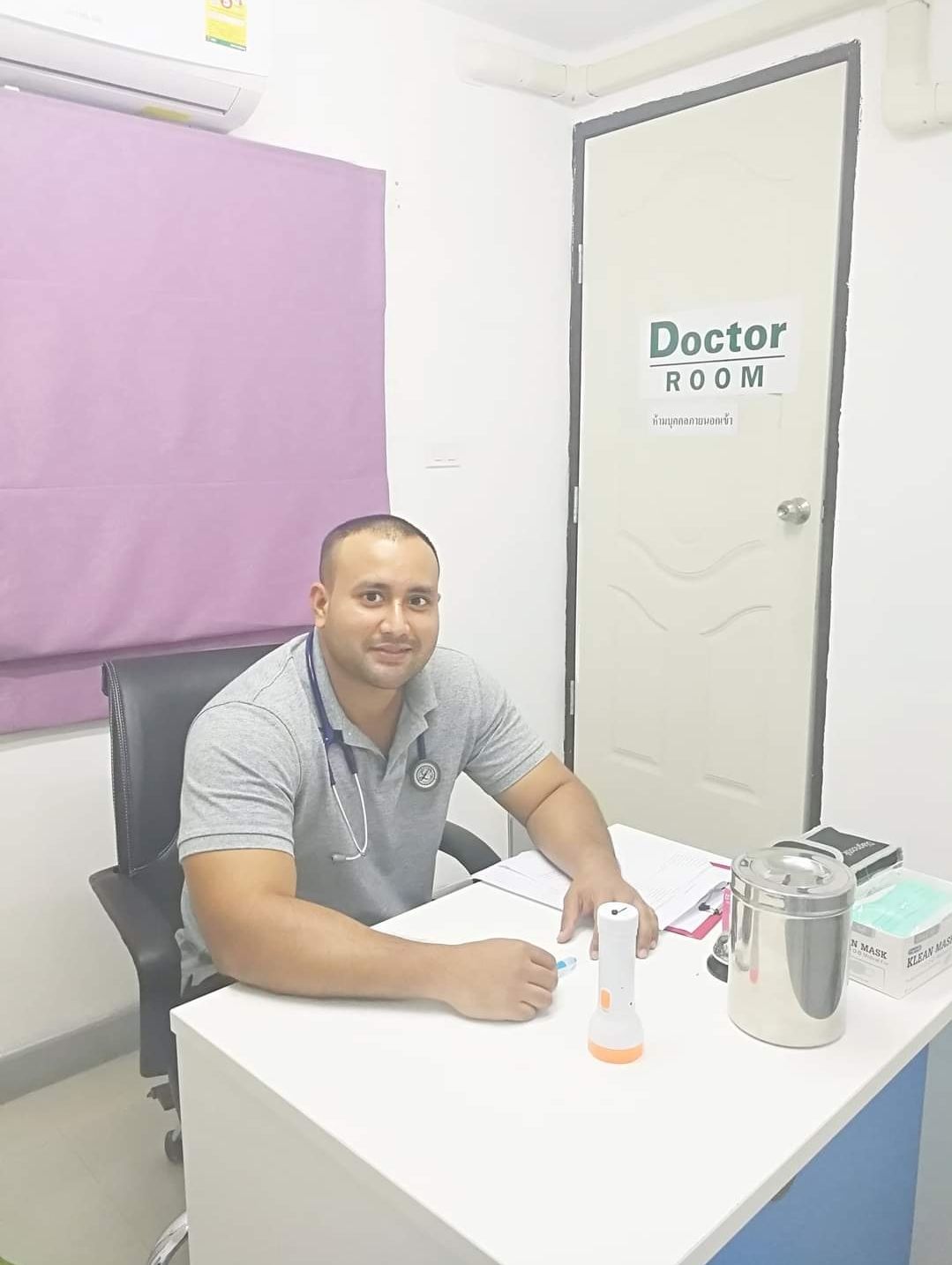
Dr. Ponlawat Pitsuwan is a physician at Doctor Bangkok, a private clinic in central Bangkok. He sees expats, residents, and medical tourists for general medicine, wellness consultations, and IV therapy. His focus is straightforward, evidence-based care delivered in plain language.