

Clinically reviewed by Dr. Ponlawat Pitsuwan, Physician, Doctor Bangkok. Last reviewed: August 2026
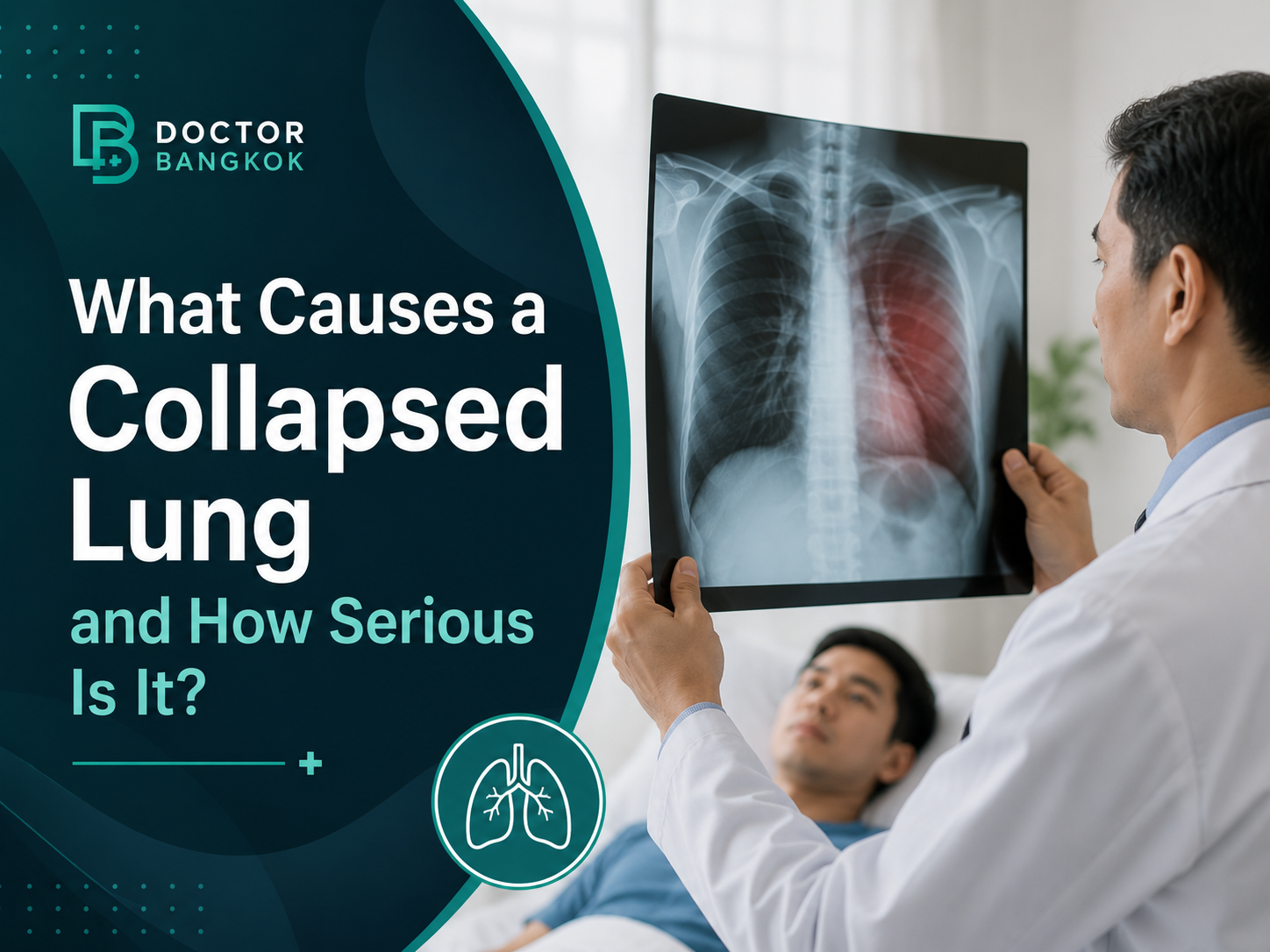
A collapsed lung, called a pneumothorax, happens when air leaks into the space between your lung and chest wall, causing the lung to partly or fully deflate. It can happen with no warning, even in healthy people. The most common signs are sudden sharp pain on one side of your chest and shortness of breath. Some small cases resolve with rest and monitoring, but most need medical assessment the same day.
I see this more than people expect. A patient comes in, usually a man in his late twenties or thirties, fit and healthy, saying he felt a sudden sharp pain in his chest while sitting at his desk. No injury, no exertion, nothing obvious. He checked his symptoms on the BTS, worried it might be his heart, and came straight in. Half the time, it turns out to be a collapsed lung.
A collapsed lung sounds dramatic, and it can be. But knowing what you are dealing with, and knowing fast, is what determines how serious it gets. If something feels off in your chest right now, here is what you need to know.

What Is a Collapsed Lung?
The medical term is pneumothorax. Your lungs sit inside your chest, surrounded by a thin space. When air leaks into that space, it pushes against the lung and stops it from expanding properly. The lung deflates, partly or fully, depending on how much air gets in.
There are different types, and the type matters for how serious it is. A primary spontaneous pneumothorax happens in people with no known lung disease, often for no clear reason. A secondary spontaneous pneumothorax happens in people who already have a lung condition. A traumatic pneumothorax follows a chest injury.
The most dangerous type is a tension pneumothorax. Air keeps entering the space but cannot escape. Pressure builds rapidly, squeezes the heart and the opposite lung, and this becomes a medical emergency fast.
What Causes a Collapsed Lung?
Blebs and Spontaneous Causes
In young, otherwise healthy people, the most common cause is a small bleb. A bleb is a tiny, weak air pocket on the surface of the lung, similar to a blister. It can rupture without warning, sending air into the space between the lung and chest wall. Most patients had no idea they had one.
Smoking significantly raises the risk. Vaping appears to carry similar risk, though the evidence is still developing. Some genetic conditions, including Marfan syndrome, a connective tissue disorder common in tall, long-limbed people, can cause blebs to form more easily.
Underlying Lung Disease
In older patients, the cause is usually an existing lung condition. COPD, chronic obstructive pulmonary disease, creates areas of damaged lung tissue that can rupture. Asthma, tuberculosis, and cystic fibrosis can do the same. A collapsed lung in someone with underlying disease tends to be more serious because their lung function is already reduced.
Trauma
A direct blow to the chest, a car accident, a fall, or a rib fracture can tear lung tissue and let air in. In some cases, a medical procedure near the chest, such as a central line placement, can accidentally cause a pneumothorax. Less common, but worth knowing if you have had a recent procedure.
Activity and Pressure Changes Around Bangkok
This is something I raise specifically with patients here. Scuba diving in the Gulf of Thailand changes the pressure your lungs experience significantly. Ascending too fast, or diving with undetected blebs, raises your risk considerably. Flying is also relevant. Cabin pressure at altitude is lower than at sea level, and a small existing pneumothorax can worsen in the air.
High-altitude trekking, popular among expats heading to northern Thailand or Nepal, carries a similar concern. If you have had a previous pneumothorax and are planning any of these activities, get medical clearance before you go.

Collapsed Lung Versus Atelectasis: Why the Difference Matters
Patients often confuse these two because both involve a lung not working fully. They are different problems with different treatments.
Atelectasis means part of a lung has collapsed due to a blockage, usually mucus, inside the airway. The lung structure is fine, but air cannot get in because the passage is blocked. It is common after surgery or during a chest infection and often resolves with deep breathing and physiotherapy.
A pneumothorax is the opposite. Air gets in where it should not be, outside the lung. The urgency and the treatment are different, and the two conditions need different imaging to tell apart. If your doctor mentions a partial collapse, ask which type they mean. It changes everything about what happens next.
Who Is Most at Risk of a Collapsed Lung?
The classic patient is a tall, thin young man between 18 and 40. Body shape genuinely matters here. Tall, slender people tend to have longer lung tips, the upper parts of the lungs where blebs are most likely to form. Smoking or vaping raises the risk further.
People with Marfan syndrome or similar connective tissue conditions are at higher risk regardless of age or build. Anyone with COPD, severe asthma, or a history of tuberculosis is in the secondary spontaneous category and needs to take chest symptoms seriously.
There is also a less commonly discussed group: women with endometriosis. In rare cases, endometrial tissue can affect the diaphragm or the pleura, the lining around the lung, causing what is called a catamenial pneumothorax, a lung collapse that occurs around the time of a period. It is often missed for years. If you are a woman with recurring unexplained chest pain tied to your cycle, bring it up with your doctor.
Symptoms: What a Collapsed Lung Actually Feels Like
The most common description I hear is a sudden, sharp, stabbing pain on one side of the chest, left or right, not central. It often gets worse when you breathe in deeply. Shortness of breath follows, sometimes mild, sometimes significant. Some patients notice their breathing feels faster and shallower than usual.
More serious cases bring a rapid heart rate and low oxygen levels. In a severe tension pneumothorax, the lips or fingernails can take on a bluish tinge. That is a medical emergency.
Mild cases can be subtle. Some patients describe a dull ache they put off for a day or two, assuming it was a pulled muscle. That delay can matter.
When to Go to an ER Versus When a Clinic Can Help First
If you have any of these right now, go directly to a hospital emergency room: severe difficulty breathing, lips or fingernails turning blue, rapidly dropping consciousness, or chest pain with a very fast heart rate and feeling faint. These can mean a tension pneumothorax and need immediate intervention.
If your symptoms are milder, one-sided chest pain with moderate shortness of breath and stable breathing, a private clinic is a reasonable first step. At Doctor Bangkok, we can arrange a chest X-ray, check your oxygen levels, and give you a clear answer quickly. Many expats come to us first because navigating a Thai public emergency department under stress, with a language barrier, adds a layer of difficulty you do not need.
Do not wait overnight to see what happens. A small pneumothorax can become a larger one.
How a Collapsed Lung Is Diagnosed
A chest X-ray is usually the first and most important test. It shows how much air has entered the space and how much of the lung is affected. The size of that gap guides the treatment decision.
In some cases, a CT scan gives more detail, particularly if we need to check for underlying blebs or if the X-ray is not conclusive. At Doctor Bangkok, this pathway is straightforward. You come in, we assess you, arrange imaging, and have a clear picture within the hour. If you need specialist or surgical review, we refer you directly to the right team.
How a Collapsed Lung Is Treated
A small pneumothorax in an otherwise healthy person may need nothing more than rest, supplemental oxygen, and repeat imaging to confirm it is resolving. The body gradually reabsorbs the air over days to weeks. This requires monitoring, not guesswork.
A larger pneumothorax needs active treatment. Needle aspiration removes the trapped air with a needle and syringe. A chest tube, a small drain inserted between the ribs, is used for larger or ongoing air leaks and works over hours to days. Both are done in a hospital setting.
If pneumothoraces keep recurring, a procedure called pleurodesis can seal the pleural space to prevent it happening again. Surgery to remove blebs may be recommended after a second episode. Your surgeon makes that call based on your imaging and history.
Recovery and Returning to Normal Activity in Bangkok
Most patients recover well. The part that surprises people is what they cannot do during recovery.
Flying is one of the most common questions I get from Bangkok-based patients with flights already booked. The standard guidance is to wait at least two to three weeks after confirmed resolution on imaging before flying. Pressure changes in the cabin can worsen a partial pneumothorax, and that is not a situation you want to be in over the Pacific.
Scuba diving is more restrictive. Full resolution, specialist clearance, and in many cases a surgical procedure if you have had more than one episode are all required before returning to diving. If you have a dive trip booked, have that conversation with your doctor first.
Recurrence is a real concern. After a first spontaneous pneumothorax, the chance of another is significant. Smoking raises that risk. Quitting is the single most impactful step most patients can take after a first episode.
Chest pain and shortness of breath in Bangkok need to be assessed the same day, not tomorrow. At Doctor Bangkok, our English-speaking physicians can evaluate your symptoms, arrange a chest X-ray, check your oxygen levels, and give you a clear answer fast. Whether you need same-day management or a referral to a specialist, we will guide you through it. Doctor Bangkok is centrally located and BTS accessible. Contact us to book a same-day consultation.
Frequently Asked Questions
Dr. Ponlawat Pitsuwan
Physician, Doctor Bangkok
a private medical clinic in central Bangkok. He sees expats, residents, and medical tourists for chest symptoms, acute illness, general consultations, and travel health concerns. His focus is straightforward, evidence-based care delivered in plain English.
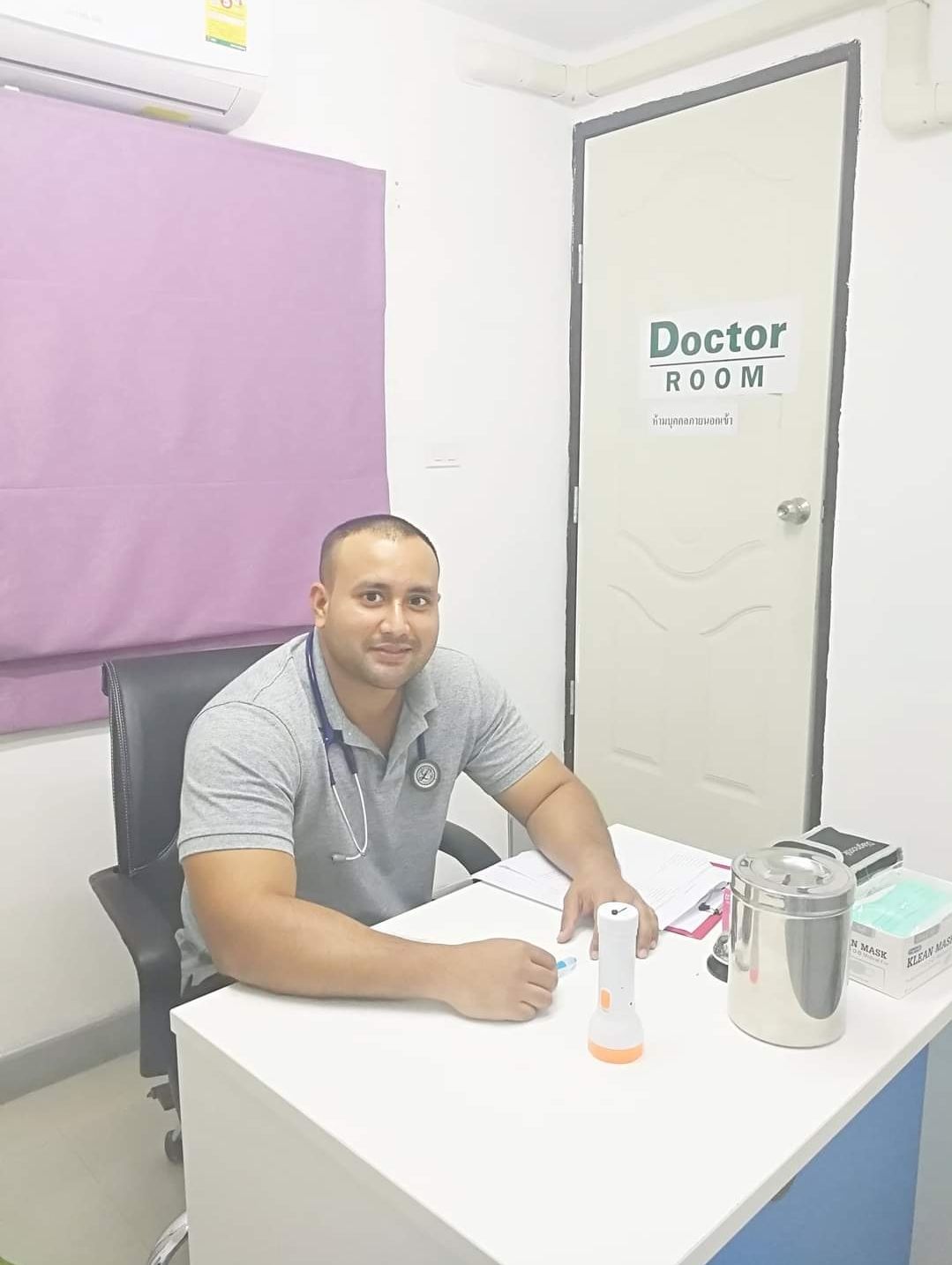
Dr. Ponlawat Pitsuwan is a physician at Doctor Bangkok, a private clinic in central Bangkok. He sees expats, residents, and medical tourists for general medicine, wellness consultations, and IV therapy. His focus is straightforward, evidence-based care delivered in plain language.