
Clinically reviewed by Dr. Ponlawat Pitsuwan, Physician, Doctor Bangkok. Last reviewed: August 2026
How long you can live with a collapsed lung depends entirely on the type. A small collapse may resolve over days to weeks with monitoring. A large one can become life-threatening within hours. A tension pneumothorax, the most dangerous type, can be fatal within minutes without emergency treatment. If you have sudden chest pain and shortness of breath right now, call 1669 or go to the nearest emergency room immediately.
Chest pain with shortness of breath is one of the most common reasons expats walk into a clinic looking unsure whether they are overreacting. Sometimes they are. Sometimes they are not. A collapsed lung sits exactly in that zone where the stakes vary wildly depending on what is actually happening inside your chest.
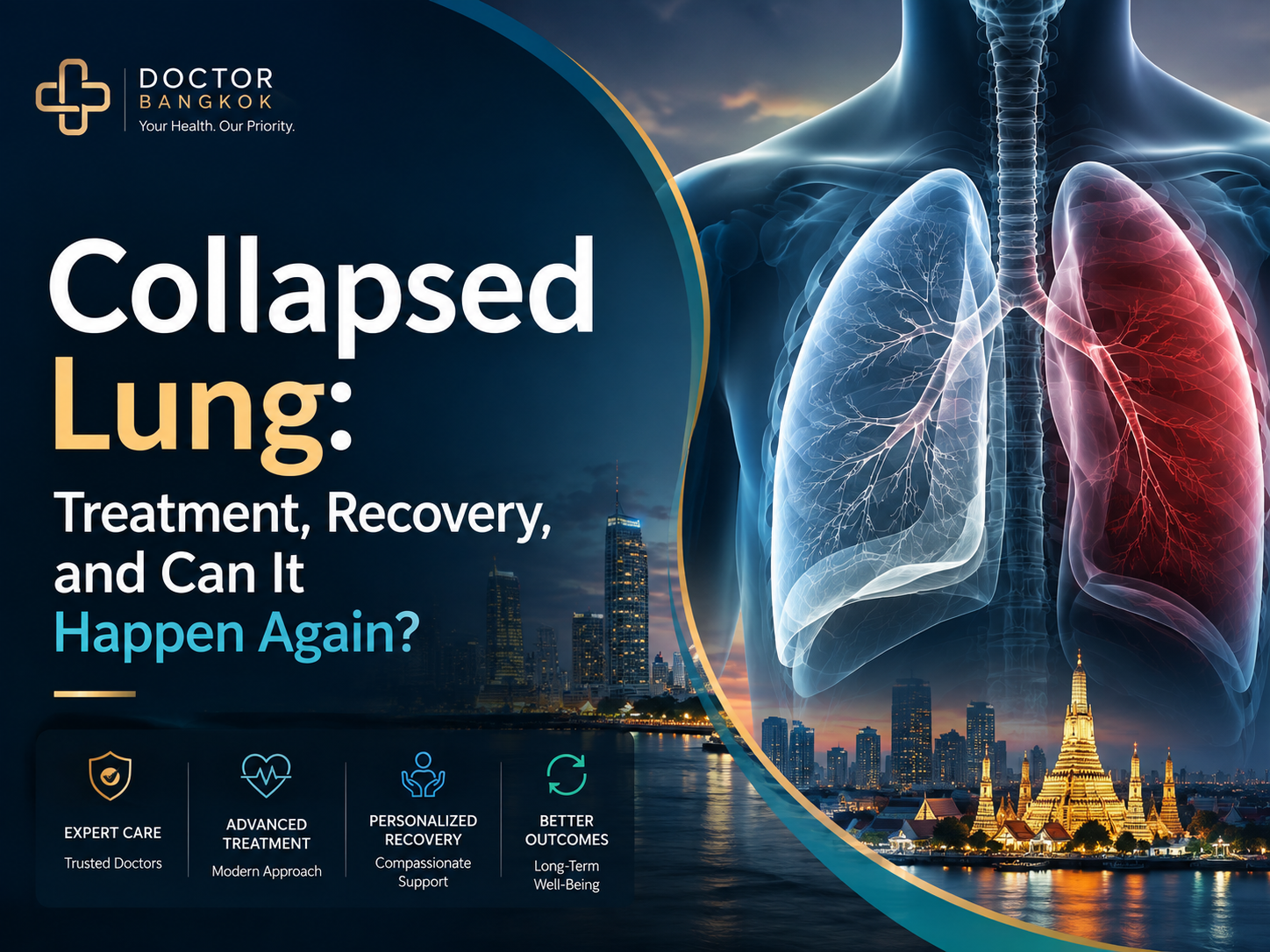
The medical term is pneumothorax. It means air has leaked into the space between your lung and chest wall, stopping the lung from expanding properly. Some cases are minor and manageable. Others cannot wait. Knowing which one you are dealing with changes everything about what you do next.

The Type Determines the Timeline and the Risk
Not all collapsed lungs are equal. The type you have determines how quickly you need help and how much danger you are actually in.
A primary spontaneous pneumothorax happens in otherwise healthy people, often young, tall, thin men with no known lung disease. A small one, affecting less than 20 percent of the lung, may reabsorb on its own over days to weeks with rest and monitoring.
A secondary spontaneous pneumothorax happens in people with existing lung conditions such as COPD or asthma. Even a small collapse can cause serious breathing problems quickly in these patients. They almost always need active treatment.
A traumatic pneumothorax follows a chest injury. A fall, a road accident, a rib fracture. This requires urgent hospital care.
A tension pneumothorax is the one that kills fast. Air keeps entering the chest with no way out. Pressure builds with every breath. The heart gets pushed sideways and cannot pump properly. This is not a clinic situation. Call 1669 or go straight to the ER.
What Is Happening Inside Your Chest
Your lungs sit inside a sealed cavity. Normally, no air sits between the lung and the chest wall. When air gets in, it takes up space and the lung starts to collapse inward.
In a simple pneumothorax, the air is there but not building. Your body can sometimes reabsorb it slowly. In a tension pneumothorax, each breath pumps more air in and none escapes. The rising pressure pushes the heart toward the other side of your chest. When the heart cannot fill properly, blood pressure drops and you lose consciousness. This can happen within minutes.

Warning Signs That Mean Go to the ER, Not a Clinic
Sharp chest pain on one side that started suddenly is the most common symptom. It often gets worse when you breathe in deeply. Shortness of breath usually comes with it.
Some symptoms mean you need an ER right now. If your lips or fingertips are turning blue, your blood is not carrying enough oxygen. If you feel faint, if your heart is racing, if something feels seriously wrong, trust that feeling. Call 1669 and do not drive yourself.
Doctor Bangkok can assess non-emergency presentations, including chest symptom evaluation and imaging referrals, and determine whether you need a hospital or can be monitored conservatively. But if you have any of the red-flag symptoms above, go straight to a hospital emergency department.
Who Is at Higher Risk of a Collapsed Lung
Primary spontaneous pneumothorax happens most often in young, tall, thin men. Taller people tend to develop small air-filled pockets at the top of the lung that can rupture. Smoking significantly increases the risk, even in younger people.
Secondary pneumothorax is more common in people with COPD, asthma, cystic fibrosis, or a history of tuberculosis. New chest pain or worsening breathlessness in anyone with these conditions needs to be taken seriously.
For expats and travellers in Bangkok, two risk factors come up regularly. First, long-haul flights. Cabin pressure changes can trigger a pneumothorax in someone with undiagnosed lung pockets. Second, air quality. Bangkok’s pollution affects people with underlying lung conditions and can make a secondary pneumothorax more likely.
How a Collapsed Lung Is Diagnosed and Treated
A chest X-ray is the standard first step. It shows the size of the collapse and how far the lung has pulled away from the chest wall. In some cases, a CT scan is needed for a clearer picture.
A small primary spontaneous pneumothorax in a stable patient may be managed with rest, supplemental oxygen, and monitoring. Oxygen helps the body reabsorb the trapped air faster.
A larger collapse usually needs a procedure to remove the air, either a needle aspiration or a chest tube placed between the ribs to drain it over hours or days. For recurrent cases or high-risk patients, a surgical option called video-assisted thoracoscopic surgery can seal the lung pockets and reduce the chance of it happening again.
Can It Happen Again
Yes, and this is one of the most important things to understand after a first episode. After a primary spontaneous pneumothorax, the risk of it happening again on the same side is real. After a second episode, the risk rises further. After a secondary pneumothorax, the risk stays high because the underlying lung condition remains.
This is why a definitive surgical procedure is seriously considered after a second episode, or sometimes after the first in high-risk patients. If you have had a pneumothorax before and you are now in Bangkok with chest symptoms, mention that history immediately when you come in. It changes how we assess you.
Life After a Collapsed Lung: What Expats and Travellers Need to Know
Flying is the question I hear most from patients who have had a pneumothorax and need to get home. Standard guidance is to wait at least two to six weeks after the lung has fully re-expanded before boarding a flight. Pressure changes at altitude can cause a partially healed area to rupture again. Come in for a fit-to-fly assessment before you book anything. Do not assume you are fine because the chest pain has gone.
Scuba diving is a separate issue, and it comes up often given how popular Thailand’s dive sites are. After a spontaneous pneumothorax, diving is generally considered too risky unless you have had definitive surgical treatment and been cleared by a doctor with dive medicine experience. The pressure changes during a dive are significant and the consequences of a pneumothorax underwater are severe. Do not dive at Koh Tao, the Similan Islands, or anywhere else until you have that clearance.
Getting Assessed in Bangkok: What to Expect
If your chest pain is not immediately life-threatening, no blue lips, no fainting, no extreme breathlessness, Doctor Bangkok is a reasonable starting point. We see expats with chest symptoms regularly and we can help triage what needs urgent hospital referral versus what can be monitored.
We will take a history, examine you, and check your oxygen saturation with a fingertip sensor. If anything points toward a serious or large pneumothorax, we will refer you directly to a hospital emergency department and help you get there. Bangkok’s major hospital emergency departments, including Bumrungrad, Samitivej, and BNH, are all equipped to manage pneumothorax, including chest tube insertion and surgical options. If it looks like an emergency from the start, call 1669 first.
If you have had sudden chest pain or shortness of breath and you are not sure what is going on, do not wait it out. Doctor Bangkok offers same-day general medical consultations for expats and visitors in central Bangkok. We assess chest symptoms, arrange hospital referrals when needed, and provide fit-to-fly clearance for patients recovering from respiratory conditions. We are BTS accessible and English-speaking. Contact us to book.
FAQ
Dr. Ponlawat Pitsuwan
Physician, Doctor Bangkok
a private medical clinic in central Bangkok. He sees expats, residents, and medical tourists for general medical consultations, respiratory assessments, chest symptom evaluation, and fit-to-fly clearances. His focus is straightforward, evidence-based care delivered in plain language.
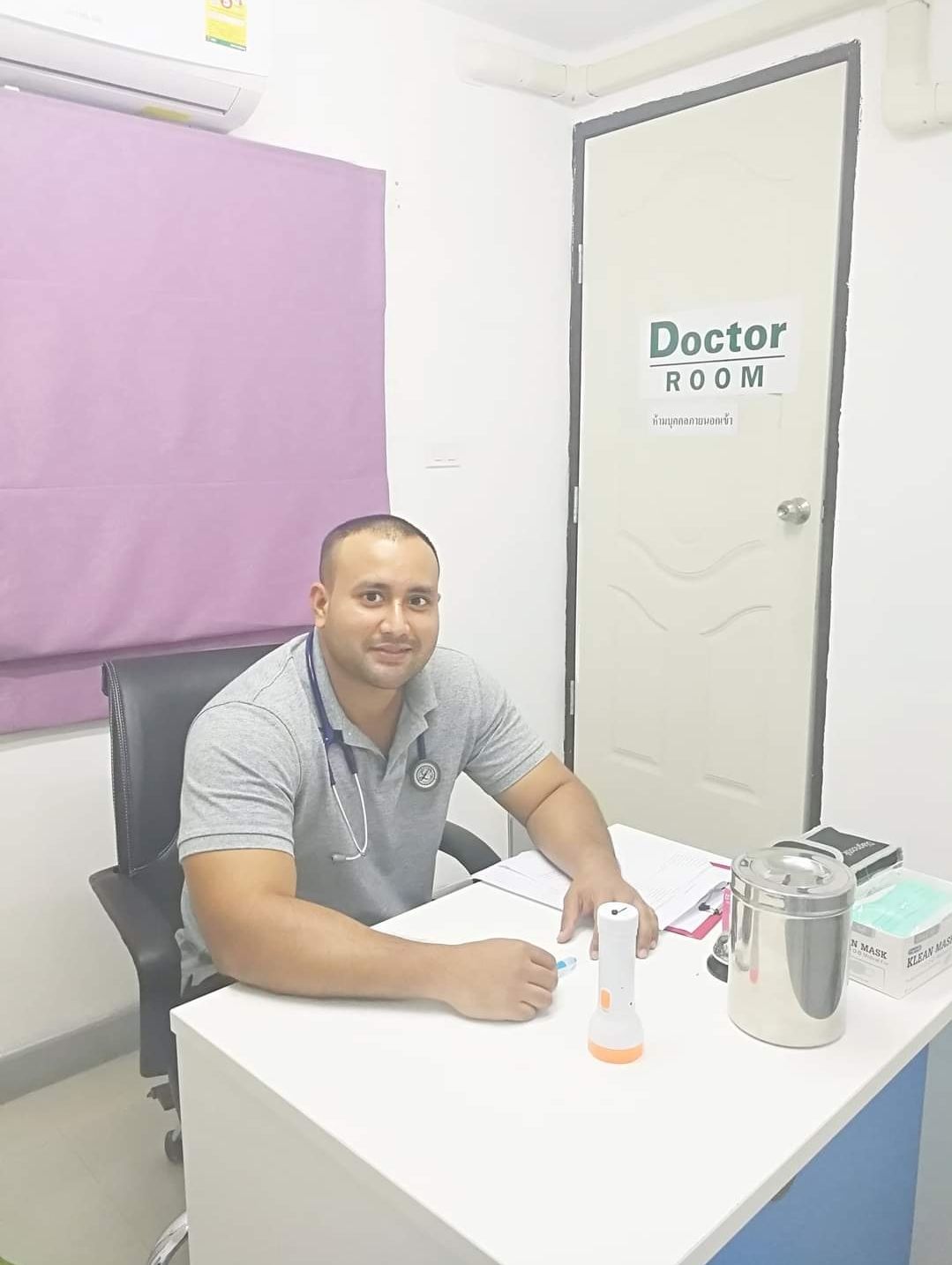
Dr. Ponlawat Pitsuwan is a physician at Doctor Bangkok, a private clinic in central Bangkok. He sees expats, residents, and medical tourists for general medicine, wellness consultations, and IV therapy. His focus is straightforward, evidence-based care delivered in plain language.