
Clinically reviewed by Dr. Ponlawat Pitsuwan, Physician, Doctor Bangkok. Last reviewed: August 2026
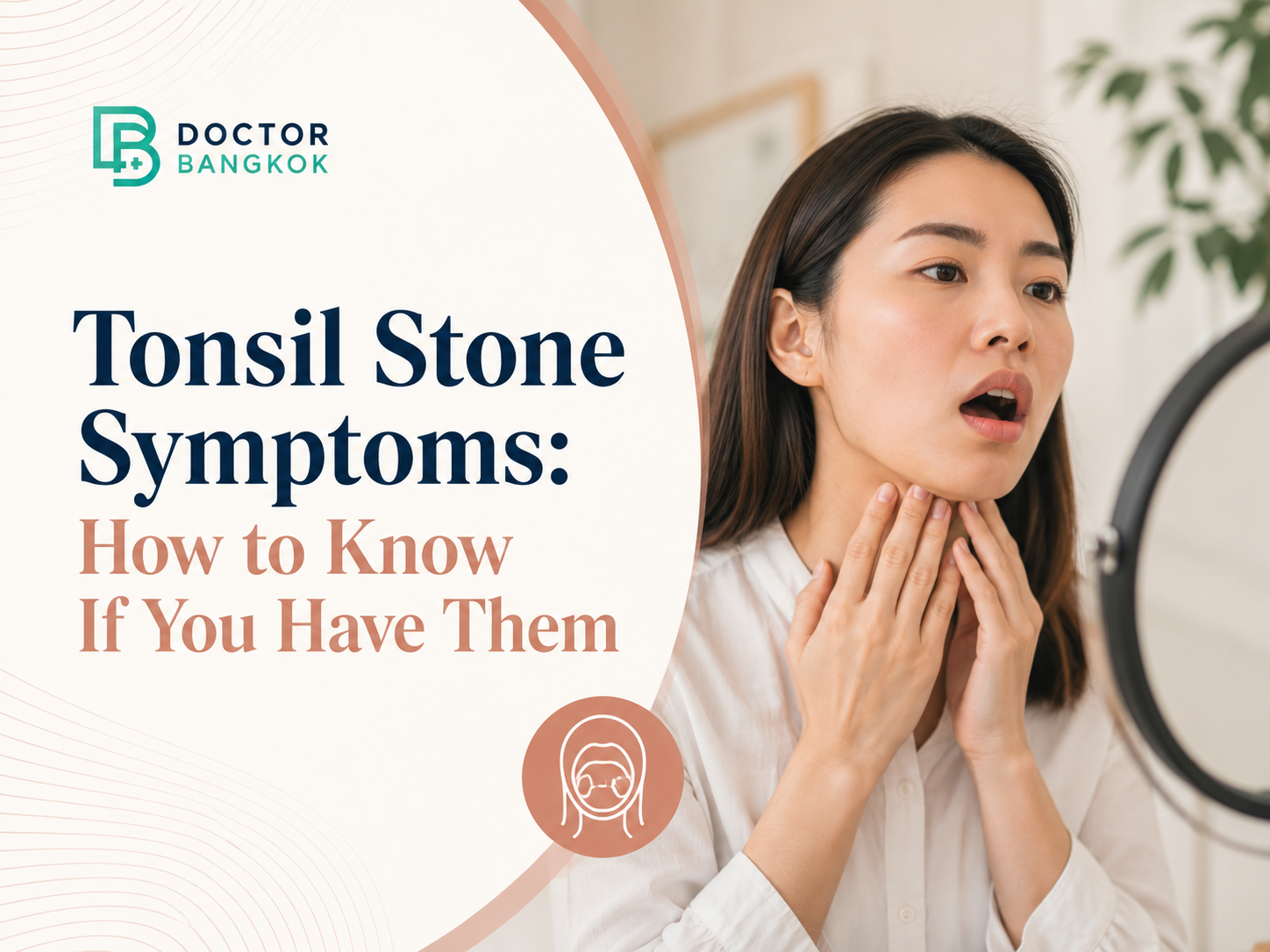
Tonsil stones cause persistent bad breath, a stuck feeling in the throat, mild soreness, and sometimes ear pain on one side. Many people have them without seeing any white spots. If your bad breath does not improve with brushing and your throat feels constantly irritated, tonsil stones are worth ruling out.
Bad breath that survives every mint, every rinse, every brushing session. I hear this regularly at the clinic, often from expats who have been quietly embarrassed about it for months and assumed it was the food or the heat. Sometimes it is tonsil stones, and they had no idea.
Tonsil stones, or tonsilloliths, are small calcified deposits that form in the pockets of your tonsils. They are not dangerous for most people, but the symptoms can be genuinely disruptive. This guide covers what tonsil stone symptoms actually feel like, how to tell them apart from tonsillitis, and when it makes sense to get checked in Bangkok rather than waiting it out.

What Tonsil Stone Symptoms Actually Feel Like
The classic picture is this: breath that smells bad no matter what you do, a nagging feeling that something is stuck at the back of your throat, and mild discomfort when you swallow. Sometimes patients notice a white or yellowish spot on one tonsil. Sometimes there is nothing visible at all.
Persistent bad breath is the most common complaint, and usually the one that finally brings people in. A chronic low-grade sore throat, a feeling of pressure or fullness, and an irritating cough that will not settle are all typical. Some patients also report ear pain on one side, which sounds unrelated but is a well-recognised part of the picture.
Difficulty swallowing can happen when stones are large enough to create physical bulk. It is usually mild, more of an awareness than actual obstruction. If swallowing becomes genuinely painful or difficult, that changes things and warrants prompt assessment.
Why Tonsil Stones Cause Such Persistent Bad Breath
This is the part that surprises most patients. The stones sit deep inside the tonsil pockets, not on your teeth or tongue. Brushing and mouthwash simply cannot reach them. That is the key clinical clue: if bad breath is genuinely resistant to good oral hygiene, the tonsils are worth examining.
The stones carry a bacterial coating that produces sulfur compounds as it breaks down trapped debris. The smell is strong and comes from a source that standard oral hygiene cannot touch. Treating the stones is the only way to deal with this kind of bad breath at its source.

Hidden Tonsil Stones: Symptoms When You Cannot See Them
Most people assume that if their throat looks normal in a mirror, they are in the clear. That is not always true. Stones can sit deep inside tonsillar crypts, completely invisible without a proper examination or imaging.
Hidden stones can still cause every typical symptom: bad breath, a chronic cough, throat irritation, and referred ear pain. Patients often spend months blaming post-nasal drip, allergies, or dry air from air conditioning. All of those are common in Bangkok, which is exactly why the tonsils get overlooked. A clinical throat examination is far more reliable than checking your own throat at home.
If symptoms persist and the cause stays unclear, a low-dose CT scan can detect calcified deposits that are not visible on examination. It is not always necessary, but it is an option when things do not add up.
Tonsil Stones vs Tonsillitis: How to Tell the Difference
This is the comparison I get asked about most often, and it matters because the two conditions are managed very differently.
| Feature | Tonsil Stones | Tonsillitis |
|---|---|---|
| Fever | Rare | Common |
| Onset | Gradual | Rapid, often sudden |
| Pain level | Mild to moderate | Usually significant |
| Bad breath | Prominent | Present but secondary |
| Swollen neck glands | Uncommon | Frequent |
| White spots on tonsils | Possible (stone surface) | Possible (pus or exudate) |
| Improves with antibiotics | No | Often yes (if bacterial) |
The key difference is fever and speed of onset. Tonsillitis comes on fast and usually makes you feel genuinely unwell: high temperature, significant throat pain, swollen neck glands. Tonsil stones creep up slowly. The discomfort is real but rarely severe, and patients usually describe it as a constant low-level nuisance rather than acute pain.
One important caveat: a large stone can trigger a secondary local infection that does produce fever and worsening pain. At that point the two conditions overlap, and a clinical assessment is the only reliable way to sort it out. A rapid strep test can rule out streptococcal tonsillitis in minutes.
Tonsil Stones and Ear Pain: What Is Actually Happening
Patients are always surprised by this one. A tonsil stone causing ear pain sounds like two unrelated problems. It is not.
A single nerve supplies sensation to both the tonsil area and part of the ear canal. When a stone creates pressure or irritation in the tonsil, the brain can misread that signal as coming from the ear. The ear itself looks completely normal on examination, because it is. This is called referred ear pain, and it is a commonly missed connection.
If your ear has been checked and nothing found, and you also have bad breath or throat discomfort, mention all of it at your next appointment. The full picture matters.
Bangkok-Specific Factors That Can Make Tonsil Stone Symptoms Worse
Living in Bangkok creates a specific set of conditions that can make tonsil stones more likely to form or more symptomatic. I see this pattern regularly, particularly in expat patients.
Air conditioning is everywhere here. Long hours in heavily air-conditioned offices and condos dry out the mouth and throat, which reduces saliva flow. Saliva is one of the things that helps flush debris out of the tonsil pockets, so less of it means more accumulation. Mouth breathing, which is common in people with nasal congestion from Bangkok’s pollution or dusty dry-season air, makes this worse.
Post-nasal drip from pollution and seasonal allergies also feeds more debris into the tonsil crypts. Dairy and alcohol can both promote mucus production and feed the bacterial environment in the tonsils. These are not things to eliminate entirely, but worth knowing if you are dealing with stones that keep coming back.
When to See a Doctor in Bangkok for Tonsil Stone Symptoms
Most tonsil stones are not urgent. Saltwater gargles and good oral hygiene handle mild cases, and small stones sometimes dislodge on their own.
Come in for a consultation if bad breath or throat discomfort has persisted for more than two to three weeks despite home care. Come in sooner if you develop fever alongside throat pain, if pain is rapidly worsening on one side, or if you have difficulty opening your mouth fully. These can point to a peritonsillar abscess, a collection of pus beside the tonsil, which is a different and more urgent situation.
At Doctor Bangkok, our English-speaking doctors can examine your throat properly, run a rapid strep test if tonsillitis is a possibility, and give you a clear answer without the wait of a large hospital. If you need an ENT specialist or further imaging, we can coordinate that referral directly. You do not need to work through the Thai hospital system alone to get this sorted.
If you have persistent bad breath, a chronic sore throat, or a stuck feeling that will not settle, come in and get your throat properly examined. Doctor Bangkok’s English-speaking physicians are available for same-day consultations in central Bangkok, BTS accessible. We can assess for tonsil stones, rule out tonsillitis or other causes, and advise on your next step including ENT referral if needed. Book online or walk in.
Frequently Asked Questions
Dr. Ponlawat Pitsuwan
Physician, Doctor Bangkok
a private medical clinic in central Bangkok. He sees expats, residents, and medical tourists for general medical consultations including throat and ear complaints, persistent bad breath, and conditions that do not fit neatly into a single specialty. His approach is straightforward and evidence-based, delivered in plain language.

Dr. Ponlawat Pitsuwan is a physician at Doctor Bangkok, a private clinic in central Bangkok. He sees expats, residents, and medical tourists for general medicine, wellness consultations, and IV therapy. His focus is straightforward, evidence-based care delivered in plain language.