
Clinically reviewed by Dr. Ponlawat Pitsuwan, Physician, Doctor Bangkok. Last reviewed: August 2026
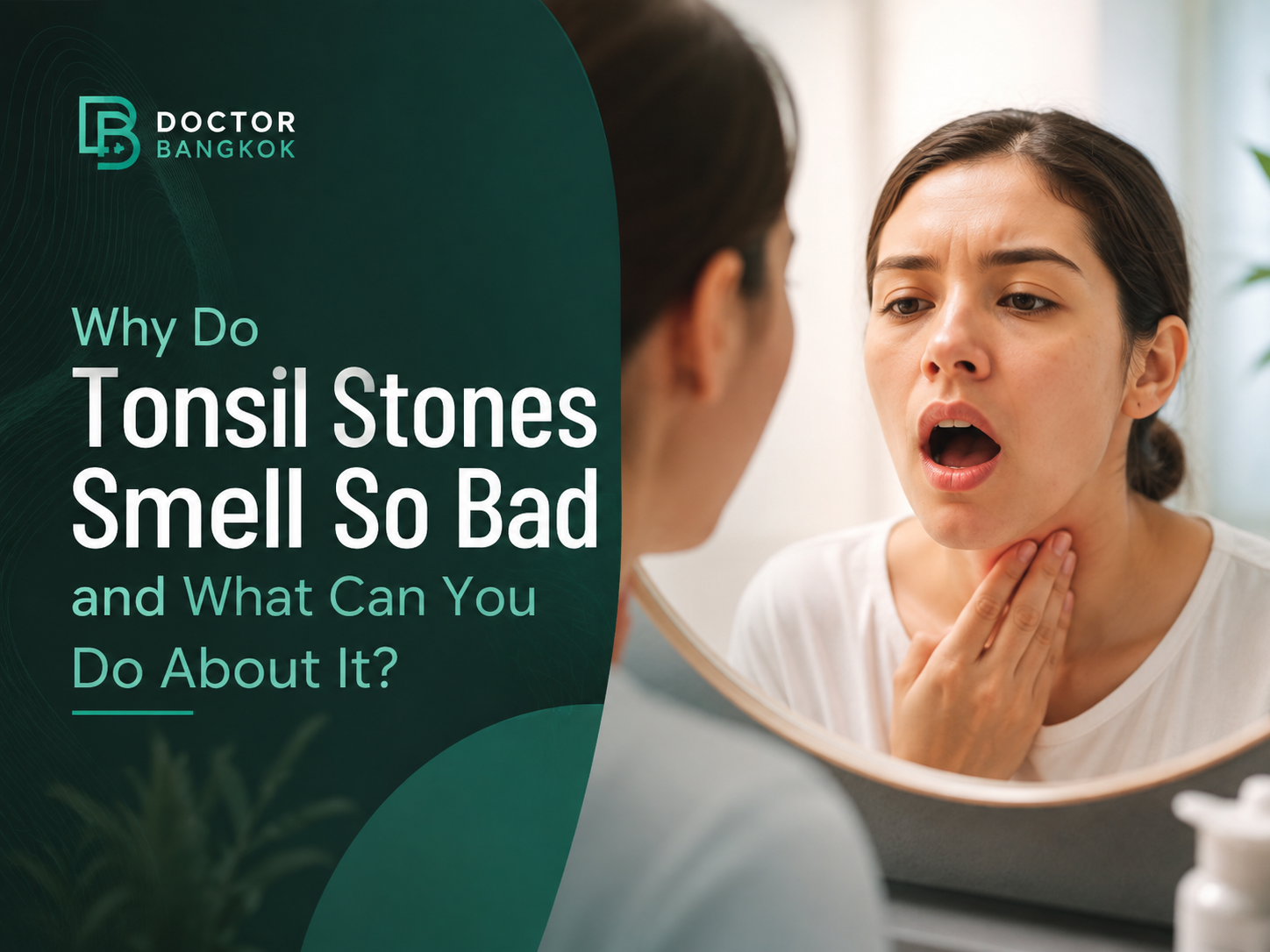
Tonsil stones smell because bacteria living deep inside your tonsil folds produce sulfur gases, including hydrogen sulfide and methyl mercaptan. These are the same compounds found in rotten eggs and spoiled meat. Small stones can often be managed at home, but recurring stones or those paired with fever, swelling, or difficulty swallowing need a doctor.
If you can smell something on your breath that no amount of brushing fixes, and you have noticed small white or yellowish lumps at the back of your throat, you are probably dealing with tonsil stones. This comes up at least a few times a week at our clinic, often from expats who have been in Bangkok long enough to notice it getting worse.
The smell is not in your head, and it is not just poor oral hygiene. There is a specific reason tonsil stones produce one of the most persistent odours in general medicine, and once you know what it is, the treatment options make a lot more sense.

Why Tonsil Stones Smell So Bad
Your tonsils are not smooth on the surface. They have folds and pockets called tonsillar crypts, and debris collects inside them: dead cells, food particles, and mucus from post-nasal drip. Bacteria move in and start breaking that debris down.
The bacteria doing the most damage here are anaerobic, meaning they thrive where oxygen levels are low. Deep inside the crypts is exactly that environment. As they digest organic material, they release sulfur gases. Hydrogen sulfide smells like rotten eggs; methyl mercaptan smells closer to decaying cabbage.
Over time, the debris hardens into a calcified lump: the tonsil stone, or tonsillolith. The stone traps and concentrates those gases in one spot, which is why tonsil stone smell is sharper and more persistent than ordinary bad breath. The bacteria are not just present; the stone locks in the odour and keeps producing it.
What Makes Tonsil Stone Smell Worse in Bangkok
Bangkok has a few things working against you here, and most people do not connect the dots until they are sitting across from me.
The biggest issue is air conditioning. Bangkok’s climate means most people move between heavy outdoor humidity and aggressively air-conditioned offices, malls, and apartments all day. Air conditioning dries out your mouth, and saliva is your natural defence against debris collecting in the crypts. Less saliva means less flushing, and more accumulation.
Mouth breathing makes things worse, especially if you have any sinus congestion from Bangkok’s air quality or year-round humidity. Post-nasal drip adds exactly the kind of protein-rich mucus that anaerobic bacteria love. Regular alcohol use also contributes to dry mouth, and if you are socialising most evenings in Bangkok, that effect compounds quickly.
The result for some expats is a near-ideal set of conditions for tonsil stone formation: dry mouth from the air conditioning, post-nasal drip from the pollution, and reduced saliva clearance overnight.

Tonsil Stone Smell vs Other Causes of Bad Breath
Not every case of persistent bad breath is tonsil stones. I see patients who have been treating the wrong problem for months.
Tonsil stone smell tends to be consistent throughout the day and is not noticeably worse after meals. You may be able to see or feel the stones at the back of your throat if you look carefully. Gum disease produces a similar sulfur smell but usually comes with bleeding gums or gum recession. Acid reflux tends to produce a sour or acidic odour, typically worse after eating or lying down. Sinus infections produce a damp, musty smell and usually come with nasal congestion.
If your teeth and gums are in good shape and the smell is still there, tonsil stones are the most likely cause. A quick clinical assessment confirms it. If you have not had a dental check recently, do that too, because both problems can exist at the same time.
What You Can Do at Home
Some home options genuinely help. Others that circulate online do not, and a few can cause real harm.
Saltwater gargles are the most consistently useful starting point. Warm salt water a few times a day disrupts the bacterial environment in the crypts and can dislodge small stones. A low-pressure oral irrigator on its lowest setting can flush debris gently. A tongue scraper reduces the overall bacterial load in your mouth, which lowers sulfur gas production across the board. Staying well hydrated matters more in Bangkok than in most cities because of how much the climate and air conditioning work against you.
What to avoid: do not use fingernails, cotton swabs, or any hard object to dig at the stones. Tonsil tissue bleeds easily, and forcing something into the crypts risks gagging, tissue damage, or pushing a stone deeper. If you can see a stone clearly and reach it without straining, a firm rinse is the safer move.
When to See a Doctor About Tonsil Stone Smell
Most tonsil stones are annoying rather than dangerous. But there are presentations that need a clinical assessment, not another round of saltwater gargles.
See a doctor if you have a fever alongside the stones. That combination points to tonsillitis, a bacterial infection of the tonsil tissue itself, which needs antibiotic treatment. See a doctor if you notice swelling on one side of your throat that is significantly worse than the other. That can indicate a peritonsillar abscess, a pocket of infection beside the tonsil, and it needs same-day attention. Also come in if you are getting new stones every few weeks. Recurrence at that frequency usually means deep tonsil crypts, chronic tonsillitis, or a structural issue that home care alone will not resolve.
At Doctor Bangkok, our GPs see tonsil stone and sore throat presentations regularly. Appointments are conducted entirely in English, no referral is needed, and we can assess whether this is a stone, a tonsillitis, or something else. If the situation calls for an ENT specialist, we organise that referral directly.
Professional Removal and Longer-Term Options
If stones keep coming back, there are clinical options beyond what you can manage at home.
Direct removal in a clinic setting is cleaner and safer than attempting it yourself, particularly for stones that are larger or sitting in deeper crypts. For recurrent cases, cryptolysis is a procedure where the folds of the tonsils are reduced or sealed, making it harder for debris to collect. It keeps the tonsils intact and sits between home management and full removal as an option.
Tonsillectomy permanently eliminates tonsil stones because there are no tonsils left to form them in. It is not the first step, but for patients dealing with recurrent stones alongside chronic tonsillitis or repeated strep infections, it is often the most effective long-term answer. An ENT specialist makes that recommendation, not a GP, and Doctor Bangkok can set up that pathway for you if it is needed.
If you have a persistent bad smell you cannot shift, white lumps at the back of your throat, or recurring sore throats, come in for a consultation. Doctor Bangkok’s English-speaking GPs assess tonsil stones, sore throats, and related infections in a single appointment at our central Bangkok clinic, with same-day bookings available. If you need an ENT referral, we organise it. Book through doctorbangkok.co.th.
Frequently Asked Questions
Dr. Ponlawat Pitsuwan
Physician, Doctor Bangkok
a private medical clinic in central Bangkok. He sees expats, residents, and medical tourists for sore throat assessments, upper respiratory infections, and general medical consultations. His focus is clear, evidence-based care delivered in plain English.
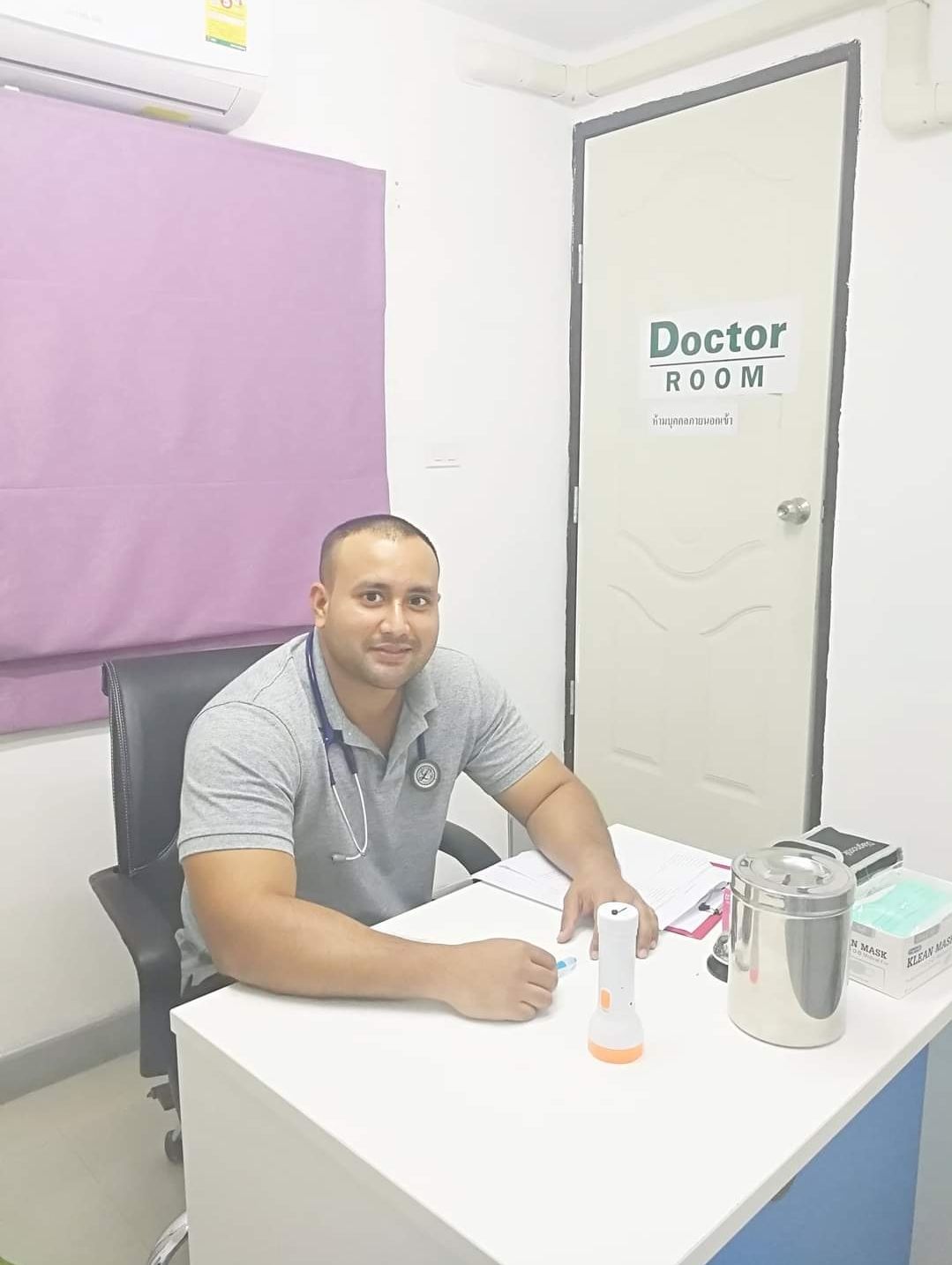
Dr. Ponlawat Pitsuwan is a physician at Doctor Bangkok, a private clinic in central Bangkok. He sees expats, residents, and medical tourists for general medicine, wellness consultations, and IV therapy. His focus is straightforward, evidence-based care delivered in plain language.