

Clinically reviewed by Dr. Ponlawat Pitsuwan, Physician, Doctor Bangkok.
Last reviewed: September 2026
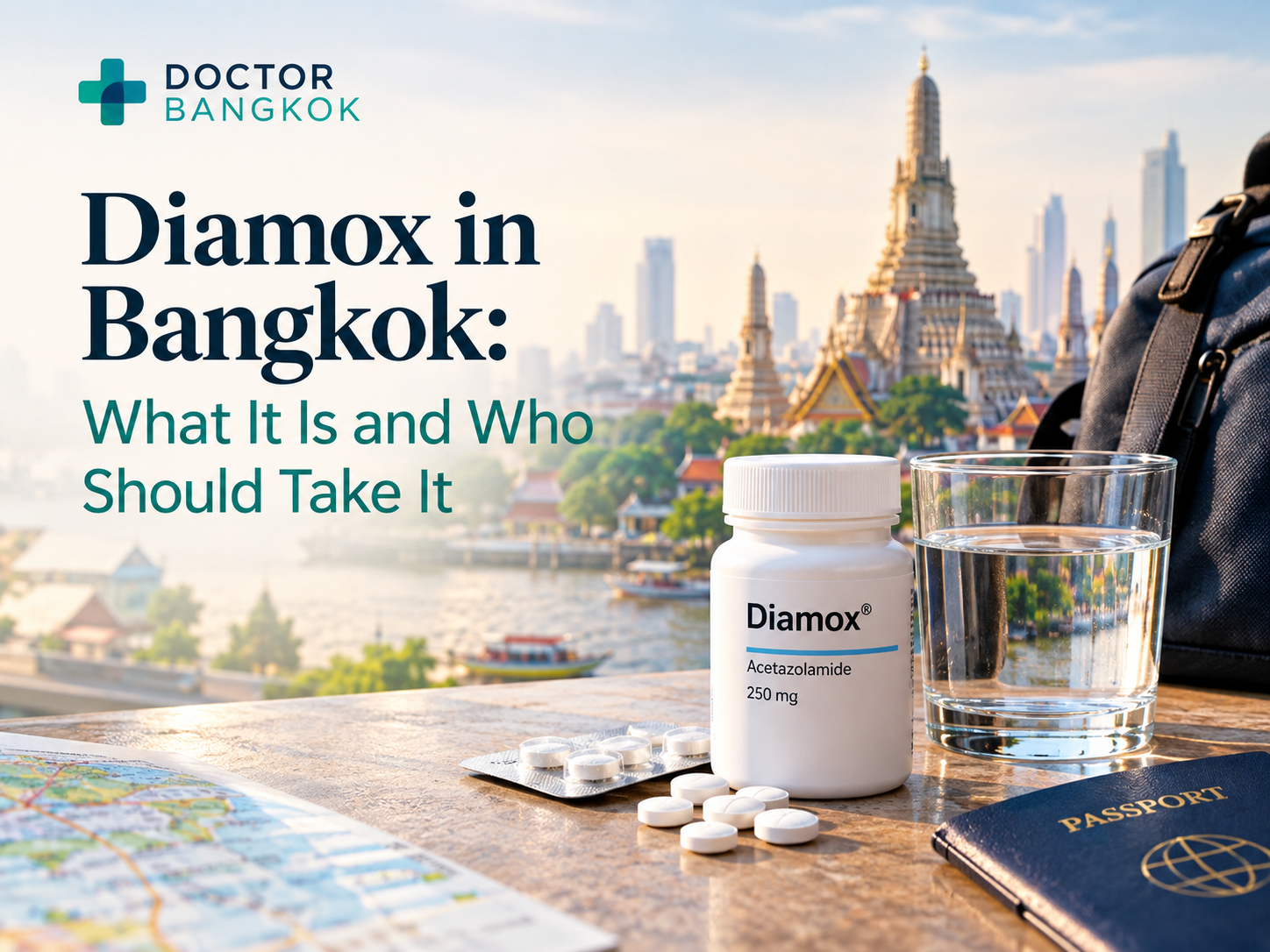
Diamox (acetazolamide) is a prescription medication used to prevent and treat altitude sickness. It speeds up acclimatisation so your body adjusts faster at high elevation. It is prescription-only in Thailand. If you are heading to Everest Base Camp, Kilimanjaro, or Cusco and need a same-day prescription in Bangkok, Doctor Bangkok can assess and prescribe on the day, no appointment needed.
I see this a few times every week. Someone lands in Bangkok with two days before their flight to Kathmandu and realises they have not sorted their altitude medication. They search on the BTS, find conflicting advice, and arrive at the clinic unsure whether they even need it. If that is you, here is what actually matters.
Diamox is the brand name for acetazolamide. It is one of the most effective tools for altitude sickness prevention, what we call prophylaxis. Bangkok sits at sea level. Destinations like Everest Base Camp, Cusco, and the Kilimanjaro trailhead sit between 3,000 and 5,400 metres. That is a rapid change your body does not always handle well. Sorting your medication before you fly is the step most people skip, and it is the one that counts.
What Diamox (Acetazolamide) Does
The drug causes your kidneys to excrete bicarbonate, which makes your blood slightly more acidic. That mild acidity signals your brain to breathe more deeply and more often, even during sleep.
At altitude, most people breathe too shallowly, especially overnight. This is a major trigger for acute mountain sickness, or AMS. Diamox addresses that directly. It is not masking symptoms. It is genuinely helping your body adjust faster.
What Diamox Is Used For
Most people associate Diamox with trekking, and altitude sickness prevention is the main travel medicine use. The drug has other clinical applications too, including certain types of glaucoma, some forms of epilepsy, and a condition called idiopathic intracranial hypertension.
This matters practically. If you already take Diamox for one of those conditions and you are planning a high-altitude trip, tell your doctor. The dosing for altitude prophylaxis is different, and we need to know your full medication list before prescribing anything.
On the altitude side, Diamox is used for AMS prevention and early treatment. It is not the drug we reach for in high altitude pulmonary oedema or high altitude cerebral oedema. Those are emergencies requiring immediate descent, not medication adjustments. Diamox is a prevention tool.
Who Needs Diamox
Not every trekker needs it. If you are doing a slow ascent with rest days built in, staying below 3,000 metres, and have no history of altitude sickness, you may acclimatise fine without medication.
But if you have had altitude sickness before, your itinerary skips acclimatisation days, or you are flying directly from Bangkok to a high-altitude city like Cusco or Addis Ababa, the risk is real. Flying from sea level to 3,400 metres is a significant physiological jump. Age, fitness, and previous altitude exposure all factor into that assessment.
If your Everest Base Camp itinerary has you at Namche Bazaar within the first few days, that is exactly the kind of profile that warrants a proper pre-travel consultation. It is also a good time to sort vaccinations and any other pre-travel needs in a single visit.
Dosage and When to Start
There is genuine confusion about Diamox dosing, and I understand why. Different sources quote different numbers. The current clinical consensus for AMS prevention is 125 mg to 250 mg twice daily. Most patients do well at 125 mg twice daily, which tends to cause fewer side effects without losing effectiveness.
Start 24 to 48 hours before you begin ascending. Not when you land in Kathmandu. Before you start going up. Continue for at least the first 48 hours at altitude, or longer if your route keeps climbing to higher sleeping elevations.
If you want to use it for treatment rather than prevention, the timing and dosing shift. That needs a direct conversation with a doctor, not a Google answer. And do not stop early because you feel fine. The medication is likely why you feel fine.
Side Effects of Diamox
Most competitor pages list side effects without telling you which ones matter. Let me separate them clearly.
Expected effects you do not need to worry about: tingling or numbness in your fingers, toes, and lips is very common and does not signal a problem. Increased urination is expected because Diamox has a mild diuretic effect, so drink more water than usual. Carbonated drinks will taste flat or metallic. All of this is normal.
Effects that should prompt you to stop and seek review: any rash, especially one that spreads or blisters. Unusual bruising or fatigue that comes on quickly. Signs of an allergic reaction. These are rare but they are the warning signs of more serious events including Stevens-Johnson syndrome. Do not push through a rash hoping it will resolve.
One practical note: because Diamox has a diuretic effect, it can lower your potassium levels. If you already take a medication that affects potassium, flag that before starting Diamox.
Who Should Not Take Diamox
Diamox is a sulfonamide derivative. If you have a documented sulfa drug allergy, this is listed as a contraindication across all major prescribing references. The clinical picture around cross-reactivity between sulfonamide drug classes is more nuanced than a simple yes or no, which is exactly why this must be discussed with a doctor, not decided independently.
Kidney disease and severe liver disease are also contraindications. Diamox increases the acidity of your blood and urine, and that becomes problematic if your kidneys are not functioning well.
Drug interactions are real. Diamox can raise lithium levels in the blood and can interact with high-dose aspirin and certain anticonvulsants. Your full medication list needs to be on the table before any prescription is issued.
Diamox vs Dexamethasone for Altitude Sickness
Dexamethasone is the other medication used for altitude sickness, and most sources never give a clear practical comparison. Here is the short version.
Diamox accelerates acclimatisation. Dexamethasone is a corticosteroid that reduces inflammation and fluid accumulation, but it does not help your body actually acclimatise. Stop dexamethasone at altitude without having acclimatised and symptoms can return fast.
Diamox is the preferred first choice for prophylaxis in most healthy travellers. Dexamethasone is used when Diamox is contraindicated, for example in patients with a sulfa allergy or significant kidney disease. It also has a role in emergency management of severe AMS or early cerebral oedema when descent is delayed.
| Diamox (Acetazolamide) | Dexamethasone | |
|---|---|---|
| Drug class | Carbonic anhydrase inhibitor | Corticosteroid |
| Primary use | Prevention and treatment of AMS | Treatment of severe AMS, HACE |
| Helps body acclimatise? | Yes | No |
| Side effects | Tingling, diuresis, altered taste | Insomnia, mood changes, blood sugar rise |
| Safe with sulfa allergy? | No | Yes |
| Available in Bangkok? | Prescription required | Prescription required |
Getting a Diamox Prescription in Bangkok
Diamox is prescription-only under Thai law. You cannot legally purchase it at a pharmacy without one, and buying it without a proper medical review carries real risk given the contraindications and interactions above.
At Doctor Bangkok’s walk-in clinic on Sukhumvit Soi 13, you can come in without an appointment, see an English-speaking doctor, and get assessed and prescribed the same day if Diamox is appropriate. The consultation covers your itinerary, your ascent profile, your medical history, any allergies, and your current medications. It takes around 20 minutes.
Many patients use this visit to handle everything at once. Diamox, required vaccinations, and other pre-travel needs sorted before the flight. Do not leave this until the evening before you depart. If Diamox is not right for you, you need time to talk through alternatives.
What to Do If Altitude Sickness Symptoms Worsen
Diamox reduces your risk significantly. It does not eliminate it. If you develop symptoms at altitude, the single most important rule is this: do not ascend further while symptomatic.
Symptoms of AMS include headache, nausea, fatigue, and dizziness. Rest, hydration, and Diamox if not already taking it are the first steps. If symptoms do not improve within 24 hours, descend. Do not wait for morning.
Warning signs of pulmonary or cerebral oedema include breathlessness at rest, a gurgling sound when breathing, confusion, loss of coordination, or severe headache unrelieved by anything. These require immediate descent. No medication replaces going down when symptoms escalate. Diamox is a prevention tool. When it is no longer enough, descent is the treatment.
Heading to a high-altitude destination and need a Diamox prescription in Bangkok? Doctor Bangkok can see you the same day, no appointment needed. Our English-speaking doctors will review your itinerary, medical history, and contraindications before prescribing. We are on Sukhumvit Soi 13, a short walk from BTS Nana. Come in before your flight and leave with a clear plan.
Frequently Asked Questions
Dr. Ponlawat Pitsuwan
Physician, Doctor Bangkok
a private medical clinic in central Bangkok. He sees expats, residents, and medical tourists for travel medicine consultations, altitude sickness prevention, pre-travel health assessments, and general medical care. His focus is straightforward, evidence-based care delivered in plain language.
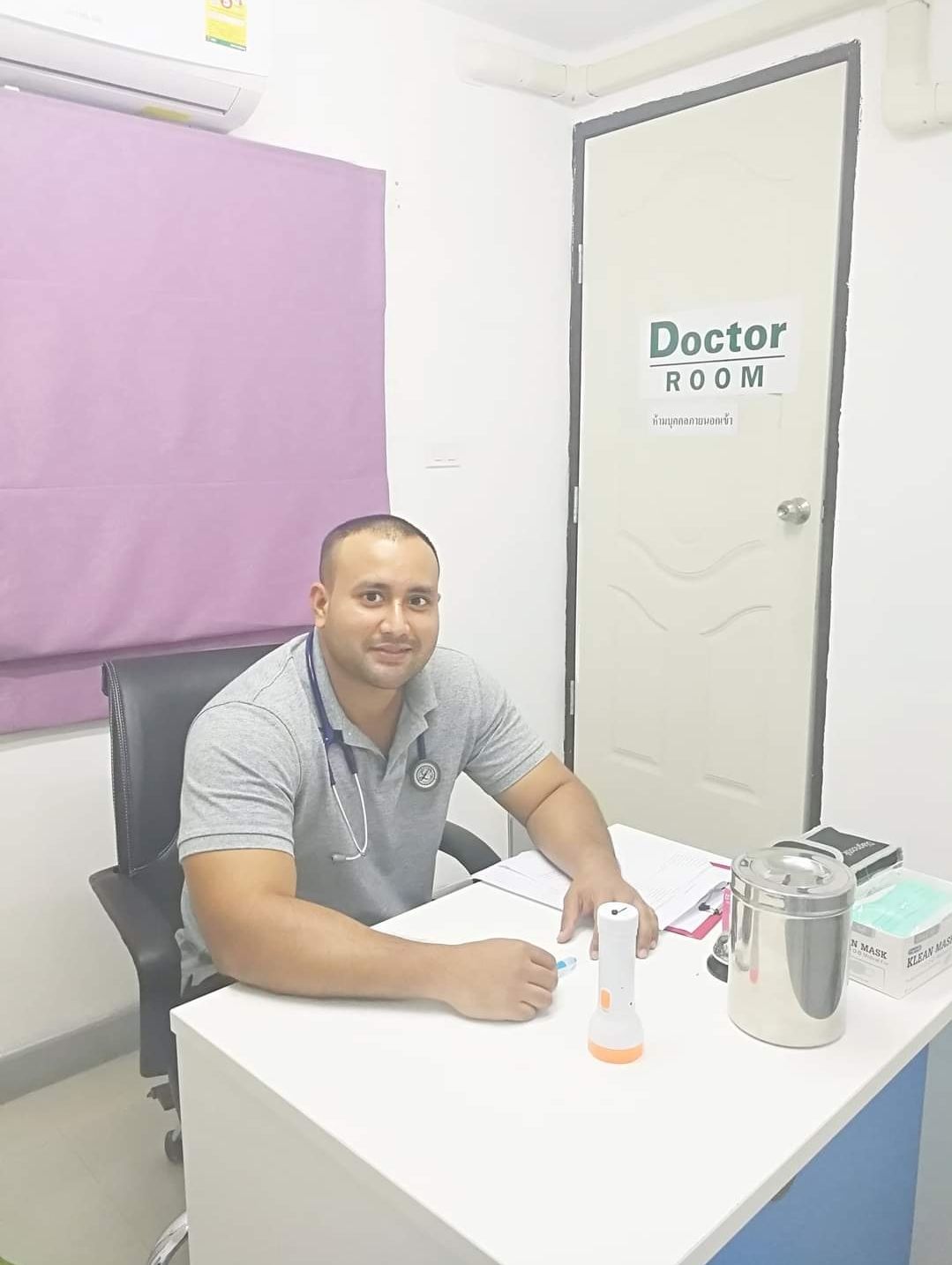
Dr. Ponlawat Pitsuwan is a physician at Doctor Bangkok, a private clinic in central Bangkok. He sees expats, residents, and medical tourists for general medicine, wellness consultations, and IV therapy. His focus is straightforward, evidence-based care delivered in plain language.