
Clinically reviewed by Dr. Ponlawat Pitsuwan, Physician, Doctor Bangkok. Last reviewed: September 2026
A tuberculin skin test (TST), also called the Mantoux or PPD test, checks whether your body has been exposed to the bacteria that cause tuberculosis. It requires two visits: one for the injection, one to read the result 48 to 72 hours later. A positive result does not mean you have active TB. It means you need follow-up testing, which Doctor Bangkok can arrange.
Most people who book a TST at our clinic are surprised to learn it takes two visits. They are fitting it around a visa deadline, a new job start date, or a work permit medical, and the two-day wait catches them off guard. If that is your situation, plan before you book. This article covers what to expect, what your result means, and what happens next.
Thailand has a meaningful TB burden. That matters if you have been here a while, work in healthcare or a school, or have had close contact with someone confirmed to have TB.

Why Living in Bangkok Raises Your TB Exposure Risk
The WHO estimates TB incidence in Thailand at around 156 cases per 100,000 people per year, placing it among the higher-burden countries in Southeast Asia. For most healthy expats, day-to-day risk is low. But if you work in a hospital, a clinic, a shelter, or a densely crowded environment, the picture changes.
I see expats who have been here two or three years and have never been screened. Some work in healthcare. Some have kids in international schools. Periodic screening in Bangkok makes sense in a way it simply would not in lower-burden countries.
Common Reasons Expats in Bangkok Need a Tuberculin Skin Test
The most common reason I see is a visa requirement. US, Canadian, and Australian visa medical examinations often include TB screening, and a TST is one of the accepted methods. Work permit medicals and pre-employment checks for healthcare roles frequently require it too.
School enrolment is another one. Some international schools in Bangkok ask for TB screening documentation before a child starts, particularly if the family is arriving from a high-burden country. Beyond paperwork, there are clinical reasons: if you have been in close contact with a confirmed TB case, or if you are about to start a medication that suppresses your immune system, such as biologics or long-term steroids, screening for latent TB first is standard practice.

How the Tuberculin Skin Test Works
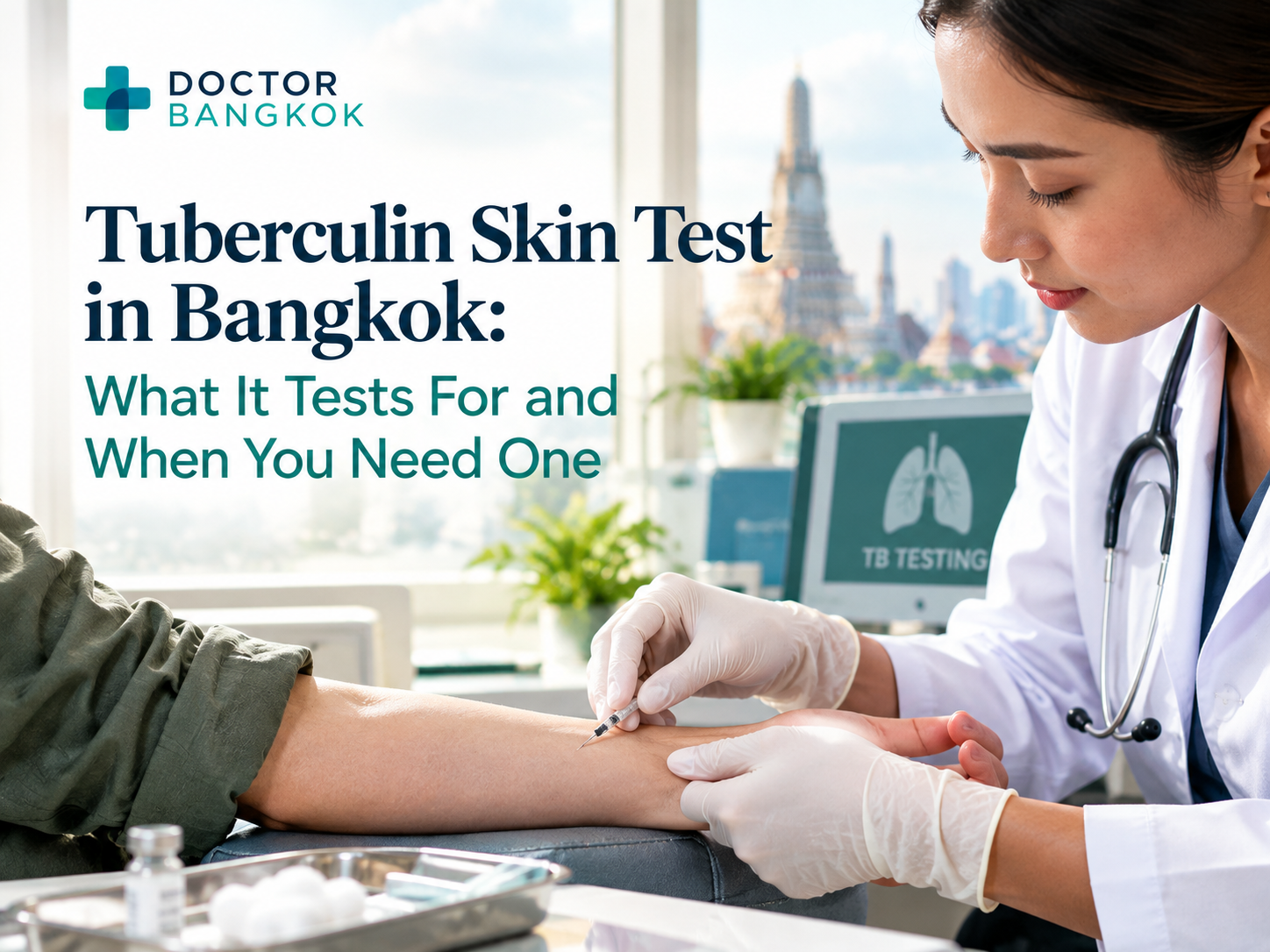
A small amount of purified protein derivative, or PPD, is injected just under the skin on your inner forearm. If your immune system has encountered TB bacteria before, it reacts. That reaction shows up as a raised, firm bump at the injection site. You return 48 to 72 hours later for a clinician to measure it.
We measure the induration, the firm raised area, not the redness around it. Redness does not count. A lot of patients come back pointing at a red patch and assume that is the result. It is not. If you cannot return within 72 hours, the test cannot be read and needs to be repeated. Plan around this before you book.
How to Read Your Tuberculin Skin Test Result
The result is not simply positive or negative. The threshold that matters depends on your situation.
Five millimetres or more is considered positive for people who are immunocompromised, for those with HIV, or for anyone who has had recent close contact with an active TB case. Ten millimetres or more applies to higher-risk groups: people living in or frequently travelling through high-burden countries like Thailand, healthcare workers, and people in crowded settings. Fifteen millimetres or more is the threshold for otherwise healthy, low-risk individuals with no known TB exposure.
| Induration Size | Considered Positive For |
|---|---|
| 5 mm or more | HIV positive, immunocompromised, recent close TB contact |
| 10 mm or more | Healthcare workers, long-term Thailand residents, high-risk occupations |
| 15 mm or more | Healthy adults with no known TB risk factors |
The BCG Complication
This is the question I get most often, and it matters for the expat population in Bangkok. If you grew up in the UK, Australia, most of Europe, South Asia, or parts of Africa and Latin America, you were likely vaccinated with BCG as a child. BCG can cause a false-positive TST result, meaning the test looks positive even though you have never been exposed to TB.
The practical problem: you are now living in Thailand, a high-burden country, and a positive TST carries real clinical weight. We cannot simply dismiss it because you had BCG. What we can do is follow up with an IGRA blood test, such as QuantiFERON-TB Gold or T-SPOT.TB, which is not affected by BCG vaccination. In many cases, if your BCG history is clear and you are not in a high-risk group, we start with the IGRA rather than the TST to avoid this problem entirely.
Exposure to nontuberculous mycobacteria, or NTM, found in soil and water, can also occasionally cause a false-positive TST. Living in Southeast Asia does raise background NTM exposure. Again, IGRA testing helps clarify this.
TST vs IGRA: Which Test Is Right for You in Bangkok
The TST and the IGRA blood tests both detect TB infection. They suit different situations.
| TST (Mantoux) | IGRA (QuantiFERON / T-SPOT) | |
|---|---|---|
| Visits required | Two (injection and reading) | One blood draw |
| Affected by BCG | Yes, can cause false positives | No |
| Affected by NTM | Sometimes | Rarely |
| Accepted for visa or work medicals | Usually yes | Depends on requirement |
| Best for | Standard screening, certain visa medicals | BCG-vaccinated patients, immunocompromised patients |
For most expats with a BCG vaccination history, I lean toward IGRA as the first-line test. It saves a second visit and avoids the BCG interpretation problem. That said, some visa and work medical requirements specifically ask for a TST. Check what your employer or embassy requires before booking.
Two-Step Testing: When Expats Need It
Two-step testing is used for people who get periodic TB screening, typically healthcare workers or those in regular contact with high-risk populations. Here is the issue it solves.
If you have not had a TST in many years, your first test may come back negative even if you were exposed to TB in the past. Your immune memory has faded. A second TST given one to three weeks later can restore that immune response and give a more reliable reading. That second result becomes your established baseline for future annual checks. If you are starting a new healthcare job in Bangkok, ask whether a two-step protocol applies to your first round of testing. We can advise on this at Doctor Bangkok.
What Happens After a Positive Tuberculin Skin Test Result
A positive TST is not a diagnosis. It is the start of a clinical conversation, and the next steps are straightforward.
First, we confirm with an IGRA blood test if one has not already been done. Second, we arrange a chest X-ray. The X-ray tells us whether the infection is active or latent. Latent TB, known as LTBI, means the bacteria are present but not causing illness. You have no symptoms, you are not contagious, and in most cases you are offered a course of antibiotics to prevent it from becoming active. Isoniazid preventive therapy, typically six to nine months, is the most widely used option and is strongly supported by evidence. If the chest X-ray suggests active TB, we refer you to an infectious disease specialist for further assessment.
Most expats who test positive have latent TB, not active disease. It is manageable. Do not sit on the result.
If you need a tuberculin skin test in Bangkok for a visa, a work permit, an employer health check, or your own peace of mind, Doctor Bangkok offers TST and IGRA testing with English-speaking physicians at our clinic in central Bangkok, a short walk from BTS Asok. Results are interpreted in the context of your BCG history, your risk factors, and your specific requirements. If your result is positive, we stay with you through the next steps. Book a same-day or next-day appointment online or contact us directly.
FAQ
Dr. Ponlawat Pitsuwan
Physician, Doctor Bangkok
a private medical clinic in central Bangkok. He sees expats, residents, and medical tourists for TB screening, travel health assessments, infectious disease concerns, and general medical consultations. His focus is straightforward, evidence-based care delivered in plain language.
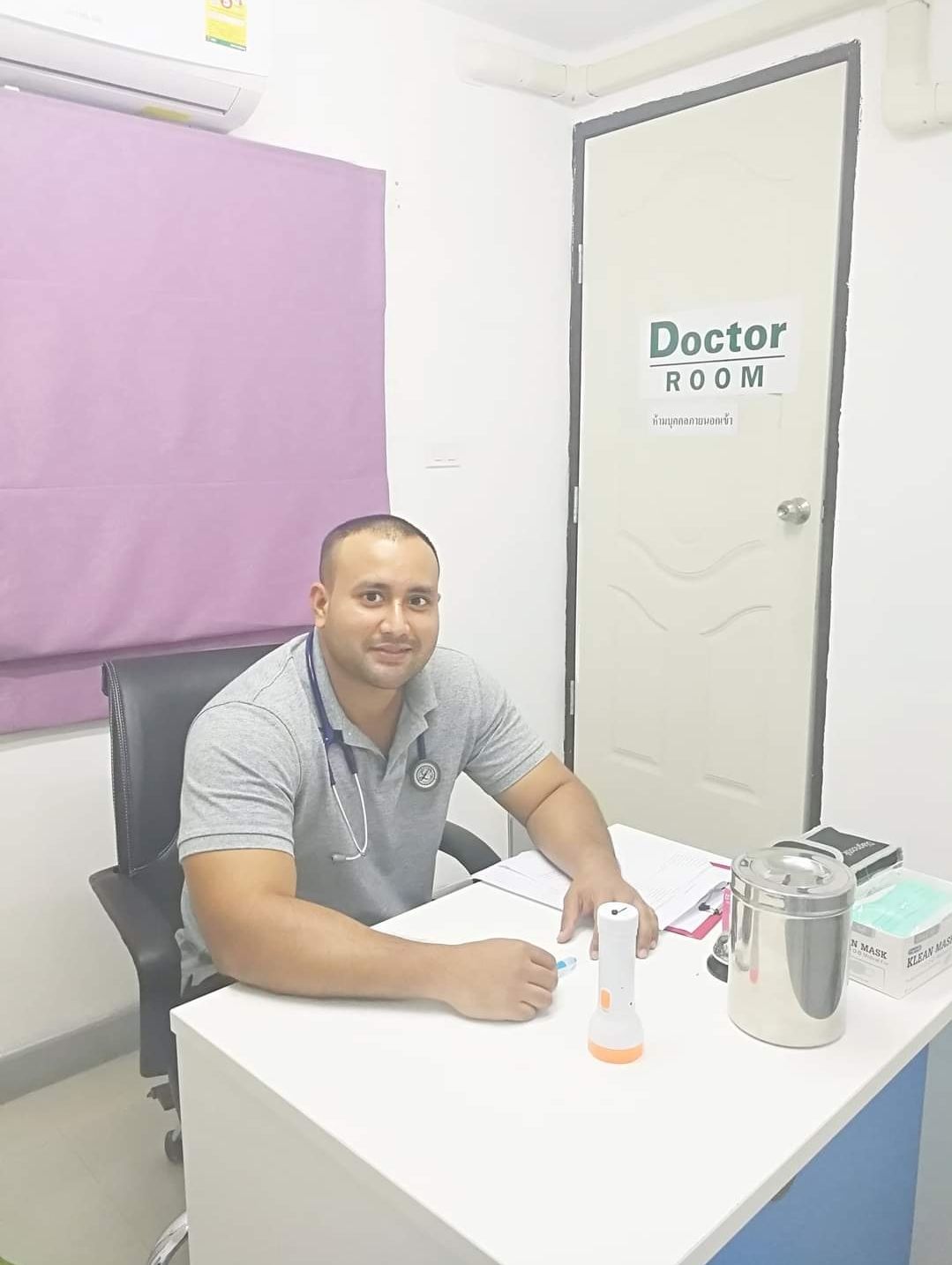
Dr. Ponlawat Pitsuwan is a physician at Doctor Bangkok, a private clinic in central Bangkok. He sees expats, residents, and medical tourists for general medicine, wellness consultations, and IV therapy. His focus is straightforward, evidence-based care delivered in plain language.