
Clinically reviewed by Dr. Ponlawat Pitsuwan, Physician, Doctor Bangkok. Last reviewed: July 2026
A blood pressure reading at or above 180/120 mm Hg is a hypertensive crisis and needs same-day medical attention. If you also have chest pain, vision changes, severe headache, or trouble speaking, go to an emergency room immediately. Without those symptoms, a walk-in clinic can assess you and start treatment the same day.
You checked your blood pressure and the number scared you. Maybe it was a pharmacy machine, a hotel gym monitor, or a home cuff you brought from abroad. Now you are searching online at midnight wondering whether you need a hospital right now or whether morning is fine. I get this question a lot, especially from expats who have not seen a doctor since arriving in Bangkok.
The short answer: the number matters, but so do your symptoms. A reading of 150/100 is not the same situation as 185/120 with a headache and blurred vision. This article walks you through what the numbers mean, which symptoms change everything, and what to do if you are in Bangkok right now without a doctor you already know.

What the Two Numbers Actually Mean
Every blood pressure reading gives you two numbers. The top number is your systolic pressure, the force when your heart beats. The bottom number is your diastolic pressure, the force between beats. Both matter.
Normal is around 120/80 mm Hg. You do not need to think about the unit. You just need to know where your numbers sit.
The Blood Pressure Scale — From Normal to Life-Threatening
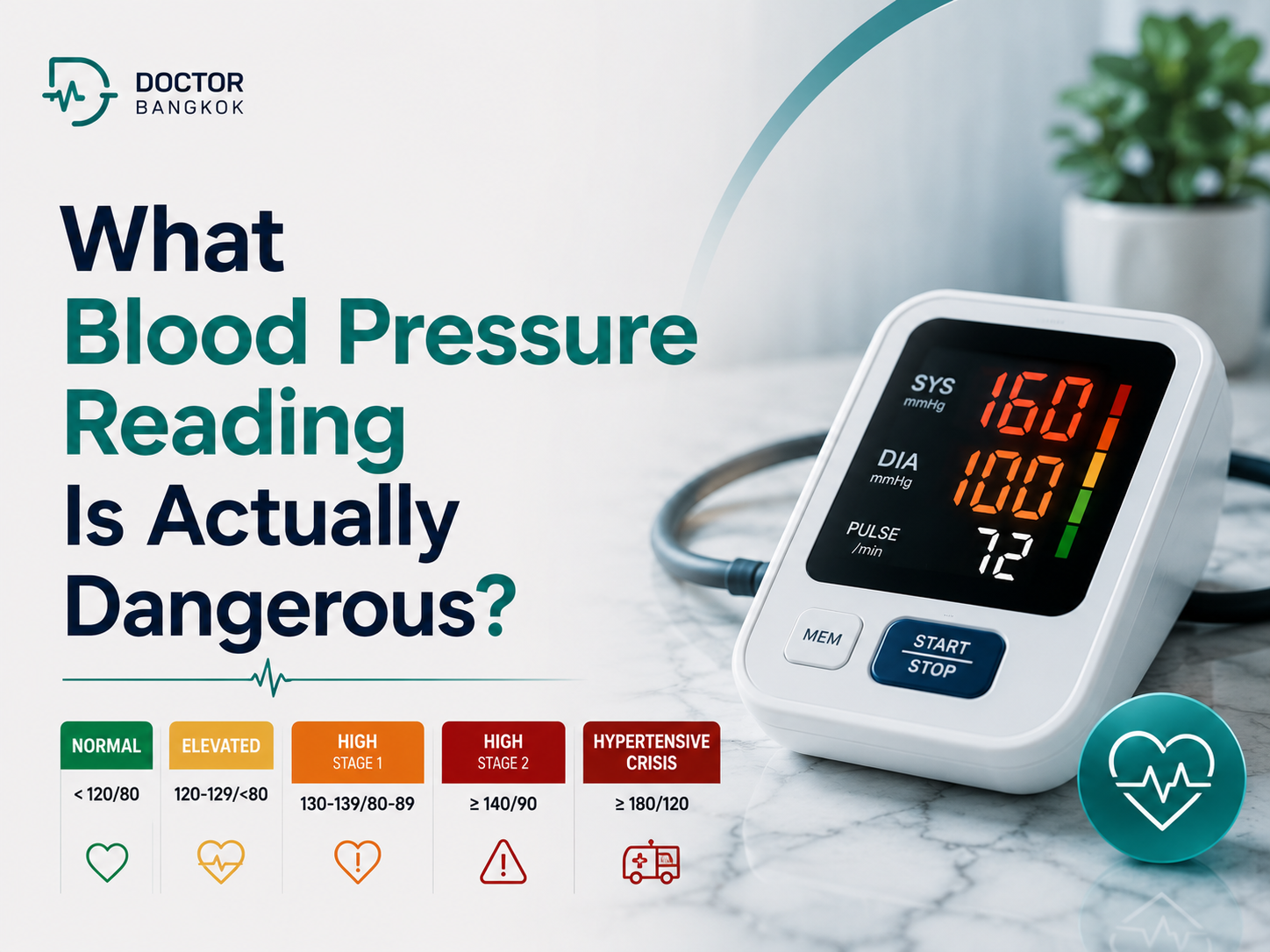
Here is how the stages break down.
| Stage | Systolic (top) | Diastolic (bottom) | What it means |
|---|---|---|---|
| Normal | Below 120 | Below 80 | Good. Keep it there. |
| Elevated | 120 to 129 | Below 80 | Watch your diet and stress. No medication yet for most people. |
| Stage 1 Hypertension | 130 to 139 | 80 to 89 | Lifestyle changes needed. Medication possible depending on your overall risk. |
| Stage 2 Hypertension | 140 or higher | 90 or higher | Medication is usually needed. Needs medical review. |
| Hypertensive Crisis | 180 or higher | 120 or higher | Needs same-day attention. Emergency if you have symptoms. |
Stage 2 hypertension at 140/90 is not an emergency, but it is not fine either. Left untreated over months, it raises your risk of stroke, heart attack, and kidney damage. A one-off reading at 142/91 after a stressful flight does not mean you need medication today. A consistent pattern at that level does.

What Is a Hypertensive Crisis — and When Is It an Emergency?
This is where I want to be precise, because the distinction genuinely changes what you should do in the next hour.
A hypertensive crisis means your reading is at or above 180/120 mm Hg. Within that, there are two very different situations.
Hypertensive Urgency
Your reading is above 180/120, but you feel okay. No chest pain, no vision changes, no severe headache. This is called hypertensive urgency. It needs same-day attention, but it does not mean you need an ambulance. Oral medication can bring your pressure down safely, and a same-day clinic visit is the right move.
Hypertensive Emergency
Your reading is above 180/120 and you have symptoms. Severe headache, blurred or lost vision, chest pain, difficulty breathing, confusion, weakness on one side of your body, or trouble speaking. Go directly to an emergency room. Do not go to a walk-in clinic. Do not wait.
One thing most patients do not know: how fast your pressure rose matters as much as the number itself. A sharp, sudden rise is always more dangerous than a slow one.
Warning Signs You Should Not Ignore
Some symptoms on their own might mean nothing. Combined with a high reading, they mean a lot.
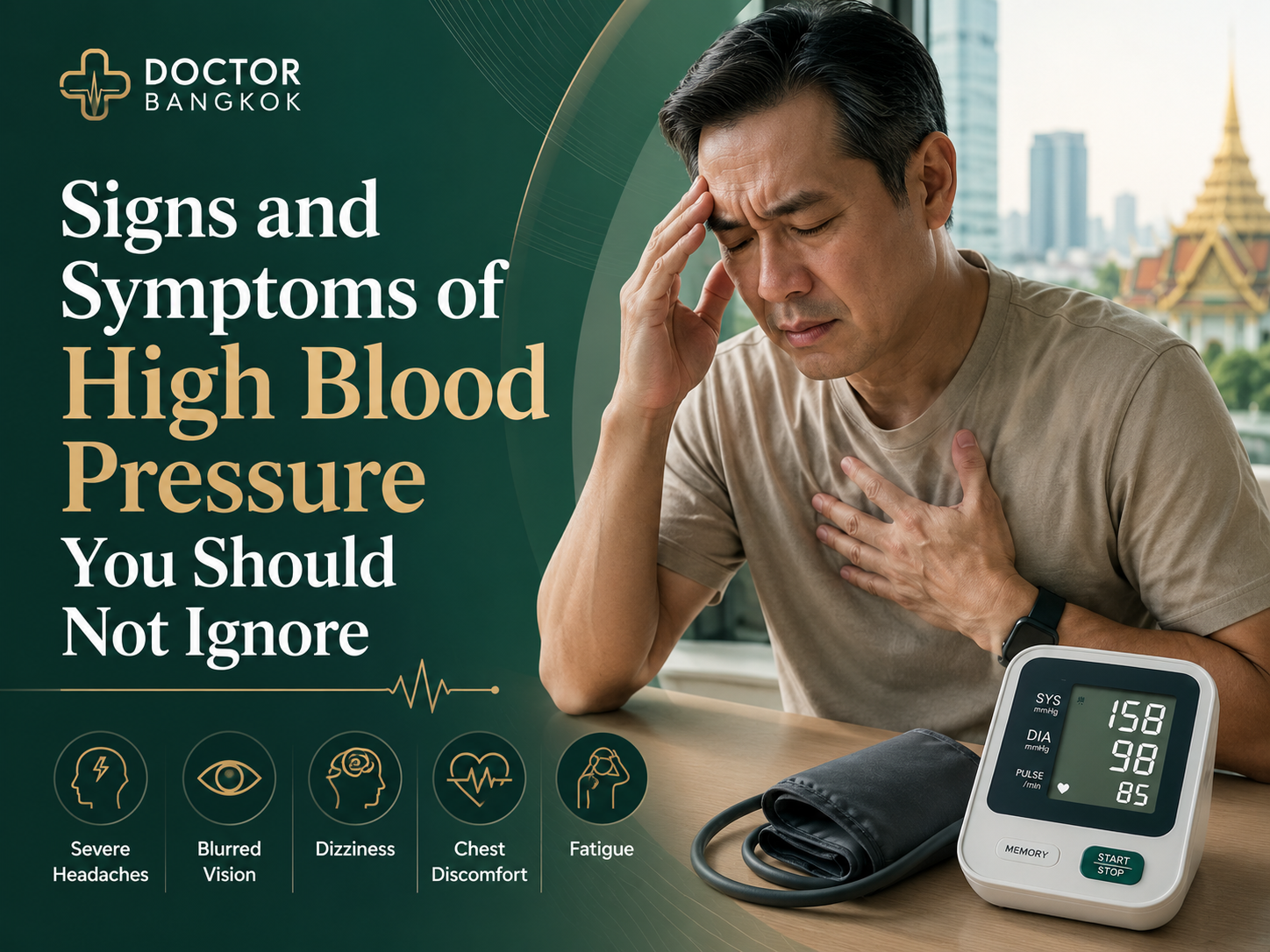
A severe headache at the back of your head, especially one that came on fast, is a red flag. Visual disturbances, such as flashing lights or losing part of your vision, are red flags. Chest pain, shortness of breath, or a feeling that something is seriously wrong are red flags.
Confusion or slurred speech alongside a high reading means go to an emergency room now. If you have a high reading and none of those symptoms, you have time to do this properly. Come in, get assessed, and start treatment today rather than waiting weeks.
Bangkok-Specific Risks That Can Push Blood Pressure Up
This is the part most online articles miss entirely, and it directly affects expats here.
Bangkok’s heat and humidity cause heavy sweating. If you are not replacing fluids, dehydration follows. Dehydration makes your heart work harder and pushes blood pressure up, faster than most people expect in the first weeks after arriving from a cooler climate.
Thai food is also very high in sodium. Pad see ew, boat noodles, nam prik sauces, processed snacks from 7-Eleven: the salt load in a typical Bangkok day is significant. Most expats eat out for every meal, which makes it hard to control.
I also see patients regularly who ran out of blood pressure medication at home and have been managing without it for weeks. Stopping antihypertensive medication abruptly is one of the most common triggers of a hypertensive crisis. If this is you, do not wait. At Doctor Bangkok, our English-speaking doctors can review your existing prescription, check your current readings, and dispense medication from the on-site pharmacy the same day. No referral needed.
White-Coat Hypertension — When the Number Is Not the Whole Story
One reading in a clinic does not always tell the full story. Some people have genuinely high readings in a medical setting even though their blood pressure at home is normal. This is called white-coat hypertension.
The opposite also exists. Some people read normal in a clinic but run high the rest of the time. This is called masked hypertension, and it is more dangerous because it often goes undetected.
If your clinic reading was high but you felt fine and have no known risk factors, check your blood pressure at home at the same time each day for a week. Sit quietly for five minutes first. Take two readings a minute apart. Write them down. This gives a much clearer picture than any single number from a clinic or pharmacy machine.
What Happens When You Come In With a High Reading
If you visit Doctor Bangkok with a high reading or concerning symptoms, here is what actually happens.
We take your blood pressure again after you have been sitting quietly for a few minutes. We take your history: how long this has been going on, what medications you take or have stopped, any symptoms. We do an ECG to check whether the elevated pressure has already affected your heart. We run on-site blood tests to look at your kidneys and electrolytes, because high blood pressure and kidney function are closely linked.
If medication is needed, we can dispense it from the clinic the same day. For ongoing management, our chronic condition care service is built around regular review, medication adjustment when needed, and clear communication in English throughout.
Is 140/90 Actually Dangerous?
Patients ask me this all the time. The honest answer is: not acutely, but it is not something to ignore.
A single reading of 140/90 after a bad night’s sleep and a stressful commute is not a crisis. A consistent pattern at that level over weeks or months raises your lifetime risk of stroke and heart disease meaningfully. The danger is not a dramatic event today. It is slow, silent damage building up over years, which is why high blood pressure gets called the silent killer. Most people feel completely fine until something serious happens.
If your reading is consistently at or above 140/90, get it assessed. The solution is usually straightforward: lifestyle changes, sometimes medication, and regular follow-up. Understanding when a blood pressure number is considered dangerous is the first step toward doing something about it.
If your blood pressure reading has you worried, or you have not had it checked since arriving in Bangkok, Doctor Bangkok offers same-day assessments with English-speaking physicians in central Bangkok, five minutes from BTS Asok. We take your reading, run on-site blood tests, perform an ECG if needed, and start treatment the same day. Walk-ins welcome. Book online at doctorbangkok.co.th or visit us directly on Sukhumvit.
Frequently Asked Questions
Is 150/100 a dangerous blood pressure reading?
It falls in Stage 2 hypertension, which is not an immediate emergency but does need medical review. Left unmanaged it raises your risk of stroke and heart disease over time. If you are in Bangkok without a regular doctor, a same-day consultation at Doctor Bangkok is a practical first step: we can check your kidneys, run an ECG, and start or adjust medication the same day.
What is the difference between hypertensive urgency and a hypertensive emergency?
Both involve readings at or above 180/120 mm Hg. Urgency means your pressure is very high but you have no symptoms of organ damage and you feel okay. Emergency means active damage is happening, such as chest pain, vision loss, or confusion. Urgency can be managed at a walk-in clinic with oral medication. Emergency means go to the nearest hospital ER immediately.
Can Bangkok’s heat make my blood pressure go up?
Yes. Heavy sweating leads to dehydration, which raises blood pressure, and Bangkok’s high-sodium food makes this worse. Expats who arrive without recent monitoring often do not know their baseline has shifted. A blood pressure check in your first few weeks in Bangkok is a smart move, especially during the hot season.
I ran out of my blood pressure medication in Bangkok. Is that dangerous?
Stopping antihypertensive medication abruptly is one of the most common triggers of a hypertensive crisis, so do not wait it out. Doctor Bangkok’s physicians can review your existing prescription, check your current blood pressure, and dispense medication from the on-site pharmacy the same day. No prior history with us is needed.
How do I know if my high reading is real or just because I was nervous at the clinic?
White-coat hypertension is genuinely common, and one high reading in a clinic does not confirm hypertension. Checking your blood pressure at home over several days, sitting quietly for five minutes before each reading, gives a much more accurate picture. Doctor Bangkok can walk you through proper technique and help you interpret what you find.
Can I just monitor my blood pressure at home and skip the doctor?
Home monitoring is useful, but it should not replace a clinical assessment if your readings are consistently above 140/90 or you have any symptoms. A doctor needs to check your kidneys, review your medication, and look at your overall cardiovascular picture. The numbers at home are a starting point, not the whole story.
Dr. Ponlawat Pitsuwan
Physician, Doctor Bangkok
a private medical clinic in central Bangkok. He sees expats, residents, and medical tourists for blood pressure assessment, chronic condition management, and general medical consultations. His focus is straightforward, evidence-based care delivered in plain language.
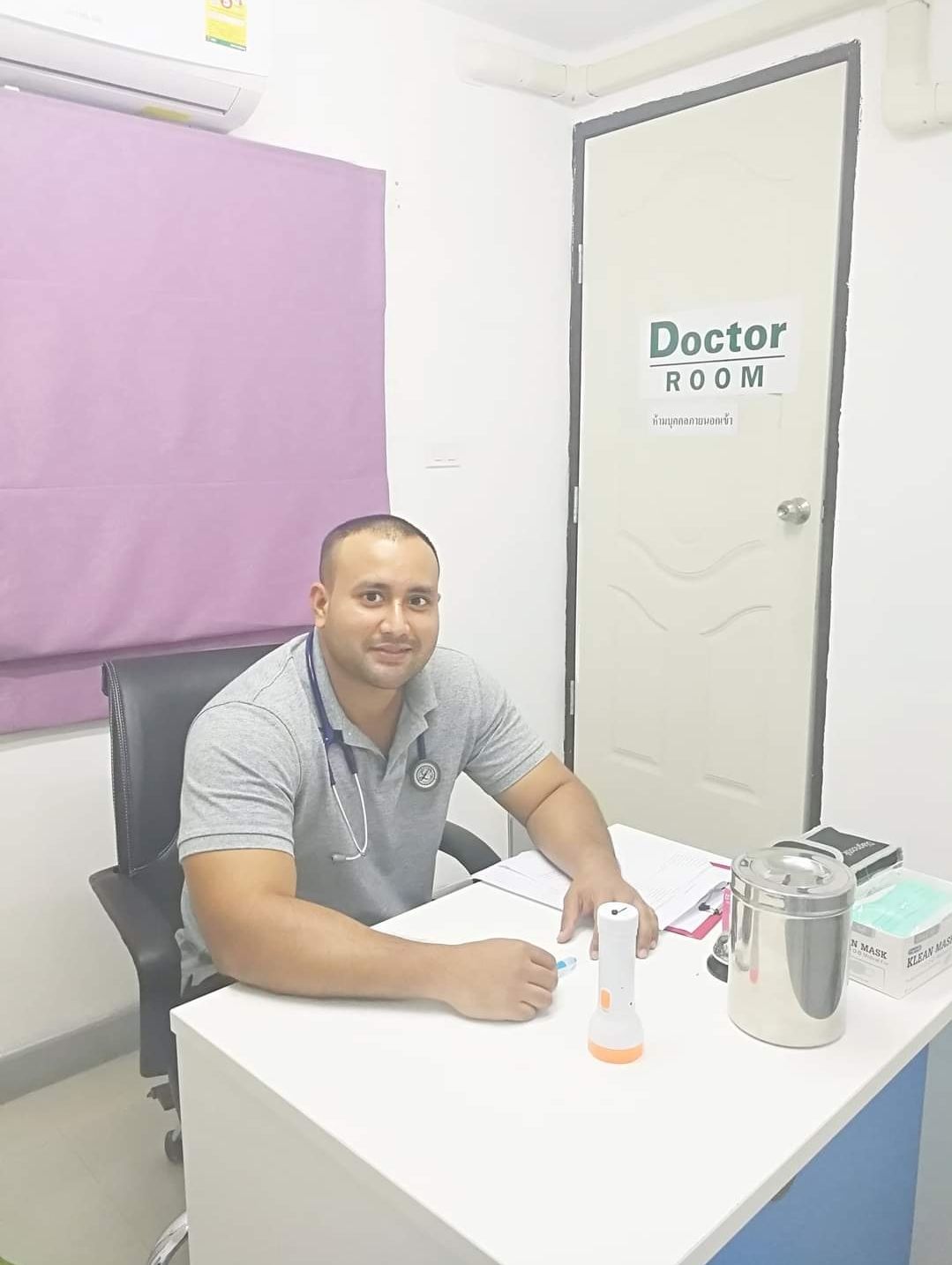
Dr. Ponlawat Pitsuwan is a physician at Doctor Bangkok, a private clinic in central Bangkok. He sees expats, residents, and medical tourists for general medicine, wellness consultations, and IV therapy. His focus is straightforward, evidence-based care delivered in plain language.