
Clinically reviewed by Dr. Ponlawat Pitsuwan, Physician, Doctor Bangkok. Last reviewed: August 2026
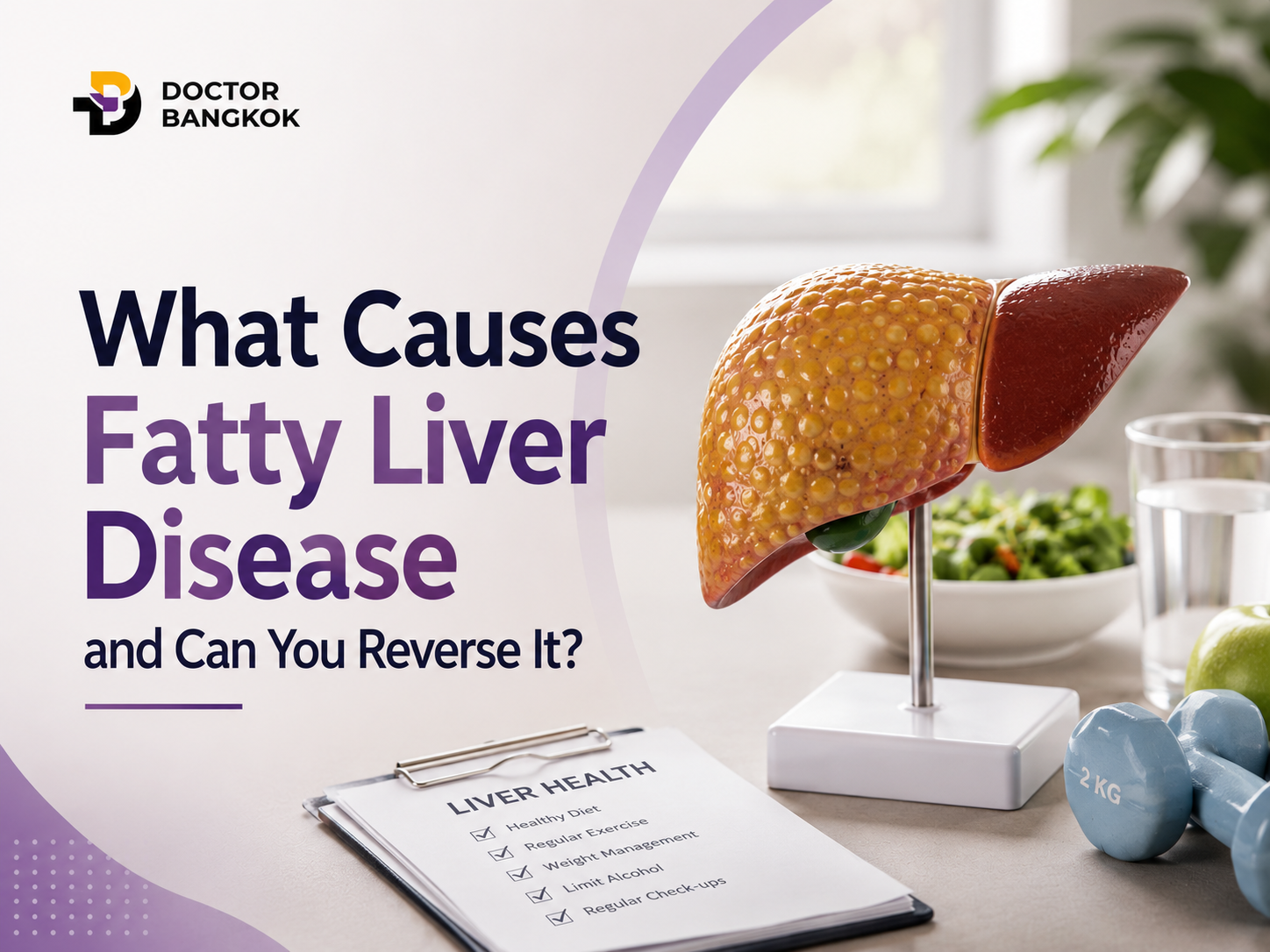
Fatty liver disease happens when too much fat builds up inside your liver cells. The most common cause is not alcohol. It is diet, weight, and insulin resistance. The good news is that if you catch it early, it can often be reversed. The first step is a simple blood test and ultrasound scan.
A lot of my patients find out they have fatty liver by accident. They come in for a routine health check, we run a blood panel, and their liver enzymes come back elevated. They feel completely fine. They had no idea anything was wrong. That is exactly what makes this condition so easy to miss and so important to catch early.
If you are living in Bangkok and you have recently been told your liver enzymes are high, or you are wondering whether your lifestyle here is doing your liver any harm, this is what I would tell you in the clinic.

What Is Fatty Liver Disease? And Why the Name Just Changed
Fatty liver disease means fat has built up inside your liver cells. A small amount of fat in the liver is normal. The problem starts when fat makes up more than about five percent of the liver’s weight. At that point, the liver starts to struggle.
You may have heard the term NAFLD, non-alcoholic fatty liver disease. That name has been replaced. The current term is MASLD, metabolic dysfunction-associated steatotic liver disease. The change matters because the new name reflects what actually drives the condition: insulin resistance and blood sugar problems, not simply the absence of alcohol.
If you were told years ago that you had NAFLD, your condition is now described differently. The causes and treatment approach are the same. But the updated framing explains why people who are not overweight and do not drink heavily can still develop this.
What Causes Fatty Liver Disease
Metabolic and Lifestyle Causes
The most common driver is insulin resistance. This is when your body stops responding properly to insulin, the hormone that controls blood sugar. When that happens, your liver starts converting excess sugar into fat and storing it. Type 2 diabetes, high triglycerides, high blood pressure, and weight around the abdomen are all closely linked.
Diet plays a major role, and not always in the way people expect. High sugar intake, especially fructose from soft drinks and processed food, pushes the liver to produce fat quickly. Refined carbohydrates and ultra-processed snacks do the same thing over time. You do not need to be eating fast food every day for this to happen.
Genetics also plays a role. Some people are more prone to storing fat in the liver even on a moderate diet. Certain medications and thyroid conditions can contribute in some cases too.
Alcohol as a Cause
Alcoholic fatty liver disease is a separate diagnosis, though the liver damage looks similar on a scan. Regular heavy drinking overwhelms the liver’s capacity to process alcohol, and fat builds up as a result.
Bangkok’s social scene is real. I see patients who were not heavy drinkers back home but after a year here, with regular nights out and drinking as part of the social fabric, their intake has crept up without them noticing. If you are drinking most evenings, your liver is feeling it.
The Lean Fatty Liver Problem
This surprises a lot of patients. You do not need to be overweight to have fatty liver disease. A significant number of people diagnosed with MASLD have a normal body weight. This is especially relevant in Asia, where visceral fat, the fat stored deep around your organs rather than under the skin, can accumulate at lower body weights than in Western populations.
You can look slim and still carry enough visceral fat to raise your metabolic risk. This is why a blood test and ultrasound matter regardless of what the scale says.

Why Bangkok Specifically Raises Your Risk
Bangkok is a city that makes it easy to eat out and hard to stay active. Air-conditioned offices, food delivery apps, long working hours, and a culture built around eating out for every meal are the norm here.
I am not criticising Thai food. Traditional cooking with fresh vegetables, herbs, and lean protein is genuinely healthy. The problem is what Bangkok eating actually looks like day to day. Street food is often cooked in palm oil. Thai iced teas and fruit smoothies are loaded with sugar. White rice is the base of almost every meal. If you are eating out three times a day, your sugar and carbohydrate load is probably much higher than you think.
Add the social drinking culture and the fact that many expats here are more sedentary than they were at home, and you have a combination that genuinely raises risk. I tell new patients to take a hard look at what their first year in Bangkok has done to their daily habits. Most of them already know the answer.
What Are the Stages of Fatty Liver Disease
Knowing where you are on this spectrum matters, because the early stages are genuinely reversible and the later ones are not.
The first stage is simple fat accumulation with no inflammation or liver damage. Most people at this stage feel nothing at all. The second stage is when the fat causes inflammation inside the liver. There may be some fatigue or mild discomfort in the upper abdomen, but most people still have no clear symptoms.
If inflammation continues unchecked, scar tissue starts to form. This is called fibrosis. Extensive fibrosis leads to cirrhosis, where large areas of the liver are replaced by scar tissue and the organ can no longer function properly. Cirrhosis is not reversible. That is why catching fatty liver in the first two stages matters so much.
Most patients who come in after an incidental finding are at stage one or early stage two. That is the good news. Early detection gives you real options.
How Is Fatty Liver Diagnosed in Bangkok
The first clue is usually a blood test. Elevated ALT, your alanine aminotransferase level, is the most common early signal. AST, another liver enzyme, is checked at the same time. Elevated enzymes tell us something is happening in the liver and that we need to look further.
An abdominal ultrasound is the standard next step. It is painless, takes about fifteen minutes, and can show fat accumulation clearly. We usually run a lipid panel and fasting blood glucose at the same time to understand your metabolic picture. In some cases, if there is a question about scarring, a FibroScan can measure liver stiffness without surgery.
In Bangkok, you can access all of these tests quickly at a private clinic without waiting weeks for a referral. At Doctor Bangkok, we can arrange liver function testing and coordinate ultrasound without unnecessary delays.
Can Fatty Liver Be Reversed
For simple fat accumulation and early inflammation, the answer is yes. The liver is a resilient organ. With the right changes, fat can reduce meaningfully within weeks to months.
The most evidence-backed step is modest weight loss. Losing five to ten percent of your body weight can produce real improvement in liver fat. You do not need to lose thirty kilograms. Even a few kilograms makes a measurable difference at the early stage. Reducing sugar and refined carbohydrates has a particularly strong effect on liver fat, more so than simply cutting total calories.
Regular exercise helps even without weight loss. Both aerobic activity and resistance training reduce liver fat. The combination works best. On the medication side, a class of drugs that includes semaglutide is showing strong early results for reducing liver fat and inflammation. There is currently no drug approved specifically for fatty liver in most countries, but this is an active and fast-moving area. I discuss options with appropriate patients individually.
If fibrosis has already developed, full reversal is unlikely. But the right changes can slow or stop progression, and that is still a meaningful outcome worth working toward.
If you have been told your liver enzymes are elevated, or you want to know where your liver health stands after a few years in Bangkok, we can help. At Doctor Bangkok, we offer liver function blood panels, metabolic screening, and referral for abdominal ultrasound from our clinic on Sukhumvit. No referral needed, no long wait. Book a consultation at doctorbangkok.co.th.
Frequently Asked Questions
Can you get fatty liver disease without drinking alcohol?
Yes, and this is actually the most common form. MASLD is driven by insulin resistance, high sugar intake, metabolic syndrome, and genetics. Many of my patients with fatty liver drink very little. Not drinking does not protect you if your diet and metabolic health are working against your liver.
Is Thai food bad for your liver?
Traditional Thai food is not the problem. The issue is how Bangkok eating actually works in practice: street food cooked in palm oil, sugary drinks at every meal, white rice three times a day, and almost no home cooking. That pattern, sustained over months, puts real pressure on the liver. It is the daily reality of eating here, not Thai cuisine itself.
My blood test showed high ALT. Does that mean I have fatty liver?
It means your liver is sending a signal worth investigating. Elevated ALT is often the first sign of fatty liver, but enzymes alone do not confirm the diagnosis. We would follow up with an ultrasound and a fuller metabolic panel. It is also worth knowing that fatty liver can be present with completely normal enzymes, so a normal result does not fully rule it out.
Can fatty liver disease be reversed?
In the early stages, yes. Fat accumulation with no scarring can often be reversed through diet changes, weight loss, and exercise. Once significant scarring develops, full reversal is unlikely, but progression can be slowed or stopped. Early detection through a routine check is the most effective thing you can do.
How do I get tested for fatty liver disease in Bangkok?
The two key tests are a liver function blood panel and an abdominal ultrasound. Both can be arranged quickly at a private clinic without a specialist referral. At Doctor Bangkok, we run the blood work in-clinic and coordinate ultrasound imaging, usually within the same week. We typically add a lipid profile and fasting glucose to give you the full picture.
I am slim. Can I still get fatty liver disease?
Yes. A meaningful number of people with fatty liver have a normal BMI. In people of Asian background especially, visceral fat can accumulate even at a healthy weight. If you have insulin resistance, high triglycerides, or a family history of diabetes or liver disease, it is worth checking regardless of what the scale says.
Dr. Ponlawat Pitsuwan
Physician, Doctor Bangkok
a private medical clinic in central Bangkok. He sees expats, residents, and medical tourists for general consultations, health screening, liver function testing, and metabolic health assessments. His focus is straightforward, evidence-based care delivered in plain language.
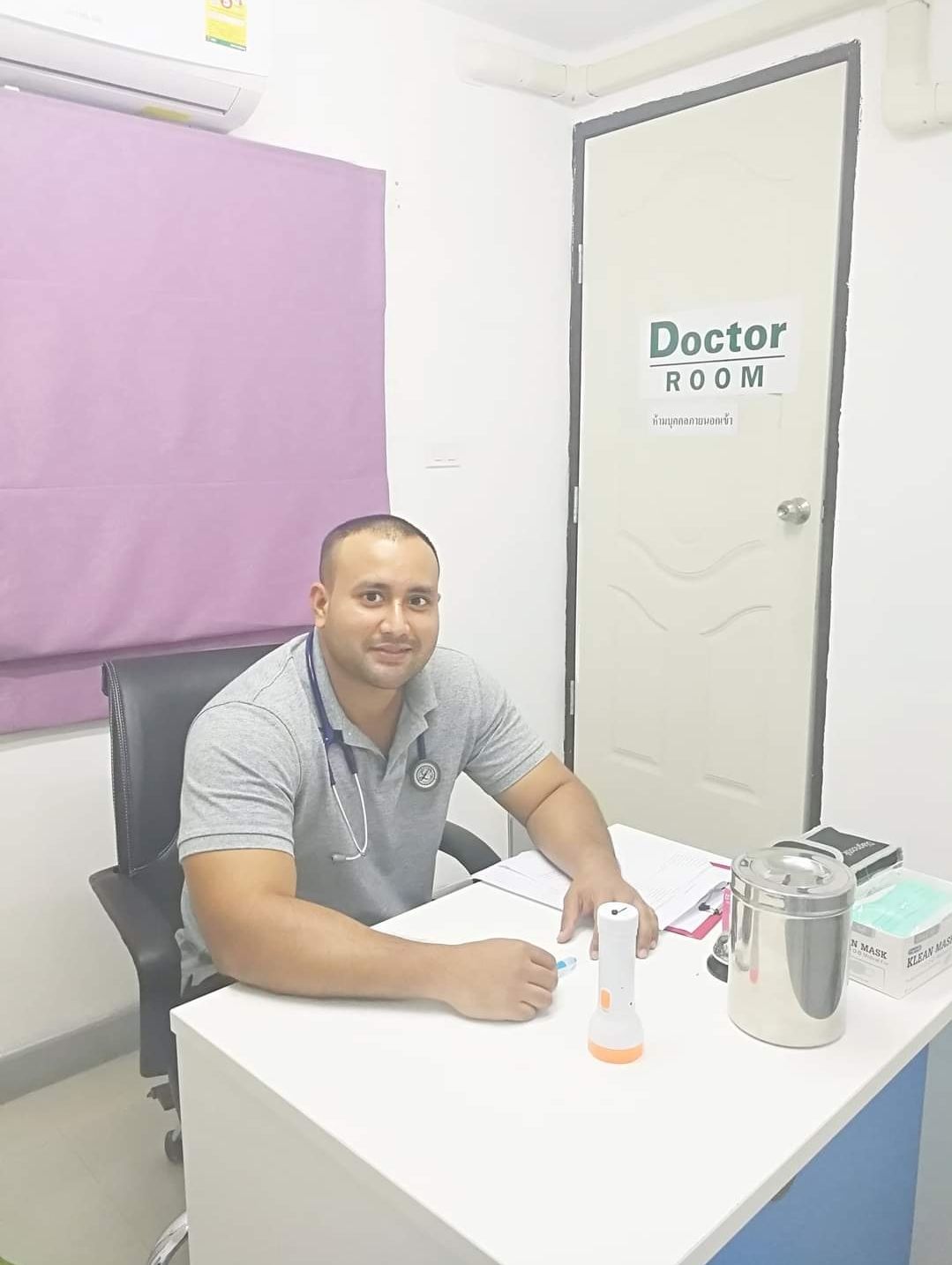
Dr. Ponlawat Pitsuwan is a physician at Doctor Bangkok, a private clinic in central Bangkok. He sees expats, residents, and medical tourists for general medicine, wellness consultations, and IV therapy. His focus is straightforward, evidence-based care delivered in plain language.