
Clinically reviewed by Dr. Ponlawat Pitsuwan, Physician, Doctor Bangkok. Last reviewed: August 2026
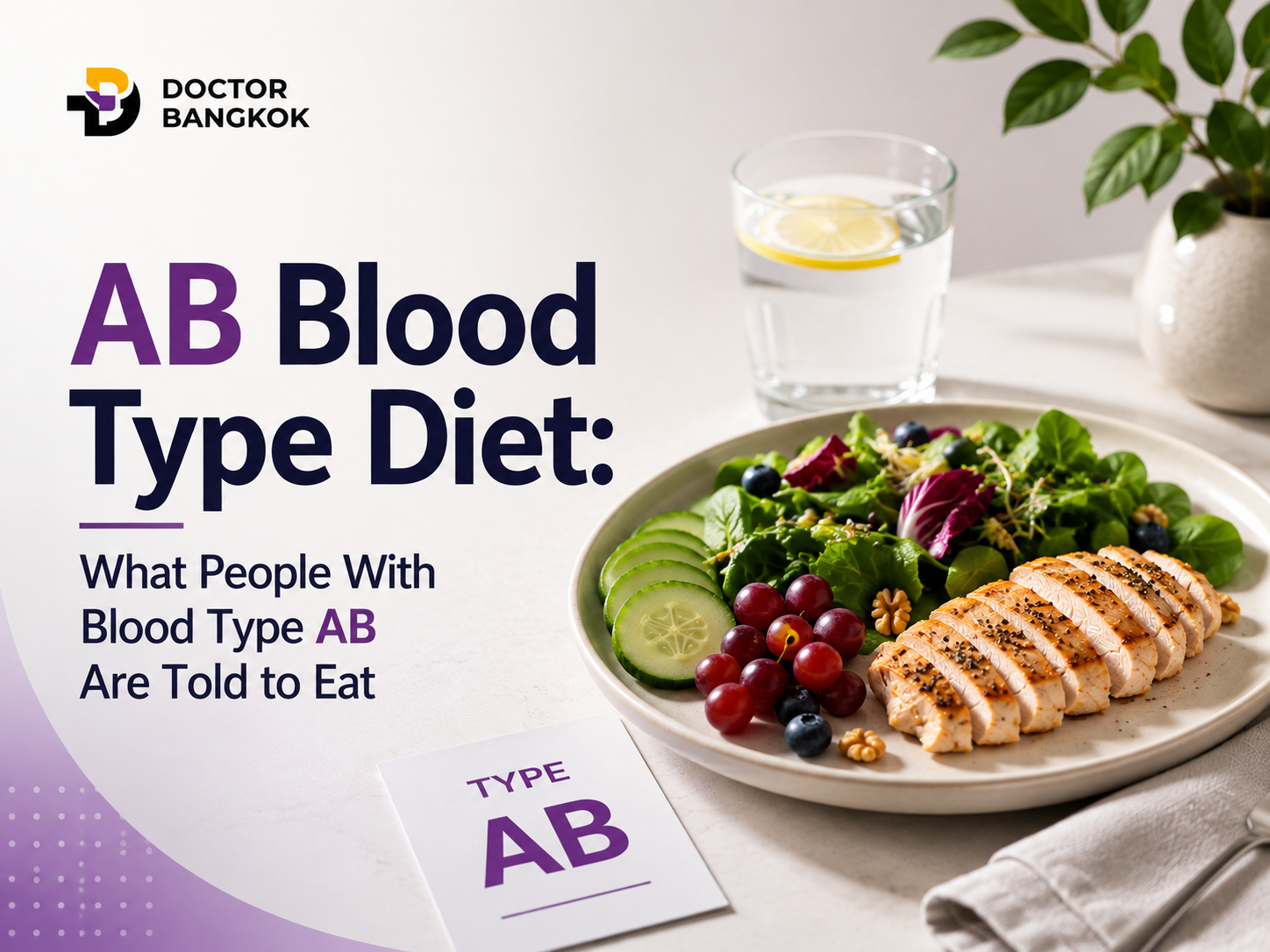
The AB blood type diet tells people with type AB blood to eat tofu, seafood, dairy, and green vegetables while avoiding red meat, chicken, and corn. The theory was created by Dr. Peter D’Adamo in his 1996 book Eat Right 4 Your Type. Current peer-reviewed research has not found evidence that ABO blood type should determine what you eat. The foods recommended for AB types are generally healthy for most people, regardless of blood type.
If you have type AB blood and you have been reading about the blood type diet, you are probably wondering whether any of it is real. It is a popular theory and it sounds logical on the surface. If you are an expat in Bangkok trying to eat well across Thai restaurants, street stalls, and menus in a second language, any structured framework feels appealing.
Here is what I tell patients who ask me about this. The AB blood type diet is not supported by current evidence. But that does not mean the foods it recommends are bad choices. Many of them are genuinely good for you. The question is whether your blood type is the reason, and the honest answer is no.

What Is the AB Blood Type Diet and Where Did It Come From
Dr. Peter D’Adamo introduced this diet in his 1996 book, Eat Right 4 Your Type. The core idea is that your ABO blood group determines how your body processes food. D’Adamo argued that proteins in food called lectins interact differently with red blood cells depending on blood type. If you eat the wrong lectins for your type, he claimed, it causes problems with digestion and overall health.
Type AB is described in his framework as the most recently evolved blood type, a blend of A and B. The diet for AB combines elements from both the type A and type B plans. In practice that means a moderate diet focused on tofu, seafood, some dairy, and plenty of vegetables.
What Does the Science Actually Say
A 2013 systematic review published in the American Journal of Clinical Nutrition looked at all available studies on the blood type diet. The reviewers found no evidence that ABO blood type influences how people respond to specific diets. Not weak evidence. No evidence.
A separate study from the University of Toronto looked at cardiometabolic outcomes and ABO blood group. Researchers found that some blood type diets did produce health improvements, but the improvements were not linked to the person’s actual blood type. People with type O who followed the AB diet improved too. The benefit came from the food choices themselves, not from any blood type match.
What this means practically: if you eat more tofu, seafood, and vegetables and less processed food, you will probably feel better. Your blood type is not why.

AB Blood Type Diet Food List: What to Eat and What to Avoid
| Category | Eat More | Limit or Avoid |
|---|---|---|
| Protein | Tofu, tuna, salmon, sardines, lamb, turkey | Red meat, chicken |
| Dairy | Yoghurt, kefir, mozzarella, ricotta | Butter, whole milk, brie |
| Grains | Rice, oats, rye, millet | Corn, buckwheat, wheat in large amounts |
| Vegetables | Leafy greens, broccoli, cauliflower, garlic, beetroot | Artichokes, avocado, corn, peppers |
| Fruit | Grapes, figs, cherries, plums, kiwi, pineapple | Mango, guava, oranges, banana |
| Beverages | Green tea, herbal teas, water | Black tea, fizzy drinks, alcohol in excess |
The moderation principle matters here. D’Adamo does not say you will collapse if you eat a mango. The list reflects priorities, not strict rules. That framing makes this diet more practical than many restrictive plans.
Eating for AB Blood Type in Bangkok
This is the part that matters if you live here or are visiting, and most articles skip it entirely.
Good news first. Thai food is quite compatible with the AB framework in parts. Tofu dishes are everywhere. Pad pak ruam, stir-fried mixed vegetables with tofu, fits well. Most seafood works: pla kapong (seabass), kung (prawns), and pla tod (fried fish) are all on the beneficial list. Morning glory, broccoli, and Thai spinach are easy to find at any local restaurant.
Coconut milk curries are generally neutral under the AB framework. If you are ordering at a local restaurant, asking for tofu instead of chicken in a stir-fry is a simple swap most kitchens will do without any fuss.
The trickier areas are chicken and certain fruits. Chicken is the most common protein in Thai street food. Khao man gai, gai yang, and pad gai are all dishes AB types are told to avoid. You will be steering clear of the most common protein at nearly every stall, which is a real challenge worth knowing before you commit. Mango, banana, and guava are also on the limit list, yet they appear in smoothies, desserts, and on every buffet in Bangkok.
My honest advice for expats: focus on the positive additions first. More tofu, more fish, more green vegetables. That is achievable here and genuinely healthy, whatever your blood type.
Nutritional Risks to Watch If You Follow This Diet
Most patients do not think about this, and most articles skip it. If you follow the AB diet strictly and cut out red meat, chicken, corn, and kidney beans at the same time, you are removing several key sources of iron, zinc, and B12 in one go.
This matters most if you already have low energy, heavy periods, or any history of anaemia. Cutting these foods without knowing your current levels is an unnecessary risk. I recommend baseline bloodwork before making significant dietary changes, then a follow-up check after two to three months.
B12 is something I see depleted in expats fairly regularly. If tofu and seafood replace your main protein sources but you are not eating enough of either consistently, your B12 can drop over months without you noticing until you feel exhausted.
What I Actually Recommend
I do not dismiss patients who come in asking about the blood type diet. Curiosity about what you eat is a good thing. What I do is redirect the conversation toward what we can actually measure.
If you want personalised nutrition guidance, the right starting point is knowing your current numbers. A general health check at Doctor Bangkok gives you a clear picture of your iron, B12, vitamin D, blood glucose, and other markers that tell us something real about how your body is handling what you eat. That information is specific to you and gives us something to work with.
Your blood type is worth knowing too. A blood group test is part of a standard health screening panel at our clinic, not because it should dictate your diet, but because it belongs in your medical record and is useful in several clinical situations. If you want evidence-based nutrition support, a wellness consultation with one of our English-speaking doctors is the most practical next step. We can review your current diet, identify any deficiencies, and give you a plan grounded in what your blood tests actually show.
Thinking about making dietary changes, or want to check your nutritional baselines before you do? Doctor Bangkok offers health screening and wellness consultations in central Bangkok with English-speaking doctors. We are BTS accessible and easy to book online. Visit doctorbangkok.co.th to make an appointment.
Frequently Asked Questions
Is there any scientific proof that the AB blood type diet actually works?
No peer-reviewed evidence supports the idea that ABO blood type should determine your diet. A 2013 systematic review in the American Journal of Clinical Nutrition found no qualifying studies backing the blood type diet theory. The foods recommended for AB types are healthy choices, but they work because they are good food, not because of your blood type.
What Thai foods work well for people following the AB blood type diet?
Quite a few. Tofu-based stir-fries, most seafood dishes, morning glory, broccoli, and green vegetable curries all fit the recommended list. Coconut milk curries without chicken are generally fine. The main challenge in Bangkok is that chicken appears in almost everything, so dishes like khao man gai and gai yang are off the table if you are following this strictly.
Should I get a blood type test before starting the AB blood type diet?
Yes, if you do not already know your blood type. Many expats have never had it confirmed. A blood group test is straightforward and is included in most health screening panels, alongside the nutritional markers that actually matter before you change your diet significantly.
Are there nutritional risks if I follow the AB blood type diet strictly?
There can be. Cutting red meat, chicken, corn, and kidney beans together removes several important sources of iron, zinc, and B12. If you already have low energy or a history of anaemia, this matters. Checking your levels with a blood test before and a few months after making significant dietary changes is a sensible precaution.
What is the difference between AB positive and AB negative for this diet?
There is none under this framework. D’Adamo’s blood type diet is based entirely on the ABO system and does not distinguish between Rh positive and Rh negative subtypes. The recommendations for AB positive and AB negative are identical. Rh factor does matter in other medical situations, particularly pregnancy and transfusions, which is another reason to have your full blood group on record.
Can I follow the AB blood type diet if I am vegetarian or vegan?
It is actually easier than for most blood types. The AB plan already leans heavily on tofu, legumes, vegetables, and grains. The main adjustment is being careful not to over-rely on corn and kidney beans, which are on the limit list. Getting enough B12 and iron without meat or fish requires attention, so baseline bloodwork before you start is a sensible step.
Dr. Ponlawat Pitsuwan
Physician, Doctor Bangkok
a private medical clinic in central Bangkok. He sees expats, residents, and medical tourists for general health consultations, nutritional screening, and wellness assessments. His focus is straightforward, evidence-based care delivered in plain language.

Dr. Ponlawat Pitsuwan is a physician at Doctor Bangkok, a private clinic in central Bangkok. He sees expats, residents, and medical tourists for general medicine, wellness consultations, and IV therapy. His focus is straightforward, evidence-based care delivered in plain language.