
Clinically reviewed by Dr. Ponlawat Pitsuwan, Physician, Doctor Bangkok. Last reviewed: July 2026
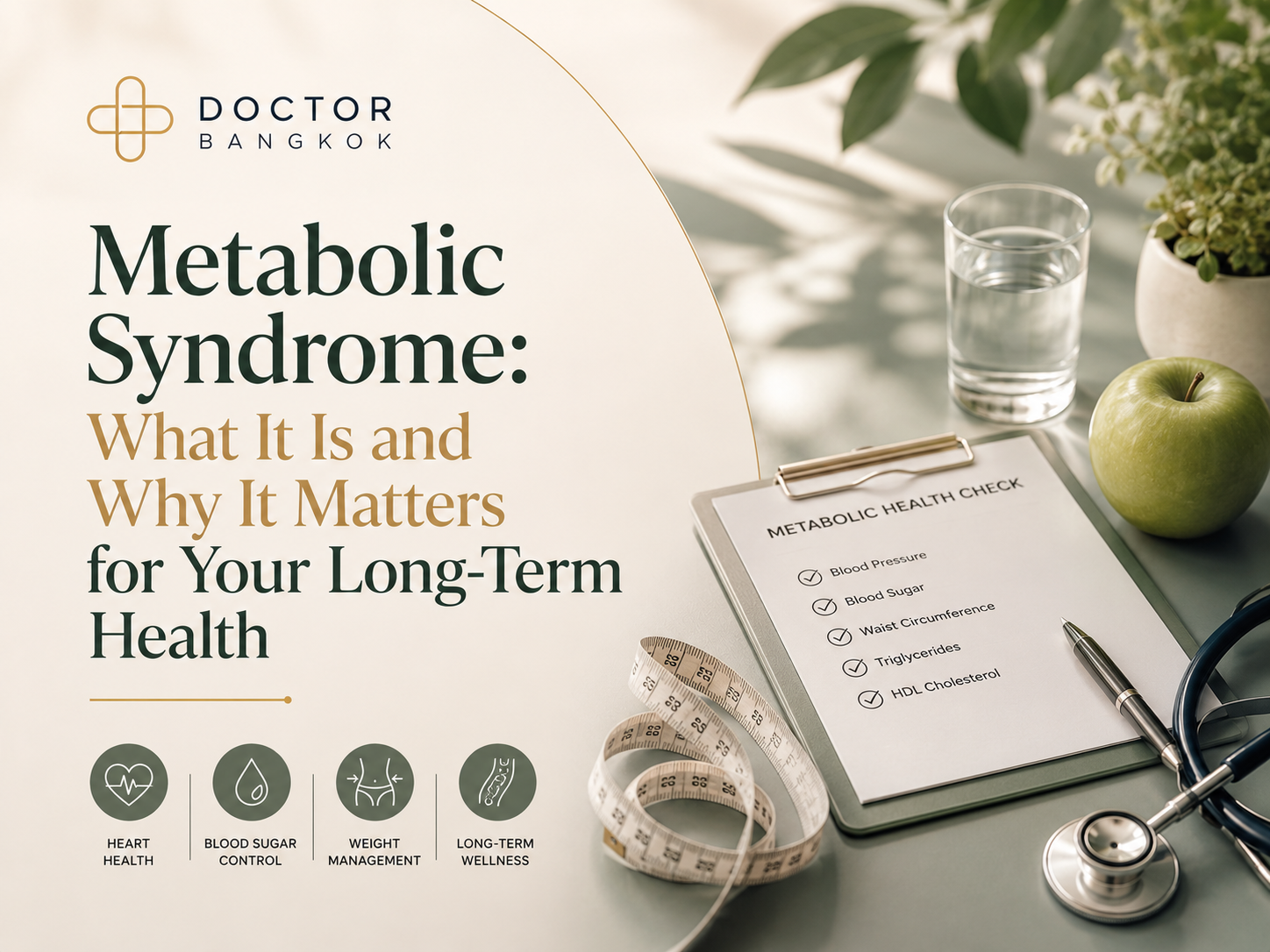
Metabolic syndrome is a cluster of five risk factors: excess waist fat, high blood pressure, high triglycerides, low HDL cholesterol, and elevated fasting blood sugar. Having three or more means you meet the criteria. It raises your risk of heart disease, type 2 diabetes, and stroke. The good news is that it can often be reversed when caught early.
A lot of patients come to see me after a routine blood test throws up something unexpected. Their cholesterol is a little high, their blood sugar is borderline, their blood pressure crept up. Each one looks minor on its own. But when they show up together, that combination has a name, and it matters. If you have been putting off a health check since moving to Bangkok, this is worth reading.
Metabolic syndrome does not feel like anything at first. There is no obvious symptom that sends you to a clinic. That is the problem. By the time it does show up, it is usually as a heart attack, a diabetes diagnosis, or something you would rather have avoided. Getting ahead of it is simple: a blood test, a blood pressure reading, a waist measurement.

What Exactly Is Metabolic Syndrome?
Think of it as your body’s warning system going off in five different places at once. The five components are a large waist circumference, high triglycerides (a type of fat in your blood), low HDL or "good" cholesterol, high blood pressure, and high fasting blood glucose. You need three of the five to meet the diagnostic criteria.
No single one of these is metabolic syndrome on its own. High blood pressure alone is just hypertension. Borderline blood sugar alone is pre-diabetes. Together, they signal something bigger: your metabolism is under strain and your cardiovascular system is at risk. What ties them together is that your body is becoming less responsive to insulin, which puts pressure on your heart, blood vessels, and pancreas over time.
Why Bangkok Expats Are Particularly at Risk
This is something I see constantly in my clinic. Patients who moved to Bangkok relatively healthy, and a year or two later, the blood tests look different. The city makes it easy for this to happen.
The food environment here is carbohydrate-heavy by default. White rice at every meal, sweetened drinks including fruit juices and Thai iced tea, and street food that is cheap, convenient, and digested quickly. Then there is alcohol. Bangkok has a social drinking culture, and alcohol is cheap and available everywhere. Sedentary behaviour and regular alcohol use are two of the strongest independent risk factors for metabolic syndrome in Thai population studies.
The heat matters too. Most expats exercise far less in Bangkok than they did back home. A 35-degree day makes a run feel like a punishment. Add a desk job, irregular sleep from adjusting to a new timezone, and the chronic stress of relocating, and you have a lifestyle that quietly builds metabolic risk over months and years. Most expats also arrive having skipped routine screening for a year or more. That combination adds up faster than people expect.

Why You May Be at Risk Even If You Look Healthy
This is one of the most important things I tell patients. BMI is a rough tool at the best of times. In Asian populations, including Thais and many South and East Asian expats, it is genuinely misleading. People can have a perfectly normal BMI and still carry dangerous levels of visceral fat.
Visceral fat sits around your internal organs, not under your skin. It is the type that drives insulin resistance and raises your cardiovascular risk. The scale does not detect it. Only your waist measurement and blood tests will show it. Thai population data shows metabolic syndrome is frequently diagnosed in people with a normal or near-normal BMI.
Waist circumference thresholds for Asian populations are lower than Western standards. Above 90cm for men and above 80cm for women is a concern. If you feel fine and your weight looks normal, that is not a reason to skip screening.
What Are the Long-Term Risks?
The headline risks are heart attack and stroke. Metabolic syndrome roughly doubles your cardiovascular risk compared to someone without it. But there are other consequences that do not get talked about enough.
Type 2 diabetes is a likely outcome if metabolic syndrome is left unmanaged over years. Non-alcoholic fatty liver disease, where fat builds up in the liver and can progress to scarring, is closely tied to metabolic syndrome and is something I see regularly in Bangkok patients. Sleep apnoea and chronic kidney disease are also associated. For women, polycystic ovary syndrome is both a driver and a consequence of the insulin resistance that underlies this whole picture.
None of these happen overnight. But all of them are preventable, or at least manageable, when you catch the warning signs early and act on them.
How Is Metabolic Syndrome Diagnosed?
There is no single test. A diagnosis is built from five measurements: waist circumference, blood pressure, and a fasting blood panel covering triglycerides, HDL cholesterol, and blood glucose. Three out of five findings above the relevant threshold confirms the diagnosis.
At Doctor Bangkok, we also check C-reactive protein, a simple blood marker for inflammation, because chronic low-grade inflammation runs alongside metabolic syndrome and gives us a fuller picture of your risk. We look at your waist-to-height ratio, which tends to be more informative than BMI alone, particularly in Asian populations. The whole process is a blood draw and a few simple measurements. We go through the results with you in plain English, same visit or at a short follow-up.
When Medication Is Part of the Plan
Every article online about metabolic syndrome will tell you to eat better and exercise more. That is true, but it is not always the whole answer.
Lifestyle changes are the foundation. Reducing refined carbohydrates, cutting alcohol, getting 150 minutes of moderate exercise per week, and losing even a small amount of abdominal fat can normalise individual components within months. For many patients, that is enough. But when individual components need faster control, medication is appropriate alongside lifestyle changes. High triglycerides may call for statin therapy. A fasting glucose in the pre-diabetic range may warrant metformin to support your body’s insulin response. Persistently elevated blood pressure may need an antihypertensive. These are not failures. They are part of a realistic, personalised plan.
What I tell patients is this: lifestyle is the most powerful tool we have. Medication helps us manage the parts that lifestyle alone cannot fix quickly enough.
Getting Checked at Doctor Bangkok
If you are an expat in Bangkok and you have not had a metabolic health check in the last year or two, that is the starting point. You do not need to navigate a large Thai hospital system. Doctor Bangkok offers English-language consultations, same-visit blood testing, and a clear plan based on your results.
A metabolic health check here covers fasting blood glucose, a full lipid panel including triglycerides and HDL cholesterol, blood pressure, and waist circumference. If results point to metabolic syndrome or elevated cardiometabolic risk, we talk through your options directly, without jargon and without rushing. You can read more about how we approach ongoing metabolic syndrome treatment Bangkok on our chronic conditions page.
Whether you need an initial screen, a second opinion on recent results, or help building a long-term plan, our chronic conditions service is built for exactly this. Annual screening is the single most effective thing most expats can do for their long-term health in Bangkok. The earlier you catch these patterns, the more options you have.
Concerned about your metabolic health in Bangkok? Doctor Bangkok offers English-language metabolic health checks including fasting blood tests, cholesterol panels, blood pressure measurement, and a personalised results review. No referral needed. BTS accessible. Book your consultation at doctorbangkok.co.th or visit our understanding metabolic syndrome page to learn more.
Frequently Asked Questions
Can I have metabolic syndrome if I am not overweight?
Yes, and this is something I explain to patients regularly. In Asian populations, metabolic syndrome often appears in people with a normal BMI because visceral fat around the organs, not surface fat, is what drives the risk. Your waist measurement and blood tests matter far more than the number on a scale. Do not let a normal weight give you false reassurance.
What blood tests are used to diagnose metabolic syndrome?
The core tests are a fasting glucose and a fasting lipid profile, which includes triglycerides, HDL, LDL, and total cholesterol. At Doctor Bangkok we also check C-reactive protein as a marker of inflammation. Combined with a blood pressure reading and waist circumference, those results give us the full picture.
Is metabolic syndrome reversible?
For most people, yes, especially when it is caught before it has progressed to diabetes or a cardiovascular event. Dietary changes, regular moderate exercise, and cutting back on alcohol can normalise individual components within months. When lifestyle alone is not enough, medication fills the gap. Early detection is what gives you the most options.
Why are expats in Bangkok at higher risk?
The combination of a high-carbohydrate food environment, cheap and socially available alcohol, desk-based work, heat that discourages outdoor exercise, disrupted sleep, and relocation stress creates real metabolic pressure. Most expats also skip routine health screening for a year or more after moving. That combination adds up faster than people expect.
How often should I be screened for metabolic syndrome?
If you are over 35, have a family history of diabetes or heart disease, carry weight around your waist, or have had any abnormal blood results, annual screening is the right call. For lower-risk individuals, every two years is a reasonable baseline. Doctor Bangkok’s chronic conditions service makes this straightforward, in English, without needing to navigate a large hospital.
What is the difference between metabolic syndrome and type 2 diabetes?
Metabolic syndrome is a collection of risk factors, including borderline blood sugar, that together signal high future risk of diabetes and heart disease. Type 2 diabetes is a confirmed diagnosis where blood glucose is chronically elevated. Metabolic syndrome is the warning sign that comes before. Catching it at that stage is exactly the point.
Dr. Ponlawat Pitsuwan
Physician, Doctor Bangkok
a private medical clinic in central Bangkok. He sees expats, residents, and medical tourists for chronic condition management, metabolic health screening, and general medical consultations. His focus is straightforward, evidence-based care delivered in plain language.

Dr. Ponlawat Pitsuwan is a physician at Doctor Bangkok, a private clinic in central Bangkok. He sees expats, residents, and medical tourists for general medicine, wellness consultations, and IV therapy. His focus is straightforward, evidence-based care delivered in plain language.