Clinically reviewed by Dr. Ponlawat Pitsuwan, Physician, Doctor Bangkok. Last reviewed: July 2026
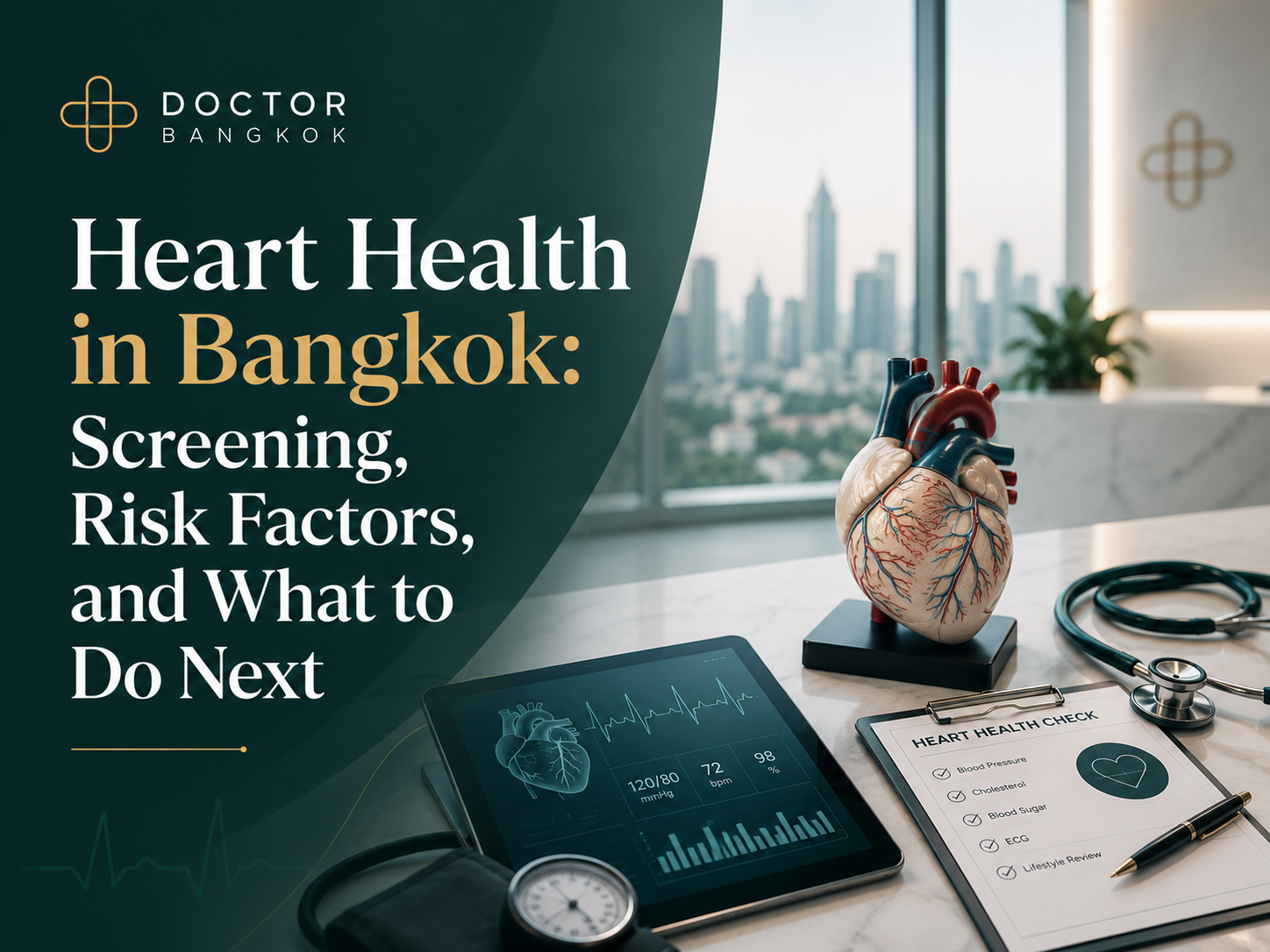
Heart disease is largely preventable, but it rarely gives obvious warning signs until something serious happens. For expats in Bangkok, gaps in routine care, a changed lifestyle, and local environmental factors all quietly raise cardiovascular risk. A basic screening, which includes a blood pressure check, lipid panel, blood sugar, and resting ECG, can catch problems early and give you a clear picture of where you stand.
If you have been in Bangkok for a year or more and have not had a heart health check, you are not alone. Most expats I see were getting regular check-ups at home, then relocated and simply stopped. Life gets busy. The Thai hospital system feels complicated. And heart disease does not hurt, so it is easy to put off.
Bangkok life introduces cardiovascular risks that your home-country GP probably never discussed. Heat, air pollution, a shift in diet, and the social drinking culture common in expat circles all add up quietly. The good news is that cardiovascular disease is one of the most preventable conditions we deal with. You just need to know where you stand.

Why Heart Disease Is Easy to Miss in Bangkok
Most people imagine heart disease announces itself. It does not. High blood pressure, high cholesterol, and early arterial damage can all be completely silent for years. You feel fine while your numbers slowly worsen.
For expats, there is another layer. At home, your GP knew your history, tracked your numbers year to year, and flagged when something shifted. Here, that continuity disappears. I see patients in their 40s and 50s who have not had a single blood pressure reading since arriving in Thailand.
Language can be a barrier too. Symptoms get dismissed, self-explained, or Googled into reassurance. Bangkok’s private hospital system is excellent, but it can feel intimidating if you do not know where to start.
Bangkok-Specific Risk Factors You May Not Have Considered
The standard cardiovascular risk list covers family history, age, smoking, high blood pressure, high cholesterol, diabetes, and obesity. All of that applies here. But Bangkok adds a few things worth knowing about.
Air Pollution
Bangkok’s air quality regularly exceeds WHO safe limits, especially from November through March. Long-term exposure to fine particulate matter, the microscopic particles known as PM2.5, causes low-grade inflammation and raises blood pressure over time. If you already have cardiovascular risk factors, this matters more than most people realise. During high-pollution months, I recommend checking your blood pressure more frequently if you have any history of hypertension.
Heat and Cardiovascular Strain
Bangkok’s heat is relentless. Your heart works harder in sustained heat to keep your body cool. For someone with undiagnosed hypertension or coronary artery disease, which is narrowing of the blood vessels supplying the heart, that adds real strain. Dehydration is easy to underestimate in this climate, and it makes the blood more prone to clotting.
Diet and Alcohol
Thai food is often high in sodium, refined carbohydrates, and saturated fat. Portion sizes at social dinners are generous. Combined with the drinking culture common in expat circles, you have a pattern that raises blood pressure, worsens cholesterol, and increases blood sugar over time. I am not saying stop eating Thai food. I am saying know your numbers so you understand the actual impact.

What a Heart Health Screening Actually Includes
You do not need a hospital cardiology department to start. At Doctor Bangkok, we initiate cardiovascular screening as part of a straightforward walk-in consultation. No referral needed, no hospital queue.
A core screen includes a fasting lipid panel, which measures total cholesterol, LDL, HDL, and triglycerides. It includes fasting blood glucose and HbA1c, which shows your average blood sugar over three months. Blood pressure is checked and documented. A resting ECG records your heart’s electrical activity and can pick up rhythm problems or signs of a past cardiac event.
Based on those results and your personal history, we calculate your ten-year cardiovascular risk using a validated scoring tool. This tells us whether you are low, moderate, or high risk and guides what happens next. If results suggest you need further investigation, we coordinate that referral directly.
Understanding Your Results
Numbers on a page mean nothing without context. Here is what the key ones actually tell you.
LDL cholesterol, often called the "bad" cholesterol, is the one we focus on most. Higher LDL accelerates the buildup of fatty deposits inside arterial walls over time. HDL, the "good" cholesterol, helps clear that buildup. The ratio between the two matters as much as either number alone.
Blood pressure is read as two numbers. The top is the pressure when your heart beats; the bottom is the pressure between beats. Anything consistently above 130 over 80 warrants attention. Above 140 over 90, we are talking about hypertension that needs active management.
Your ten-year risk score combines these numbers with your age, sex, and smoking status to estimate the probability of a major cardiac event in the next decade. A score above ten percent typically means we discuss medication alongside lifestyle changes. This is not a judgment. It is a map that tells us how aggressively to act.
What to Do After Your Results
Getting the numbers is step one. Acting on them is where it actually matters.
For low-risk patients, the next step is usually reassurance and a plan to recheck in one to two years. I give specific lifestyle guidance based on what the results show, whether that is reducing sodium, improving sleep, cutting back on alcohol, or increasing activity.
For moderate to high-risk patients, we discuss medication. Statins have strong evidence behind them for reducing cardiac events in people with elevated LDL. Blood pressure medication works the same way. Starting treatment is not a failure. It is catching a problem before it becomes a crisis.
For patients whose results suggest something more complex, we coordinate referral to a cardiologist at a trusted nearby private hospital. We stay involved and translate the specialist’s recommendations into plain language. If you are already managing ongoing cardiovascular risk, our chronic conditions care page explains how we support long-term management in Bangkok.
How Often Should You Get Screened
If you are under 40 with no risk factors and no family history, every two to three years is a reasonable schedule. If you are over 40, have any risk factors, smoke, drink regularly, or have a family history of heart disease, annual screening is appropriate.
If you have already been diagnosed with hypertension or high cholesterol and are on medication, your blood pressure and lipid levels should be checked at least every six months. We manage this directly at Doctor Bangkok, without you needing to navigate a larger hospital for a routine review.
Red Flags: When Not to Wait for a Scheduled Appointment
Chest pain, pressure, or tightness that does not resolve within a few minutes is a medical emergency. Call 1669, Thailand’s emergency ambulance number, or get to the nearest emergency room immediately. Do not drive yourself.
Sudden shortness of breath at rest, pain radiating to your arm or jaw, or fainting also require emergency care, not a clinic visit.
Occasional brief palpitations, mild breathlessness after exertion, or non-severe dizziness are symptoms worth a same-day consultation rather than an emergency response. An ECG takes ten minutes and gives us immediate information. Doctor Bangkok is BTS accessible and sees walk-in patients. Do not sit on symptoms like these while waiting for a scheduled check.
Worried about your heart health in Bangkok? Doctor Bangkok offers walk-in cardiovascular screening with no referral needed. We check your blood pressure, cholesterol, blood sugar, and ECG, then explain what the numbers mean for you personally. English-speaking physicians. BTS accessible. Book or walk in at doctorbangkok.co.th.
Frequently Asked Questions
Do I need a referral to get a heart health screening in Bangkok?
No. At private clinics in Bangkok, you can walk in and request cardiovascular screening directly. At Doctor Bangkok, we can run blood tests, check your blood pressure, and perform an ECG during a standard consultation, then refer you to a specialist if results indicate you need one.
What heart health tests should expats in Bangkok get, and how often?
The core screen covers a fasting lipid panel, blood pressure, fasting glucose or HbA1c, BMI, and a resting ECG. If you are over 40 or have any cardiovascular risk factors, annual screening makes sense. Lower-risk adults under 40 can generally screen every two to three years, though your doctor will adjust this based on your results and history.
Can Bangkok’s air pollution affect my heart health?
Yes, and this comes up more than most patients expect. Chronic exposure to PM2.5, the fine particles measured in Bangkok’s pollution index, drives low-grade inflammation and raises blood pressure over time. If you already have cardiovascular risk factors, the November to March high-pollution season is a good time to monitor your blood pressure more closely.
What should I do if I experience chest pain or palpitations in Bangkok?
Persistent chest pain, especially with radiation to the arm or jaw, requires emergency care immediately. Call 1669. For occasional palpitations or mild breathlessness on exertion, come in for a same-day assessment. An ECG and a brief consultation can rule out anything serious and tell you what is actually happening.
Will my international health insurance cover a heart screening at a Bangkok private clinic?
Most international health insurance plans cover GP consultations and preventive screenings. Doctor Bangkok provides itemised receipts suitable for reimbursement. Check whether your policy covers preventive cardiology separately from diagnostic testing, as some plans draw a distinction. Advanced tests like CT calcium scoring may require pre-authorisation, so confirm before booking.
I have high blood pressure but feel completely fine. Do I actually need to treat it?
Yes. High blood pressure is one of the most reliable risk factors for heart attack and stroke, and it almost never causes symptoms until serious damage has occurred. Feeling fine is not the same as being fine. This is exactly the situation where a consultation and a treatment plan can prevent something far worse.
Dr. Ponlawat Pitsuwan
Physician, Doctor Bangkok
a private medical clinic in central Bangkok. He sees expats, residents, and medical tourists for cardiovascular risk assessment, chronic disease management, and general medical consultations. His focus is straightforward, evidence-based care delivered in plain language.

Dr. Ponlawat Pitsuwan is a physician at Doctor Bangkok, a private clinic in central Bangkok. He sees expats, residents, and medical tourists for general medicine, wellness consultations, and IV therapy. His focus is straightforward, evidence-based care delivered in plain language.