
Clinically reviewed by Dr. Ponlawat Pitsuwan, Physician, Doctor Bangkok. Last reviewed: August 2026
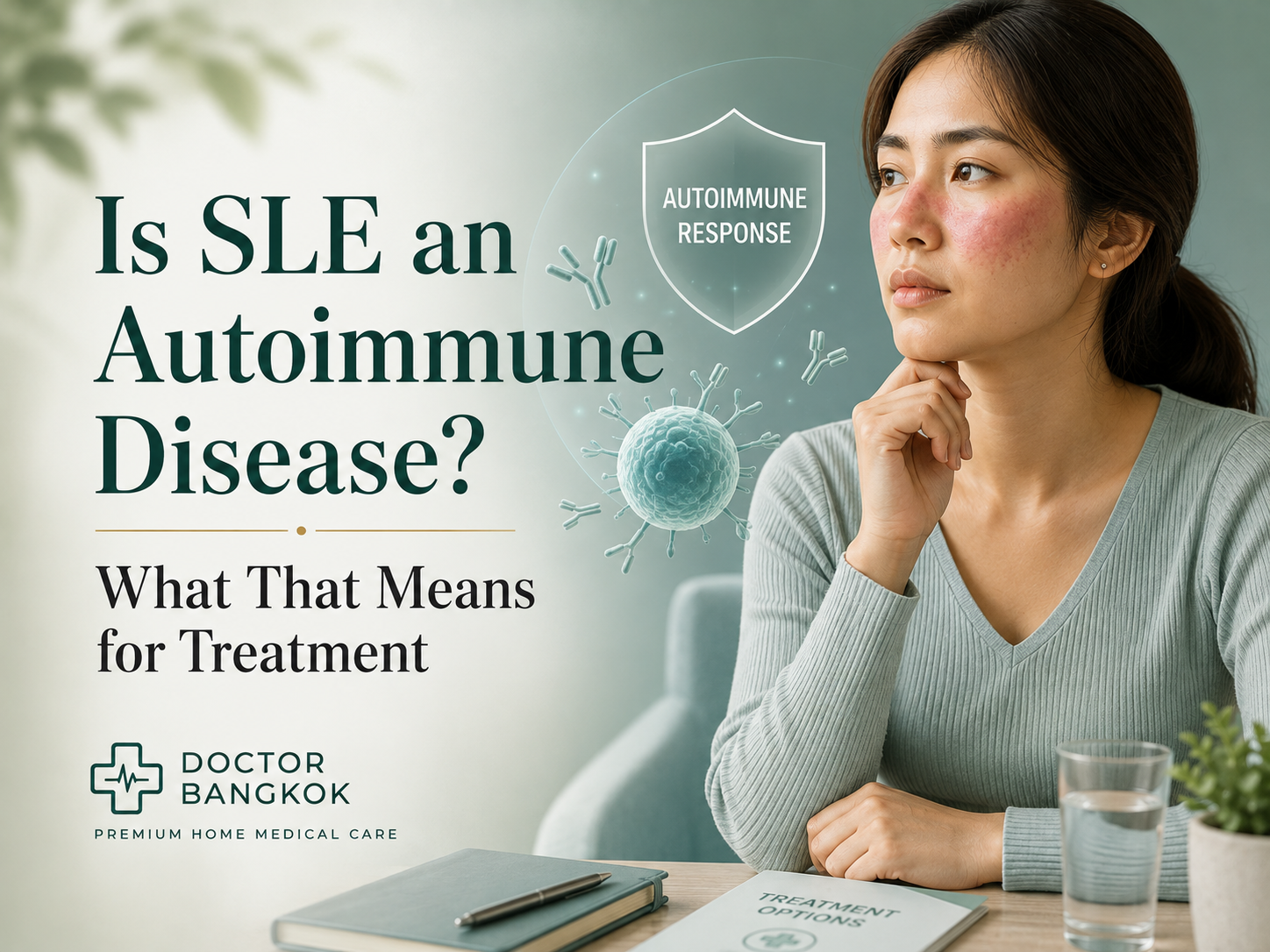
Yes, SLE is an autoimmune disease. It stands for systemic lupus erythematosus. Your immune system, which normally fights infections, turns against your own tissues instead. This causes inflammation that can affect your joints, skin, kidneys, and other organs. It is manageable with the right treatment, but it does need a specialist diagnosis.
If you have been Googling joint pain, unexplained fatigue, and a rash across your cheeks, and the words "lupus" or "SLE" keep coming up, you are not alone. I see patients at this exact stage regularly, sitting across from me with a phone full of search results and a lot of anxiety. The good news is that a blood test can start giving you real answers within days.
SLE is more common than most people realise, and it disproportionately affects women of Asian descent. That makes it especially relevant in Bangkok. If you are an expat here and you have been brushing off symptoms for months, this article covers what SLE actually is, what the tests look like, and what to do next.

What Kind of Autoimmune Disease Is SLE?
Your immune system is built to recognise threats, attack them, and then stand down. In SLE, it loses the ability to tell the difference between a threat and your own tissue. It starts producing antibodies that target your own cells, called autoantibodies.
Those autoantibodies circulate in your blood and trigger inflammation in organs and tissues throughout the body. That is why SLE can affect so many different parts of the body at once, which is also why it is called systemic.
SLE falls into a group of conditions called connective tissue diseases, alongside rheumatoid arthritis and Sjögren’s syndrome. It is not contagious, and it is not caused by anything you did.
Why Does the Immune System Do This?
Honestly, we do not fully understand why. Genetics play a role. So do hormones, which explains why SLE affects women far more than men. Environmental triggers like UV light, certain infections, and some medications can push a genetically susceptible person toward active disease.
There is nothing you could have done to prevent it. It is a complex condition with a strong inherited component.

SLE Symptoms — From Butterfly Rash to Organ Involvement
The symptoms that bring most patients to me are fatigue, joint pain, and a rash across the cheeks and nose. That rash spreads across the bridge of the nose in a shape that looks like a butterfly. It is called a malar rash, and it is one of the more recognisable signs.
SLE does not stop at the skin. It can affect the kidneys, the lining around the heart and lungs, the nervous system, and blood cells. Kidney involvement, called lupus nephritis, is one of the more serious complications, and it is a reason why early diagnosis matters.
Photosensitivity is also a core feature. Many patients first notice that sun exposure triggers a flare, meaning a period when symptoms return or worsen. In Bangkok, where UV levels are high all year, this is something I discuss with every SLE patient I see.
Types of Lupus — Is SLE the Only Form?
SLE is the most common and most serious form, but it is not the only one. Cutaneous lupus affects only the skin, without internal organ involvement. Drug-induced lupus is triggered by certain medications and usually resolves once the drug is stopped.
When most people and most doctors say "lupus," they mean SLE. If you have been told you might have lupus, the key question is whether it is systemic, meaning whether it involves organs beyond the skin.
How Is SLE Diagnosed? The Blood Tests Explained
The first test we usually run is the ANA, which stands for antinuclear antibody. It is a screening test. A positive result alone does not mean you have SLE. Around 30% of healthy adults can show a low-level positive ANA, according to the American College of Rheumatology.
What matters is the concentration of the antibody and the clinical context. From there, we look at more specific markers. Anti-dsDNA and anti-Smith antibodies are highly specific for SLE. We also check complement levels, specifically C3 and C4. Low complement alongside a positive anti-dsDNA is a meaningful signal.
No single test confirms SLE. Diagnosis uses a combined scoring system that weighs your symptoms and lab results together. That is why you need a clinician reading the full picture, not just a printed lab result.
Living With SLE in Bangkok — Sun, Heat, and Flare Triggers
Bangkok has one of the highest UV indices of any major city in the world. For someone with SLE, that is clinically significant. UV exposure is a well-documented flare trigger, and photosensitivity affects a large proportion of SLE patients.
If you have SLE and you live here, sun protection is not optional. I tell every patient: SPF 50 or higher every morning, even on overcast days, and UPF-rated clothing if you are spending time outdoors. Avoid peak sun hours between 10am and 3pm where you can. Rooftop bars and pool days are high-risk situations.
Heat can also worsen fatigue. Bangkok’s climate requires more active daily management than you would need in a cooler city. That does not mean you cannot live well here with SLE, but it takes planning.
Treatment and Long-Term Management of SLE
SLE cannot be cured, but it can be well controlled. The goal of treatment is to reduce inflammation, prevent flares, and protect organs from damage over time.
Hydroxychloroquine is the foundation of treatment for most patients. It has strong evidence for reducing flare frequency and protecting the kidneys and joints. Most people with SLE take it long-term, and it does require regular eye checks because there is a small risk of retinal toxicity over many years.
During flares, steroids are often used to bring inflammation down quickly. For more serious disease, immunosuppressants may be added. Your rheumatologist will monitor your blood counts, kidney function, and liver function throughout treatment. This is not a set-and-forget condition. It requires consistent follow-up.
Getting Diagnosed in Bangkok as an Expat
If you are in Bangkok and you suspect SLE, a general physician is the right first step. You do not need to find a rheumatologist yourself or navigate a large Thai hospital alone.
At Doctor Bangkok, we can order an ANA panel, review your symptoms, and give you a clear picture of whether specialist assessment is needed. You come in for a consultation, we take a history, and we decide which blood markers to run. Results from an ANA panel typically come back within a few days. If the results point toward SLE, we refer you directly to a rheumatologist with your results already in hand.
For expats, this matters. We speak your language, we know the referral pathways, and we make sure you are seen by the right specialist without unnecessary delay.
Worried about joint pain, a facial rash, or unexplained fatigue in Bangkok? These symptoms have a range of causes, and SLE is worth ruling out. At Doctor Bangkok, our English-speaking physicians can order an ANA panel, assess your symptoms, and refer you to a rheumatologist if needed. We are centrally located, BTS accessible, and built for expats navigating health concerns far from home. Book a consultation at doctorbangkok.co.th.
Is SLE the same as lupus?
In everyday use, yes. SLE is what most people mean when they say lupus. It is the most common and most serious form. Cutaneous lupus affects only the skin, and drug-induced lupus is caused by certain medications and typically resolves once the drug is stopped.
What does a positive ANA test mean? Do I have SLE?
Not necessarily. A positive ANA is a starting point, not a diagnosis. Up to 30% of healthy adults can show a low-level positive result. What matters is the concentration, the pattern, and whether more specific antibodies also come back positive alongside your actual symptoms. A clinician needs to interpret all of this together.
Can Bangkok’s sun make lupus worse?
Yes, and this is something I take seriously with every SLE patient I see here. UV exposure is a well-documented flare trigger, and Bangkok has year-round high UV levels. Daily SPF 50 sunscreen, protective clothing, and avoiding peak sun hours are a genuine clinical priority, not just general advice.
What type of doctor diagnoses and treats SLE?
A rheumatologist makes the formal diagnosis and manages ongoing treatment. But you do not need to find one yourself first. Start with a general physician at a clinic like Doctor Bangkok. We can run the initial blood tests, assess your symptoms, and refer you directly to the right specialist with your results already in hand.
Is SLE more common in women and in Asian populations?
Yes. SLE affects women at roughly nine times the rate of men, typically between ages 15 and 44. Research consistently shows higher rates and greater disease severity in Asian and Black populations compared to White populations. If you are a woman of Asian descent with relevant symptoms, SLE is worth taking seriously.
Can SLE be cured?
SLE cannot be cured, but it can be well managed. Most patients on the right treatment, typically with hydroxychloroquine as a foundation, lead full and active lives. The key is consistent monitoring and not waiting too long to get diagnosed, as early treatment reduces the risk of organ damage over time.
How long does it take to get an SLE diagnosis in Bangkok?
Initial blood results from an ANA panel typically come back within a few days at a private clinic. If further specific antibody testing is needed, add a few more days. Getting to a confirmed diagnosis with a rheumatologist may take two to four weeks in total. Starting at Doctor Bangkok with an initial workup already done makes the specialist referral faster.
Dr. Ponlawat Pitsuwan
Physician, Doctor Bangkok
a private medical clinic in central Bangkok. He sees expats, residents, and medical tourists for general consultations, health assessments, and the initial workup of complex symptoms including suspected autoimmune conditions. His focus is straightforward, evidence-based care delivered in plain language.
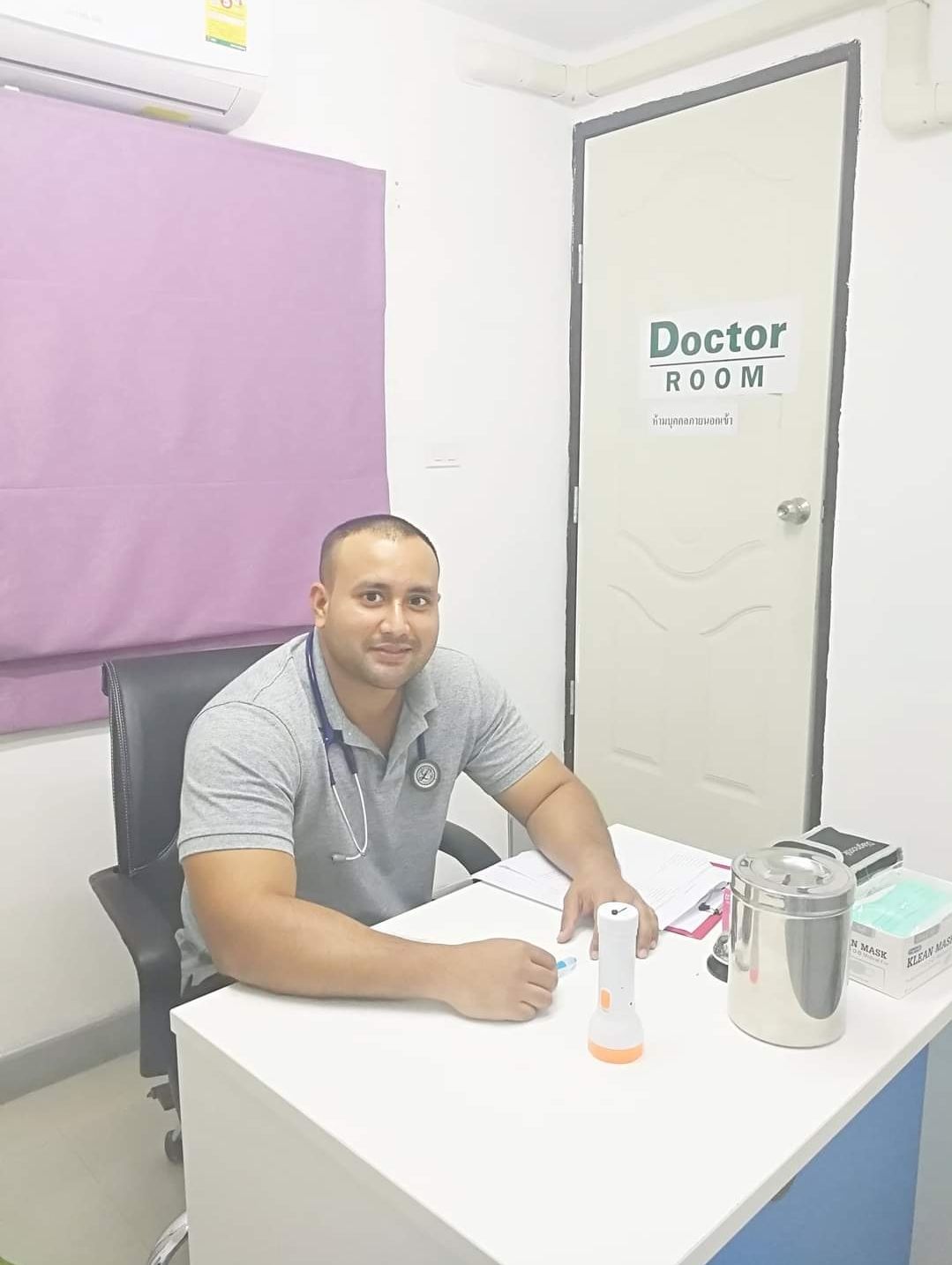
Dr. Ponlawat Pitsuwan is a physician at Doctor Bangkok, a private clinic in central Bangkok. He sees expats, residents, and medical tourists for general medicine, wellness consultations, and IV therapy. His focus is straightforward, evidence-based care delivered in plain language.