
Clinically reviewed by Dr. Ponlawat Pitsuwan, Physician, Doctor Bangkok. Last reviewed: September 2026
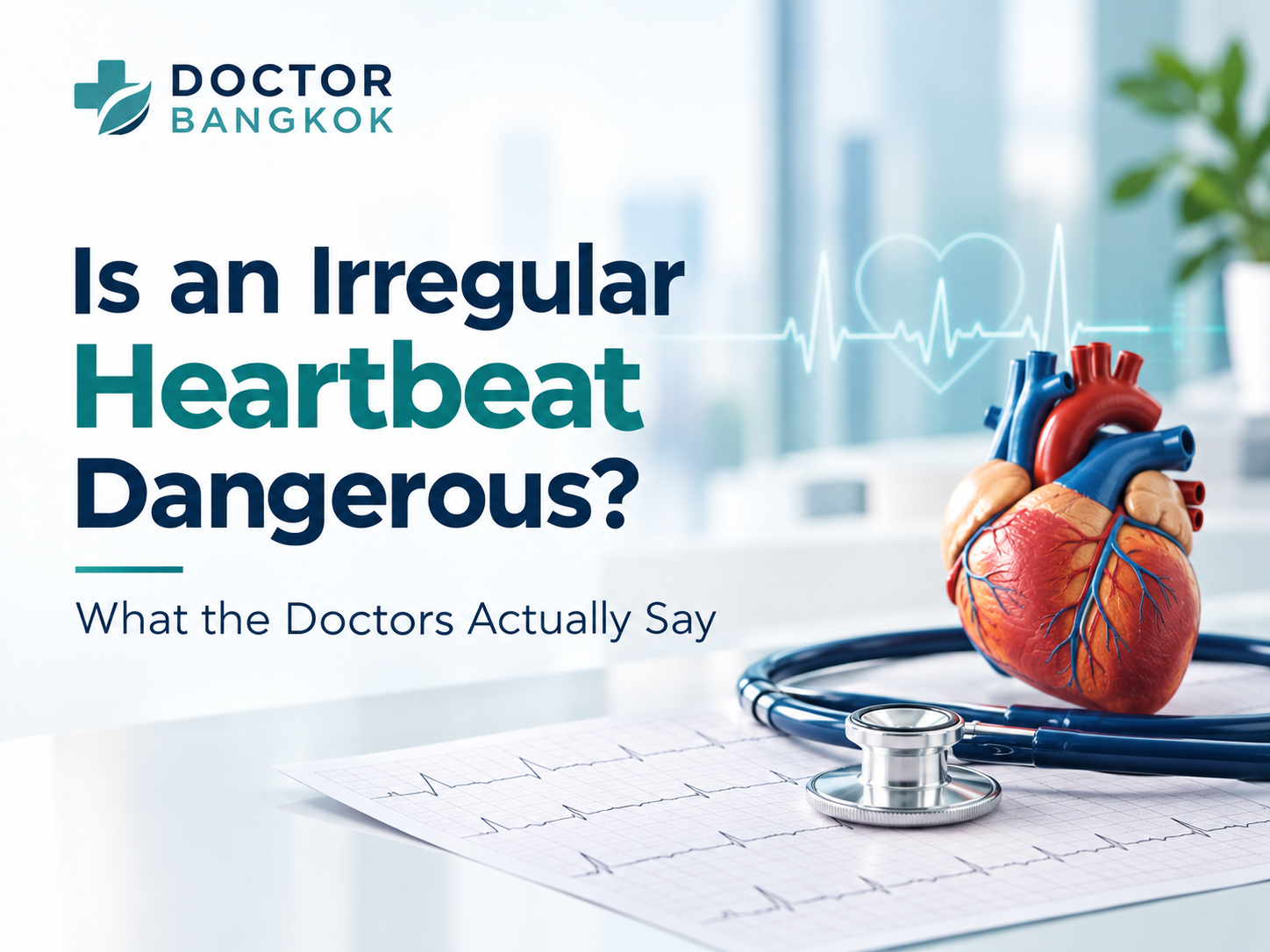
Most irregular heartbeats are not dangerous. Many are caused by stress, caffeine, dehydration, or poor sleep, and they settle on their own. But some types, especially atrial fibrillation (AFib), carry a real stroke risk and need prompt assessment. If your heart is skipping beats and you are also feeling dizzy, short of breath, or have chest pain, get seen the same day. If it is occasional and you feel otherwise fine, book an appointment soon and get an ECG done.
If you felt your heart flutter, skip, or thud in your chest today, you know how unsettling it is. Most of the time, what you felt was a harmless extra beat. But some irregular heartbeats do need attention, and the only way to know which you are dealing with is a quick assessment and an ECG.
Finding out is straightforward. A resting ECG takes about five minutes, results are immediate, and a physician reviews it with you on the spot. Here is what you need to know before you come in.

What an Irregular Heartbeat Actually Means
Your heart beats because of an electrical signal that fires in a regular rhythm. When something disrupts that signal, your heart may beat too fast, too slow, or in an uneven pattern. Doctors call this an arrhythmia.
Most people notice it as a flutter, a thud, a brief pause, or a racing heart. Some people feel nothing at all and only find out during a routine ECG. The term covers a wide range of conditions, from completely harmless to ones that need treatment.
Types of Irregular Heartbeat and Which Ones Are Serious
Not all arrhythmias are equal. Here is a straightforward way to think about them.
| Type | What It Means | Risk Level |
|---|---|---|
| Ectopic beats / PVCs | Extra beats from outside the normal signal. Very common. | Usually benign |
| Supraventricular tachycardia (SVT) | Fast heart rate starting above the lower chambers. | Low to moderate |
| Atrial fibrillation (AFib) | Chaotic, disorganised beating in the upper chambers. | Moderate to high |
| Bradycardia | Heart beating too slowly. | Depends on cause |
| Ventricular tachycardia (VT) | Fast rhythm in the lower chambers. | High |
| Ventricular fibrillation (VF) | Chaotic lower chamber rhythm. Cardiac arrest risk. | Life-threatening |
Premature ventricular contractions and ectopic beats are the most common thing I see in otherwise healthy patients. They feel alarming but rarely need treatment. AFib is different. It is common, often silent, and carries a significant stroke risk if left unmanaged.

Harmless vs. Dangerous: How to Tell the Difference
The honest answer is that you cannot always tell from symptoms alone. That is what the ECG is for.
Occasional skipped beats with no other symptoms, especially after coffee, a poor night of sleep, or a stressful week, are almost always benign. They come, they go, and they do not cause harm. An irregular heartbeat that comes with dizziness, breathlessness, fainting, or chest discomfort is a different picture. That combination needs same-day assessment.
Palpitations that last more than a few minutes and happen regularly also warrant investigation, even without other symptoms. Frequency and pattern matter as much as intensity.
Red Flag Symptoms: Get Seen the Same Day
Some symptoms alongside an irregular heartbeat mean you should not wait. These include chest pain or tightness, feeling faint or actually fainting, sudden shortness of breath at rest, and a heart rate that is very fast and will not settle.
If any of these are happening now in Bangkok, go to the nearest emergency department. Do not wait to see if it passes.
AFib and Stroke Risk: The Connection That Matters Most
AFib is the arrhythmia I see patients ignoring for months, and it is the one where that wait carries the most risk. When the upper chambers of your heart beat chaotically, blood can pool inside them. Pooled blood can clot. That clot can travel to the brain and cause a stroke.
People with untreated AFib have a stroke risk several times higher than those without it, according to established cardiology guidelines. The risk compounds over time. The good news is it can be managed effectively with anticoagulants and rate or rhythm control medication. But you have to know you have it first, and that requires an ECG.
What Triggers an Irregular Heartbeat in Otherwise Healthy People
I get asked this a lot. The triggers are often things patients do not connect to their heart at all.
Alcohol is a significant one, particularly binge drinking. Poor sleep, high stress, thyroid dysfunction, and electrolyte imbalances from low potassium or magnesium are all common culprits. Obstructive sleep apnoea is worth knowing about too. Repeated drops in oxygen during sleep can cause or worsen arrhythmias, especially overnight. Viral infections can also irritate the heart temporarily. If you have had a recent fever and now notice palpitations, mention that when you come in.
Bangkok-Specific Triggers Worth Knowing About
No international article is going to mention these, because they are written for readers in cooler climates, not someone walking out of Asok BTS at 2pm in 34-degree heat.
Dehydration is the biggest one here. Bangkok’s heat causes significant fluid and electrolyte loss, especially if you are active outdoors or drinking alcohol regularly. Replacing fluids alone is not enough if you are also losing sodium, potassium, and magnesium.
Long-haul flights in and out of Bangkok are another factor I see regularly. Cabin dehydration, alcohol on the plane, disrupted sleep, and the physical stress of travel can all trigger palpitations in people who are otherwise well. I have seen this pattern more than once. Usually benign, but worth checking. Air pollution is also relevant. Bangkok’s elevated PM2.5 levels have been linked in published research to increased rates of arrhythmia, particularly in people with existing cardiovascular risk.
How an Irregular Heartbeat Is Diagnosed in Bangkok
The starting point is a 12-lead ECG. It is a resting test, takes about five minutes, and a physician reviews the result with you straight away. If your ECG is normal but symptoms are frequent or concerning, the next step is usually a Holter monitor, a small wearable device that records your heart rhythm over 24 to 48 hours at home.
At Doctor Bangkok, we offer same-day resting ECGs with English-speaking physicians reviewing results on the spot. If you need echocardiography, a stress test, or a specialist cardiology review, those require a hospital setting and we will coordinate that referral directly. Many patients come to us first, get the initial assessment done somewhere familiar, and then we help them decide what comes next.
How an Irregular Heartbeat Is Treated
Treatment depends entirely on what type of arrhythmia you have. Many people with benign ectopic beats need no treatment at all, just reassurance and some lifestyle adjustments.
AFib is managed with rate control medication, rhythm control medication, or both. Anticoagulation is often added to reduce stroke risk. For some patients, cardioversion or catheter ablation at a specialist centre is the right path. The role of a first clinic visit is to get the diagnosis right, start appropriate medication if needed, and refer you to the right place. That is exactly what an initial assessment at Doctor Bangkok covers.
Noticed palpitations, a racing heart, or a skipped beat you cannot explain? A same-day ECG at Doctor Bangkok takes five minutes and gives you an immediate answer. Our English-speaking physicians will review your results with you, explain what they mean, and tell you clearly whether you need further investigation or can go home reassured. We are centrally located in Bangkok, BTS accessible, and see walk-in and same-day appointment patients. Book your ECG or cardiac assessment with Doctor Bangkok today.
Frequently Asked Questions
Dr. Ponlawat Pitsuwan
Physician, Doctor Bangkok
a private medical clinic in central Bangkok. He sees expats, residents, and medical tourists for cardiac symptom assessment, general medicine, and health screening, including resting ECG and Holter monitoring referrals. His approach is direct, evidence-based, and delivered in plain English.
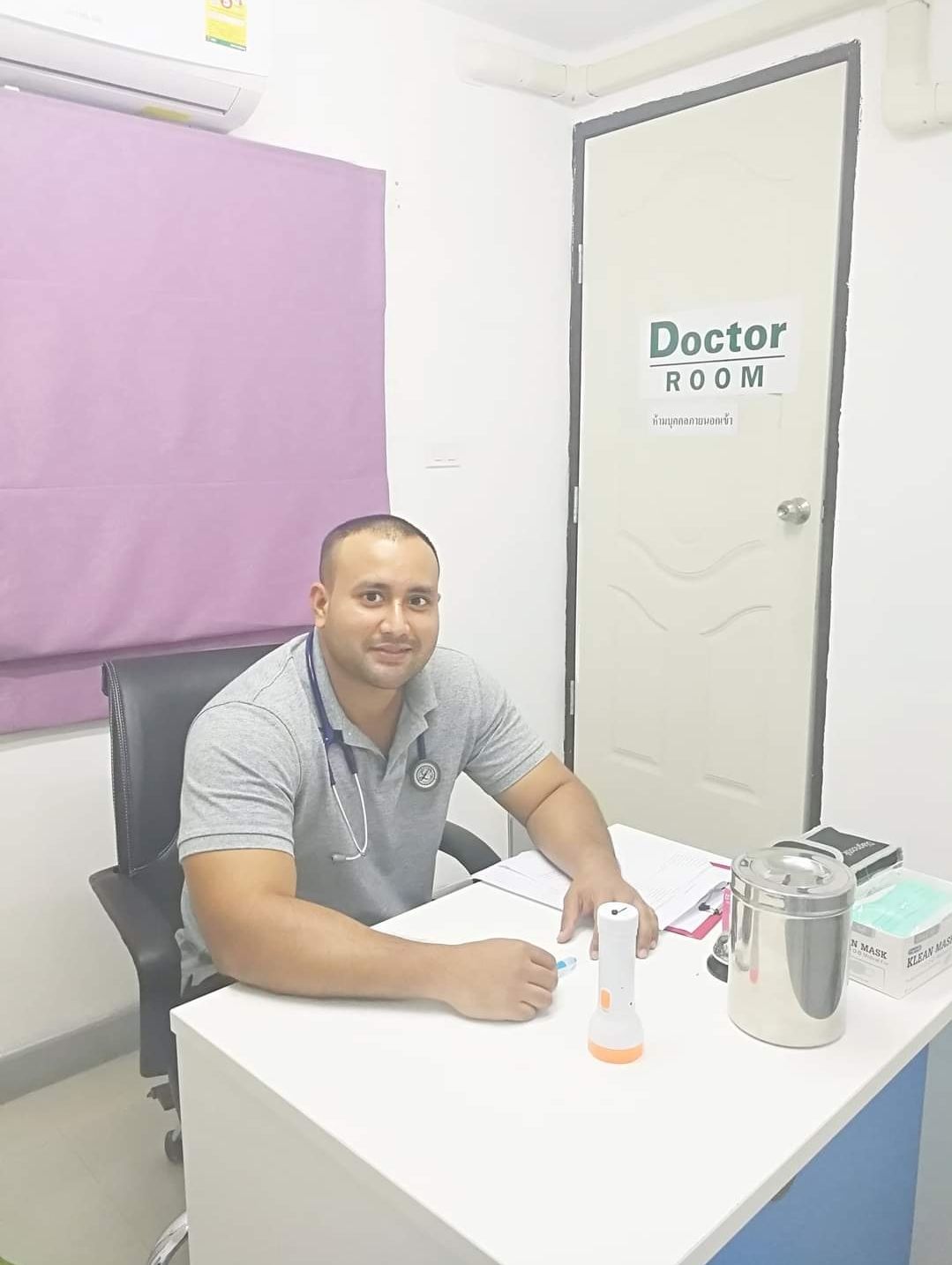
Dr. Ponlawat Pitsuwan is a physician at Doctor Bangkok, a private clinic in central Bangkok. He sees expats, residents, and medical tourists for general medicine, wellness consultations, and IV therapy. His focus is straightforward, evidence-based care delivered in plain language.