
Clinically reviewed by Dr. Ponlawat Pitsuwan, Physician, Doctor Bangkok. Last reviewed: September 2026
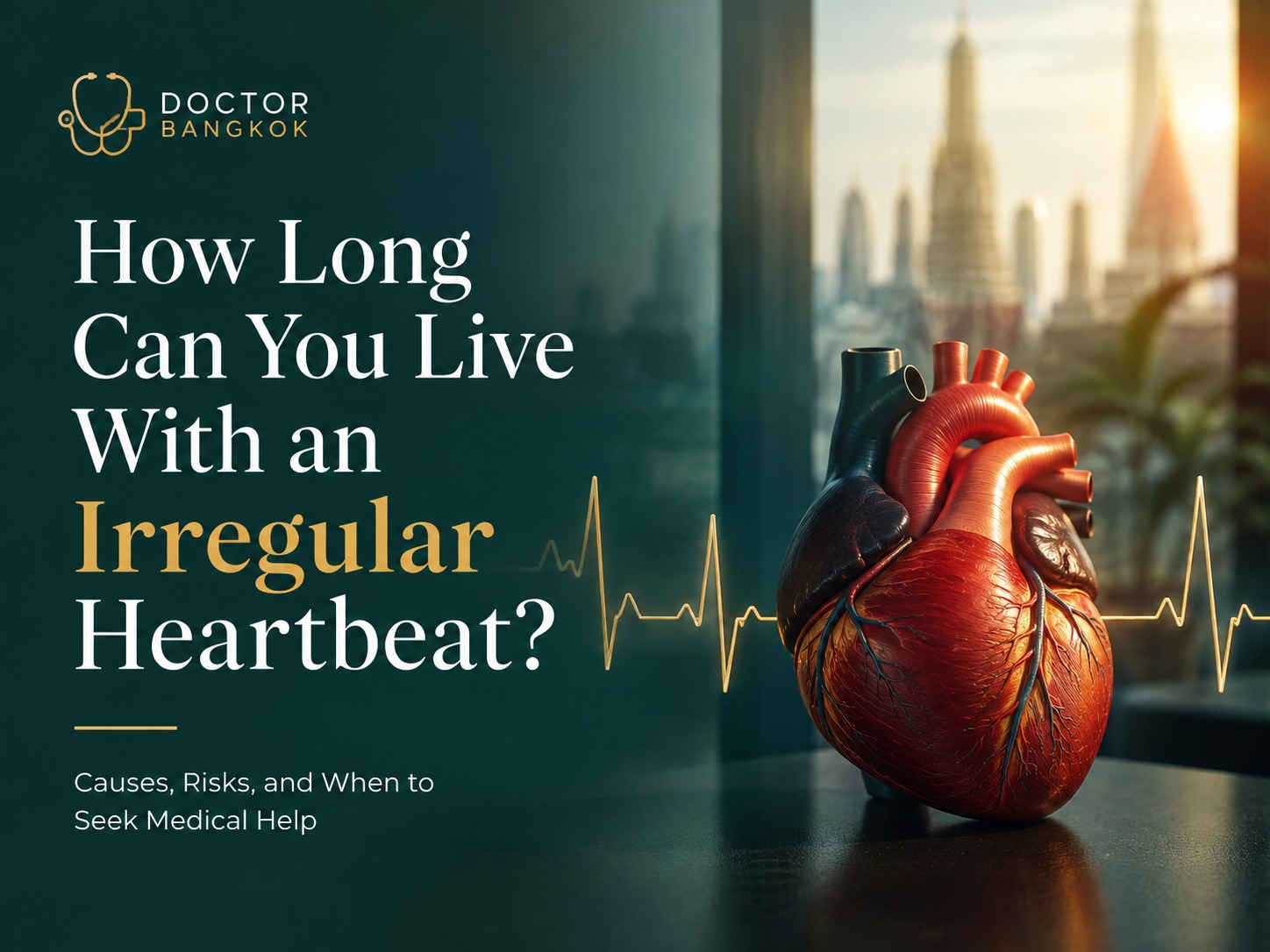
Most irregular heartbeats do not shorten your life. The ones that do, particularly atrial fibrillation left untreated, carry a meaningfully higher stroke risk and are linked to a reduction in life expectancy. With the right diagnosis and treatment, most people live full, normal lives. The key word is diagnosis. You cannot manage what you have not found.
I had a patient last month, an expat who had been in Bangkok for three years, who mentioned almost in passing that his heart "did something weird" occasionally. He had been ignoring it. No check-up since he left the UK. One ECG later, we had a clear answer and a clear plan. That is the pattern I see most often: not panic, just quiet avoidance.
If you are asking how long you can live with an irregular heartbeat, the honest answer is: it depends entirely on which type you have and whether you know about it. Some arrhythmias are harmless background noise. Others quietly raise your stroke risk for years before anything obvious happens. A quick test tells you which category you are in.

Not All Irregular Heartbeats Are Equal
The word arrhythmia covers a wide range. Some types are essentially harmless. Others need treatment. Knowing the difference is the whole point.
Premature ventricular contractions, or PVCs, are the most common. They feel like a skipped beat or a thud in the chest. In most people with a healthy heart, they carry no serious risk and need no treatment. Supraventricular tachycardia, or SVT, causes sudden fast heartbeats that usually stop on their own. Uncomfortable, but rarely dangerous in otherwise healthy people.
Atrial fibrillation, known as AFib, is different. It is the most common serious arrhythmia and the one most likely to affect your long-term health. The heart’s upper chambers beat chaotically instead of in a steady rhythm. Blood can pool and clot, and those clots can travel to the brain. That is where the stroke risk comes from.
Ventricular fibrillation sits at the most dangerous end of the spectrum. It causes cardiac arrest and is a medical emergency requiring immediate treatment.
Irregular Heartbeat Life Expectancy: What the Evidence Shows
Published research on AFib patients shows an average reduction in life expectancy of around 2.6 years compared to people without the condition. Untreated AFib also carries a meaningfully elevated risk of stroke and all-cause mortality. These are not small numbers.
But here is the important context. Those figures apply largely to untreated or late-diagnosed cases. People diagnosed early, started on anticoagulants to prevent clots, and given proper rate or rhythm control treatment do significantly better. The gap in outcomes between treated and untreated AFib is one of the clearest in cardiology.
For benign arrhythmias like PVCs or SVT in an otherwise healthy person, life expectancy is not meaningfully affected. The problem is that you cannot tell which type you have based on symptoms alone. Palpitations feel the same whether the cause is harmless or not.

Can You Have an Irregular Heartbeat Without Knowing It?
Yes. This is the part most people do not expect. Many arrhythmias produce no symptoms at all. AFib in particular can be completely silent for years.
I ask every expat patient who comes in for a general check-up when they last had an ECG. The answer is almost always never, or years ago before they moved here. If you have not had a routine health screen since arriving in Bangkok, something could be sitting quietly in the background. A resting ECG takes about five minutes and is completely painless. It is the fastest way to rule out the serious causes.
This is exactly why a cardiac screening is worth doing, not just when you feel something, but as a baseline.
What Decides How Serious Your Prognosis Is
The type of arrhythmia matters most. After that, several factors shape your outlook.
Age and underlying health play a big role. AFib in a 35-year-old with no other conditions carries a different risk profile than AFib in a 65-year-old with high blood pressure and diabetes. Cardiologists use a scoring tool called the CHA2DS2-VASc score to calculate individual stroke risk. It factors in age, sex, blood pressure, diabetes, and previous stroke history, and guides decisions about blood thinners.
Whether you are getting treatment is the single biggest modifier. Anticoagulant therapy, rate control medication, and procedures like catheter ablation or electrical cardioversion can dramatically change the trajectory. These are standard care options that many patients manage comfortably for decades.
Living in Bangkok With an Irregular Heartbeat: What Expats Need to Know
Bangkok adds some specific considerations that your doctor back home probably never mentioned.
Heat and dehydration are real triggers. When you are dehydrated, your electrolyte balance shifts, and electrolytes are directly involved in how your heart maintains a stable rhythm. Bangkok’s heat means you lose fluid faster than you realise. If you are also drinking alcohol regularly, the risk compounds. Alcohol is a well-documented trigger for AFib episodes.
Air quality matters too. On high-pollution days in Bangkok, patients with existing cardiac conditions report more palpitations. If you have a known arrhythmia, checking the AQI and limiting outdoor exertion on bad days is practical advice. Managing a heart condition far from home also means having a local doctor who knows your history. Continuity of care matters more than most expats realise until something happens.
When to Go to the ER and When to Book a Same-Day Appointment
This is the question I get most often, and it matters to get it right.
Go to an emergency room immediately if palpitations come with chest pain, fainting or near-fainting, severe breathlessness, or a very fast heart rate that does not stop. These need hospital-level assessment right now.
Book a same-day appointment if palpitations are brief, come and go, and are not accompanied by those symptoms. That is the right situation for a clinic visit, an on-site ECG, and a conversation about what you felt and when. At Doctor Bangkok, we can run an ECG the same day and check a basic blood panel including electrolytes and thyroid function. If the ECG points toward something that needs a specialist, we handle the referral.
Do not wait weeks because you feel fine between episodes. The whole point of an ECG is to look for the pattern even when you are not symptomatic.
How an Irregular Heartbeat Is Diagnosed in Bangkok
The starting point is always an ECG. It records your heart’s electrical activity and can pick up AFib, PVCs, SVT, and other arrhythmias in a single reading. If your symptoms come and go and the resting ECG is normal, the next step is usually a Holter monitor, a small wearable device you take home that records your heart rhythm over 24 to 48 hours.
Blood tests matter too. Thyroid problems, anaemia, and electrolyte imbalances can all cause or worsen arrhythmias. Ruling these out is part of the first visit.
If initial tests suggest something structural, or if your risk profile is high, a referral to a cardiologist for an echocardiogram or further testing is the next step. Doctor Bangkok handles the initial workup and coordinates that pathway. You do not need to arrive knowing which specialist you need. That is what the first visit is for.
If you have noticed an irregular heartbeat, palpitations, or a fluttering sensation in your chest, a same-day ECG and clinical review is the sensible first step. Doctor Bangkok offers on-site ECG testing and general health consultations with English-speaking physicians in central Bangkok, BTS accessible, no referral needed. Book online or walk in during clinic hours.
Frequently Asked Questions
Dr. Ponlawat Pitsuwan
Physician, Doctor Bangkok
a private medical clinic in central Bangkok. He sees expats, residents, and medical tourists for cardiac symptom assessment, general health screening, and ongoing condition management. His focus is straightforward, evidence-based care delivered in plain language.
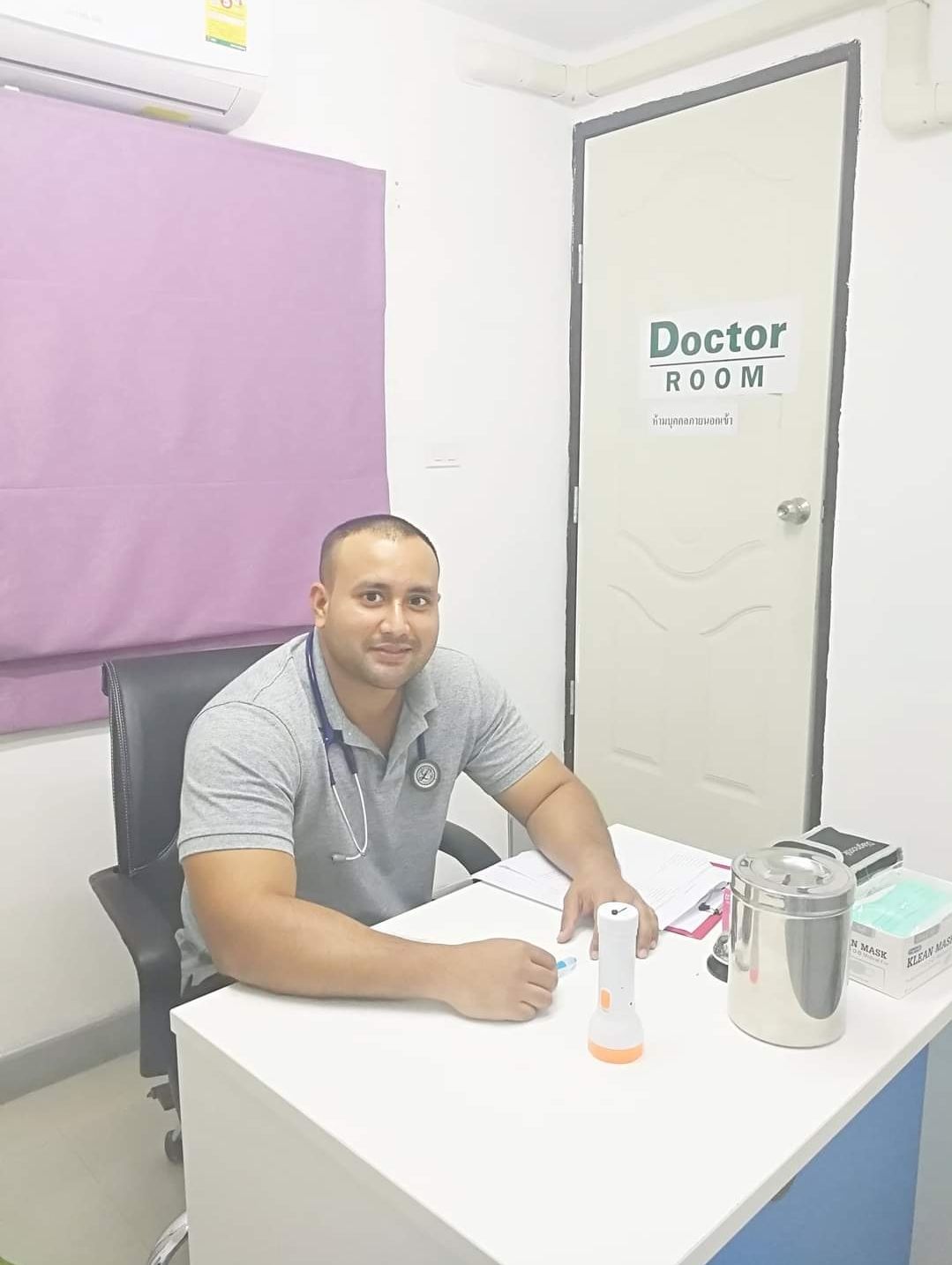
Dr. Ponlawat Pitsuwan is a physician at Doctor Bangkok, a private clinic in central Bangkok. He sees expats, residents, and medical tourists for general medicine, wellness consultations, and IV therapy. His focus is straightforward, evidence-based care delivered in plain language.