
Clinically reviewed by Dr. Ponlawat Pitsuwan, Physician, Doctor Bangkok. Last reviewed: September 2026
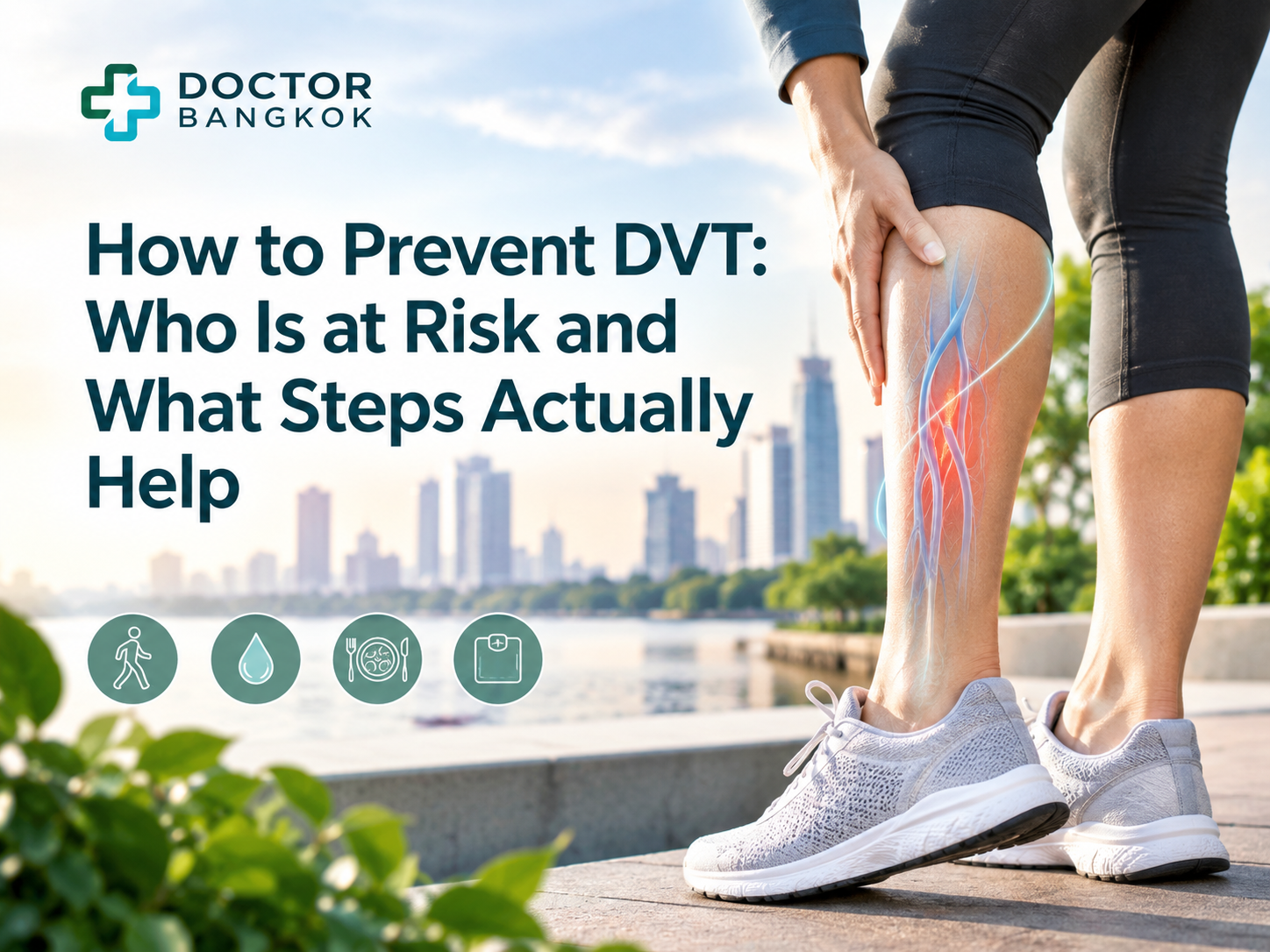
DVT, or deep vein thrombosis, is a blood clot that forms in a deep vein, usually in the leg. You can reduce your risk by staying hydrated, moving regularly, and wearing graduated compression stockings on long flights. If you have existing risk factors, a pre-travel consultation can help you decide whether you also need prescription medication. One-sided leg swelling or calf pain after a long-haul flight needs same-day clinical assessment.
I see this more than people realise. Someone lands in Bangkok after 12 hours from London or Sydney, checks into their hotel, and two days later walks in with a swollen, tender calf. They assumed it was muscle strain from the journey. It was not.
Most people have heard of DVT in the context of long flights, but what actually works to prevent it tends to get buried in generic advice. This article covers the real risks, the steps with strong evidence behind them, and when to stop reading and come in.

Why Blood Clots Form in Deep Veins
Three things have to line up for a clot to form. Blood flow slows down. The vein wall sustains some stress. And the blood itself clots more readily than usual.
Sitting still for hours slows the blood moving through your leg veins. Your calf muscles act as a pump every time you walk, pushing blood back toward the heart. Stop walking, stop pumping. Add dehydration, which thickens the blood, and you have the first two conditions covered on almost any long flight.
The third, a tendency to clot more easily, can come from combined oral contraceptives, cancer, pregnancy, a genetic clotting disorder, or recent surgery. This is why some people fly 15 hours without issue while others develop a clot on a 4-hour regional flight.
Long-Haul Flights to Bangkok and Your DVT Risk
Flights from Europe, North America, and Australia to Bangkok routinely run 10 to 14 hours. That puts them in the highest-risk duration category for travel-related DVT. Cabin air is dry, so you lose fluid through breathing the entire flight. Most passengers drink far less than usual, and many substitute alcohol instead.
Here is something that often gets missed. You land in Bangkok and step into 33-degree heat and high humidity. Your body immediately starts losing more fluid. If you arrived mildly dehydrated from the flight and spend the afternoon in Sukhumvit heat, your blood stays thicker for hours after landing. The risk does not stop at the gate.
This double-dehydration pattern, dry cabin air followed by tropical heat, makes Bangkok arrivals a specific group worth thinking about. Drink water on the plane. Keep drinking after you land. This is not filler advice. It is the cheapest and most effective step available.

How to Prevent DVT on the Plane
Put your compression stockings on before you board, at home or at the airport, not mid-flight. Graduated compression stockings, tighter at the ankle and gradually looser toward the knee, support blood flow back up the leg. For most healthy travellers on flights over four hours, there is moderate evidence they reduce clot risk.
During the flight, get up and walk to the bathroom at least once every 90 minutes. When you cannot get up, do seated calf exercises. Flex your foot toward your shin, hold briefly, then push it back down. Twenty repetitions every 30 minutes keeps the calf pump working and blood moving through your deep veins.
Drink roughly a cup of water every hour. Keep alcohol to one drink or skip it. Avoid sleeping medication that keeps you flat and motionless for eight hours unless you genuinely need it.
After landing, do not go straight from the taxi to the hotel bed. Even a 20-minute walk helps clear the stasis from your legs.
DVT Risk for Expats in Bangkok — Not Just a Flying Problem
This comes up regularly with expat patients who are not going anywhere. If you work at a desk in Silom or Asoke and sit for eight or more hours a day, you carry a background DVT risk. Bangkok’s heat means you are losing fluid through sweating even in an air-conditioned office, because the commute is warm and humid.
Set a timer. Stand and walk for two minutes every hour. The evidence behind regular movement for venous health is solid. A standing desk or under-desk foot pedal helps as well.
If you are on the combined contraceptive pill, are significantly overweight, or have a personal or family history of clots, that background risk is meaningfully higher. These are the patients I encourage to come in for a general health check so we can look at the full picture.
When Lifestyle Steps Are Not Enough
For most healthy travellers, compression and hydration are sufficient. For some, prescription medication is appropriate.
Low molecular weight heparin is an injectable anticoagulant sometimes prescribed for high-risk travellers before a long flight. It requires a consultation, a review of your risk factors, and a prescription. This is not something to pick up over the counter.
Aspirin comes up in conversation regularly. The evidence for aspirin in travel-related DVT prevention is limited, and it carries its own bleeding risks. I do not routinely recommend it for this purpose, and I would not start it based on something read online.
For most healthy adults on long flights, class 1 medical-grade compression stockings at 15 to 20 mmHg at the ankle are appropriate. If you have a history of DVT or significant varicose veins, a higher compression class may be needed, and that decision should involve a doctor.
High-Risk Travellers: When to See a Doctor Before You Fly
If any of these apply to you, book a pre-travel consultation before your next long-haul flight. A previous DVT or pulmonary embolism. Active cancer or recent chemotherapy. Surgery within the last three months, especially on the hip or knee. Pregnancy or the first six weeks after delivery. A diagnosed clotting disorder such as Factor V Leiden. BMI over 30. A cast or leg immobilisation.
A pre-travel assessment at Doctor Bangkok covers your full history, calculates your risk level, and gives you a clear plan. That might mean compression only. It might mean a prescription. In rare cases, it means delaying travel. Getting this wrong on a 12-hour flight is not a recoverable mistake.
DVT Symptoms After Landing in Bangkok
Both ankles swelling slightly after a long flight is common. Blood pools in the lower legs during prolonged sitting and usually settles within 24 hours of moving around.
What concerns me is one leg: swollen, warm, red, or tender, especially in the calf. That combination needs same-day clinical assessment. Not tomorrow. Not after you see if it improves.
DVT can also be completely silent. Roughly half of cases produce no symptoms at all. A clot that goes untreated can travel to the lung, causing a pulmonary embolism, which is a medical emergency. Chest pain, sudden shortness of breath, or coughing blood after a long flight requires immediate emergency care, not a walk-in clinic visit.
If you have one-sided leg symptoms after arriving in Bangkok, Doctor Bangkok can assess you the same day. A physical examination, with imaging where indicated, is how we confirm or rule out DVT. Avoiding post-thrombotic syndrome, the long-term leg pain and swelling that follows an untreated clot, is exactly what we are trying to prevent.
If you have just landed in Bangkok with a swollen or tender leg, or you are planning a long-haul flight and want to know your actual DVT risk, Doctor Bangkok offers same-day general medical consultations with English-speaking physicians. We also provide pre-travel health assessments for high-risk travellers, including fit-to-fly reviews and prescription options where appropriate. Our clinic is centrally located in Bangkok with easy BTS access. Walk in or contact us to book.
Frequently Asked Questions
Dr. Ponlawat Pitsuwan
Physician, Doctor Bangkok
a private medical clinic in central Bangkok. He sees expats, residents, and medical tourists for travel medicine, general medical consultations, pre-travel health assessments, and acute presentations including post-flight symptoms. His focus is straightforward, evidence-based care delivered in plain language.
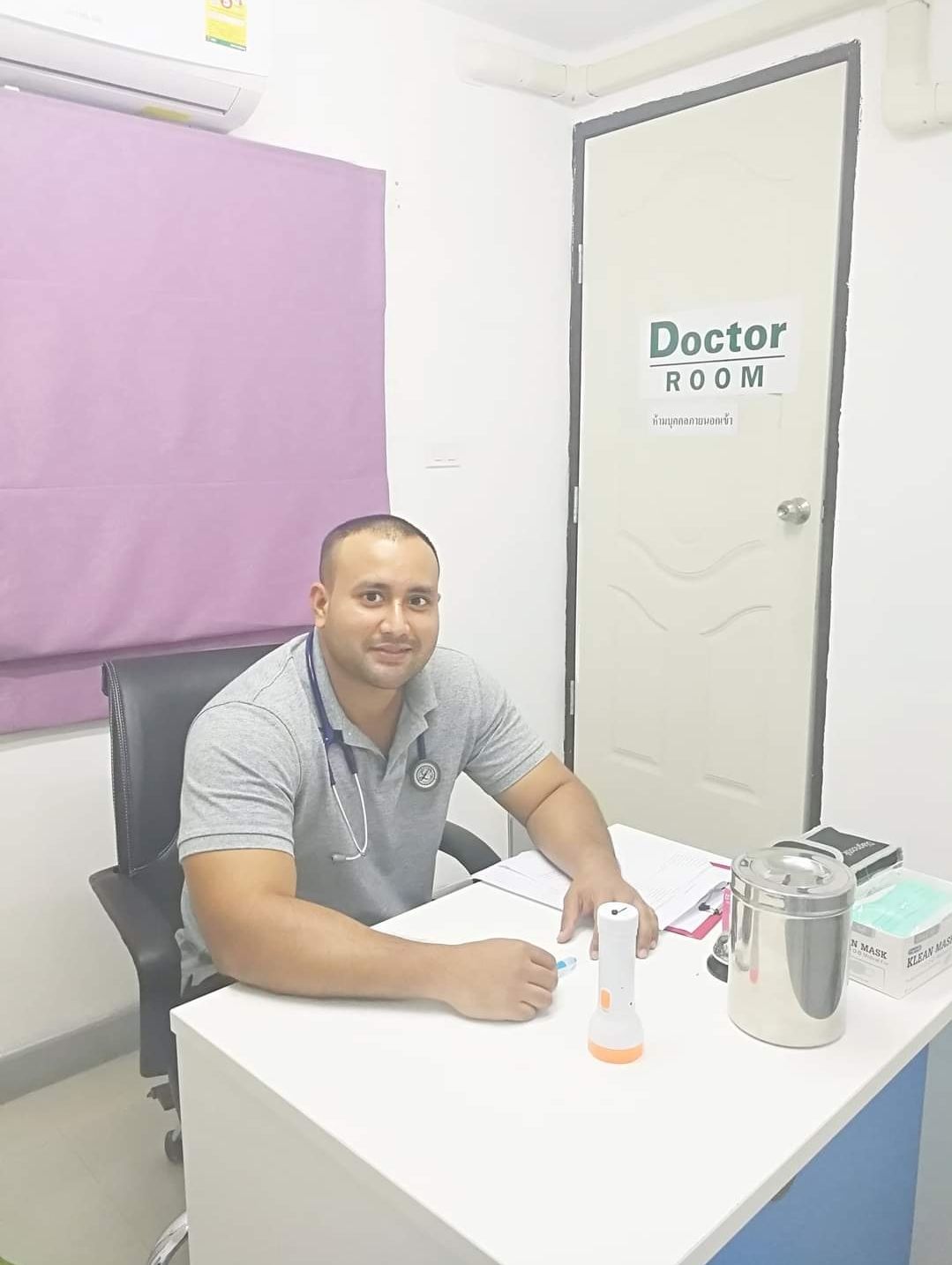
Dr. Ponlawat Pitsuwan is a physician at Doctor Bangkok, a private clinic in central Bangkok. He sees expats, residents, and medical tourists for general medicine, wellness consultations, and IV therapy. His focus is straightforward, evidence-based care delivered in plain language.