
Clinically reviewed by Dr. Ponlawat Pitsuwan, Physician, Doctor Bangkok. Last reviewed: July 2026
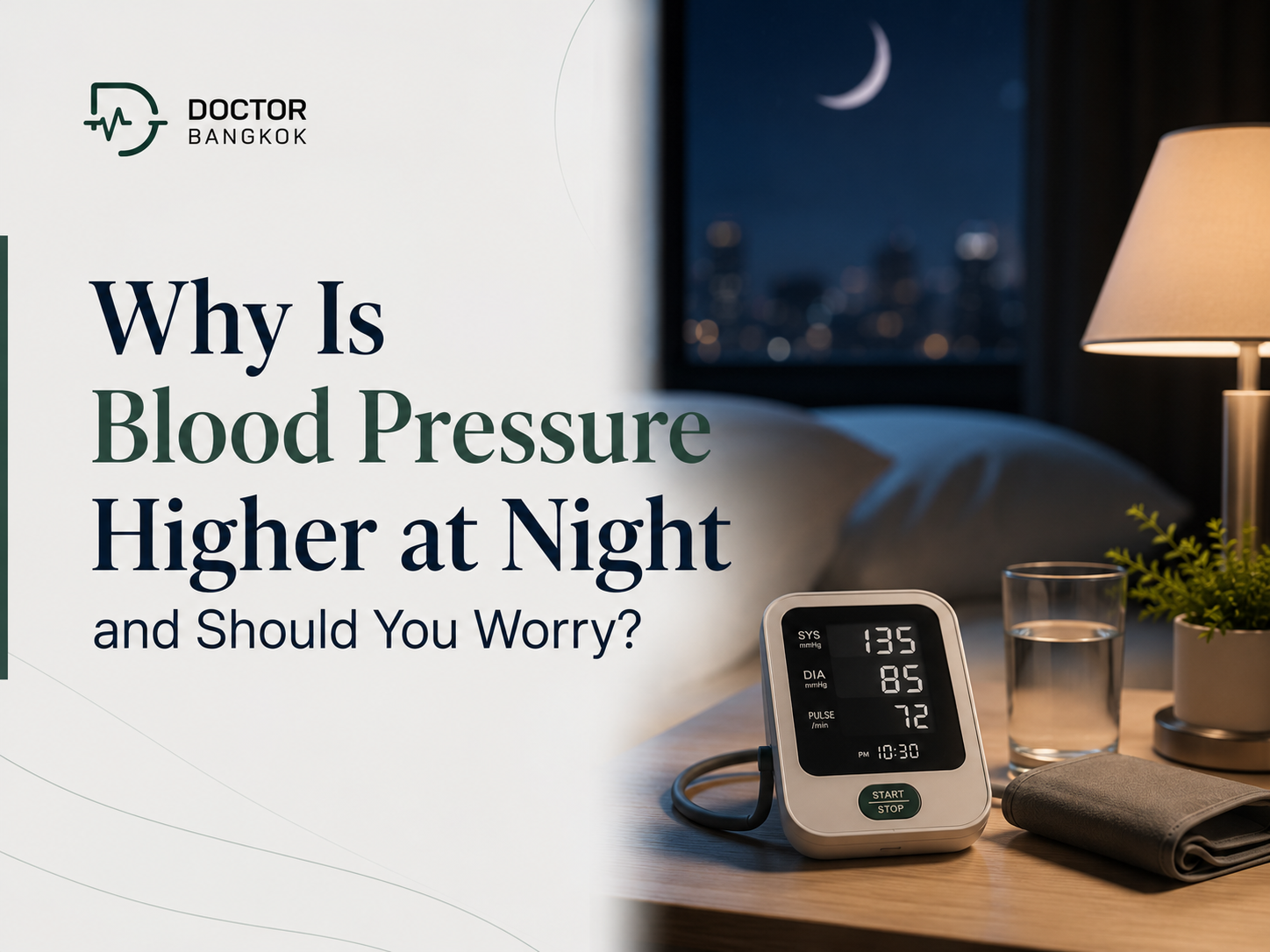
Blood pressure normally drops by 10 to 20 percent during sleep. When it stays high instead, this is called nocturnal hypertension, and it carries a higher risk of heart attack and stroke than daytime high blood pressure alone. A nighttime reading above 110/65 mmHg is considered elevated. The only reliable way to detect it is with a 24-hour blood pressure monitor, since standard clinic readings taken during the day will miss it entirely.
If you have woken up with a pounding headache, felt oddly tired despite a full night’s sleep, or noticed your blood pressure cuff reading something alarming at 7am, you are not overreacting. A lot of patients come in after exactly this kind of night, especially expats who are newly settled in Bangkok and not sure what normal looks like here. The question they all ask is: should I be worried?
The short answer is yes, this is worth taking seriously, but not every high nighttime reading means crisis. What matters is the pattern. Blood pressure is supposed to fall when you sleep. When it does not, that tells us something important about what risks are building quietly in the background.

What Your Blood Pressure Should Do at Night
Most people do not realise this, but your blood pressure is not the same around the clock. During the day it rises and falls with activity, stress, and meals. When you fall asleep, your nervous system shifts into a lower gear. Your heart slows, your blood vessels relax, and blood pressure drops.
That drop is called the nocturnal dip. It is healthy, normal, and protective. Your heart and arteries get a few hours of genuine rest each night. Without that rest, damage accumulates over time.
What counts as high blood pressure at night
The threshold for nighttime blood pressure is lower than daytime. A reading above 130/80 mmHg during the day is considered high. At night, anything above 110/65 mmHg during sleep is already elevated. Even a reading that looks borderline at night carries real clinical weight.
What Is Dipping and What Happens When It Does Not Happen
Doctors use the word "dipping" to describe the normal nighttime fall in blood pressure. A healthy dip is roughly 10 to 20 percent below your daytime average. When your results come back from a 24-hour blood pressure monitor, this is one of the first things I look at.
If your pressure drops less than 10 percent overnight, you are a non-dipper. Your heart is not getting the recovery window it needs. Non-dippers have a higher risk of stroke, kidney damage, and heart enlargement over time.
Reverse dipping is the most serious pattern
Reverse dipping means your blood pressure actually rises above your daytime level while you sleep. This is less common but more serious. It is strongly linked to sleep apnea, kidney disease, and problems with the nerves that regulate your heart and blood vessels. If your 24-hour monitor shows this pattern, it needs prompt attention.

Can Your Blood Pressure Be Normal During the Day but High at Night
Yes, and this catches people out constantly. I see it regularly, particularly in patients who have had a routine check-up, been told their blood pressure is fine, and gone away reassured. The problem is that a standard clinic reading only captures one moment in time, usually mid-morning, sitting down, after you have been awake for hours.
This is called masked nocturnal hypertension. Your daytime pressure is genuinely normal. Your nighttime pressure is not. Without a 24-hour ambulatory blood pressure monitor, you would never know. This is one of the main reasons I do not rely on a single clinic reading when someone comes in with concerns about their blood pressure pattern.
The white-coat effect works in reverse here
Some patients have the opposite of white-coat hypertension. Their blood pressure rises at the clinic because they are anxious, but is fine at home. With masked nocturnal hypertension, the clinic reading looks clean, but the real risk is happening at home while they sleep. Standard checks will miss it every time.
What Causes Blood Pressure to Rise at Night
Sleep apnea is one of the most common causes I see. Every time you stop breathing during sleep, your body releases a surge of stress hormones that raise your blood pressure, over and over through the night.
Kidney disease affects how your body handles fluid and salt overnight. Diabetes can damage the nerves that regulate blood pressure during rest. Poorly controlled daytime hypertension, obesity, and certain medications, including some decongestants and anti-inflammatory painkillers, can all blunt the normal nighttime dip.
Who is most at risk
Older adults are at higher risk, as the normal dipping pattern tends to weaken with age. People with diabetes or chronic kidney disease are at elevated risk regardless of age. Shift workers with disrupted sleep cycles often show abnormal nighttime patterns. Expats adjusting to a new time zone, new diet, or irregular lifestyle are more vulnerable than they might expect, particularly in the first year of living abroad.
Living in Bangkok: How Heat, Salty Food, and Late Nights Raise Your Nighttime Pressure
This is something I tell almost every expat who comes in with blood pressure concerns: Bangkok is not a neutral environment for your cardiovascular system. The heat, the food, and the lifestyle all interact with your blood pressure in ways most people do not account for.
Bangkok’s heat and humidity cause your blood vessels to widen during the day as your body tries to cool down. To compensate, your kidneys hold onto more fluid. That fluid can push blood pressure higher at night when you lie down. Add a late evening Thai meal, which is genuinely high in sodium, and your body is dealing with a salt and fluid load right when it should be winding down.
Evening alcohol is part of life in Bangkok for a lot of expats. It fragments your deeper sleep stages and removes the nocturnal dip. I am not saying one drink causes a heart attack. But regular late nights with alcohol, followed by disrupted sleep, is one of the most consistent patterns I see in expats whose nighttime blood pressure is elevated while their daytime readings look manageable.
Why Nocturnal Hypertension Is More Dangerous Than It Sounds
When the nocturnal dip is absent, the heart and arteries do not get a break. Over months and years, the heart muscle can thicken to cope with the extra workload, and the arteries stiffen. The kidneys, brain, and eyes are all sensitive to sustained high pressure and can begin to show damage.
Nocturnal hypertension adds risk on top of whatever your daytime readings show. A patient with normal daytime pressure and elevated nighttime pressure still has a meaningfully higher risk of stroke than a patient whose pressure is controlled around the clock. This is not a borderline finding to monitor from a distance.
Can Changing When You Take Your Blood Pressure Medication Help
Possibly, yes, but do not change your medication timing on your own. There is a clinical approach called chronotherapy, which means taking blood pressure medication at bedtime rather than in the morning, specifically to target nocturnal pressure. Some studies have shown this improves nighttime control in non-dippers.
However, bedtime dosing is not right for every medication or every patient. Some drugs can cause a dangerous drop in blood pressure overnight when taken at night. The decision depends on your specific medication, your full blood pressure pattern, and any other conditions you have. At Doctor Bangkok, this is exactly the kind of conversation our GPs have during a chronic condition review, once we have your 24-hour data in hand.
How Blood Pressure Is Properly Assessed: What to Expect
A single reading at the clinic is a starting point, not a full picture. If I suspect nocturnal hypertension, the next step is a 24-hour ambulatory blood pressure monitor. You wear a small cuff on your upper arm for a full day and night. It takes automatic readings while you go about your normal life, sleep as usual, and return the device the next day.
The data shows your daytime average, your nighttime average, your dipping pattern, and any spikes. This is far more useful than a few readings taken in a clinic chair. Doctor Bangkok’s English-speaking GPs can assess your blood pressure pattern, arrange ambulatory monitoring, and manage treatment for patients who need ongoing hypertension care in Bangkok.
Home blood pressure monitoring is also useful between appointments. Take readings in the morning before you get up and move around, and again before bed. Keep a log for two weeks. That pattern gives a doctor far more to work with than a single reading, even without a 24-hour monitor.
Concerned about high blood pressure at night? Doctor Bangkok is a private, English-speaking medical clinic on Sukhumvit Soi 13, open 24 hours a day. Our GPs assess blood pressure patterns, arrange 24-hour ambulatory monitoring, and manage blood pressure concerns for expats and residents in Bangkok. Whether you woke up with a headache or noticed something worrying on your home cuff, do not wait to get it checked. Visit doctorbangkok.co.th or walk in any time.
Frequently Asked Questions
What blood pressure reading is considered high at night?
The nighttime threshold is lower than during the day. A reading above 110/65 mmHg while you are asleep is considered elevated, compared to the 130/80 mmHg cut-off used for daytime readings. Blood pressure is supposed to be lower during sleep, so even a mildly elevated nighttime reading carries clinical weight.
Can blood pressure be normal during the day but high at night?
Yes. This is called masked nocturnal hypertension, and I see it more often than most patients expect. Your clinic reading can look completely normal while your nighttime pressure remains elevated. The only way to detect it is with a 24-hour ambulatory blood pressure monitor.
Is Bangkok’s heat and diet making my nighttime blood pressure worse?
It can, yes. Bangkok’s heat causes fluid retention that can push pressure higher when you lie down at night. Thai food is genuinely high in sodium, and regular evening alcohol, common in Bangkok’s social scene, disrupts sleep and removes the normal nighttime dip. These factors combine in ways most people do not realise.
Should I take my blood pressure medication in the morning or at night?
That depends on your individual blood pressure pattern and which medication you are taking. Taking medication at bedtime can improve nighttime control in some patients, but it is not appropriate for everyone and can be unsafe with certain drugs. Do not switch timing on your own. Discuss it with your doctor after reviewing your 24-hour monitor results.
Where can I get a 24-hour blood pressure test in Bangkok?
Doctor Bangkok’s GPs can assess your blood pressure, arrange 24-hour ambulatory monitoring, and manage ongoing hypertension care in English. The clinic is on Sukhumvit Soi 13, BTS accessible, and open 24 hours. You do not need a referral to walk in.
Is waking up with a headache a sign of high blood pressure at night?
A morning headache, especially across the back of the head, is one of the more common symptoms patients describe when nocturnal hypertension is later confirmed. It is not always the cause, but it is worth checking. If it is happening regularly, get your blood pressure assessed properly rather than relying on a single reading.
About the author: Dr. Ponlawat Pitsuwan is a physician at Doctor Bangkok, a private medical clinic in central Bangkok. He sees expats, residents, and medical tourists for blood pressure assessment, chronic condition management, and general medical care. His focus is straightforward, evidence-based care delivered in plain language.

Dr. Ponlawat Pitsuwan is a physician at Doctor Bangkok, a private clinic in central Bangkok. He sees expats, residents, and medical tourists for general medicine, wellness consultations, and IV therapy. His focus is straightforward, evidence-based care delivered in plain language.