
Clinically reviewed by Dr. Ponlawat Pitsuwan, Physician, Doctor Bangkok. Last reviewed: July 2026
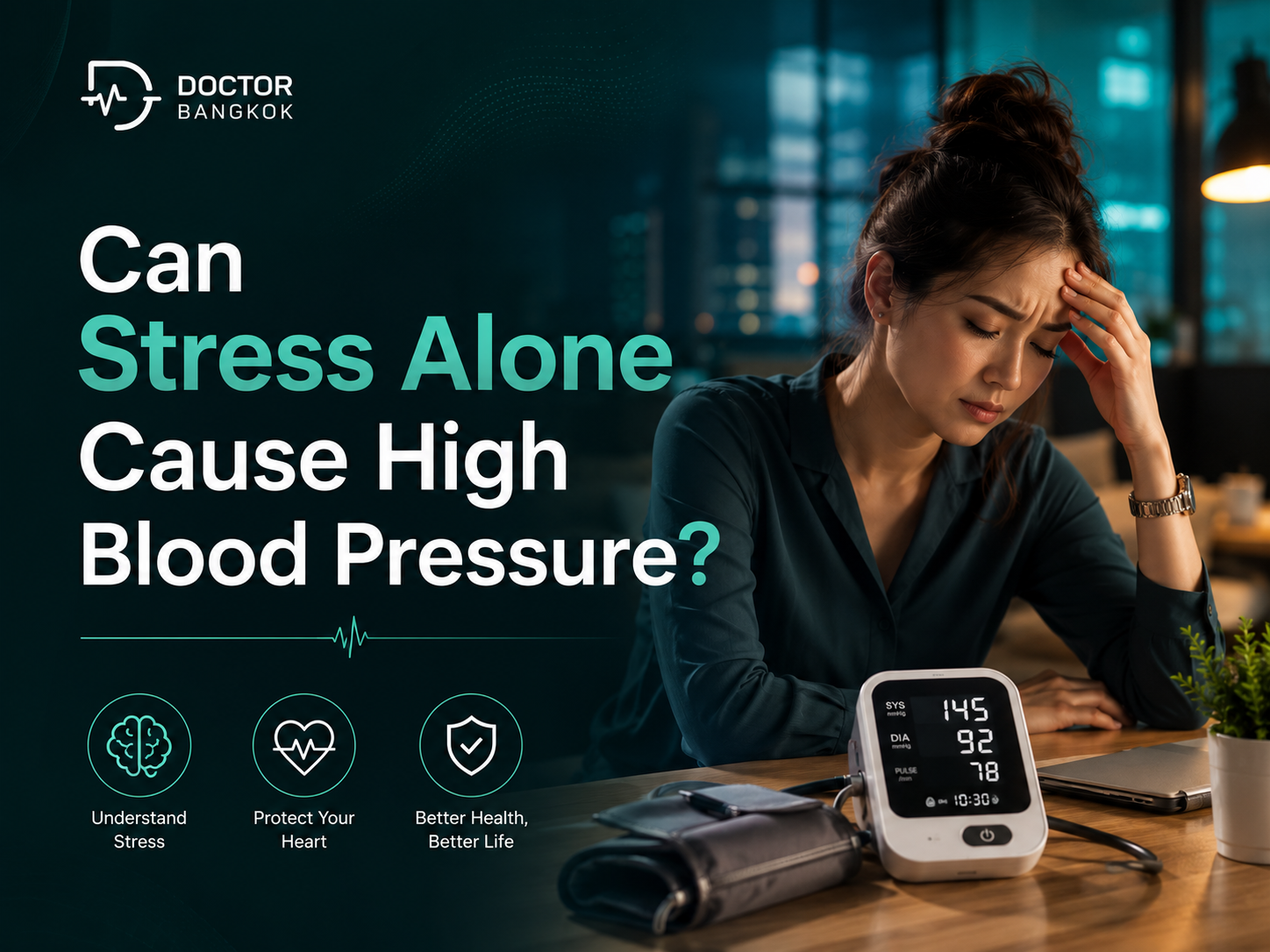
Stress causes real, measurable rises in blood pressure. Short-term stress spikes resolve quickly. But repeated or chronic stress may contribute to lasting high blood pressure over time, especially when it drives poor sleep, excess alcohol, and inactivity. The only way to know where your blood pressure actually stands is to get it measured.
If you have been under pressure for months and wondering whether stress is doing something to your heart, you are not wrong to ask. I see this regularly at my clinic, particularly with expats who have been in Bangkok for a year or two, grinding through work pressure, relocation stress, and irregular routines, and have not had a proper health check since they left home. Their blood pressure is often higher than they expect.
The honest answer is that stress alone is unlikely to permanently raise your blood pressure the way smoking or a high-salt diet does. But it is not harmless either. Stress spikes your reading in the short term, and over months and years it pushes many people into habits that raise blood pressure for good. Here is what you actually need to know.

Acute Stress vs. Chronic Stress — Two Very Different Situations
These two types of stress behave completely differently in your body.
Acute stress is short-lived. A near-miss in Bangkok traffic. A hard deadline. A difficult phone call. Your blood pressure jumps, sometimes significantly, and then comes back down within minutes. This is normal. It is not dangerous on its own.
Chronic stress is the problem. This is the kind that sits with you for weeks or months. Work pressure that never lifts. A relationship that is not working. Financial worry. The relentless low-grade strain of living far from home in a city that does not slow down. With chronic stress, your blood pressure does not fully settle between spikes. Over time, that matters.
What Stress Actually Does to Your Blood Pressure
When you feel stressed, your body releases adrenaline and cortisol. These hormones tell your heart to beat faster and your blood vessels to tighten. Both push blood pressure up.
With chronic stress, your body also starts to hold onto more sodium and water. More fluid in your blood vessels means higher pressure. Over time, your blood vessel walls can become less flexible. That makes the problem harder to reverse.
You do not feel any of this happening. That is the point. Your blood pressure can be climbing for months before anyone notices.

The Indirect Route — How Stress Raises Blood Pressure Without You Realising
This is the part most people miss. Stress does not only raise blood pressure directly. It changes your behaviour, and your behaviour raises your blood pressure even more.
When people are chronically stressed, they sleep worse. Poor sleep on its own raises blood pressure. They drink more alcohol, eat more salt, exercise less, and drink more coffee. Each of these pushes the reading higher. In Bangkok, the lifestyle traps are obvious: late nights, rich food, easy access to alcohol, and erratic work schedules. None of this is unusual. But it compounds.
The hormonal effect and the behavioural effect run together. By the time stress-related high blood pressure shows up on a monitor, it usually is not stress alone anymore.
Why Expats in Bangkok Face This More Than They Think
I want to be direct about this because I see the pattern constantly. Expats carry a specific stress burden that most health articles do not acknowledge.
Relocation stress is real and it lingers. Language barriers, a new legal and financial system, distance from family, and the constant effort of adapting to a different culture all add up. Bangkok adds its own layer: heat that disrupts sleep, traffic that wastes hours, and a nightlife culture that makes it easy to deprioritise health. Many of my patients have also gone two, three, sometimes five years without seeing a GP, because accessing healthcare in a foreign country feels complicated.
That gap matters. Someone who left their home country healthy at 35 can be sitting at 150/95 at 40 and have no idea. At Doctor Bangkok, we see this presentation more often than I would like.
Symptoms You Are Probably Not Getting
Here is the uncomfortable truth about high blood pressure: most people feel nothing.
You might get occasional headaches. Some people notice their heart feels like it is working harder. But none of these are reliable. Plenty of people with seriously elevated blood pressure feel completely fine until something goes wrong.
This is why high blood pressure has been called a silent condition for decades. You cannot feel a reading of 160/100. For expats and visitors who have not been checked in years, this is genuinely worth taking seriously.
What a Blood Pressure Check at a Bangkok Clinic Actually Involves
Some people avoid getting checked because they are not sure what to expect, especially in a country where they are unfamiliar with how clinics work.
A blood pressure check is straightforward. You sit quietly for a few minutes, a cuff goes around your arm, and we take a reading. It takes about two minutes. If the reading is high, we do not make a diagnosis on one number. We check it again, ask about your history, and decide whether we need to monitor it over time or run any additional tests.
One thing worth knowing: some people get what we call white coat hypertension. Their blood pressure goes up simply because they are anxious about being measured. A good GP accounts for this. If your readings are consistently elevated, we talk about what is driving it and what comes next. That conversation happens with you, not at you.
You can learn more about our chronic conditions and blood pressure management service if you want to know what an assessment involves before you come in.
What You Can Do Right Now
You do not need to eliminate stress from your life. That is not realistic. But there are things with solid evidence behind them that genuinely help.
Regular aerobic exercise, even thirty minutes most days, lowers both stress hormones and your baseline blood pressure. Good sleep is not optional. Seven to eight hours is where the evidence is clear. Reducing alcohol and salt matters more than most people want to hear.
If you have not had your blood pressure checked in more than a year, that is the single most useful thing you can do today. Bangkok has parks, gyms, and excellent food options if you choose them. The challenge for most expats is not access. It is making health a priority when the city offers a hundred reasons not to.
Doctor Bangkok is on Sukhumvit Soi 13, BTS Nana. Our English-speaking GPs see expats, residents, and visitors with no referral needed. If you want to know where your blood pressure actually stands, we can tell you the same day.
Worried your blood pressure might be higher than it should be? Doctor Bangkok offers same-day blood pressure assessments and hypertension consultations at our clinic on Sukhumvit Soi 13, BTS Nana. Our English-speaking GPs see expats, residents, and visitors with no referral needed. If you have not had a check in years, now is a reasonable time. Learn more about our hypertension and chronic conditions service at doctorbangkok.co.th/chronic-conditions.
FAQ
Can stress alone permanently raise my blood pressure?
Stress alone rarely causes permanent hypertension by itself. But chronic stress contributes over time by reducing blood vessel flexibility, keeping hormones elevated, and driving habits like poor sleep and excess alcohol that independently raise blood pressure. By the time it becomes a sustained problem, stress is usually working alongside several other factors. The only way to know your actual status is to get checked.
What symptoms suggest stress might be raising my blood pressure?
Honestly, there are often none. High blood pressure is usually silent. Some people notice headaches or palpitations under stress, but these are not reliable indicators of your actual reading. The only way to know is to measure it. Doctor Bangkok offers walk-in blood pressure checks with no appointment required.
I have lived in Bangkok for a few years and have not seen a doctor. Could my blood pressure be raised without me knowing?
Yes, and this is exactly the pattern I see regularly. Expats who have gone years without a check often discover elevated readings they had no idea about. Relocation stress, lifestyle changes, heat, and disrupted routines all add up silently. A single painless reading at Doctor Bangkok can tell you where you stand. Our GPs speak English and are on Sukhumvit Soi 13, BTS Nana.
Does Bangkok’s heat make stress-related blood pressure worse?
Heat puts extra demand on your cardiovascular system, which can compound stress-related spikes. Disrupted sleep from heat, dehydration, and Bangkok’s noise and traffic are also physical stressors in their own right. Expats often underestimate how much the environment adds to their overall load.
What is white coat hypertension and should I be worried about it?
White coat hypertension is when the act of being measured raises your blood pressure above your true baseline, simply due to anxiety. It is real and well recognised. A good GP will take multiple readings across time rather than diagnosing on one number. At Doctor Bangkok, we account for this as part of a proper assessment.
Should I start blood pressure medication if stress is the main cause?
That is a decision made after a proper assessment, not after one reading. If lifestyle changes address the underlying drivers, medication may not be needed. If your blood pressure stays elevated across multiple checks, medication alongside lifestyle changes is often the right call. This is a conversation to have with your GP, not something to decide alone.
Dr. Ponlawat Pitsuwan
Physician, Doctor Bangkok
a private medical clinic in central Bangkok. He sees expats, residents, and medical tourists for hypertension assessment, chronic condition management, and general medical consultations. His focus is straightforward, evidence-based care delivered in plain language.
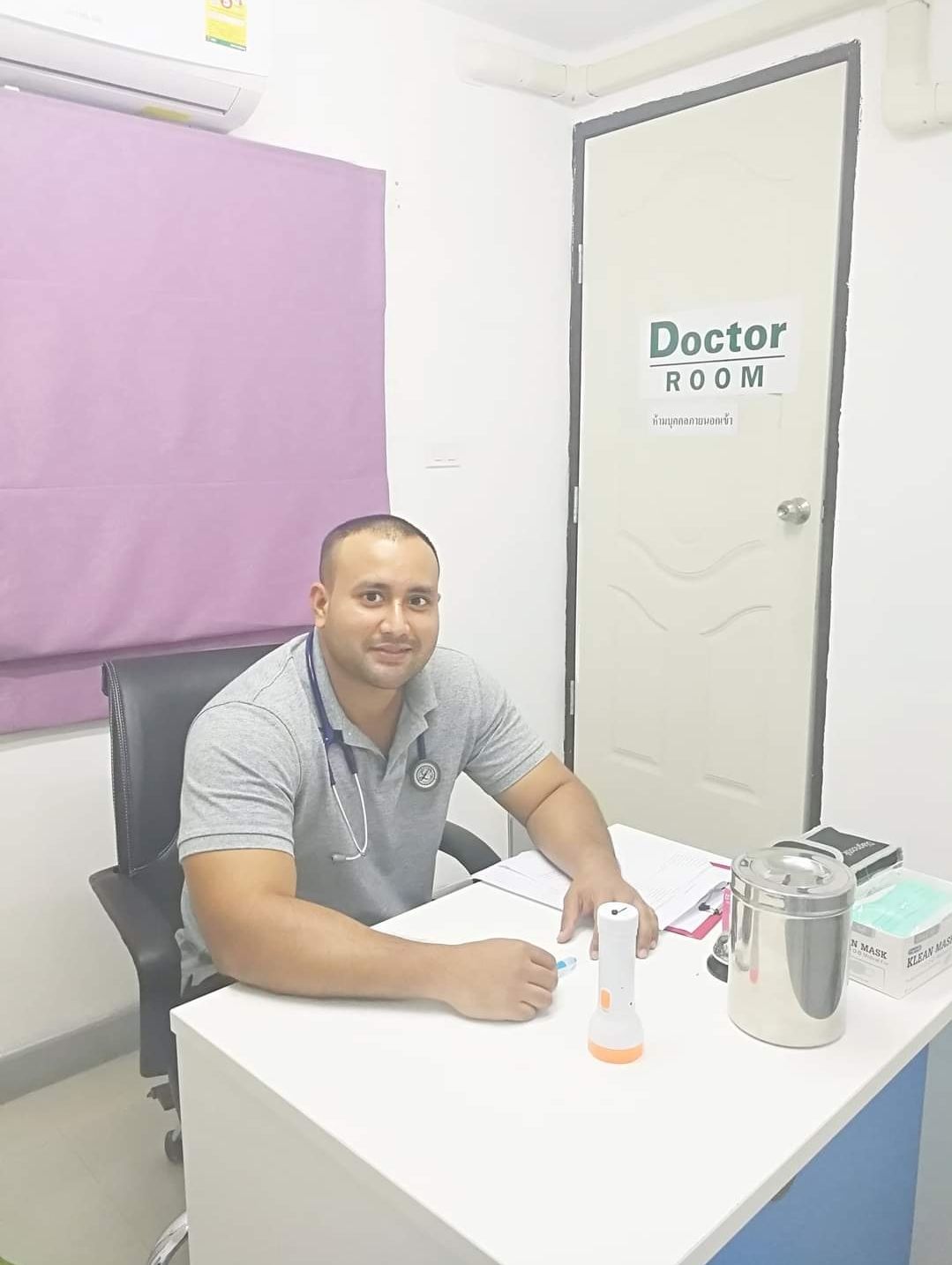
Dr. Ponlawat Pitsuwan is a physician at Doctor Bangkok, a private clinic in central Bangkok. He sees expats, residents, and medical tourists for general medicine, wellness consultations, and IV therapy. His focus is straightforward, evidence-based care delivered in plain language.