
Clinically reviewed by Dr. Ponlawat Pitsuwan, Physician, Doctor Bangkok. Last reviewed: September 2026
Chronic venous insufficiency means your leg veins cannot push blood back up to the heart efficiently. Blood pools in the lower legs, causing swelling, aching, and over time, skin changes or ulcers. CVI is not immediately life-threatening, but it is progressive. Left untreated, it significantly worsens. Early assessment changes the outcome.
If your legs feel heavy, swollen, and tired by the end of the day, you are not imagining it. I see this pattern often in expats who have been here a year or two. They chalk it up to Bangkok’s heat and keep going. Sometimes that is fine. Sometimes it is not.
Chronic venous insufficiency, or CVI, is a condition where the veins in your legs struggle to send blood back up to your heart. Blood pools in your lower legs and pressure builds over months and years. It does not kill you outright, but it progresses steadily and quietly. By the time most patients walk in, it has been going on far longer than they realise.

What Chronic Venous Insufficiency Actually Means
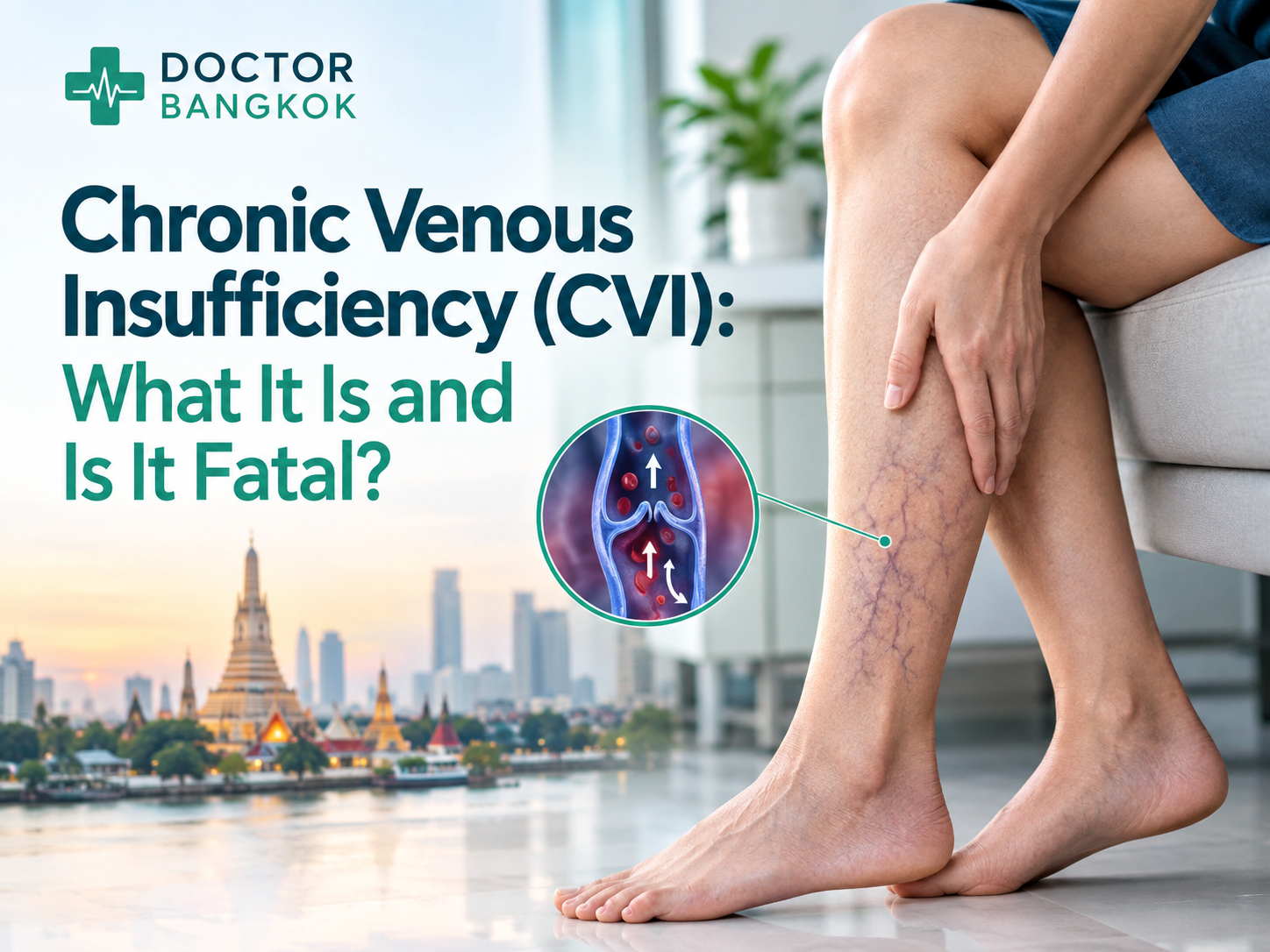
Your leg veins work against gravity. They have small one-way valves that open to let blood through and close to stop it sliding back down. When those valves fail, blood sits in the veins and pressure builds. This is the core problem in CVI.
CVI is not the same as having varicose veins. Varicose veins are an early sign of venous disease. CVI is the stage where swelling or skin changes are already present. Clinically, we use a grading system from C0, which means no visible disease, up to C6, which is an open venous ulcer. CVI starts at C3. If you have swollen ankles that do not go away after a night’s sleep, that is a signal worth taking seriously.
What Causes Chronic Venous Insufficiency
The most common cause is blood flowing backward down the veins instead of upward. This happens when vein valves are damaged or worn out. A history of deep vein thrombosis, known as DVT, is another major cause. When a clot forms in a deep vein and resolves, it can leave the valve scarred and non-functional. This is more common than people realise.
Sitting or standing still for long periods also plays a role. Every time you walk, your calf muscles squeeze the deep veins and push blood upward. If that barely happens across the day, the veins bear the load alone. Other risk factors include being overweight, pregnancy, family history of venous disease, and age.

Why Bangkok Makes CVI Worse
Heat causes blood vessels to widen. In tropical heat, the veins in your legs dilate and blood pools more easily. Bangkok is hot every single month of the year. That is not a minor variable.
Add the typical expat workday: long hours at a desk, commuting by BTS or taxi with little walking, then lunch and dinner at air-conditioned restaurants. The calf muscle pump gets almost no stimulus. I tell patients who sit for eight hours and then wonder why their ankles are puffy at 7pm: this is exactly why.
Long-haul flights are another piece of this. Expats flying in and out of Bangkok frequently are at real risk of DVT during those flights. DVT is one of the most direct routes to CVI. If you fly often and already notice leg swelling, that connection matters.
Symptoms: What CVI Looks and Feels Like
Early CVI feels like tired, heavy legs. Ankles swell through the day and improve overnight. You might notice aching or a dull throbbing after standing. At this stage, most people do not come in. They buy better shoes.
As it progresses, the swelling becomes more persistent. Skin around the ankle starts to change colour, becoming brownish or purplish from iron deposits leaking out of stressed veins. Some patients develop a hardened, tight quality to the skin. Others notice small white scarred patches on the lower leg. These are not cosmetic concerns. They are signs the skin is under serious pressure.
The end stage is a venous ulcer, typically on the inner ankle. These are slow to heal and prone to infection. Getting there is not inevitable, but it happens when CVI is ignored for years.
Is CVI Fatal?
The short answer is no, CVI itself is not fatal. But this question deserves a direct answer rather than reassurance that glosses over the risks.
Untreated CVI can lead to chronic skin infections and venous ulcers that are very difficult to heal. Because DVT is both a cause and a complication of advanced CVI, the indirect risks are real. DVT can lead to a blood clot in the lungs, which is life-threatening.
CVI will not kill you quietly in the night. But it does degrade your health steadily, and the complications it opens the door to can become serious. Treat it early.
How CVI Is Diagnosed
When a patient comes in at Doctor Bangkok with leg swelling and heaviness, I start with a full history and a physical exam. Where is the swelling? Is it one leg or both? Does it improve overnight? Is there any skin change?
The key test is a duplex ultrasound of the leg veins. This is a non-invasive scan that checks how blood is flowing and whether any valves are leaking. It is painless and takes around 30 to 45 minutes. For more complex presentations, further imaging of the deep venous system can be arranged.
How Chronic Venous Insufficiency Is Treated
Treatment depends on how far things have progressed. For early-stage CVI, the approach is conservative and effective. Medical-grade compression stockings, properly fitted, support the vein walls and reduce pooling. Walking more, elevating the legs at rest, and losing weight if relevant all make a measurable difference.
When lifestyle measures are not enough, there are minimally invasive options. Sclerotherapy involves injecting a solution into smaller varicose veins to close them off. Radiofrequency ablation uses heat delivered by a thin catheter to seal faulty veins. Endovenous laser treatment works on the same principle using laser energy. These are all done without major surgery and have solid evidence behind them.
For advanced CVI with ulcers, specialist wound care and sometimes surgical input are needed. A general consultation at Doctor Bangkok can determine where you sit on this spectrum and whether you need a referral for specialist vascular procedures.
Red Flags That Mean Come In Now
Most CVI builds gradually. But some presentations need prompt attention, not a wait-and-see approach. If one leg swells suddenly and is tender or warm to touch, that could be an acute DVT. Come in the same day.
If a skin sore on your lower leg is not healing after two weeks, come in. If leg swelling is accompanied by chest pain or shortness of breath, seek emergency care immediately. For everyone else, the right time to come in is when symptoms are consistent and affecting your day. Not when they become unbearable.
Swollen legs, heaviness, or skin changes around the ankles warrant a proper assessment. At Doctor Bangkok, our English-speaking physicians can evaluate your symptoms, arrange a duplex ultrasound where needed, and give you a clear picture of what is happening and what to do next. We are centrally located and BTS accessible. Walk-ins are welcome, or book ahead online.
What is the difference between chronic venous insufficiency and varicose veins?
Varicose veins are a visible sign of venous disease, but having them does not automatically mean you have CVI. CVI is diagnosed when swelling, skin changes, or ulcers are also present. Think of varicose veins as a warning sign. CVI is what happens when that warning goes unaddressed for long enough.
Can Bangkok’s heat and humidity make my CVI worse?
Yes, and this comes up a lot with patients here. Heat causes blood vessels to widen, which makes it harder for veins to push blood upward against gravity. Bangkok’s year-round tropical climate, combined with sedentary commuting and desk-based work, creates a cycle that worsens venous pooling. If your legs are consistently worse in the hot season, that is a direct connection.
Is chronic venous insufficiency serious if left untreated?
CVI is progressive and will not resolve on its own. Left untreated, it can lead to venous ulcers, recurrent skin infections, and significant loss of mobility. It also increases your risk of DVT, which can have more serious consequences. The good news is that early-stage CVI responds well to conservative treatment, and the sooner you start, the better the outcome.
How is CVI diagnosed — what tests will a doctor run?
The main test is a duplex ultrasound, which looks at blood flow and valve function in your leg veins. It is non-invasive and takes under an hour. A full clinical examination is also done, because a lot can be learned from how the swelling behaves and where the skin changes are. In complex cases, further imaging may be arranged.
Do long-haul flights increase my risk of CVI?
Frequent long-haul flights are a recognised risk factor for DVT, and DVT is one of the most direct causes of CVI. If you are flying regularly between Bangkok and Europe or Australia and already have leg swelling or varicose veins, that combination is worth assessing. Compression stockings, staying hydrated, and walking the aisle every hour reduce in-flight risk.
My legs swell and ache after sitting through a long event — should I be worried?
Hours of sitting in one position, especially in Bangkok’s heat, is exactly the kind of trigger that makes venous symptoms flare. If the swelling resolved overnight and you have no other symptoms, it was likely a one-off. If this happens regularly after prolonged sitting, or if the swelling is not down by morning, that pattern is worth checking. Come in and let us take a look.
Dr. Ponlawat Pitsuwan
Physician, Doctor Bangkok
a private medical clinic in central Bangkok. He sees expats, residents, and medical tourists for general medical consultations, health assessments, and the evaluation of circulatory and vascular symptoms including leg swelling and venous disease. His approach is straightforward and evidence-based, delivered in plain language.
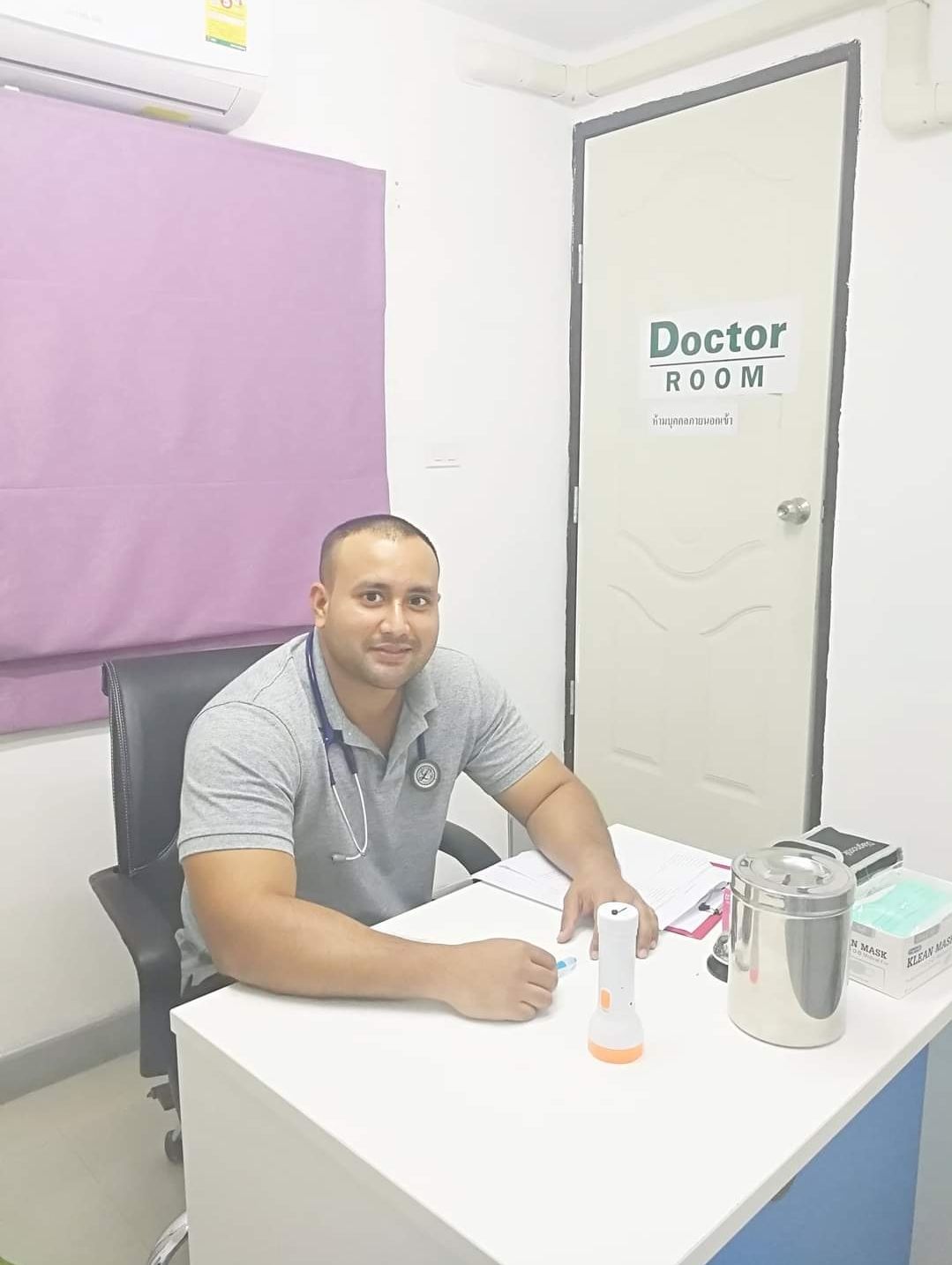
Dr. Ponlawat Pitsuwan is a physician at Doctor Bangkok, a private clinic in central Bangkok. He sees expats, residents, and medical tourists for general medicine, wellness consultations, and IV therapy. His focus is straightforward, evidence-based care delivered in plain language.