

Clinically reviewed by Dr. Ponlawat Pitsuwan, Physician, Doctor Bangkok. Last reviewed: September 2026
Blepharitis is inflammation of the eyelid margin, most often caused by bacterial overgrowth, blocked oil glands, Demodex mites, or skin conditions like rosacea. It is not contagious and cannot be cured, but it can be well controlled with the right treatment. Bangkok’s heat, humidity, and air pollution make flare-ups more likely and more frequent than in cooler climates.
Waking up with eyelids crusted shut is something people tend to dismiss for weeks. By the time someone books an appointment, they have usually tried rinsing with water, switching eye drops, or blaming their contacts. Most of the time, the answer is blepharitis, and the fix is simpler than they expected once you know what is actually causing it.
Blepharitis is not a single condition. It has several distinct causes, and the treatment depends entirely on which one you are dealing with. If you have been in Bangkok a while, the climate here is genuinely working against you. High heat, humidity, and poor air quality all make this worse. This article covers what is behind it, what makes Bangkok particularly hard on your eyelids, and when you need a doctor rather than another bottle of eye drops.

What Blepharitis Actually Is and Why It Gets Misdiagnosed
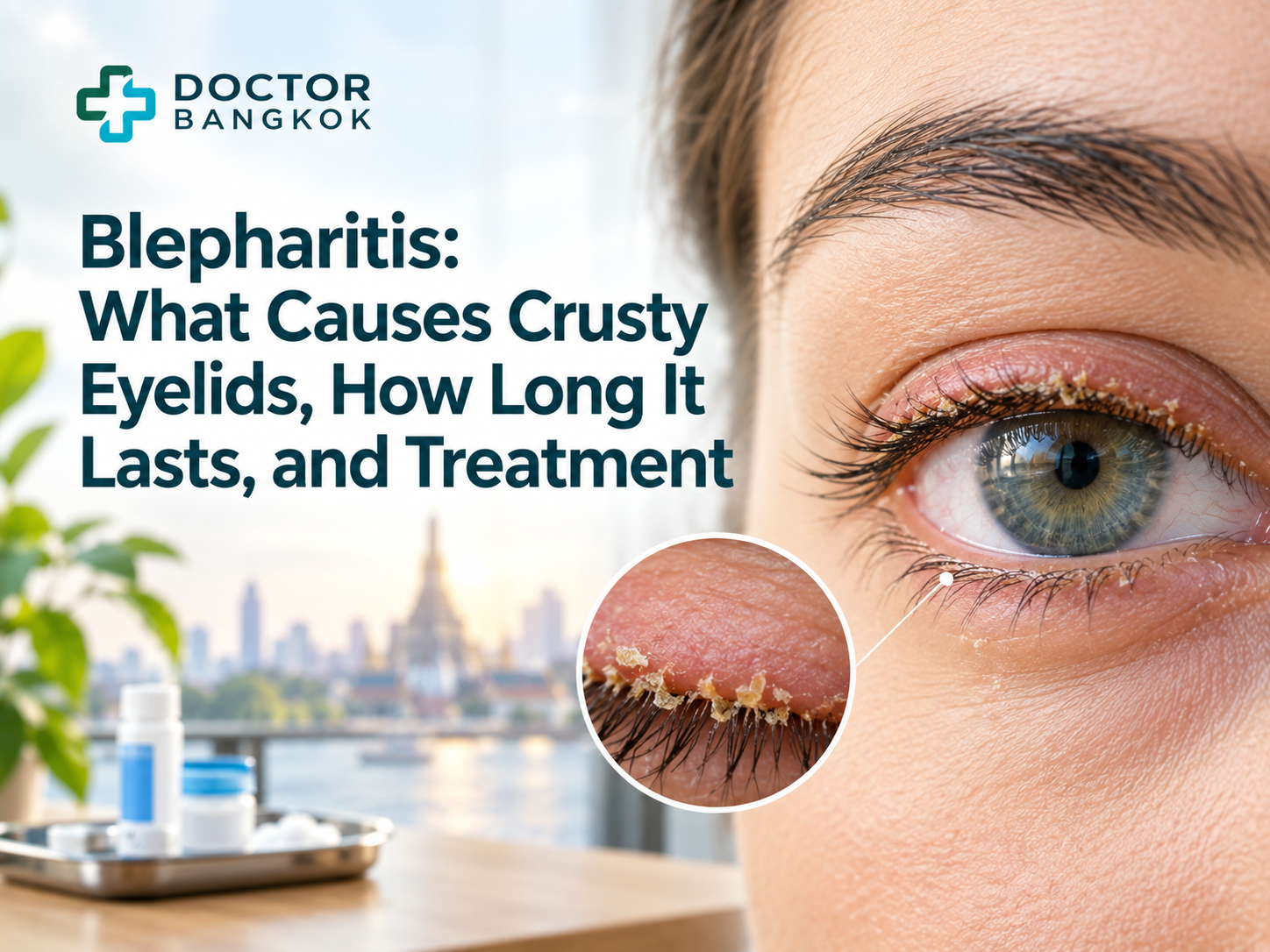
The eyelid margin is where your eyelashes grow. Tiny oil glands sit just behind them. When bacteria, blocked glands, or mites disrupt this area, you get inflammation along the whole lid edge. That is blepharitis.
People confuse it with a stye, pink eye, or allergies all the time. Blepharitis usually affects both eyes, causes morning crusting and a gritty feeling throughout the day, and tends to come back. A stye is a single, painful lump in one spot. Pink eye causes discharge and redness across the whole white of the eye, not just the lid edge. If it keeps returning and both eyes are involved, blepharitis is the more likely answer.
The Two Types and What Causes Each
There are two main types. Anterior blepharitis affects the outer eyelid margin where the lashes sit. Posterior blepharitis affects the inner lid edge, where the oil glands open onto the eye surface. Many people have both at the same time.
Anterior blepharitis is mainly caused by bacterial overgrowth, Demodex mites, or seborrheic dermatitis. Posterior blepharitis is mainly caused by blocked or inflamed meibomian oil glands, often linked to acne rosacea. Understanding which type you have is what determines the treatment that will actually work.

Bacterial Overgrowth — The Most Common Cause of Anterior Blepharitis
Staphylococcus bacteria live on everyone’s skin. When they overgrow along the eyelid margin, they irritate the lash follicles and inflame the lid edge. Symptoms are worst first thing in the morning because the bacteria have been active overnight while your eyes were closed and tear flow was reduced.
The result is crusting at the lash base, redness, and that gritty burning feeling many patients describe as sand in the eye. Flare-ups tend to worsen with stress, poor sleep, or if you stop cleaning your eyelids consistently.
Meibomian Gland Dysfunction — The Main Cause of Posterior Blepharitis
Your eyelids contain around 25 to 30 small oil glands. They produce an oily substance that coats your tear film and stops tears from evaporating too quickly. When these glands become blocked or inflamed, your eyes dry out faster and the lid margin becomes irritated.
This type is closely linked to acne rosacea. If you have redness across your nose and cheeks, or visible broken capillaries on your face, rosacea may be driving your eyelid inflammation. Treating the skin condition often helps the eyelids significantly at the same time.
Demodex Mites — A Blepharitis Cause That Is More Common in Bangkok Than You Might Think
Demodex folliculorum are microscopic mites that live in hair follicles and oil glands. Almost everyone carries them in small numbers. The problem starts when they multiply. Bangkok’s heat pushes sebum production up, which gives the mites more to feed on. Research from Thai ophthalmology studies estimates Demodex prevalence in Thailand at around 42 percent, notably higher than in cooler climates.
When numbers are high, you may notice small cylindrical flakes wrapped around the base of individual eyelashes. This is a strong clinical sign of Demodex-driven blepharitis. Standard lid hygiene alone will not clear it. You need a specific treatment, usually tea tree oil-based eyelid wipes or in some cases a prescription anti-parasitic. A doctor needs to confirm this before you start any treatment.
Skin Conditions That Trigger Blepharitis
Seborrheic dermatitis, the skin condition that causes flaking on the scalp and eyebrows, frequently extends to the eyelids. If you have dandruff and greasy, flaky skin around your brows, there is a good chance your blepharitis is connected. The same inflammatory process that affects your scalp affects the eyelid margin.
Eczema can cause eyelid inflammation too, though this more often presents as swelling and itch around the eye rather than at the lid margin itself. If you are managing a chronic skin condition and now have recurrent eye irritation, the two are likely linked. A doctor can assess both at the same visit.
Bangkok-Specific Risk Factors for Blepharitis Causes
This is where Bangkok is genuinely different from most places. Research confirms that poor air quality negatively affects meibomian gland function and tear film stability. Bangkok has some of the worst air quality days in Southeast Asia. Spending the day outside and then moving into a heavily air-conditioned office creates a cycle that strips the tear film and overworks the oil glands.
Heat drives sebum overproduction, which feeds Demodex. High humidity prevents the normal evaporation that keeps eyelid skin balanced. Eyelash extensions, extremely popular in Bangkok, can physically block meibomian gland openings and introduce bacteria along the lash line if the application is not sterile. If you wear extensions regularly and have recurring eyelid irritation, that connection is worth discussing with a doctor.
Who Is Most at Risk
Contact lens wearers are at higher risk because lenses can trap bacteria and disrupt the tear film. People who wear heavy eye makeup daily without thorough removal are also more likely to develop it. Long hours in front of screens reduce blink rate, which worsens meibomian gland function. Combine that with Bangkok’s air-conditioned offices and you have a situation I see constantly in expat patients here.
Age increases risk because meibomian gland function declines over time. But I see this in people in their 20s and 30s regularly, usually because of lifestyle factors, not age.
Symptoms — What to Look For
Blepharitis causes crusting along the lash line, worst in the morning. Eyes feel gritty, itchy, or like something is stuck in them. The eyelid edge looks red and slightly swollen. Some patients notice their eyes water more, which sounds counterintuitive but happens because irritation triggers reflex tearing. Sensitivity to light and a mild burning sensation are common too.
If you notice symptoms in only one eye, or if there is significant pain, thick yellow-green discharge, or blurring vision, those symptoms need a same-day clinical assessment. They can point to something beyond straightforward blepharitis.
Complications If Blepharitis Is Left Untreated
Blepharitis that is ignored tends to get worse, not better. Repeated inflammation can cause eyelashes to fall out or grow inward, scraping the cornea with every blink. Blocked meibomian glands can form a firm, painless lump inside the eyelid called a chalazion, which sometimes requires drainage. Ongoing tear film instability can progress to chronic dry eye disease.
Corneal involvement is the outcome I take most seriously. Persistent inflammation at the lid margin can cause scarring or small erosions on the cornea over time. This is not common, but it is entirely preventable with consistent management.
When to See a Doctor for Blepharitis in Bangkok
If you have tried warm compresses and gentle lid cleaning for a week with no improvement, come in. If your symptoms are worsening, if you keep getting styes or chalazia, or if your eyelashes are changing, do not keep waiting.
At Doctor Bangkok, a general consultation includes a clinical assessment of the eyelid margin and a check for signs of Demodex, rosacea, or seborrheic dermatitis. For posterior blepharitis with meibomian gland dysfunction, oral doxycycline taken for several weeks has strong evidence and is a standard first-line treatment. Omega-3 fatty acids have moderate evidence for supporting meibomian gland function over time. For confirmed Demodex cases, specific anti-parasitic lid treatments are used. For bacterial blepharitis, topical antibiotic ointments applied to the lid margin are the usual approach.
If your case needs specialist ophthalmology input, Doctor Bangkok can refer you through their hospital partner network. You do not need to navigate the Thai healthcare system on your own.
If your eyelids are crusted, irritated, or inflamed and home remedies are not working, Doctor Bangkok can assess what is causing it and get you on the right treatment. Our English-speaking doctors see expats and medical tourists for general consultations including eyelid and eye symptoms. We are centrally located in Bangkok and accessible by BTS. Book a consultation at Doctor Bangkok today.
What is the most common cause of blepharitis?
The most common causes are bacterial overgrowth along the lash line for anterior blepharitis, and blocked meibomian oil glands for posterior blepharitis. Demodex mites are a third major cause that is particularly relevant in Bangkok, where heat and humidity increase the sebum production that feeds them. Many people have more than one cause at the same time, which is why a proper assessment matters.
How do I know if I have blepharitis or a stye?
Blepharitis causes inflammation along the entire eyelid margin in both eyes, with morning crusting, grittiness, and itch that comes and goes. A stye is a single, painful, localised lump caused by one infected oil gland. If you keep getting styes, blepharitis is often the underlying reason, and treating it is what stops them recurring.
Can Bangkok’s air pollution and climate make blepharitis worse?
Yes, and this is clinically documented. Poor air quality affects meibomian gland function and tear film stability. Bangkok’s heat raises sebum production, which feeds Demodex mites. Moving between outdoor pollution and heavily air-conditioned spaces dries out the tear film faster than in most other cities, and this is a pattern that shows up regularly in expats and long-term residents here.
I got eyelash extensions recently and now my eyelids are constantly irritated. Could that be the cause?
Yes, this is a real connection. Eyelash extensions can physically block meibomian gland openings and introduce bacteria along the lash line, especially if application tools are not fully sterile. Adhesive glue can also irritate the lid margin directly. If the timing lines up with when you got your extensions, come in so we can check the lid margins properly.
Is blepharitis contagious?
Blepharitis itself is not contagious. You cannot catch it from another person. Demodex mites can theoretically transfer through shared towels, pillowcases, or cosmetics, but this is not considered a significant route in practice. Not sharing eye makeup is sensible, but no special precautions are needed.
How long does blepharitis last and will it go away completely?
Blepharitis requires ongoing management rather than a one-time cure. Most patients who follow a consistent lid hygiene routine and treat the underlying cause get good control of symptoms within a few weeks. Flare-ups can still happen, especially in Bangkok’s climate, but they become less frequent and less severe. The goal is management, not elimination, and most people find that very achievable once they know what they are dealing with.
Dr. Ponlawat Pitsuwan
Physician, Doctor Bangkok
a private medical clinic in central Bangkok. He sees expats, residents, and medical tourists for general medical consultations including eye and eyelid conditions, skin-related health concerns, and a broad range of acute and chronic presentations. His focus is straightforward, evidence-based care delivered in plain language.
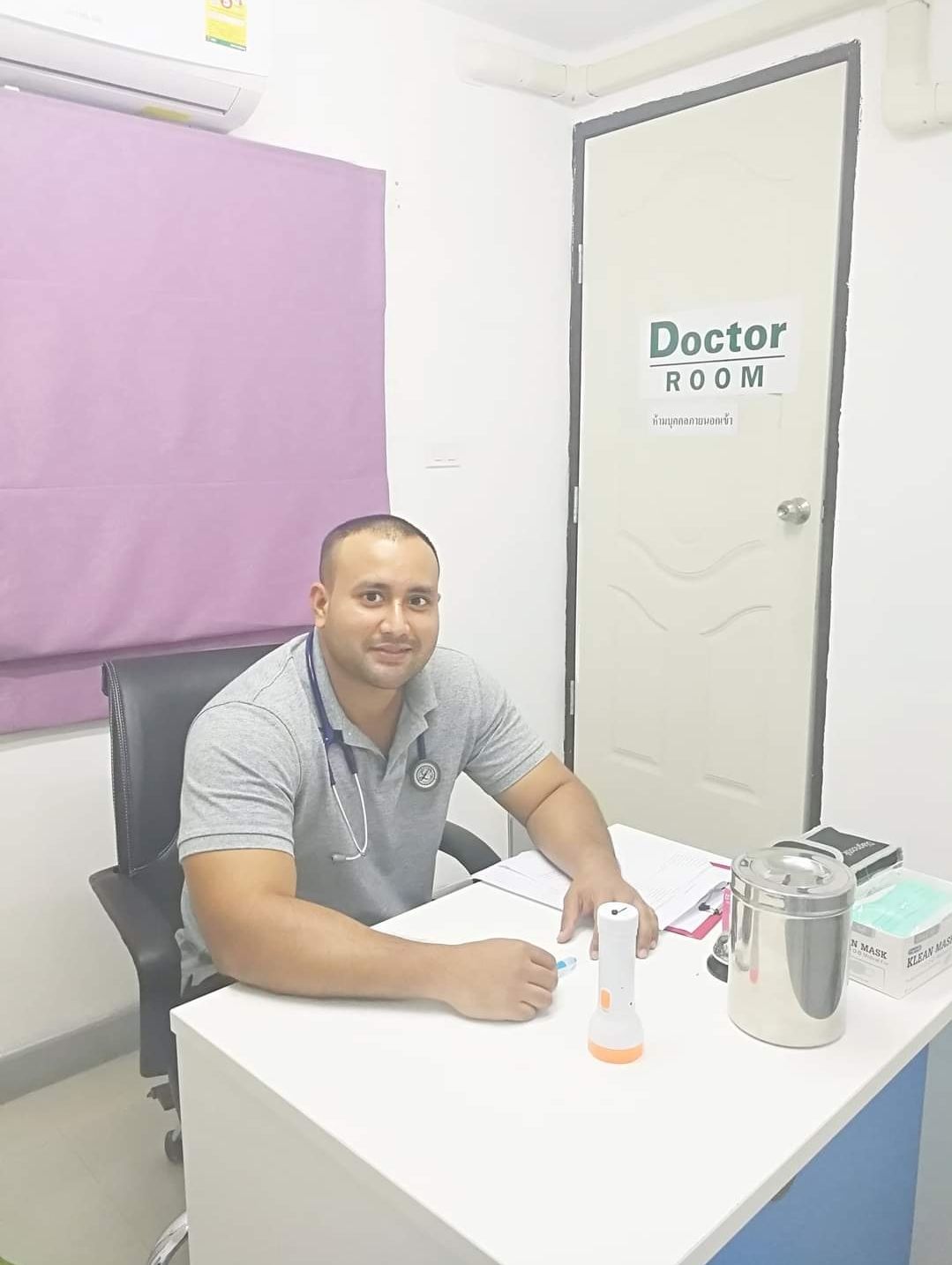
Dr. Ponlawat Pitsuwan is a physician at Doctor Bangkok, a private clinic in central Bangkok. He sees expats, residents, and medical tourists for general medicine, wellness consultations, and IV therapy. His focus is straightforward, evidence-based care delivered in plain language.