
Clinically reviewed by Dr. Ponlawat Pitsuwan, Physician, Doctor Bangkok. Last reviewed: September 2026
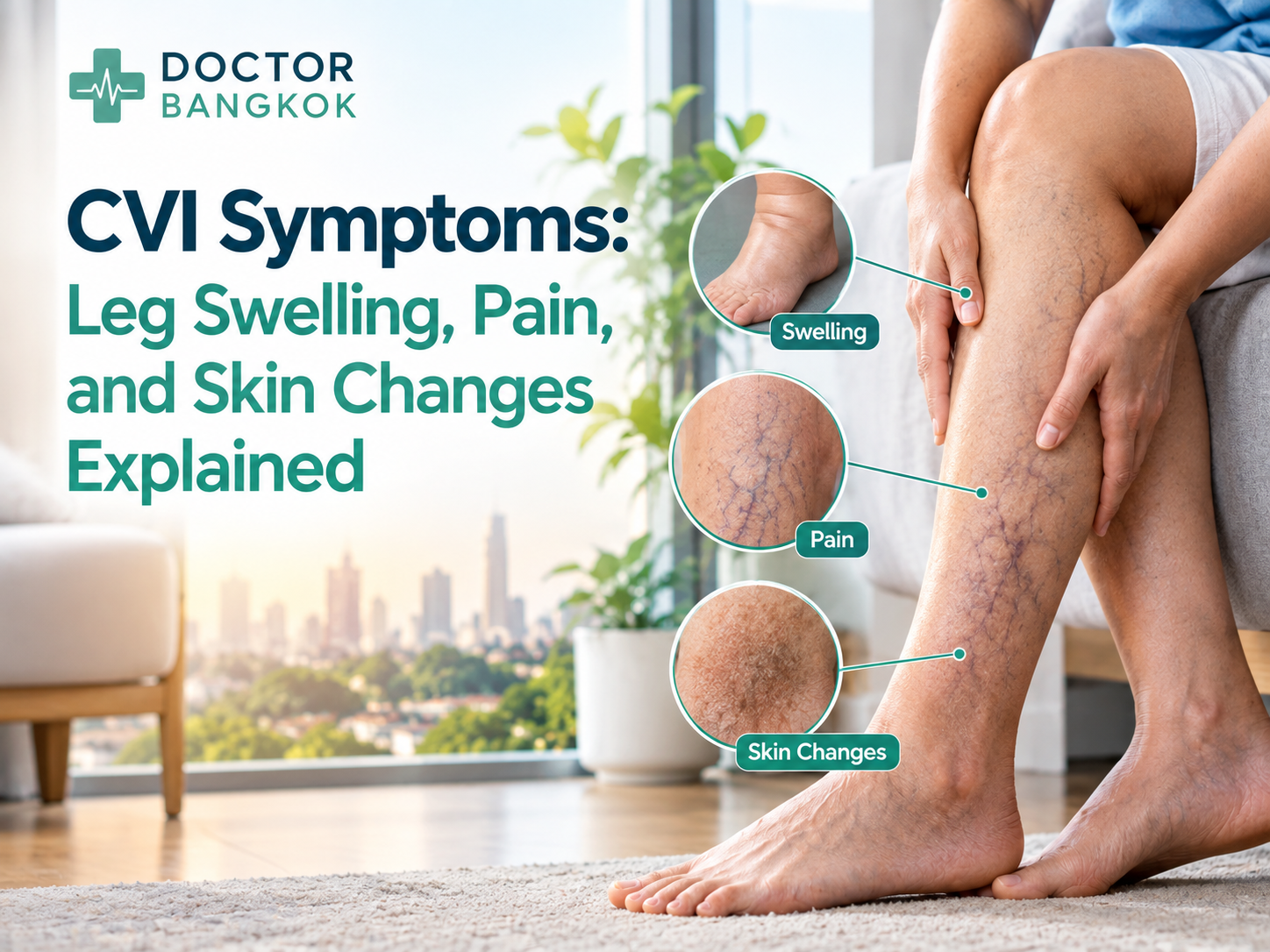
Chronic venous insufficiency causes leg swelling, heaviness, aching, and over time, visible skin changes. Symptoms worsen through the day and improve with rest. Bangkok’s heat makes them significantly worse. If your legs feel heavy every afternoon or your ankles stay swollen, these symptoms warrant a clinical assessment, not just more rest.
If your legs are swollen by mid-afternoon and you have been blaming the heat, you might be partly right. But I see this pattern regularly with expats who have been in Bangkok six months or more and assume their legs are just adjusting to the tropics. Sometimes they are missing something more significant underneath.
Chronic venous insufficiency, or CVI, happens when the veins in your legs struggle to push blood back up to the heart. Blood pools in the lower leg, pressure builds, and that pressure drives the swelling, the aching, and eventually the skin changes that bring people into the clinic. The earlier you catch it, the simpler the management.

What Is CVI and Why Your Legs Feel the Way They Do
The veins in your legs have small valves that keep blood moving upward. When those valves weaken or fail, blood flows backward and pools in the lower leg. Fluid then leaks into the surrounding tissue. That is your swelling.
Your calf muscles normally help push blood upward when you walk. If you sit at a desk most of the day, that pump barely works. Add Bangkok’s heat, which causes blood vessels to widen and pool further, and the pressure in your lower leg veins rises. That rising pressure drives every CVI symptom you feel.
Early CVI Symptoms You Should Not Ignore
The earliest symptoms are easy to dismiss. Legs that feel heavy or tired by late afternoon. Mild aching after standing for a few hours. Ankles that swell slightly by evening and look normal again by morning. These are the signs most people brush off for months.
One thing I see often: calf pain from early CVI gets labelled as a muscle strain. A patient comes in thinking they pulled something at the gym, but the pain is dull, persistent, and gets worse the longer they stand, not better with movement. Muscle injuries generally improve with light activity. CVI pain does not.
Some patients also describe a restless, uncomfortable feeling in their legs at night that makes sleep difficult. When it comes alongside swelling and heaviness, it fits the picture and is worth mentioning at your consultation.

CVI Symptoms by Stage — What the CEAP Scale Means for You
Doctors use a system called CEAP to stage CVI from C0 to C6. You do not need to memorise it, but it helps to know where your symptoms sit.
| CEAP Stage | What You Notice |
|---|---|
| C0 | Heaviness or aching, but nothing visible yet |
| C1 | Spider veins or fine surface veins appear |
| C2 | Varicose veins, the larger rope-like bulging veins |
| C3 | Visible swelling around the ankle and lower leg |
| C4 | Skin changes: discolouration, thickening, or an eczema-like rash |
| C5 | A healed ulcer, but the area remains vulnerable |
| C6 | An open venous ulcer that is not healing |
Most patients who come to Doctor Bangkok present at C2 or C3. They have had visible varicose veins for a while and are now noticing swelling that does not fully resolve overnight. That is the moment to act, before skin changes begin.
Advanced CVI Symptoms — Skin Changes and Venous Ulcers
If CVI goes unmanaged for long enough, the skin around your lower leg and ankle starts to change in a recognisable pattern.
First, the skin around the ankle becomes itchy, red, and irritated. It looks like eczema, and many patients treat it as eczema for months before the real cause is found. Next, the lower leg skin thickens and feels woody or tight, often with a brownish discolouration. Small brown spots appear as iron deposits accumulate under the skin.
Later still, pale scarred-looking patches develop, sometimes with small red dots around them. At this stage, the skin is fragile and heals poorly. A small knock or scratch can become a venous ulcer, usually just above the inner ankle. These ulcers are painful and slow to close. Getting to this stage is not inevitable, but it happens when early symptoms are ignored for years.
Why Bangkok’s Heat and Humidity Make CVI Symptoms Worse
This comes up every week with expats who moved here not knowing they had a vein problem. Bangkok’s climate genuinely amplifies CVI symptoms in a way that a cooler city would not.
Heat causes blood vessels to widen. For most people, that is just a warm day. For someone with faulty venous valves, wider vessels mean more blood pooling in the lower leg and more swelling. Bangkok’s humidity also compounds fluid retention in the lower limbs. It is not your imagination that your legs feel significantly worse between March and May.
Compression stockings, the main non-invasive way to manage CVI symptoms, are harder to wear in the heat. Lighter-weight medical compression options exist, and finding something practical for this climate is part of what we discuss at the appointment. Staying well hydrated, using air conditioning where you can, and elevating your legs regularly all help reduce the daily burden here.
CVI Risk Factors Worth Knowing If You Live in or Are Visiting Bangkok
Some risk factors are the same everywhere: being female, being over 50, having a family history of varicose veins, obesity, or a history of deep vein thrombosis (DVT). A past DVT is one of the most common causes of CVI, because the vein walls can be permanently damaged after a clot.
There are also risks more specific to life in Bangkok. Long-haul flights are a significant one. Sitting immobile for ten to fourteen hours slows venous return dramatically. If you had any degree of valve weakness before you boarded, that flight may have pushed you into symptomatic CVI, or worse, a DVT. If you landed in Bangkok and your leg swelling has not settled after a few days, that needs assessment.
Sedentary desk jobs in air-conditioned offices are another factor I see regularly in the expat community here. Long hours sitting, minimal walking, and dehydration from the commute heat create the exact conditions CVI needs to worsen.
How CVI Is Diagnosed — What to Expect at the Clinic
The main diagnostic tool for CVI is a duplex ultrasound. It is painless, non-invasive, and takes around 30 to 45 minutes. It shows whether blood is flowing backward through your veins, and it rules out DVT, which can look similar on symptoms alone.
At Doctor Bangkok, we start with a full clinical assessment. I take your history, examine your legs, and assess where you sit on the CEAP scale. If duplex ultrasound is indicated, we arrange that directly. Results are discussed with you the same day where possible, and everything is done in English so nothing gets lost in translation.
You do not need a referral. You can book directly and we go from there.
CVI Treatment — What Is Actually Available in Bangkok
Treatment depends on your stage. For early CVI, medical-grade compression stockings reduce pressure in the leg veins and slow symptom progression. Plant-derived venoactive medications have moderate evidence for symptom relief and are widely available in Bangkok.
For C2 and above, sclerotherapy is an option for smaller varicose veins. A solution injected into the vein causes it to close. For larger veins, endovenous laser ablation closes the damaged vein from the inside with no large incisions. Both procedures are available in Bangkok and are typically done as outpatient treatments.
Venous ulcers at C6 require specialist wound care and compression, and healing takes time. The best outcome is always the one where we catch CVI before ulcers develop. That means not waiting until your legs are at C4 or C5 before coming in.
If your legs swell regularly, feel heavy by afternoon, or you have noticed skin changes around your ankles, these are CVI symptoms worth assessing properly. Doctor Bangkok offers English-language consultations for chronic venous insufficiency, including clinical examination and referral for duplex ultrasound. We are centrally located in Bangkok, BTS accessible, and see expats, residents, and medical tourists. Book a vein assessment directly — no referral needed.
Can Bangkok’s heat and humidity make CVI symptoms worse?
Yes, and this comes up in the clinic every week. Heat causes blood vessels to widen, which means more blood pools in the lower leg when your valves are not working properly. Bangkok’s humidity makes fluid retention worse on top of that. Your symptoms in April or May are genuinely worse than they would be in a cooler city, not just in your head.
What is the difference between CVI symptoms and normal leg tiredness?
Normal tiredness resolves after a night’s sleep. CVI symptoms come back the next afternoon, worsen progressively through the day, and are linked to standing or sitting rather than exertion. If your ankles are swollen or your skin is changing colour around the lower leg, that is not normal fatigue. Come in and get it checked.
Could my long-haul flight to Bangkok have triggered my leg swelling?
It is possible. Long flights slow venous return significantly, and if you already had weak vein valves, that flight may have pushed you into symptomatic CVI. More urgently, prolonged immobility during a flight raises the risk of DVT. If one leg is more swollen than the other, or red and warm to touch after flying, that needs same-day assessment, not a wait-and-see approach.
I walked around a market for a few hours and my legs were so swollen I had to sit down. Is that CVI?
That level of swelling from a few hours on your feet, especially in Bangkok’s heat, warrants assessment. It may be CVI, or it may be something else. Either way, it is not a normal response to walking around. A clinical examination and possibly a duplex ultrasound will give you a clear answer.
At what point do CVI symptoms need urgent medical attention?
Sudden swelling in one leg with redness and warmth needs same-day assessment to rule out DVT. Bleeding from a varicose vein also needs prompt care. Skin ulcers above the inner ankle that are not healing should not be managed at home. Persistent heaviness, ankle swelling, and visible varicose veins are serious but not emergencies, though they do need a proper appointment soon rather than later.
What does a CVI assessment actually involve at a private clinic in Bangkok?
We start with a clinical consultation where I take your full history and examine your legs. If imaging is needed, we refer for a duplex ultrasound, which is painless and takes under an hour. Everything is done in English. We discuss findings and next steps at the same appointment where possible, so you leave with a clear plan, not just a printout.
Dr. Ponlawat Pitsuwan
Physician, Doctor Bangkok
a private medical clinic in central Bangkok. He sees expats, residents, and medical tourists for general medical conditions including venous and circulatory concerns, health assessments, and chronic disease management. His approach is straightforward and evidence-based, delivered in plain language.
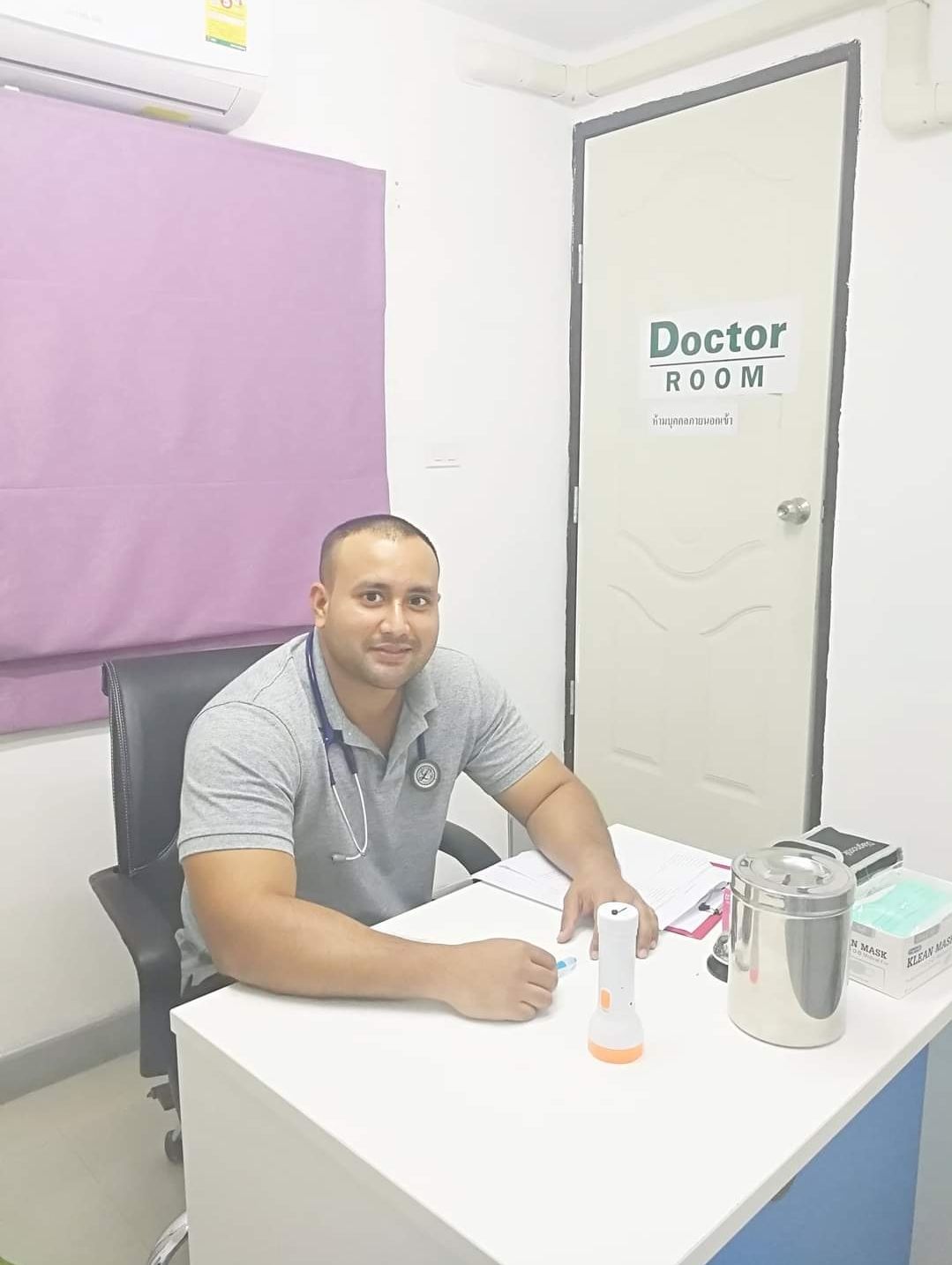
Dr. Ponlawat Pitsuwan is a physician at Doctor Bangkok, a private clinic in central Bangkok. He sees expats, residents, and medical tourists for general medicine, wellness consultations, and IV therapy. His focus is straightforward, evidence-based care delivered in plain language.