
Clinically reviewed by Dr. Ponlawat Pitsuwan, Physician, Doctor Bangkok. Last reviewed: September 2026
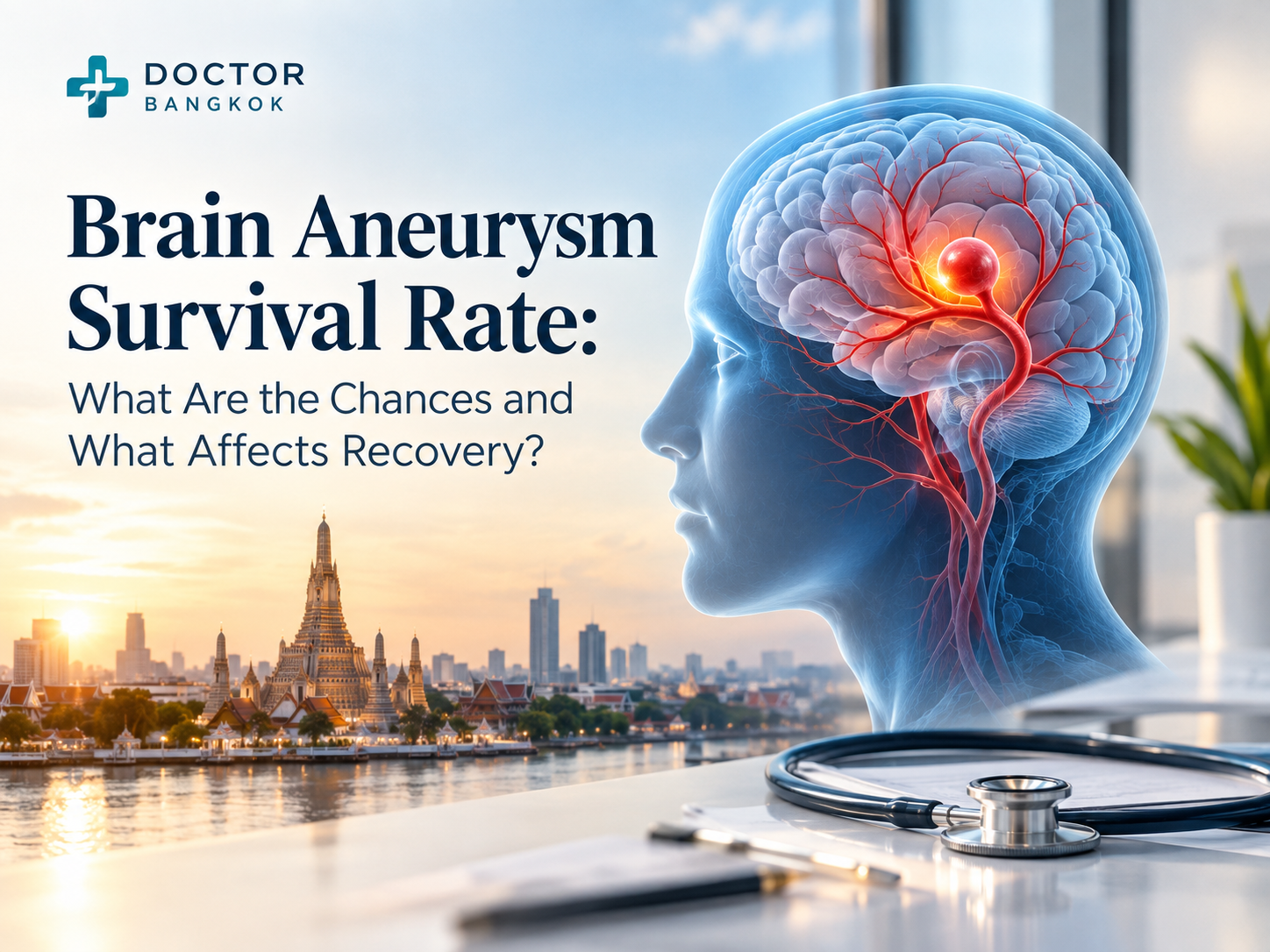
The brain aneurysm survival rate depends heavily on whether the aneurysm has ruptured. For unruptured aneurysms treated electively, survival rates are around 97 to 99 percent. For a ruptured aneurysm, roughly 50 to 60 percent of patients survive, and of those who do, many face long-term neurological challenges. The faster the treatment, the better the outcome.
If someone you know just had a brain aneurysm, or you have been told you have one, here is the clearest answer I can give you right now. The numbers vary a lot, and they vary for a good reason. Ruptured and unruptured aneurysms are two completely different situations with two very different outlooks.
I see expats and visitors at Doctor Bangkok who come in worried about headaches, family history, or something flagged on imaging done back home. The first thing I tell them: what matters most is whether this aneurysm has bled or not. Everything in this article comes back to that distinction.

Ruptured vs Unruptured — Two Very Different Prognoses
This is the most important section on this page. Read it before anything else.
An unruptured aneurysm is one that has not yet bled. These are often found during a scan done for something else entirely. When treated electively, survival rates are around 97 to 99 percent. The risk comes from the procedure itself, not from the aneurysm sitting there quietly.
A ruptured aneurysm is a medical emergency. Blood leaks into the space around the brain, causing what doctors call a subarachnoid haemorrhage. Roughly 50 to 60 percent of people who suffer a rupture survive. About 15 percent die before reaching a hospital. Of those who make it, many will have lasting neurological effects.
These two scenarios should never be blended. If you are here because someone just collapsed, that is a rupture situation. If a routine scan found something unexpected, that is a very different conversation.
Warning Signs — The Thunderclap Headache You Must Never Ignore
The symptom that matters most is sudden. Not a headache that builds over an hour. Not a migraine you can feel coming. A thunderclap headache hits full force within seconds. Patients describe it the same way every time: the worst headache of my life.
That phrase is a clinical red flag. If someone uses it, they go to emergency. Not a clinic. Not a pharmacy. Emergency.
Some people experience a smaller warning bleed in the days before a major rupture. It causes a severe headache that then fades. Patients often mistake it for tension or migraine and wait. That wait can cost them everything.
Other symptoms alongside a sudden severe headache include nausea, vomiting, neck stiffness, light sensitivity, a drooping eyelid, or loss of consciousness. If any of these appear together, call for emergency help immediately. In Thailand, that number is 1669.

How Severity at Arrival Shapes Brain Aneurysm Survival Rate
When a patient arrives at hospital after a rupture, doctors use a grading scale to assess how serious the bleed is. It runs from Grade 1 to Grade 5. Grade 1 is a mild headache with minimal symptoms. Grade 5 is deep coma.
Grade matters enormously for survival. Patients who arrive at Grade 1 or 2 have a strong chance of a good recovery. By Grade 4 or 5, survival drops significantly and meaningful recovery becomes much less likely. This is why how quickly you reach hospital, and how you present on arrival, shapes the entire outcome.
How Location and Size Change the Survival Equation
Size matters. Aneurysms under 7mm carry a low annual rupture risk, estimated at around 1 percent per year. Giant aneurysms over 25mm carry a much higher rupture risk and are technically harder to treat.
Location matters too. Aneurysms at the back of the brain are generally harder to reach surgically and carry higher procedural risk. Aneurysms at the front are more accessible and outcomes tend to be better.
Shape also plays a role. An irregular aneurysm with bumps on its surface is considered higher risk than a smooth, rounded one. When doctors weigh whether to treat or monitor, they look at all of these factors together.
Why the First 14 Days Still Matter After Rupture
Surviving the initial bleed is not the finish line. The two weeks after a rupture are when two serious complications can still claim a patient’s life.
The first is rebleeding. If the aneurysm is not secured quickly, it can bleed again. A second bleed is often more devastating than the first. This is why treatment is done as soon as the patient is stable enough.
The second is cerebral vasospasm. Between days 4 and 14 after rupture, blood vessels in the brain can narrow and cut off blood flow, causing a stroke even after the aneurysm has been treated. Families and caregivers should know that deterioration in the days after a rupture is not always a sign that treatment failed. Medical teams watch for this closely.
Treatment Options That Improve Survival
There are two main ways to treat a ruptured or high-risk unruptured aneurysm. The right choice depends on the aneurysm’s size, location, and the patient’s overall health.
Surgical clipping involves opening the skull and placing a metal clip across the neck of the aneurysm to stop blood flow into it. It is highly effective and durable but carries the risks of open brain surgery.
Endovascular coiling is done through a catheter inserted into an artery, usually at the groin. Tiny coils are placed inside the aneurysm to block blood flow. Recovery tends to be faster, though some aneurysms may need re-treatment over time.
For some complex cases, a flow diverter device redirects blood away from the aneurysm through the artery beside it. This is used for large or difficult-to-reach aneurysms. The treating neurovascular team will determine which approach fits the situation.
Life After Survival — Neurological Recovery and Long-Term Outlook
Surviving a ruptured aneurysm is a real achievement. But it is often the beginning of a long road.
Roughly a third of survivors will have significant long-term neurological effects. These can include memory problems, fatigue, difficulty concentrating, mood changes, and physical weakness. Some patients recover fully. Some do not.
Recovery depends on how severe the initial bleed was, how quickly treatment happened, and whether complications like vasospasm caused secondary injury. Physiotherapy, speech therapy, and neuropsychological support all improve outcomes meaningfully for many patients. Early access to rehabilitation makes a measurable difference.
Can Brain Aneurysms Be Found Before They Rupture?
Yes. An MRI scan of the brain and its blood vessels, called MR angiography, can detect unruptured aneurysms before they cause any symptoms. It is non-invasive and does not require contrast dye in most cases.
Screening is worth discussing if you have a first-degree family member who had a brain aneurysm, if you have polycystic kidney disease, or if you have had an aneurysm before. Uncontrolled high blood pressure and smoking significantly raise the risk of both formation and rupture.
If you are an expat in Bangkok and have never had a proper health review, a general medical consultation is a reasonable starting point. At Doctor Bangkok, our physicians can review your risk factors, discuss whether imaging is warranted, and arrange referral to a neurovascular specialist if needed. Finding an aneurysm before it ruptures changes the survival equation completely.
What Expats and Visitors in Bangkok Should Know
Bangkok has strong neurosurgical capacity at its major private and university hospitals. If you or someone with you has a sudden, explosive headache, do not come to a GP clinic first. Call 1669 for an ambulance or go straight to the nearest major hospital emergency department. Every minute counts with a suspected rupture.
Where Doctor Bangkok fits in is different. If your headache is more gradual, or you are unsure whether it warrants concern, come in. Our English-speaking doctors can assess your symptoms, check your blood pressure, review your history, and refer urgently if anything is concerning.
For those with known risk factors, a health screening appointment is a sensible place to start. We can review your cardiovascular risk, go through your family history, and refer for imaging if it is indicated.
If you have been told you have a brain aneurysm, or you are worried about headaches and risk factors you have never had properly checked, come and see us. Doctor Bangkok is a private English-speaking clinic in central Bangkok, accessible from BTS. Our doctors can review your symptoms, assess your risk, and arrange specialist referral when needed. Book through doctorbangkok.co.th or walk in during clinic hours.
Frequently Asked Questions
Dr. Ponlawat Pitsuwan
Physician, Doctor Bangkok
a private medical clinic in central Bangkok. He sees expats, residents, and medical tourists for general medical consultations, health screenings, urgent symptom assessment, and specialist referral coordination. His focus is straightforward, evidence-based care delivered in plain language.
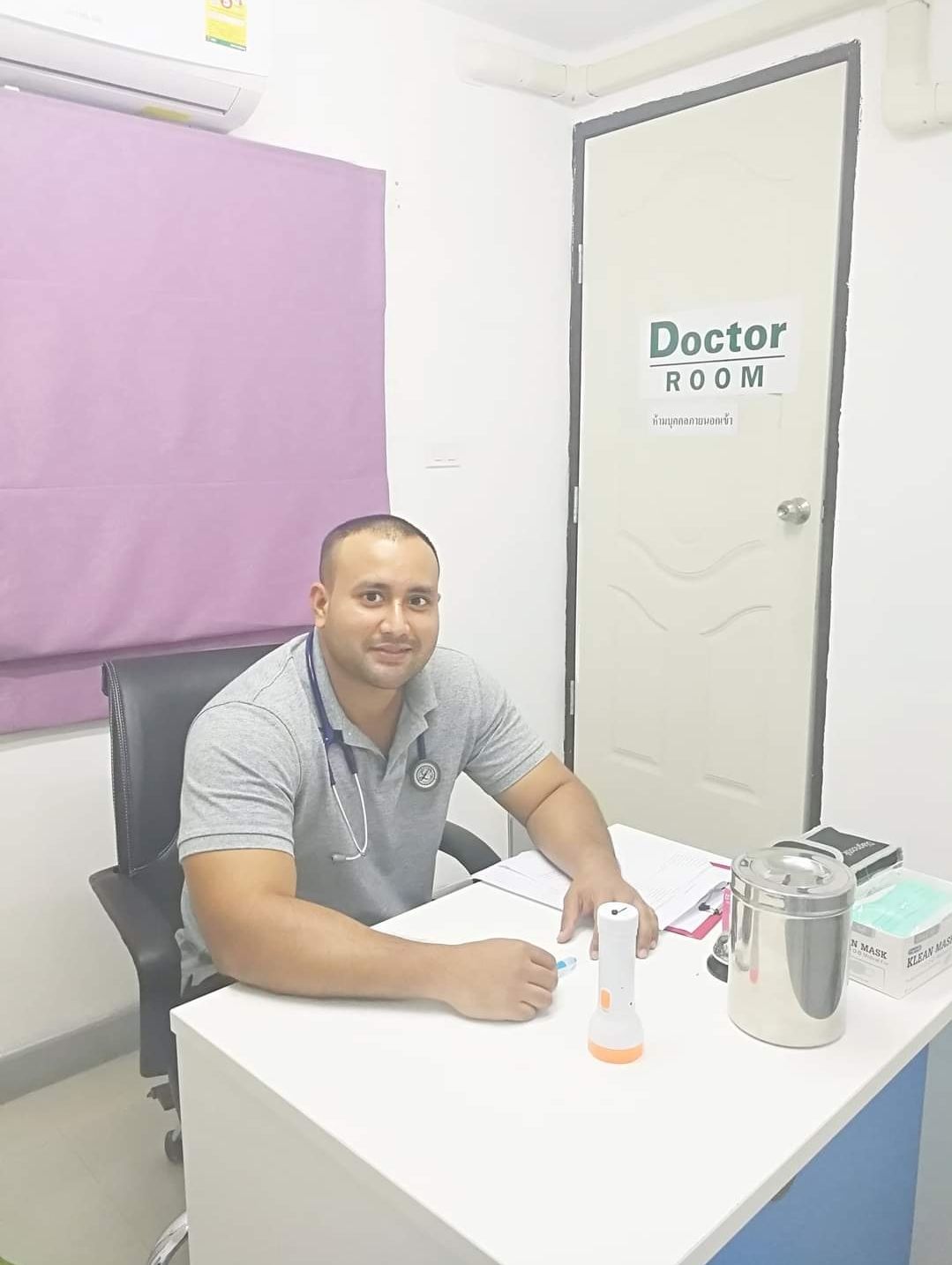
Dr. Ponlawat Pitsuwan is a physician at Doctor Bangkok, a private clinic in central Bangkok. He sees expats, residents, and medical tourists for general medicine, wellness consultations, and IV therapy. His focus is straightforward, evidence-based care delivered in plain language.