

Clinically reviewed by Dr. Ponlawat Pitsuwan, Physician, Doctor Bangkok. Last reviewed: September 2026
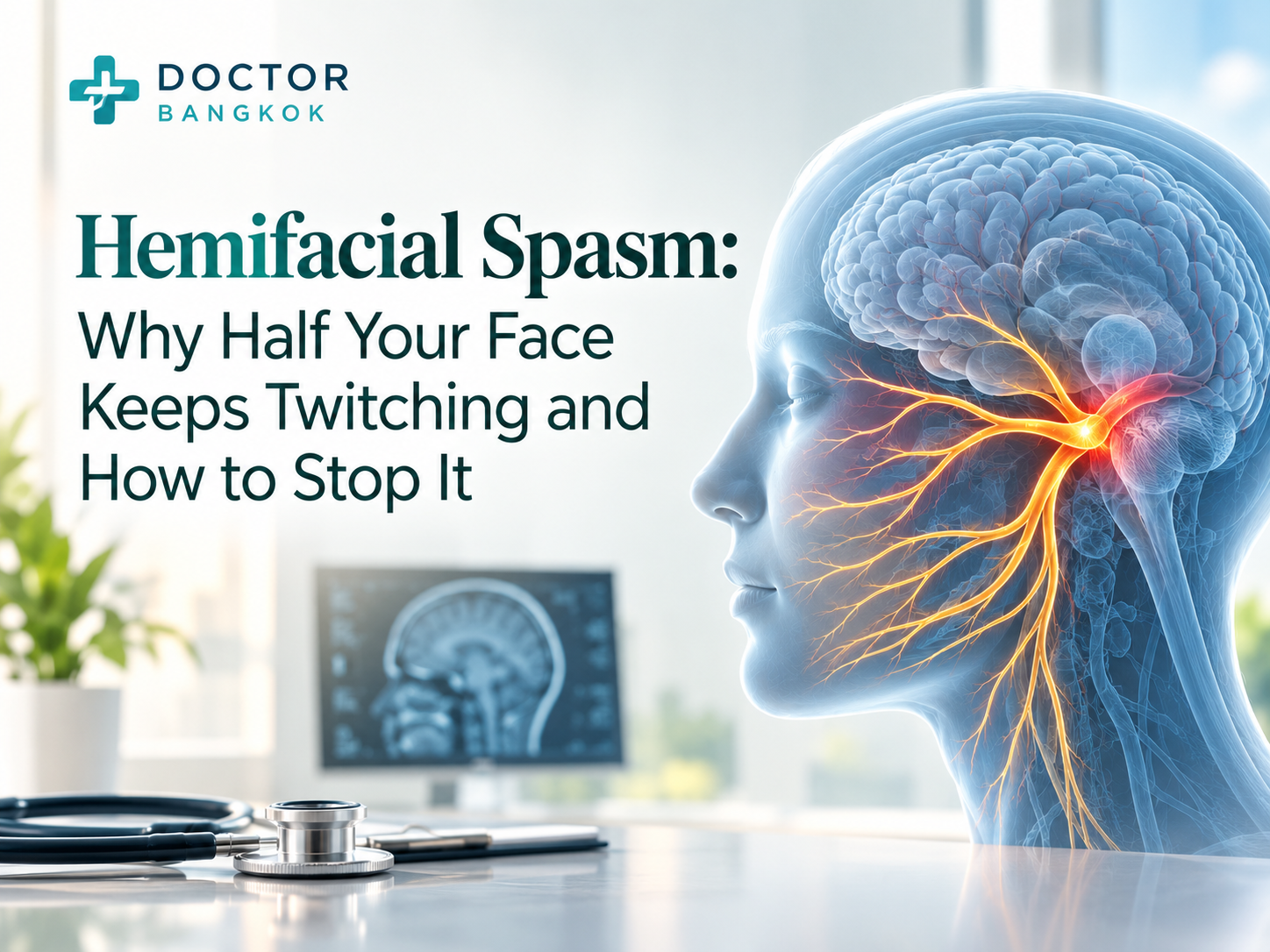
Hemifacial spasm causes involuntary twitching on one side of the face, starting around the eye and often spreading to the cheek and mouth. It is caused by a blood vessel pressing on the facial nerve and does not go away on its own. Botulinum toxin injections are the most common treatment, with effects lasting roughly three to four months per cycle. If you are in Bangkok and unsure whether your twitching is serious, a clinical assessment is the right first step.
Half your face has been twitching for weeks. It started with the eyelid and now you notice it pulling at the corner of your mouth too. You have told yourself it is tiredness, stress, too much coffee — but it is not getting better. That pattern is exactly what brings most patients in.
Hemifacial spasm is a neurological condition where the facial nerve misfires, causing uncontrolled muscle contractions on one side of the face. It is not dangerous, but it does get worse over time without treatment. Effective treatment exists, and if you are in Bangkok, you do not need to navigate the Thai healthcare system alone to access it.

What Causes Hemifacial Spasm
The facial nerve controls the muscles on each side of your face. In hemifacial spasm, a blood vessel presses against this nerve where it exits the brainstem. That pressure causes the nerve to fire abnormally, sending signals to your facial muscles that you never asked for.
In a small number of cases, something else is pressing on the nerve — a tumour, a cyst, or scarring from a previous Bell’s palsy. Your doctor will want to rule these out with imaging before settling on a treatment plan.
Who Gets Hemifacial Spasm — and Why It Is More Common in Southeast Asia
Hemifacial spasm is more common in middle-aged women, but I see it across a wide age range in practice. What most clinic websites do not mention is that research consistently shows higher rates among Asian populations compared to Western ones. That makes this condition particularly relevant in Thailand, both for Thai patients and for expats living here long-term.
The likely explanation is anatomical. Differences in the space at the back of the skull where the facial nerve exits may make vascular compression more likely. It is not something you can prevent, but it does mean that doctors in Bangkok have seen plenty of it.

Symptoms: What Hemifacial Spasm Actually Feels Like
It almost always starts with the eyelid. A flutter, a twitch, something that feels like a persistent eye tic. Most people assume it is nothing.
The difference is what happens next. In hemifacial spasm, the twitching spreads. Within months to years, it moves down to the cheek and then to the muscles around the mouth. Some patients notice their face pulling to one side during a spasm, or a brief involuntary closing of the eye.
It does not plateau and it does not resolve on its own. If your twitching started at the eye and has been moving downward, that is the pattern to take seriously.
How to Tell Hemifacial Spasm Apart from Other Facial Twitches
Not every facial twitch is hemifacial spasm. This is where most patients get stuck.
Common eyelid twitching — myokymia — is probably what you have had before. It affects either eye at different times, it is linked to fatigue or caffeine, and it clears up within days or weeks. It stays in the eyelid and never spreads.
Blepharospasm is different again. It affects both eyes, causes forceful blinking, and is a separate movement disorder.
| Feature | Common Eye Twitch (Myokymia) | Hemifacial Spasm | Blepharospasm |
|---|---|---|---|
| Which side | Either, often alternating | One side only, always | Both sides |
| Where it starts | Eyelid | Eyelid | Both eyelids |
| Does it spread? | No | Yes, to cheek and mouth | No, stays at eyes |
| Goes away on its own? | Yes, within days or weeks | No | No |
| Triggered by fatigue? | Yes | Not directly | Not directly |
| Needs treatment? | No | Yes | Yes |
The key red flag is spread. If twitching that started at your eye is now involving your cheek or mouth, get it assessed. Do not wait.
Getting a Diagnosis and Referral in Bangkok as an Expat
Accessing specialist care in a new country, in a different language, is genuinely difficult. I hear this from expats regularly.
The pathway is straightforward once you know it. You start with a general physician for a clinical history and initial assessment. If hemifacial spasm is suspected, you will be referred to a neurologist who will order a brain MRI to confirm whether a vessel is pressing on the facial nerve.
At Doctor Bangkok, that initial assessment is conducted entirely in English. We take your symptom history, assess what you are describing, and arrange specialist referral where needed. For expats with international health insurance, a documented physician referral is often what your insurer requires before covering specialist care — so that first appointment carries practical value beyond the clinical one.
Botulinum Toxin for Hemifacial Spasm: What the Treatment Involves
Botulinum toxin type A is the first-line treatment for hemifacial spasm and has strong evidence behind it. A specialist injects small amounts into the muscles around the eye and, if the spasm has spread, into the lower facial muscles too. The twitching settles because the muscles stop receiving those misfired nerve signals.
Results are not immediate. Most patients see improvement within three to five days, with full effect at around two weeks. Symptom control typically lasts three to four months per cycle, and some patients find the effect extends slightly with each repeat treatment.
This is long-term management, not a one-time fix. Injections are repeated roughly every three to four months on an ongoing basis. Side effects are usually mild and temporary — the most common is a drooping eyelid that resolves as the toxin wears off.
When Surgery Is Worth Considering
Botulinum toxin works well for most patients. But some eventually ask whether there is a more permanent option, and there is.
Microvascular decompression (MVD) is a neurosurgical procedure that addresses the underlying cause directly. A surgeon repositions the blood vessel away from the facial nerve and places a small cushion between them to prevent re-contact. For suitable candidates, long-term resolution rates are high.
MVD is typically discussed when botulinum toxin has stopped being effective, when a patient cannot tolerate repeat injections, or when a younger patient prefers a long-term solution over injections every few months for decades. It is a significant operation and is not right for everyone. Your neurologist and neurosurgeon will walk through the risk-benefit balance with you directly.
Living with Hemifacial Spasm in Bangkok
The practical impact of this condition is something most clinic articles skip past.
Hemifacial spasm affects confidence. Patients tell me they avoid presentations, client meetings, and social situations because they are self-conscious about their face moving without warning. That is a legitimate concern, not a minor side effect.
Bangkok’s heat and physical stress can make spasms more noticeable in the short term, though they do not change the underlying condition. Managing fatigue does not treat hemifacial spasm, but it may reduce how disruptive the spasms feel day to day.
For expats who travel for work or are in Thailand temporarily, the treatment schedule matters. Botulinum toxin injections every three to four months fit within most long-stay schedules. If you are a medical tourist considering this treatment, plan for at least two visits — ideally over six to eight weeks — to assess your initial response before committing to a long-term cycle.
If you have twitching on one side of your face that started at the eye and has been spreading, come in for an assessment. At Doctor Bangkok, our English-speaking physicians can review your symptoms, take a full clinical history, and refer you to the right specialist in Bangkok’s private healthcare network. We see expats, residents, and medical tourists for general medical consultations and specialist referral coordination. BTS accessible on Sukhumvit. Book online or contact us directly to arrange your appointment.
Can hemifacial spasm go away on its own without treatment?
In almost all cases, no. Hemifacial spasm is progressive — the spasms typically become more frequent and spread to more facial muscles over time. Waiting it out is not a strategy that works here. Early assessment and treatment give you the best outcome.
How long does botulinum toxin last and how often will I need injections?
Most patients get around three to four months of symptom control per cycle. You will need repeat injections on an ongoing basis, roughly every three to four months. Some patients find the duration extends slightly with subsequent treatments, which is worth factoring in if you are weighing this against surgery.
What is the difference between hemifacial spasm and a regular eye twitch?
A common eye twitch stays in the eyelid, affects either eye at different times, and clears up within days to weeks. Hemifacial spasm is always on one side, starts at the eye and spreads downward to the cheek and mouth, and does not resolve without treatment. If your twitching has moved beyond the eyelid or has lasted more than a few weeks, get it assessed.
Can I get diagnosed and treated for hemifacial spasm in Bangkok without speaking Thai?
Yes. Bangkok’s private healthcare system is well set up for English-speaking patients. The pathway starts with an English-speaking general physician who takes your history and refers you to a neurologist for imaging and formal diagnosis. Doctor Bangkok handles that first step entirely in English, which removes the most common barrier expats describe when accessing specialist care here.
Is botulinum toxin for hemifacial spasm covered by international health insurance in Thailand?
Botulinum toxin for hemifacial spasm is a neurological treatment, not cosmetic, and many international health insurance policies cover it when a neurologist documents it as medically necessary. Check with your insurer before your appointment and ask your neurologist for a formal diagnosis letter. A documented physician referral — which Doctor Bangkok can provide — is often what insurers require to approve specialist and treatment costs.
How do I know if I need surgery rather than injections?
Most patients start with botulinum toxin and do well with it long-term. Surgery — specifically microvascular decompression — becomes worth discussing if injections stop working, if you cannot tolerate repeat treatments, or if you prefer a potentially permanent solution. Your neurologist and a neurosurgeon will assess whether you are a suitable candidate based on your imaging and overall health.
Will hemifacial spasm spread to the other side of my face?
No. Hemifacial spasm stays on the same side — it does not cross to the other side. It can spread progressively within that side, from the eye down to the cheek and mouth, which is why earlier treatment makes sense. The other side of your face is not at risk.
Dr. Ponlawat Pitsuwan
Physician, Doctor Bangkok
a private medical clinic in central Bangkok. He sees expats, residents, and medical tourists for neurological symptom assessment, specialist referral coordination, and general medical consultations. His focus is straightforward, evidence-based care delivered in plain language.
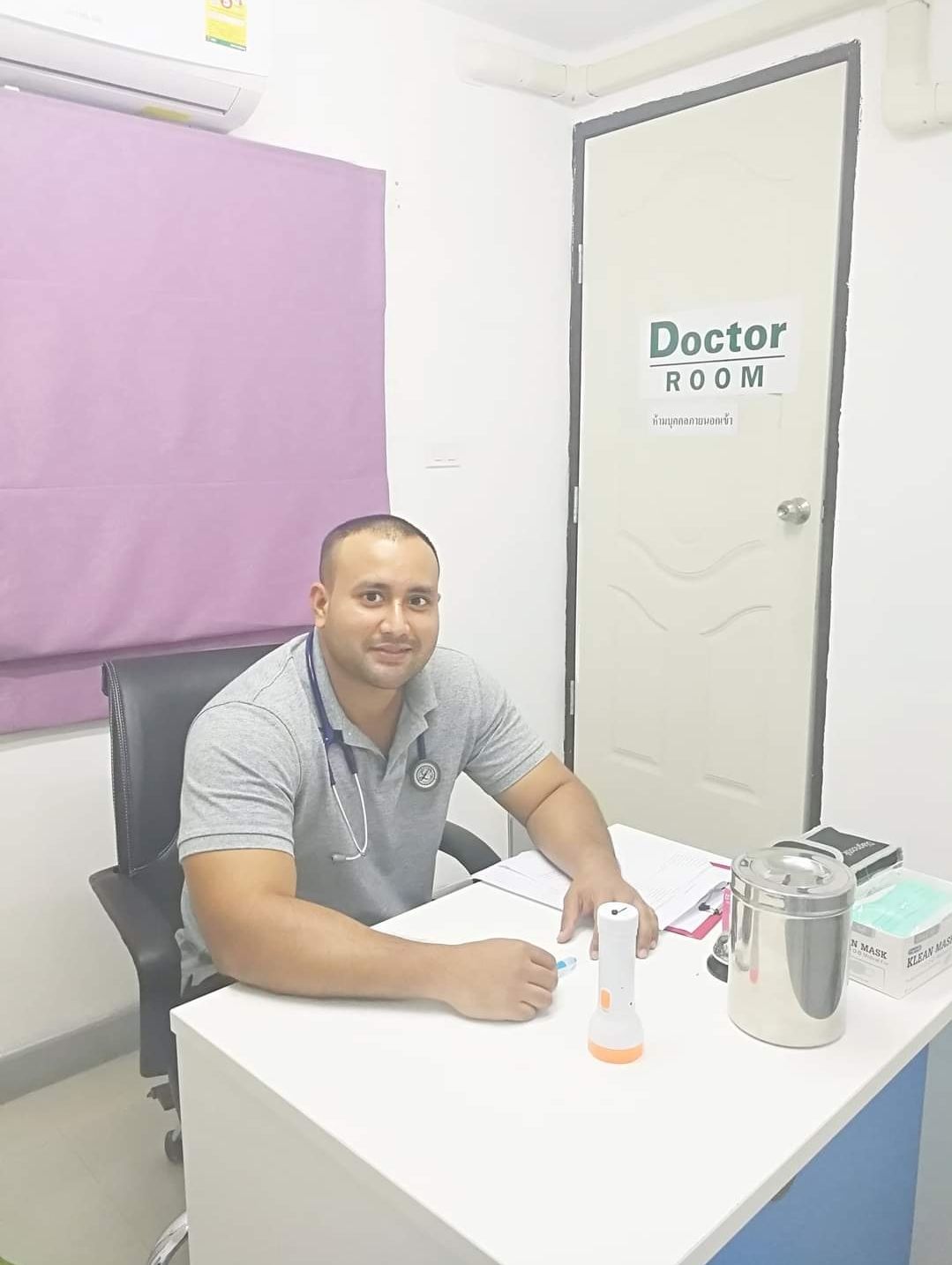
Dr. Ponlawat Pitsuwan is a physician at Doctor Bangkok, a private clinic in central Bangkok. He sees expats, residents, and medical tourists for general medicine, wellness consultations, and IV therapy. His focus is straightforward, evidence-based care delivered in plain language.