
Clinically reviewed by Dr. Ponlawat Pitsuwan, Physician, Doctor Bangkok. Last reviewed: September 2026
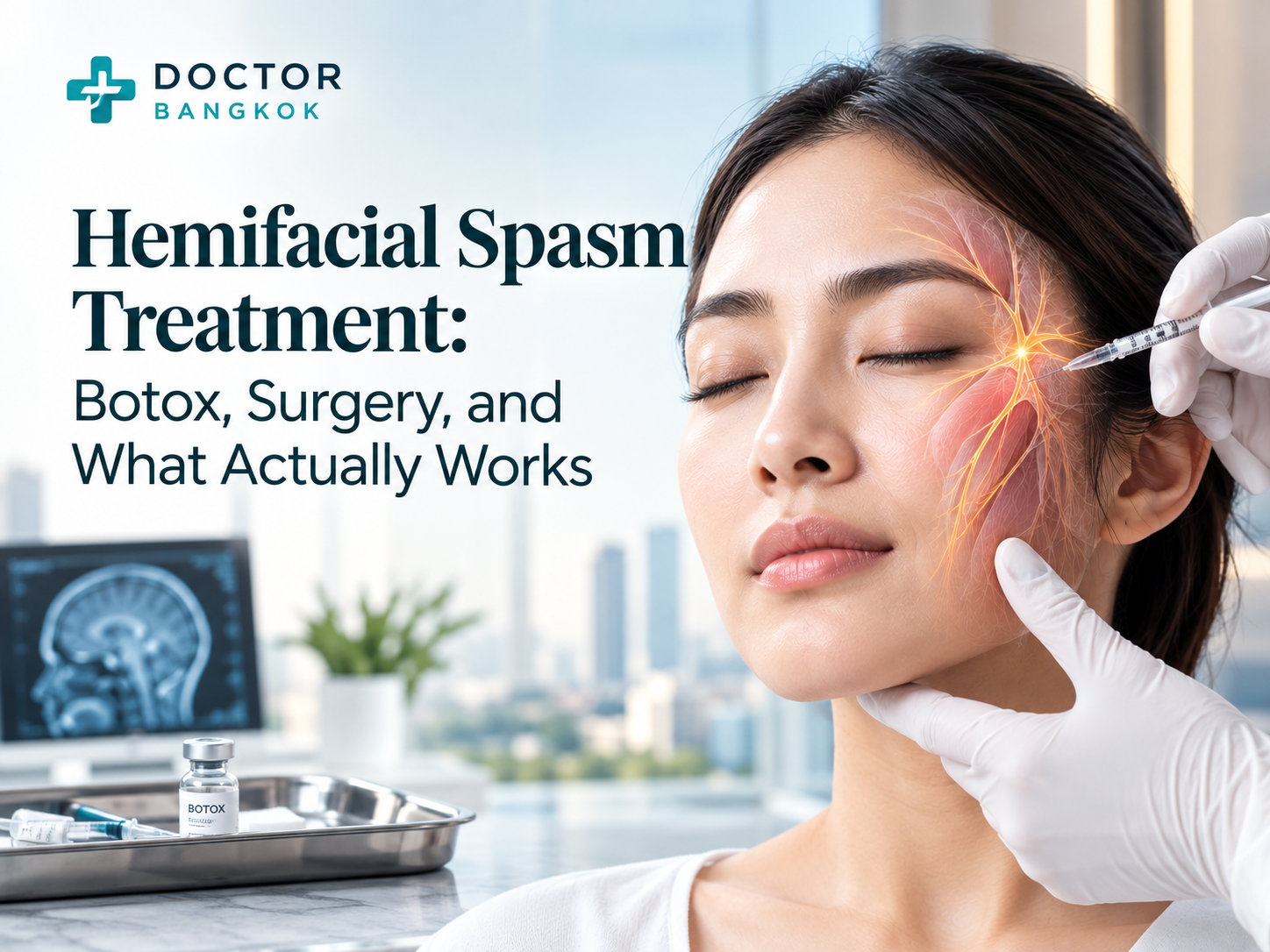
Hemifacial spasm causes involuntary twitching on one side of the face, starting around the eye and often spreading to the cheek and jaw. It is caused by a blood vessel pressing on the facial nerve and does not go away on its own. Botulinum toxin injections, repeated every three to four months, are the most effective first-line treatment for most patients.
Most patients describe it the same way: one eye starts flickering, they put it down to stress or bad sleep, and they wait. Then it starts pulling at the cheek. Then the corner of the mouth. That is usually when they book an appointment, weeks or months after it first started.
Hemifacial spasm is not dangerous, but it rarely settles on its own. The longer it goes unassessed, the more it tends to spread. If you are an expat in Bangkok or passing through for work, diagnosis and treatment here are straightforward, conducted in English, and available without the referral queues you may be used to back home.

Hemifacial Spasm vs Ordinary Eye Twitching
This is the question I get most often. Most people have had a twitchy eyelid at some point, usually after poor sleep, too much coffee, or a rough week. That type, called benign eyelid myokymia, clears up on its own within days.
Hemifacial spasm is different. It starts around the eye but does not stay there. Over weeks or months it spreads to the cheek, the muscles around the mouth, and sometimes the jaw, always on one side only. It does not stop between episodes the way stress-related twitching does, and it often happens when you are completely relaxed or even asleep.
If the twitching has lasted more than two to three weeks, is spreading beyond your eyelid, or is affecting one full side of your face, come in and get it assessed. Do not talk yourself out of it.
What Causes Hemifacial Spasm
The seventh cranial nerve controls all the muscles on one side of your face. In most cases of hemifacial spasm, a blood vessel is pressing against this nerve near the base of the brain. That pressure causes the nerve to fire when it should not, which produces the spasms you feel.
Less commonly, the cause is a tumour near the nerve, or changes from a previous facial nerve injury. This is exactly why imaging matters: most of the time the cause is a blood vessel, but other causes need to be ruled out.

Who Gets Hemifacial Spasm
Hemifacial spasm is more common in Asian populations than in Western ones, and it is more common in women than men. It tends to appear in middle age, though younger patients get it too.
If you are living in Bangkok long-term, this is worth knowing. I see it regularly in both expat and Thai patients. It is one of those conditions that gets missed for months simply because people assume the twitching will pass.
Diagnosis: What to Expect at a Private Clinic in Bangkok
At Doctor Bangkok, I start with a clinical history and a neurological examination. I want to know when it started, which side, whether it is spreading, and what makes it better or worse. The pattern of the spasm itself tells me a lot.
For most patients, I recommend an MRI of the brain, sometimes combined with MR angiography to look more closely at the blood vessels near the facial nerve. This rules out a tumour and can identify the compressing vessel. Imaging is arranged quickly through our referral network, and we review the results together in plain language.
Hemifacial Spasm Treatment: Your Main Options
Botulinum Toxin Injections
This is the most effective ongoing treatment for most patients, with strong evidence behind it. Botulinum toxin type A is injected into the overactive muscles on the affected side of your face. It blocks the signals that cause the contractions. This is the same compound used in cosmetic Botox, but the dose, placement, and clinical purpose are completely different. If you have had cosmetic injections before, do not use that as your point of comparison.
Relief typically begins within three to five days. Most patients get three to four months of benefit per injection, and some get closer to six. You then return for a repeat session.
The biggest variable in outcomes is clinician experience. Therapeutic injections for hemifacial spasm require different anatomical knowledge than cosmetic work. This is a neurological indication, not a cosmetic one, and that distinction matters when it comes to both results and risk.
Oral Medications
Medications such as carbamazepine or clonazepam can reduce spasm frequency in some patients. Side effects including drowsiness and dizziness make them difficult to sustain long-term. I use them selectively, mostly as a short-term measure while we work out a longer treatment plan.
Microvascular Decompression Surgery
Microvascular decompression (MVD) is a neurosurgical procedure that physically moves the compressing blood vessel away from the facial nerve. It is the only option that treats the underlying cause directly, and in suitable candidates it can offer long-term or permanent relief.
That said, this is brain surgery, and it carries real risks. Most patients manage well with regular botulinum toxin injections and never need to consider an operation. MVD is typically discussed for patients who get inadequate relief from injections, are young enough that decades of repeat treatment presents a practical concern, and are medically fit for a major procedure. If you reach that point, Doctor Bangkok helps you understand your options clearly and refers you to the right neurosurgical colleague.
Risks and Side Effects of Botox for Hemifacial Spasm
The most common side effects are temporary facial weakness on the treated side and occasional mild eyelid drooping, which doctors call ptosis. Both are transient and resolve as the toxin wears off, usually within a few weeks.
These side effects are closely tied to injection technique. Seeing a clinician with neurological experience in botulinum toxin, rather than a purely cosmetic background, reduces your risk and improves your results. Make sure the product being used is pharmaceutical-grade and that the clinician understands this is a neurological indication.
Long-Term Management as an Expat in Bangkok
Repeat injections every three to four months are manageable, even if you travel a lot. Many patients at Doctor Bangkok schedule appointments around work trips or flights in and out of the city. The key is consistency: same clinician, similar injection interval, and flagging any changes between visits.
If you are based in Bangkok long-term, continuity of care is easy to maintain. If you visit Thailand regularly, you can plan your injections around your trips. I recommend keeping a brief note of when your symptoms return and how strong they are, because that information helps us adjust your dose over time.
Insurance coverage varies. Some international health policies cover botulinum toxin for hemifacial spasm under neurological conditions. Bring your policy documents and we can help you work out what documentation you need for a claim.
If you have noticed persistent twitching on one side of your face, or if it has been spreading beyond your eyelid over recent weeks, come in and get it assessed. At Doctor Bangkok, consultations are conducted in English by experienced physicians who can examine you, arrange imaging if needed, and discuss botulinum toxin treatment or specialist referral in plain language. We are centrally located in Bangkok and easy to reach by BTS. Walk-ins are welcome, or book ahead online.
Is hemifacial spasm the same as ordinary eye twitching?
No. Ordinary eyelid twitching is temporary and usually linked to tiredness, caffeine, or stress. Hemifacial spasm is caused by a blood vessel pressing on the facial nerve, spreads beyond the eyelid to the cheek and jaw, and does not resolve on its own. If your twitching has lasted more than a few weeks or involves more than just your eyelid, get it assessed.
How long does botulinum toxin last, and how often will I need injections?
Most patients get three to four months of relief per injection, though some find it lasts closer to six months. Relief usually begins within three to five days. You will need repeat injections on an ongoing basis, and seeing the same experienced clinician each time helps maintain consistent results and reduce side effects.
Can hemifacial spasm be cured permanently?
Botulinum toxin manages symptoms well but requires ongoing treatment. Microvascular decompression surgery addresses the underlying cause and can offer long-term or permanent relief for suitable candidates, but it involves neurosurgery and is not appropriate for everyone. Most patients do well with regular injections and never need to consider surgery.
Is it safe to get botulinum toxin for hemifacial spasm at a private clinic in Bangkok?
Yes, when the clinician has neurological experience with botulinum toxin rather than a purely cosmetic background. Side effects like temporary facial weakness or mild eyelid drooping are transient and closely linked to technique. Make sure the product is pharmaceutical-grade and that the clinician understands this is a neurological indication.
What should I expect at my first appointment at Doctor Bangkok for face twitching?
We start with your history, a neurological examination, and a look at the spasm pattern. If hemifacial spasm looks likely, I will discuss imaging and explain what an MRI can tell us. The whole process is in English, and I will walk you through your options before we make any treatment decisions. There is no obligation to proceed with anything on the same day.
Does hemifacial spasm go away on its own?
Rarely. Unlike stress-related eye twitching, hemifacial spasm tends to persist and often gradually worsens over time. Early assessment means earlier relief and rules out uncommon but serious underlying causes such as a tumour near the facial nerve.
Dr. Ponlawat Pitsuwan
Physician, Doctor Bangkok
a private medical clinic in central Bangkok. He sees expats, residents, and medical tourists for neurological concerns, general medical consultations, and conditions requiring ongoing management such as hemifacial spasm. His focus is straightforward, evidence-based care delivered in plain language.
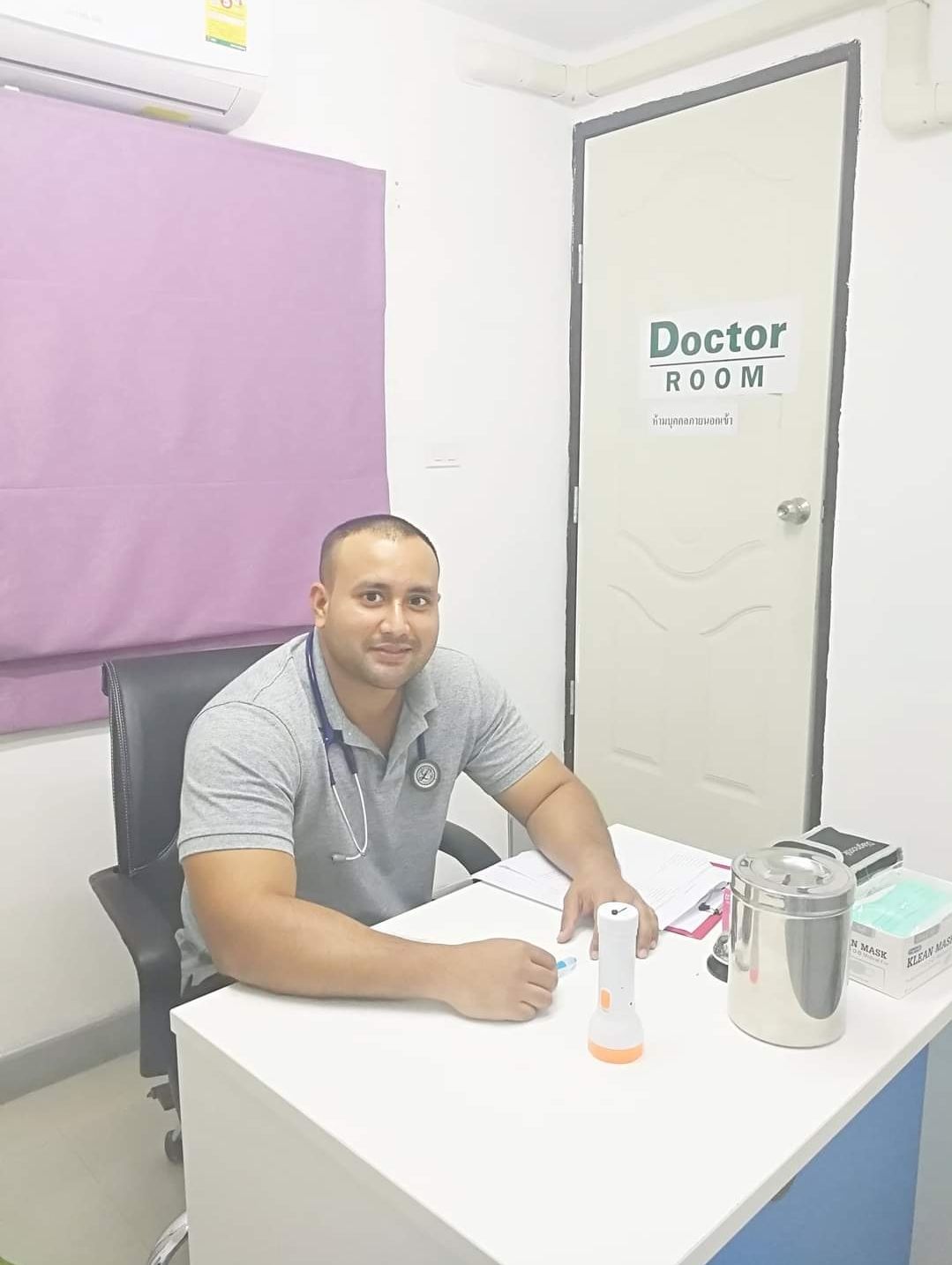
Dr. Ponlawat Pitsuwan is a physician at Doctor Bangkok, a private clinic in central Bangkok. He sees expats, residents, and medical tourists for general medicine, wellness consultations, and IV therapy. His focus is straightforward, evidence-based care delivered in plain language.