

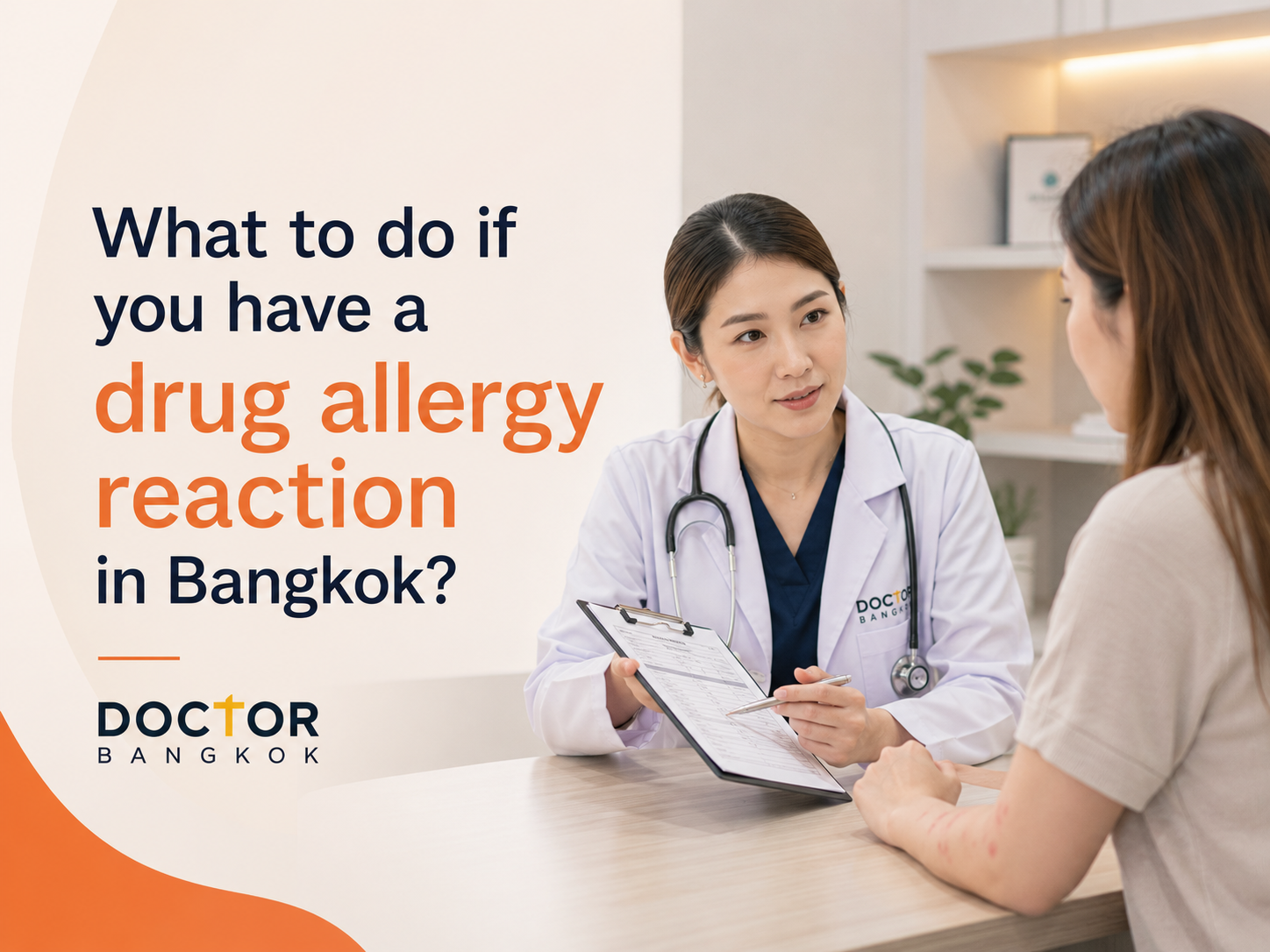
Clinically reviewed by Dr. Ponlawat Pitsuwan, Physician, Doctor Bangkok. Last reviewed: July 2026
If you have a drug allergy reaction, stop the medication and assess how bad it is. A mild rash with no other symptoms can be monitored at home with antihistamines. Hives spreading fast, face swelling, difficulty breathing, or a racing heart need emergency care right now. Get to the nearest hospital or call 1669.
You took a medication, something felt wrong, and now you are searching your symptoms at midnight in your Bangkok apartment. Maybe it is a rash. Maybe your throat feels a little tight. Maybe you are not sure if it is the drug or just a coincidence. This is one of the most common things I deal with in expat patients, and the uncertainty is completely understandable.
Drug allergies range from mildly inconvenient to life-threatening. The most important thing is knowing which situation you are in. This article walks you through how to tell the difference, what to do right now, and how to get properly assessed at an English-speaking clinic in Bangkok so you have a clear record going forward.

Allergy or Side Effect — This Matters More Than You Think
Most patients who come to me saying they have a drug allergy actually had a side effect. This is not a small distinction.
A true drug allergy means your immune system has decided the drug is a threat. The reaction can happen fast and can affect your whole body. A side effect is different. It is a predictable response to how the drug works: nausea from antibiotics, dizziness from blood pressure medication, headaches from certain painkillers.
The reason this matters is that an incorrect allergy label follows you. Doctors will avoid first-line treatments for years based on something that was never confirmed. Research from allergy bodies suggests that more than 90% of people who report a penicillin allergy test negative when formally evaluated. Most of them were given broader antibiotics they did not need.
Being mislabelled as drug-allergic is not harmless. It affects every prescription you get, including in an emergency. Getting it confirmed, in either direction, is worth doing.
What a Drug Allergy Actually Feels Like
Reactions That Come Fast
These usually start within an hour of taking the drug, sometimes within minutes. You get hives: raised, itchy welts on the skin. Your face, lips, or tongue may swell. Your throat may feel tight. You may wheeze, feel dizzy, or notice your heart racing.
Anaphylaxis is the most severe version. It involves two or more body systems reacting at once, for example hives plus breathing difficulty. It can become life-threatening within minutes. Call 1669 or get to a hospital immediately. Do not wait.
Reactions That Come Days Later
Some drug allergy reactions do not appear until days after you start the medication. Patients often miss this connection entirely.
Two serious delayed reactions to know: Stevens-Johnson syndrome causes painful blistering of the skin and mucous membranes. DRESS syndrome involves a spreading rash, fever, and effects on internal organs. Both are rare but serious. If you develop a spreading, painful, or blistering skin reaction while on any medication, get it checked the same day.

What to Do Based on How Bad It Is
Mild Reaction
A small localised rash, some itching, or minor flushing with no other symptoms. Stop the medication. Take an antihistamine if you have one and watch closely for the next few hours. If it stays mild and does not spread, follow up with a doctor the next day for review and documentation.
Moderate Reaction
Spreading hives, swelling that is not on your face or throat, or symptoms that are worsening but not yet severe. Stop the medication and seek medical care the same day. Do not drive yourself if you feel unwell. At Doctor Bangkok, we see patients for same-day allergy review and can assess whether you need corticosteroids, antihistamines, or further testing.
Severe Reaction or Anaphylaxis
Throat tightening, difficulty breathing, face or tongue swelling, dizziness, sudden rapid heartbeat, or losing consciousness. This is an emergency. Call 1669 immediately. If someone nearby has an epinephrine auto-injector, use it now. Get to an emergency department, not a clinic.
Buying Medication in Bangkok and the OTC Problem
This is something every expat in Bangkok should know. Many antibiotics and other medications that require a prescription back home are sold over the counter here, with no prescription required.
People buy amoxicillin, azithromycin, or co-trimoxazole for a cough or a UTI without ever seeing a doctor. If you are allergic to one of these and do not know it yet, you may find out the hard way after taking a full dose alone at home.
If you had a reaction to something bought from a Bangkok pharmacy, photograph the packaging before you throw it away. Note both the brand name and the generic name. Thai pharmacy labels often list drugs under brand names that differ from what you know at home. Bring that packaging to your consultation. Our team at Doctor Bangkok regularly helps patients who have reacted to locally purchased medications and need those reactions documented in English.
Getting a Formal Drug Allergy Diagnosis in Bangkok
A self-reported allergy history is a starting point, not a diagnosis. Formal testing tells you what you are actually dealing with.
The right test depends on your history and which drug is suspected. Skin tests check for immediate reactions. A supervised oral challenge can confirm or rule out an allergy under controlled conditions. A blood test for specific antibodies can add supporting information. I would not recommend picking one yourself. Come in, tell me what happened and what you took, and we go from there.
If your allergy is confirmed, we document it formally. If it is ruled out, we remove the label from your records. That process, sometimes called allergy delabelling, improves the care you receive for every health issue going forward. You can find out more about our allergy assessment and treatment options on our service page.
Protecting Yourself Going Forward in Bangkok
Once you have a confirmed drug allergy, there are a few things I always tell patients before they leave the clinic.
Carry an allergy card listing the drug by its generic name, not just the brand name. Get it in both English and Thai. Not every pharmacy or clinic you encounter in Thailand will have an English speaker on hand, and a card in Thai can make a real difference in an emergency.
Tell every provider, including dentists and any clinic where you receive a drip or a vaccination. Do not assume records transfer between clinics in Bangkok. They often do not. Mention your allergy every time.
If you have had anaphylaxis before, talk to your doctor about carrying an epinephrine auto-injector. Our allergy treatment service can help you set up a written management plan and arrange this for you. Having formal documentation from a clinic, rather than just your own account of a past reaction, is what actually protects you when a new provider sees you for the first time.
Had a reaction to a medication in Bangkok? Not sure if it was a true allergy or a side effect? At Doctor Bangkok, our English-speaking physicians can assess your reaction, run the right tests, and give you a formal allergy record you can use across every clinic in the city. We are in central Bangkok, BTS accessible, and available for same-day consultations. Visit doctorbangkok.co.th/allergy-treatment/ to book.
Frequently Asked Questions
How do I know if I had a drug allergy or just a side effect?
Side effects are predictable reactions to how a drug works: nausea, fatigue, headache. A true allergy involves your immune system, and the signs are hives, swelling, wheezing, or anaphylaxis. If you had stomach upset from an antibiotic, that is likely a side effect. If you broke out in hives within an hour, that points more strongly to an allergy, and formal testing is the only way to confirm it.
I bought medication from a Bangkok pharmacy and had a reaction. What should I do?
Stop the medication and photograph the packaging, front and back, before you do anything else. Note the generic name if it is listed, not just the brand name. Then come in for a same-day review. Many medications are sold here without a prescription, and knowing exactly what you took is critical for assessing and documenting the reaction properly.
Do I need to avoid all antibiotics in the same family if I am allergic to penicillin?
Not automatically. Cross-reactivity between penicillin and other antibiotics exists, but it is lower than most people assume, and a doctor needs to assess your specific history. Carrying the penicillin allergy label without confirming it can mean less effective antibiotics every time you need treatment. Skin testing or a supervised oral challenge can settle this definitively.
What is anaphylaxis and what do I do if it happens in Bangkok?
Anaphylaxis is a severe allergic reaction that affects two or more body systems at once, for example hives and difficulty breathing together. It can start within minutes and become life-threatening quickly. Call 1669 immediately or get to the nearest hospital emergency department. If you have an epinephrine auto-injector, use it straight away. Do not wait to see if symptoms improve on their own.
Can I travel safely in Bangkok if I have a known drug allergy?
Yes, with the right preparation. Carry a bilingual allergy card in English and Thai listing the drug by its generic name. Tell every provider, every time, including dentists and any clinic where you receive treatment. If your allergy is severe, ask your doctor about carrying an epinephrine auto-injector. A formal written record from a clinic protects you far more reliably than your own account of a past reaction when you are seen by someone new.
How long does a drug allergy reaction last?
A mild localised rash often fades within a few days once you stop the medication. Hives may take longer if the drug stays in your system. Severe reactions need treatment to resolve, and some delayed reactions can last weeks. If your symptoms are not clearly improving after stopping the drug, or if they are spreading or worsening, get reviewed the same day.
Dr. Ponlawat Pitsuwan
Physician, Doctor Bangkok
a private medical clinic in central Bangkok. He sees expats, residents, and medical tourists for allergy assessment, drug reaction evaluation, and general medical consultations. His focus is straightforward, evidence-based care delivered in plain language.
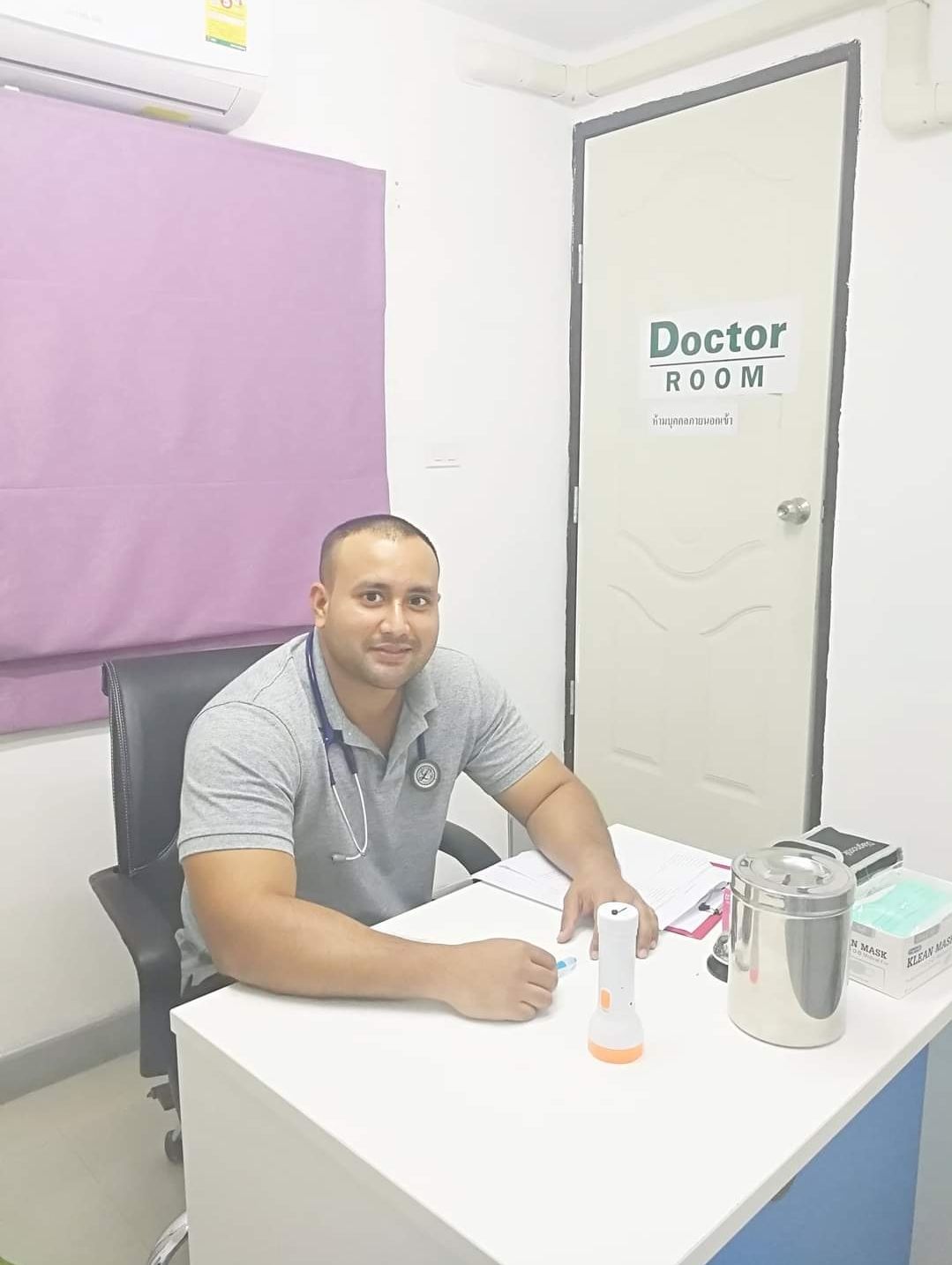
Dr. Ponlawat Pitsuwan is a physician at Doctor Bangkok, a private clinic in central Bangkok. He sees expats, residents, and medical tourists for general medicine, wellness consultations, and IV therapy. His focus is straightforward, evidence-based care delivered in plain language.