


Clinically reviewed by Dr. Ponlawat Pitsuwan, Physician, Doctor Bangkok. Last reviewed: July 2026
Yes, penicillin allergy can go away over time. Most people labelled as penicillin-allergic as children are no longer reactive by adulthood. The only way to confirm this is formal testing. Keeping an outdated allergy label on your medical record can lead to worse antibiotic treatment when you actually need it.
If you have "penicillin allergy" written in your medical history, you have probably never questioned it. Maybe a parent told you. Maybe it showed up on a form years ago. You wrote it down, and every doctor since has worked around it.
That label may not be accurate anymore. A large number of people carrying a penicillin allergy label were never truly allergic to begin with, and even those who were can lose that reactivity over time. This matters especially if you are living in Bangkok and relying on a foreign medical record that no one here can easily verify.

The Difference Between a Side Effect and a True Allergy
This is where most mislabelling starts. Penicillin causes side effects in a lot of people: nausea, loose stools, mild stomach upset. Those are not allergies. They are just how the drug behaves in some people.
A true allergy involves your immune system reacting to penicillin as if it were a threat. The most common signs are hives, swelling, or a widespread rash appearing within an hour or two of taking the drug. Anaphylaxis, a severe whole-body reaction, is the most serious form but is uncommon.
There is also a delayed type that shows up days later, usually as a skin rash without the rapid onset. Many people were labelled allergic after a childhood rash that was actually caused by the infection being treated, not the antibiotic. A viral rash looks a lot like a drug rash, and this mix-up happens constantly.
Why Penicillin Allergy Fades Over Time
The immune response behind an immediate penicillin allergy involves antibodies that your body produces and maintains in a state of readiness. If you are not re-exposed to penicillin, your immune system gradually stops maintaining that readiness. The sensitisation fades.
This is well-documented and explains why most people who had a genuine penicillin allergy decades ago are no longer reactive today. The delayed type of allergy also tends to fade over time, though the timeline is less predictable. For the majority of patients, both types do eventually go away.

Why the Label on Your Medical Record Actually Matters
I see patients at Doctor Bangkok who assume carrying the penicillin allergy label is just a minor inconvenience. It is not.
When a doctor sees that label, they cannot use the most effective first-line antibiotics for many common infections. They prescribe alternatives that are often broader-spectrum, meaning they affect more types of bacteria, including the helpful ones in your gut. This raises your risk of difficult gut infections and contributes to antibiotic resistance over time.
Patients with penicillin allergy labels tend to have longer hospital stays and higher rates of complications when they need surgery. That is not an administrative issue. It is real clinical harm coming from an outdated label sitting unchallenged in your notes.
How Doctors Assess Whether Your Allergy Has Gone
There is a clinical tool called the PEN-FAST score that helps doctors quickly estimate how likely it is that a penicillin allergy is still active. It looks at the type of reaction you had, how long ago it happened, and whether there were any severe features. Patients with a low score may be candidates for a supervised oral challenge, skipping skin testing entirely.
For higher-risk patients, skin testing comes first. If that is negative, a graded oral challenge follows: a supervised, step-by-step dose of amoxicillin given in a clinic with monitoring. Research published in recent years confirmed that a direct oral challenge is safe and appropriate for patients assessed as low risk, which simplifies the process considerably.
Can the Allergy Come Back After It Has Gone?
This is something most patients do not hear about. After you are successfully de-labelled, re-exposure to penicillin can, in some cases, restart the immune response. This is called resensitisation.
It is not common, but it is documented. This is one reason testing should always be done under clinical supervision rather than self-testing at a pharmacy. If you ever react after a confirmed de-labelling, your doctor needs to know the testing history. De-labelling means your current risk is reassessed and found to be low. For most patients, that reassessment holds up long-term.
A Practical Note for Expats in Bangkok
Bangkok has a particular set of challenges around this issue. Penicillin-class antibiotics, including amoxicillin, are available without a prescription at many Thai pharmacies. If you are carrying an unverified allergy label and you pick up amoxicillin during a chest infection, one of two things can happen: you take a drug you may actually react to, or you avoid it and take something less effective.
Many expats I see here have childhood records from another country, often incomplete, sometimes just a parental memory. That is not a reliable basis for avoiding an entire class of antibiotics for the rest of your life. If you are not sure whether your label is still valid, the right move is a proper reassessment.
Getting Tested in Bangkok
A penicillin allergy reassessment starts with a consultation. We go through your history: what happened, when, what the reaction looked like, and what you were being treated for. From that, we apply validated clinical criteria and decide whether skin testing or a direct oral challenge is the right next step.
Testing is done under supervised conditions. If you have low-risk features, we may move directly to a graded oral challenge. If the history is more concerning, skin testing comes first. If testing confirms you are no longer reactive, we update your records accordingly. That documentation matters every time you see a doctor going forward. You can read more about our approach on our allergy treatment page.
Not sure if your penicillin allergy is still real? Doctor Bangkok offers penicillin allergy reassessment consultations in central Bangkok with English-speaking physicians. We use validated clinical tools to assess your current risk and, where appropriate, supervised testing to confirm your status. Walk in or book ahead at doctorbangkok.co.th. BTS accessible.
Frequently Asked Questions
I was labelled penicillin-allergic as a child. Does that diagnosis still count decades later?
Childhood labels are among the least reliable. Many reactions were side effects or viral rashes misattributed to penicillin. Even if the original reaction was genuine, the immune response fades in the majority of people within ten years. The label deserves a proper re-evaluation, not a lifetime of unchallenged avoidance.
What is the difference between a penicillin side effect and a true allergy?
Side effects like nausea or mild stomach upset are not allergies. A true allergy involves an immune response: hives, swelling, or anaphylaxis appearing within a couple of hours, or a delayed skin rash appearing days later. Only formal assessment can confirm which category you fall into.
What does penicillin allergy testing involve? Is it painful or risky?
For low-risk patients, it usually means a supervised graded oral dose of amoxicillin, taken in steps with monitoring between each one. Higher-risk patients have a skin test first. Everything is done in a clinical setting with treatment available if needed. It is not painful, and the risk of a serious reaction during properly supervised testing is very low.
Can a penicillin allergy come back after it has gone?
Yes, rarely. Re-exposure to penicillin after de-labelling can sometimes restart the immune response. It is uncommon but real, which is why testing should always be done clinically and the result properly documented, not assumed based on tolerating a single pharmacy purchase.
Does it matter if I keep my penicillin allergy label even if I am not sure it is real?
It matters a great deal. An inaccurate label means doctors prescribe broader-spectrum alternatives that carry higher risks of gut infections, antibiotic resistance, and surgical complications. In Bangkok, where this class of antibiotic is widely used, having a wrong label actively leads to worse care.
Does an amoxicillin allergy mean the same as a penicillin allergy?
Amoxicillin is a penicillin-class antibiotic, so the two are closely related. A true allergy to one usually means caution with the other. If you have been labelled allergic to amoxicillin specifically, that label should be assessed the same way as a penicillin allergy label. Talk to a doctor before assuming it no longer applies.
Dr. Ponlawat Pitsuwan
Physician, Doctor Bangkok
a private medical clinic in central Bangkok. He sees expats, residents, and medical tourists for allergy assessments, general medical consultations, and a wide range of acute and chronic health concerns. His focus is straightforward, evidence-based care delivered in plain language.
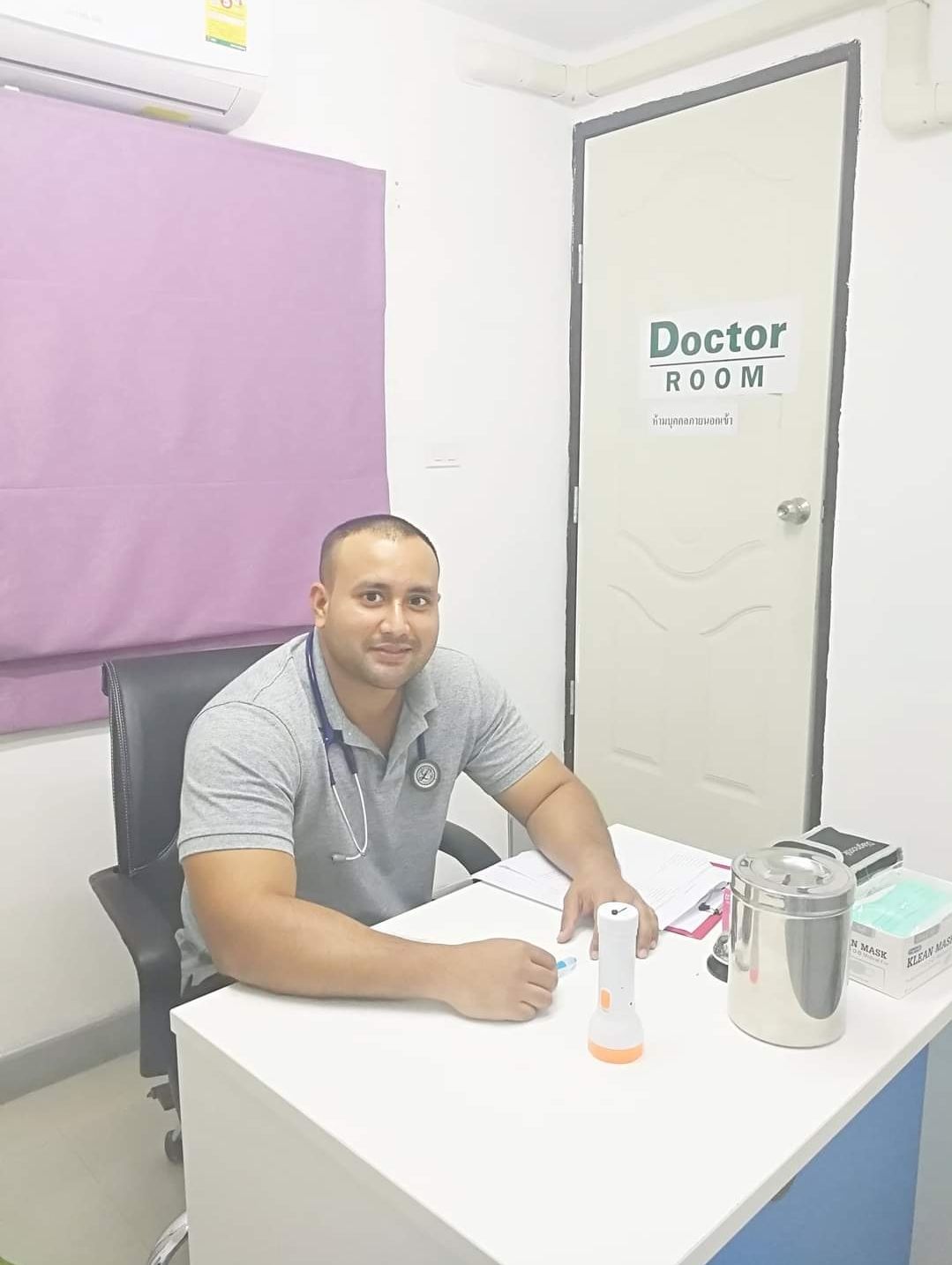
Dr. Ponlawat Pitsuwan is a physician at Doctor Bangkok, a private clinic in central Bangkok. He sees expats, residents, and medical tourists for general medicine, wellness consultations, and IV therapy. His focus is straightforward, evidence-based care delivered in plain language.