
Clinically reviewed by Dr. Ponlawat Pitsuwan, Physician, Doctor Bangkok. Last reviewed: June 2026
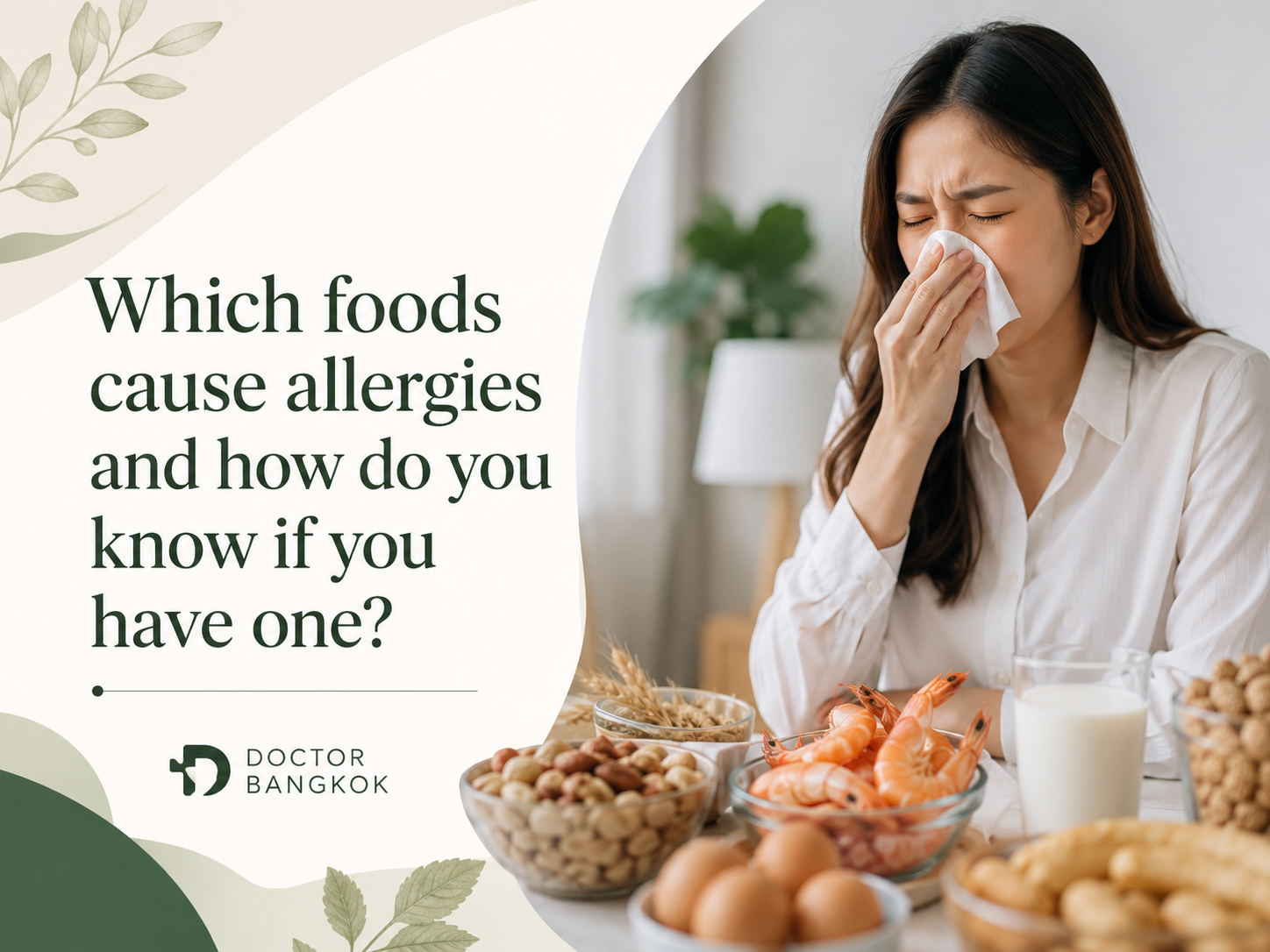
Food allergies happen when your immune system treats a harmless food protein as a threat. Reactions range from mild hives to life-threatening anaphylaxis. The most common triggers are peanuts, tree nuts, shellfish, fish, milk, eggs, wheat, soy, and sesame. A proper diagnosis requires testing, not guesswork. If you are in Bangkok and suspect a food allergy, you can get tested without a referral at a private clinic.
You ate something and now something feels wrong. Maybe your lips tingled. Maybe you got hives. Maybe it has happened more than once and you are starting to connect the dots. If you are an expat or visitor in Bangkok, figuring out food allergies is harder than it sounds. Thai cuisine hides allergens in ways most people do not expect, and the symptoms of a true allergy can look a lot like other things.
The good news is that food allergies are very testable and very manageable once you know what you are dealing with. This guide covers every major food allergy type, what the symptoms actually feel like, how to tell an allergy from an intolerance, and what to do about it if you are living in or visiting Bangkok.

Nut allergies: peanuts, tree nuts, and cross-reactivity
Nut allergies are among the most serious food allergies I see. They can cause severe reactions even from tiny amounts. In Bangkok, peanuts are everywhere: in sauces, salads, curries, and street food, often without any warning.
There are two separate categories here. Peanuts are legumes, not tree nuts. Tree nuts include cashews, almonds, walnuts, and pistachios. Some people are allergic to both. Some are allergic to only one, and you cannot assume.
If you are allergic to one tree nut, you may react to others because their proteins are similar. A blood test can identify which specific proteins you are reacting to. This tells us how serious your allergy really is and where the biggest risks lie.
Peanut allergy: symptoms, severity, and emergency response
Peanut allergy symptoms usually come on fast, within minutes of eating. You might get hives, swelling of the lips or tongue, a tight feeling in the throat, vomiting, or trouble breathing. At the severe end, this becomes anaphylaxis, which is a medical emergency.
If you have a known peanut allergy, carry epinephrine. In Bangkok, epinephrine auto-injectors are not reliably stocked at pharmacies, so bring them from home. If anaphylaxis occurs, use the epinephrine, call 1669 (Thailand’s emergency number), and go to the nearest emergency department immediately. Do not wait to see if it passes.
Shellfish allergy: shrimp, prawns, lobster, and molluscs
Shellfish allergy is extremely common, and Bangkok is one of the harder cities to manage it in. The allergy typically covers crustaceans: shrimp, prawns, crab, and lobster. Some people also react to molluscs: clams, oysters, squid, and mussels. These are biologically different groups, so you can be allergic to one and not the other, but many people react to both.
Here is the Bangkok-specific problem. Fish sauce, known as nam pla, is the base of almost every savoury Thai dish. Shrimp paste, known as kapi, is used in curry pastes and dipping sauces. Kitchen staff often do not consider these ingredients that need to be declared. If you have a fish or shellfish allergy, assume they are in the dish unless you can confirm otherwise.
Carrying a Thai-language allergy card is practical advice I give every shellfish-allergic patient I see here. It explains the allergy clearly so kitchen staff can understand. It does not guarantee safety, but it helps.
Seafood allergy: fish vs shellfish and how they differ
Fish allergy and shellfish allergy are not the same thing. They involve completely different proteins. Being allergic to salmon does not automatically mean you react to shrimp, and vice versa. People often avoid all seafood unnecessarily because of this confusion.
If you have reacted to any seafood, get tested before deciding what else you can or cannot eat. Self-testing by eating and watching what happens is not a safe approach when anaphylaxis is a possibility.

Gluten allergy vs coeliac disease: what is the difference?
"Gluten allergy" is a term I hear often, but medically it does not quite exist. What people usually mean is one of three things: coeliac disease, wheat allergy, or non-coeliac gluten sensitivity.
Coeliac disease is an autoimmune condition where gluten causes immune damage to the small intestine over time. It is not an allergy, and untreated it causes serious long-term harm. Wheat allergy is a true immune-mediated allergy to proteins in wheat and can cause rapid reactions including anaphylaxis. Non-coeliac gluten sensitivity causes gut symptoms and fatigue without measurable immune damage or IgE.
These three conditions require different tests and different management. If you suspect any of them, a blood test is the right starting point. Do not go gluten-free before testing, as this changes the results.
Cow’s milk protein allergy: symptoms, diagnosis, and dairy-free management
Cow’s milk protein allergy is most common in infants, but adults can have it too. It is different from lactose intolerance. Lactose intolerance is a digestive issue. Cow’s milk protein allergy is an immune response to the proteins in milk, mainly casein and whey.
In infants, this allergy often does not show up on standard allergy blood tests. Symptoms in babies include blood in stools, persistent reflux, eczema, and gut pain. A normal test result does not rule out the allergy in young children, and this is something many parents miss.
Management means eliminating dairy from the diet. In Bangkok, this is genuinely manageable since Thai cuisine is largely dairy-free by default. The challenge is Western-style food and imported products where dairy is hidden in the ingredients.
Oral allergy syndrome: when raw fruit and vegetables cause a reaction
Oral allergy syndrome is something I see in patients who thought they had a fruit allergy. You eat a raw apple or some raw celery and your lips tingle or your mouth itches. It passes quickly. You cook the same food and nothing happens.
Certain raw fruit and vegetable proteins look similar to pollen proteins. Your immune system gets confused. The reaction is almost always mild and stays in the mouth. Cooking breaks down the responsible proteins, which is why cooked versions of the same foods are usually fine.
Alpha-gal allergy: the tick bite that causes red meat allergy
Alpha-gal allergy is a red meat allergy triggered not by eating, but by a tick bite. The tick transfers a sugar molecule called alpha-gal into your bloodstream. Your immune system builds a reaction to it. After that, eating red meat, including beef, pork, and lamb, can trigger an allergic reaction.
What makes alpha-gal unusual is the timing. Reactions typically occur two to six hours after eating red meat, not immediately. This delay means people often do not connect the meal to the symptoms.
Most research on alpha-gal comes from tick species in the US, Europe, and Australia. In Thailand, tick species differ, and this is an area where research is still developing. If you spend time outdoors in rural Thailand and start reacting to red meat with a delayed reaction, raise it with a doctor.
Alcohol allergy vs alcohol intolerance: what is the difference?
True alcohol allergy is rare. What most people calling themselves allergic to alcohol are experiencing is alcohol intolerance. The most common form is ALDH2 deficiency, also known as Asian flush.
ALDH2 deficiency is a genetic variant common in East and Southeast Asian populations. The body cannot break down acetaldehyde, a toxic byproduct of alcohol. The result is facial flushing, a rapid heartbeat, nausea, and headache. It is uncomfortable, but it is not an immune response and it is not an allergy.
Some people react to specific components of alcoholic drinks, such as sulphites in wine or histamine in red wine and beer. This is still typically intolerance rather than true allergy. If you think you are reacting to alcohol, it is worth figuring out exactly what is causing it, since the management differs.
Allergy vs intolerance: how to tell them apart
The simplest way I explain this to patients is: an allergy involves your immune system. An intolerance does not.
A true food allergy can cause symptoms within minutes. Those symptoms can involve skin, breathing, and circulation, and they can be life-threatening. An intolerance causes symptoms too, often gut pain, headaches, or flushing, but they are never life-threatening.
This distinction matters in practice. An allergy requires strict avoidance. An intolerance often means you can tolerate small amounts. You cannot figure this out accurately by guessing. You need testing.
One thing worth knowing about Bangkok: Thai FDA regulations require allergen labelling on packaged foods, but the mandatory list is narrower than EU standards. Restaurants and street food vendors have no labelling requirements at all. Know your allergy through proper testing and communicate it clearly. Do not rely on packaging or restaurant staff to keep you safe.
Histamine intolerance: what it is and how it differs from a true food allergy
Histamine builds up naturally in aged, fermented, and processed foods: aged cheese, wine, fermented fish products, and cured meats. Most people break it down without trouble. Some people cannot, because of low levels of an enzyme called diamine oxidase.
When this enzyme is low, histamine accumulates and causes symptoms that look like an allergic reaction: hives, headache, nasal congestion, gut pain, and flushing. But there is no immune response involved, and allergy blood tests will come back normal.
Histamine intolerance is managed through a low-histamine diet. In Bangkok, this is genuinely difficult given how central fermented fish products are to local cuisine. If this sounds like your situation, a proper consultation can confirm the diagnosis and give you practical guidance that fits life here.
How food allergies are tested and diagnosed
If you suspect a food allergy, testing is straightforward at a private clinic. At Doctor Bangkok, we start with a clinical history. When did the reaction happen? How long after eating? What were the symptoms? This conversation is often the most useful part of the process.
From there, the main tests are a skin prick test and a specific IgE blood test. Both are reliable for immune-mediated allergies. Neither will diagnose histamine intolerance or the non-IgE-mediated form of cow’s milk protein allergy in infants.
One thing I want to be direct about: IgG food sensitivity panels are commercially popular in Bangkok. These tests measure IgG antibodies, which reflect food exposure, not allergy. The clinical evidence does not support using IgG panels to diagnose food allergy or intolerance. If a clinic recommends an IgG panel as your primary allergy test, treat that as a warning sign.
What to do if you have an allergic reaction in Bangkok
If you have mild symptoms, hives only, mild itching, no throat tightening, no breathing difficulty, antihistamines will usually manage it. Come in to be assessed if it is your first reaction or if symptoms are not settling.
If symptoms include throat tightening, difficulty breathing, dizziness, or swelling of the face or tongue, this is anaphylaxis. Use an epinephrine auto-injector if you have one, call 1669, and get to the nearest hospital emergency department without delay. Epinephrine buys time. It does not replace emergency care.
If you have a known serious allergy, Doctor Bangkok can help you put together a written anaphylaxis action plan. This is a simple document that explains what to do, what you carry, and when to use it. I recommend every high-risk patient in Bangkok carries one.
Worried about a food allergy? Doctor Bangkok offers food allergy testing and assessment at our central Bangkok clinic, with no referral needed. English-speaking physicians see expats, residents, and visitors for allergy evaluation, skin prick testing, and IgE blood tests. Book an appointment at doctorbangkok.co.th/allergy-treatment.
FAQ
Can I get a food allergy test in Bangkok without a referral?
Yes. At Doctor Bangkok you can book an allergy appointment directly, no referral required. We take a history, discuss your symptoms, and decide which tests make sense for your situation. Bringing a note of when reactions happen and what you had eaten helps a lot.
Is fish sauce a problem if I have a fish or shellfish allergy?
Fish sauce is a fermented fish product and is present in the base of most Thai savoury dishes. Shrimp paste carries a similar risk for shellfish-allergic patients. Kitchen staff often do not flag these as allergens, so carry a Thai-language allergy card and speak to a doctor about your personal risk before eating out.
What is the difference between a food allergy and a food intolerance?
A food allergy involves your immune system and can cause rapid, life-threatening reactions. A food intolerance does not involve the immune system and is never life-threatening, though it can still cause unpleasant symptoms. The only reliable way to know which one you have is proper testing.
What should I do if I have a severe allergic reaction in Bangkok?
Use your epinephrine auto-injector immediately if you have one, then call 1669 and get to the nearest hospital emergency department. Do not wait to see if the reaction settles on its own. Epinephrine auto-injectors are not reliably available in Thai pharmacies, so bring them from home if you have a known serious allergy.
Does Thailand have food allergen labelling laws?
Thailand requires allergen labelling on packaged foods, but the mandatory list is narrower than EU standards and enforcement is inconsistent. Restaurants and street food stalls have no allergen disclosure requirements. Do not rely on labels or staff to protect you. Know your allergy through proper testing and communicate it clearly in Thai.
Is Asian flush an alcohol allergy?
No. Asian flush is caused by ALDH2 deficiency, a genetic variant that makes it harder to break down a byproduct of alcohol. It is an intolerance, not an allergy, and it is very common in East and Southeast Asian populations. It is uncomfortable but not an immune response and not life-threatening.
Can a food intolerance become a food allergy over time?
Not exactly. They are different processes and one does not convert into the other. However, it is possible to develop a new allergy as an adult even to foods you have eaten safely for years. If your reaction to a food changes or worsens, get it assessed properly rather than trying to work it out yourself.
Dr. Ponlawat Pitsuwan
Physician, Doctor Bangkok
a private medical clinic in central Bangkok. He sees expats, residents, and medical tourists for food allergy assessment, general medicine, and a wide range of acute and ongoing health concerns. His focus is straightforward, evidence-based care delivered in plain language.
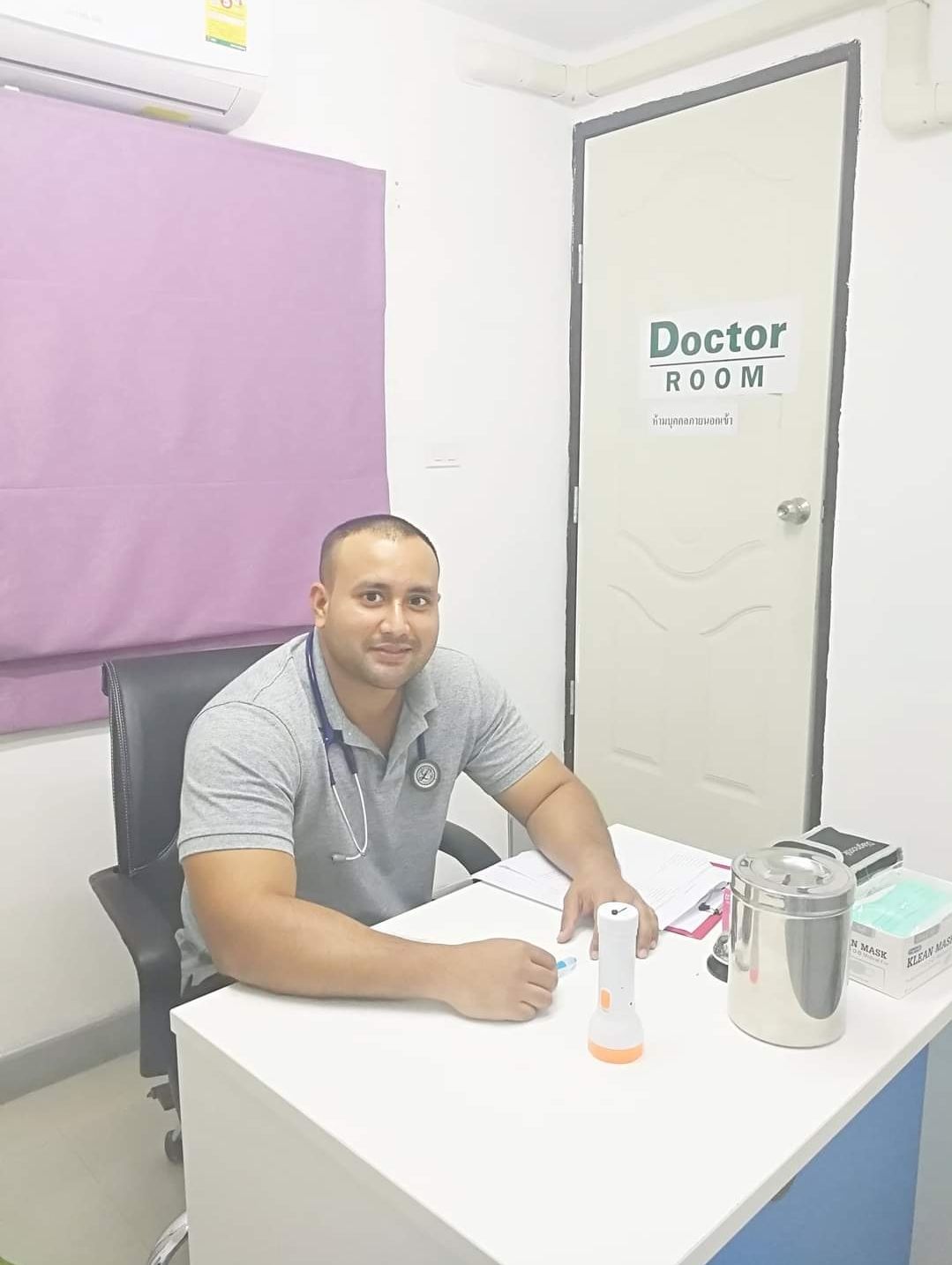
Dr. Ponlawat Pitsuwan is a physician at Doctor Bangkok, a private clinic in central Bangkok. He sees expats, residents, and medical tourists for general medicine, wellness consultations, and IV therapy. His focus is straightforward, evidence-based care delivered in plain language.