

Clinically reviewed by Dr. Ponlawat Pitsuwan, Physician, Doctor Bangkok.
Last reviewed: November 2026
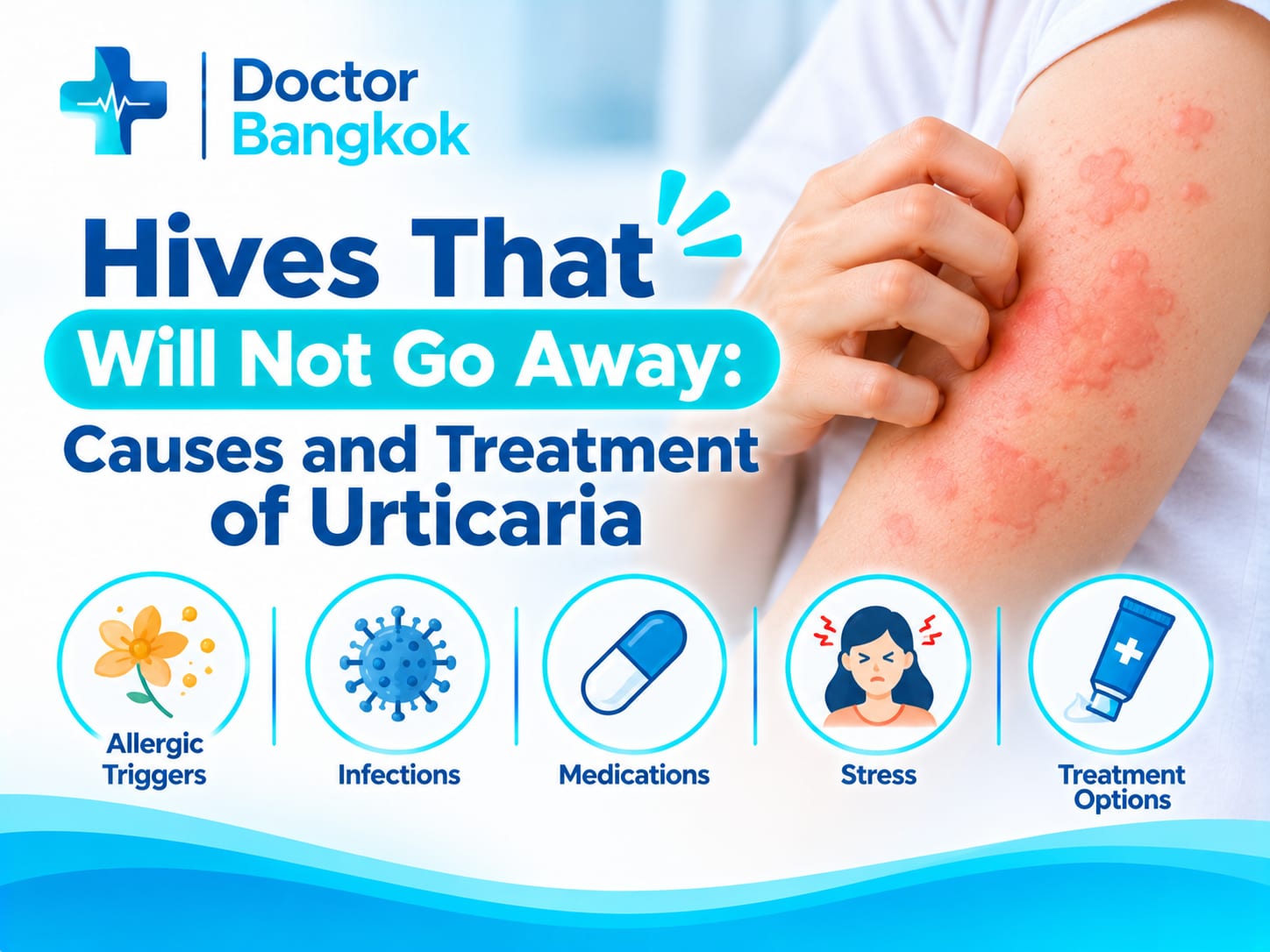
Hives, also called urticaria, are raised, itchy welts that appear suddenly on the skin and usually fade within 24 hours, though new ones can keep appearing. Most cases resolve within six weeks and respond well to antihistamines. If hives persist beyond six weeks, return repeatedly, or come with facial swelling or breathing difficulty, you need a medical assessment.
You are halfway through a meal on Sukhumvit and your arms are suddenly covered in welts. Or you wake at 2 am itching everywhere after a long day navigating Bangkok’s heat and cold air conditioning. It happens here more than people expect, and it often catches first-timers off guard.
Most hives are not dangerous and settle with the right antihistamine. What matters is knowing what your skin is reacting to, when antihistamines are enough, and when they are not.

What Hives Look Like
Hives are raised welts on the skin. They can be small and round, or they can spread into large irregular patches. The colour is usually pink or red, and they go pale when you press them. That blanching on pressure is one of the clearest signs you are looking at hives and not another type of rash.
The itch is typically intense. Some people describe it more as a sting or burn than a classic itch. Individual welts usually fade within 24 hours, but new ones appear while old ones clear. That shifting, moving quality sets hives apart from most other skin reactions.
Sometimes hives come with angioedema, a deeper swelling under the skin. This most often affects the lips, eyelids, hands, or feet. Swelling of the tongue or throat is a different situation entirely and is covered in the emergency section below.
Common Triggers of Hives in Bangkok
For roughly half of all chronic hives cases, no specific trigger is ever found. That category is called idiopathic urticaria. For acute cases, a trigger is usually identifiable if you look carefully at the 24 hours before the rash appeared.
Food, Drugs and Insect Stings
Thai cuisine uses shellfish, peanuts, and fish sauce in ways that are not always obvious from the menu. If you have a known shellfish or peanut allergy, ask specifically about ingredients, because they appear in sauces, soups, and curries without being listed.
Drug reactions are another common cause. NSAIDs such as ibuprofen and aspirin can trigger hives in susceptible people, as can certain antibiotics. If hives appeared after starting a new medication, raise that connection with a doctor before taking another dose.
Insect stings can cause localised hives at the sting site, or a more generalised reaction. Bangkok has species you may not have encountered before. Spreading hives beyond the sting area, or any swelling of the face, needs prompt assessment.
Heat, Sweat and Pressure
This category explains a lot of new-onset hives among Bangkok expats and visitors. When sweating or a rise in core body temperature triggers hives, the condition is called cholinergic urticaria. Small, intensely itchy wheals appear during exercise, after a hot shower, when eating spicy food, or simply from being outdoors in Bangkok’s heat.
The abrupt swing from outdoor humidity into heavy air conditioning can also be its own trigger. Cold urticaria, triggered by sudden cooling of the skin, is a recognised inducible subtype. If hives appear specifically when you walk into cold air conditioning after being outside, that pattern is worth mentioning to a doctor.
Dermatographism, sometimes called skin writing, is another inducible form. Scratching or firm pressure on the skin produces a raised wheal along the line of contact within minutes. It is often mistaken for a standard allergic reaction.

Acute vs Chronic Hives
If hives clear completely within six weeks, the episode is classified as acute urticaria. Most cases fall here. Acute hives often follow a viral infection, a new food exposure, or a drug reaction.
Chronic urticaria means hives that recur on most days for more than six weeks. At that point the investigation changes. A doctor will look at underlying causes including thyroid conditions and autoimmune factors. Idiopathic chronic urticaria, where no cause is found after a full workup, is managed long-term.
If you are dealing with recurrent hives in Bangkok and have not had a proper assessment, the chronic urticaria service at Doctor Bangkok is a practical starting point. A same-day consultation can rule out the common, treatable causes before the pattern becomes established.
Antihistamines and Other Hives Treatments
First-line treatment for hives is antihistamines. Second-generation antihistamines such as cetirizine and loratadine are preferred because they are non-sedating. You can function normally while taking them, which matters if you are working or travelling. First-generation antihistamines such as chlorphenamine cause drowsiness and are generally used only for short-term or night-time relief. Antihistamines should be used with caution in pregnancy, in young children, and in people with kidney or liver impairment. If any of these apply, check with a doctor before taking them.
For chronic urticaria that does not respond to standard doses, current guidelines support dose escalation under medical supervision before moving to other options. A doctor needs to guide that step, not a pharmacist.
If dose-escalated antihistamines still do not control the hives, omalizumab, a biological treatment given by injection, is an option supported by current international guidelines for refractory chronic urticaria. This requires specialist input.
Corticosteroids such as prednisolone are sometimes used for short courses during severe acute flares. They are not appropriate for long-term management of chronic hives.
Over-the-Counter vs Prescription Options in Thailand
Cetirizine and loratadine are available without a prescription at pharmacies across Bangkok. They are a reasonable first step for mild, acute hives. If your hives do not fully settle within 48 hours on a standard dose, or if they keep coming back, see a doctor rather than continue self-treating.
Prescription-strength options and dose escalation require a consultation. Doctor Bangkok offers same-day walk-in assessments at the walk-in clinic on Sukhumvit Soi 13, or a doctor can come to your hotel or condo within one hour if leaving is not practical. If your travel insurance covers private medical care, the clinic works with major providers directly.
When Hives Are an Emergency
Most hives are uncomfortable, not dangerous. But a small number of cases escalate rapidly, and knowing the difference matters.
Call for emergency help or use an epinephrine auto-injector if you have one when you notice throat tightness or difficulty swallowing, voice changes or hoarseness, difficulty breathing or wheezing, or sudden dizziness alongside the hives. These are signs of anaphylaxis. This is not a situation for antihistamines alone, and not a situation to wait and see.
Angioedema of the lips or eyelids without any breathing symptoms is alarming but not automatically an emergency. It still needs medical assessment the same day. If you are in a hotel and do not want to navigate transport with significant facial swelling, a doctor-on-call visit is a practical option.
See a doctor, not an emergency department, if your hives have not responded to antihistamines after 48 hours, if they have come back two or more times in a week, or if you are developing new swelling in the face or limbs without airway symptoms. These do not need an ER, but they do need a physician. If you are unsure whether your symptoms need emergency care, the 24-hour emergency care service can help you make that call.
Dealing with hives in Bangkok? Doctor Bangkok is open 24/7 at Trendy Office, Sukhumvit Soi 13. Walk in without an appointment, or book a doctor to come to your hotel or condo anywhere in Bangkok within one hour. If your hives are not settling, recurring, or you have any swelling of the face, we can assess you today. For ongoing or chronic urticaria, our allergy service offers a structured workup and treatment plan in plain English.
Frequently Asked Questions
Dr. Ponlawat Pitsuwan
Physician, Doctor Bangkok
a private medical clinic in central Bangkok open 24/7, with a doctor-on-call service that reaches your hotel or condo within one hour. He sees expats, residents, and medical tourists for skin conditions including hives and allergic reactions, general medical consultations, and urgent care. His focus is straightforward, evidence-based care delivered in plain language.
References
- Zuberbier T, et al. The international EAACI/GA²LEN/EuroGuiDerm/APAAACI guideline for the definition, classification, diagnosis, and management of urticaria. Allergy. 2022;77(3):734-766.
- Maurer M, et al. Omalizumab for the treatment of chronic idiopathic or spontaneous urticaria. New England Journal of Medicine. 2013;368(10):924-935.
- Simons FE, et al. World Allergy Organization anaphylaxis guidelines: 2013 update of the evidence base. International Archives of Allergy and Immunology. 2013;162(3):193-204.
- Magerl M, et al. The definition, diagnostic testing, and management of chronic inducible urticarias. Allergy. 2016;71(6):780-802.
The information in this article is for educational purposes only and does not constitute medical advice. It should not be used to self-diagnose or replace a consultation with a qualified physician. If you have concerns about your health, contact a licensed medical professional. For appointments at Doctor Bangkok, visit doctorbangkok.co.th.
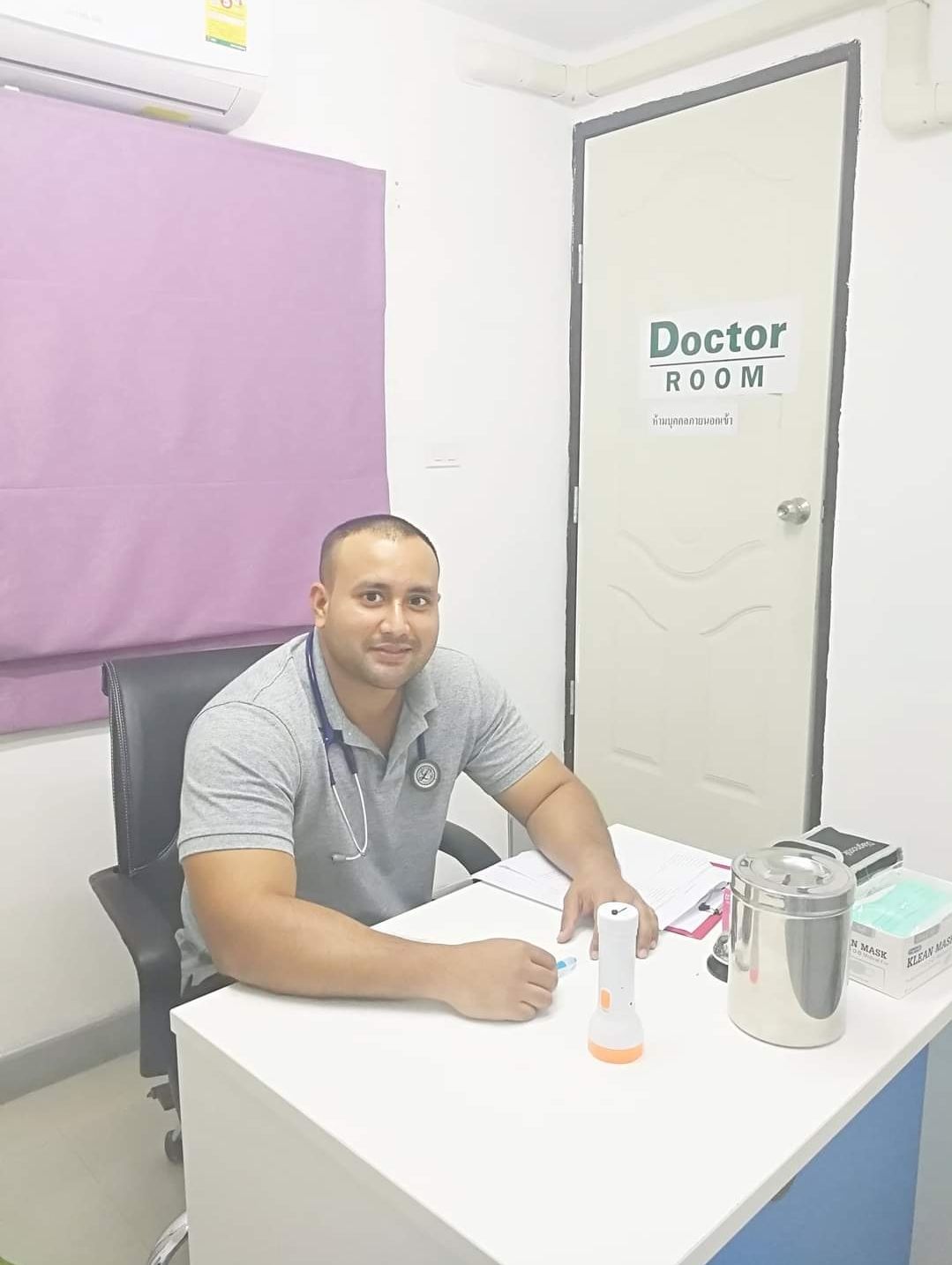
Dr. Ponlawat Pitsuwan is a physician at Doctor Bangkok, a private clinic in central Bangkok. He sees expats, residents, and medical tourists for general medicine, wellness consultations, and IV therapy. His focus is straightforward, evidence-based care delivered in plain language.