
Clinically reviewed by Dr. Ponlawat Pitsuwan, Physician, Doctor Bangkok.
Last reviewed: November 2026
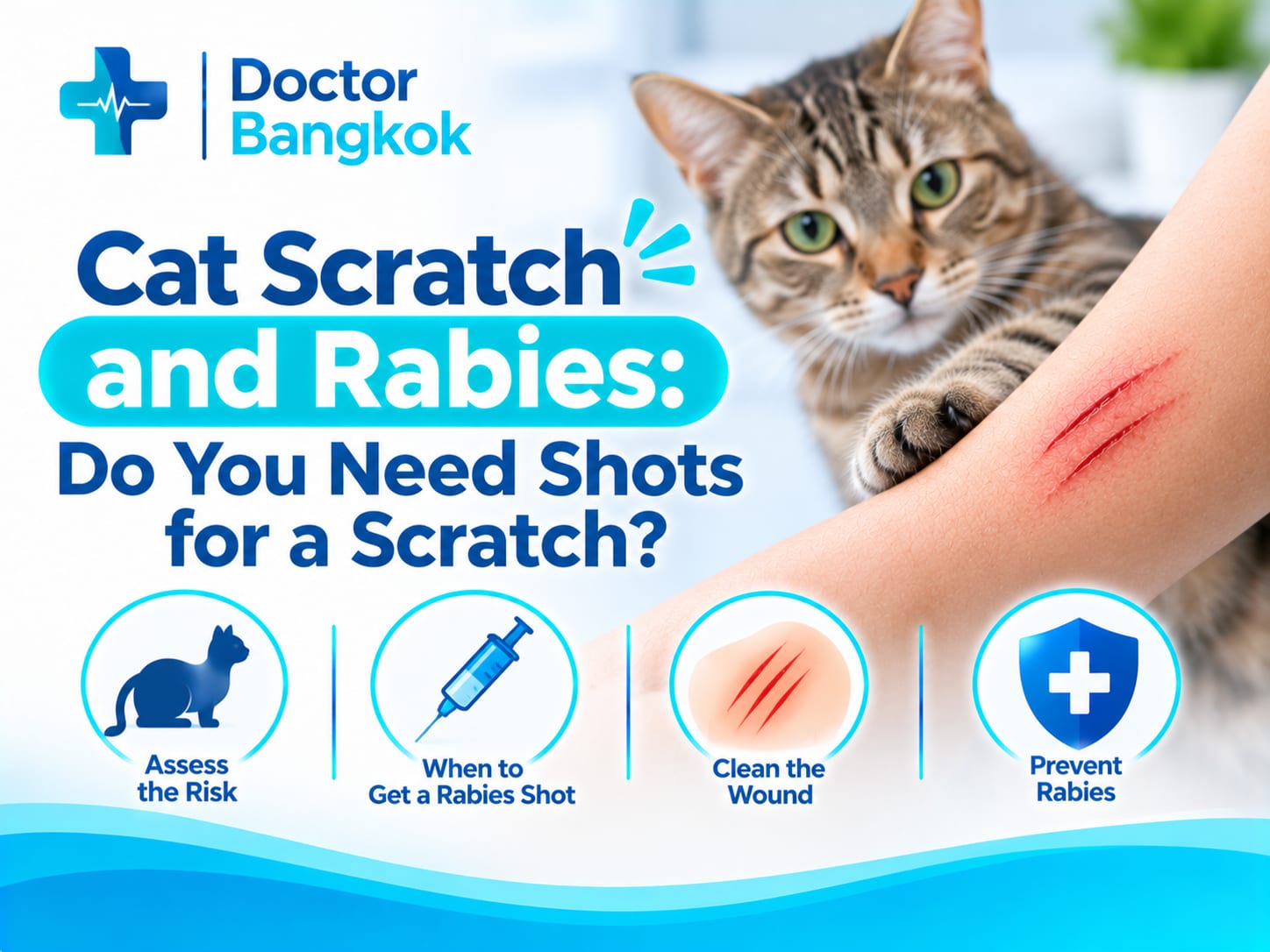
A scratch from a stray cat in Bangkok is a potential rabies exposure. Thailand is a rabies-endemic country, and any scratch that breaks the skin from a cat with unknown vaccination status should be washed immediately and assessed by a doctor the same day. Whether you need post-exposure shots depends on the cat’s status and the wound depth, a clinician can help you decide quickly.
You are on Sukhumvit, or cutting through a temple courtyard, and a street cat you barely touched has left a mark on your hand. It is small. You are wondering if you need to do anything. You do.
Thailand is a WHO-designated rabies-endemic country. That changes the calculation compared to being scratched back home in the UK, Australia, or the US. Where domestic cats are routinely vaccinated and stray populations are managed, a scratch is usually low risk. In Bangkok, the stray population is large, vaccination status is unknown, and the standard Western reassurance does not apply the same way.

Can a Cat Scratch Transmit Rabies?
The short answer is yes. Rabies lives in saliva. Cats groom their claws, so a scratch can deposit saliva into broken skin. This is why a scratch is treated differently from touching a cat or simply being near one.
The WHO classifies animal exposures into three categories. Category I means contact with intact skin only, no wound, no risk. A scratch that breaks the skin is Category II. A deep scratch, puncture wound, or any exposure near the face or mucous membranes is Category III. Both Category II and III exposures in a rabies-endemic country warrant same-day medical assessment.
The key variable is the cat. A healthy, vaccinated indoor cat that you know well is a very different risk from a stray that disappeared after scratching you. With a stray, the standard 10-day observation rule cannot be applied, it requires the animal to be caught and monitored. If the cat has gone, that option is gone with it.
Cat Scratch Disease vs Rabies Risk
These are two separate infections. Getting one does not protect you from the other, and the rabies vaccine does not cover cat scratch disease.
Cat scratch disease is caused by Bartonella henselae, a bacterium cats carry in their claws and saliva. Signs appear within one to three weeks: redness at the wound site, swollen lymph nodes nearby, and sometimes a low fever. In most healthy adults it resolves without treatment, though a doctor may prescribe antibiotics in some cases. In people who are immunocompromised, it can be more serious.
Rabies is a different matter. Early symptoms feel like flu. Without treatment, they progress to neurological signs that are fatal once they appear. The only effective response is post-exposure prophylaxis (PEP), and it must start before symptoms develop.
If your scratch site becomes swollen and nearby glands enlarge, come in and get checked for Bartonella specifically. Do not assume a rabies shot covers it.

Washing the Wound First
Do this before anything else. Run the wound under clean running water for at least 15 minutes. Use soap. This step alone reduces rabies transmission risk and is the first action WHO guidelines recommend.
After washing, apply a wound disinfectant. Povidone-iodine is widely available at pharmacies across Bangkok and is appropriate here. Alcohol-based disinfectant is a reasonable second option if that is what you have.
Also check your tetanus status. Cat scratches carry a tetanus risk alongside everything else. If your last booster was more than five years ago, or if you are unsure, raise it with the doctor at the same visit. You can read more about timing and eligibility on the tetanus vaccine page.
When Rabies Post-Exposure Shots Are Recommended
If the scratch broke the skin and the cat was a stray, see a doctor the same day. That is the practical rule in Bangkok.
For someone who has never had rabies vaccination, a Category II exposure typically requires a vaccine course. WHO-accepted schedules include a four-dose intramuscular regimen on Days 0, 3, 7, and 14, as well as a shorter intradermal regimen on Days 0, 3, and 7. Your treating doctor will recommend the schedule available at the clinic. Category III exposures additionally require Rabies Immunoglobulin (RIG) on Day 0. If you have already completed a pre-exposure prophylaxis course before the incident, the schedule shortens to two booster doses on Days 0 and 3, and RIG is not needed. Your treating doctor will confirm the right schedule based on your specific exposure and history.
If you are unsure whether you need shots, that uncertainty is itself a reason to come in. The assessment takes a few minutes. Starting PEP unnecessarily is inconvenient. Skipping it when you needed it is a different problem.
For more on rabies shots after a cat scratch and what the visit involves, the clinic’s rabies vaccine page covers the full process. Doctor Bangkok’s walk-in clinic on Sukhumvit Soi 13 is open 24 hours, and no appointment is needed. If you cannot travel, a doctor can come to your hotel or condo anywhere in Bangkok, usually within an hour, assess the wound, confirm the exposure category, and start PEP on the same visit. Details are on the doctor hotel visit page.
Pre-Exposure Vaccination for Expats in Bangkok
If you are living in Bangkok long term, pre-exposure vaccination is worth discussing at your next clinic visit. It does not eliminate the need for post-exposure treatment if you are scratched, but it reduces the number of doses required, removes the need for RIG, and gives you more time to reach care if an incident happens while travelling outside the city.
The Thai Ministry of Public Health and WHO both recommend pre-exposure prophylaxis for people living in or travelling to rabies-endemic regions. If you would like to review your broader vaccination needs at the same time, the travel health Bangkok page covers what is recommended for Thailand.
What to Expect at the Clinic
The visit is straightforward. A doctor will assess the wound depth and location, confirm your vaccination history, and determine your exposure category. If PEP is indicated, the first dose is given immediately.
For wound care, the clinic handles cleaning, dressing, and any stitching if the scratch is deep. If you need a wound care assessment in Bangkok, that can be done at the same visit alongside rabies and tetanus review. The whole process, wound assessment, exposure categorisation, first vaccine dose, usually takes under an hour.
Scratched by a cat in Bangkok? Doctor Bangkok is open 24 hours a day, seven days a week, with no appointment needed. Walk in to the clinic on Sukhumvit Soi 13, or call for a doctor to come to your hotel or condo. We assess the wound, confirm your exposure category, and start rabies post-exposure treatment the same visit. Tetanus status can be checked and updated at the same time.
FAQ
Dr. Ponlawat Pitsuwan
Physician, Doctor Bangkok
a private medical clinic in central Bangkok, open 24 hours a day with a doctor-on-call service that reaches your hotel or condo within an hour. He sees expats, residents, and medical tourists for rabies risk assessment, post-exposure prophylaxis, wound care, and travel vaccinations. His approach is straightforward, evidence-based care delivered in plain language.
References
- World Health Organization. Rabies vaccines: WHO position paper, April 2018. Weekly Epidemiological Record, No. 16, 2018, 93, 201–220.
- World Health Organization. Rabies post-exposure prophylaxis (PEP) recommendations. WHO Neglected Tropical Diseases.
- World Health Organization. Rabies: Post-exposure prophylaxis. WHO Fact Sheet. Updated 2023.
- Centers for Disease Control and Prevention. Rabies post-exposure prophylaxis (PEP). CDC, updated 2024.
The information in this article is for educational purposes only and does not constitute medical advice. It should not be used to self-diagnose or replace a consultation with a qualified physician. If you have concerns about your health, contact a licensed medical professional. For appointments at Doctor Bangkok, visit doctorbangkok.co.th.
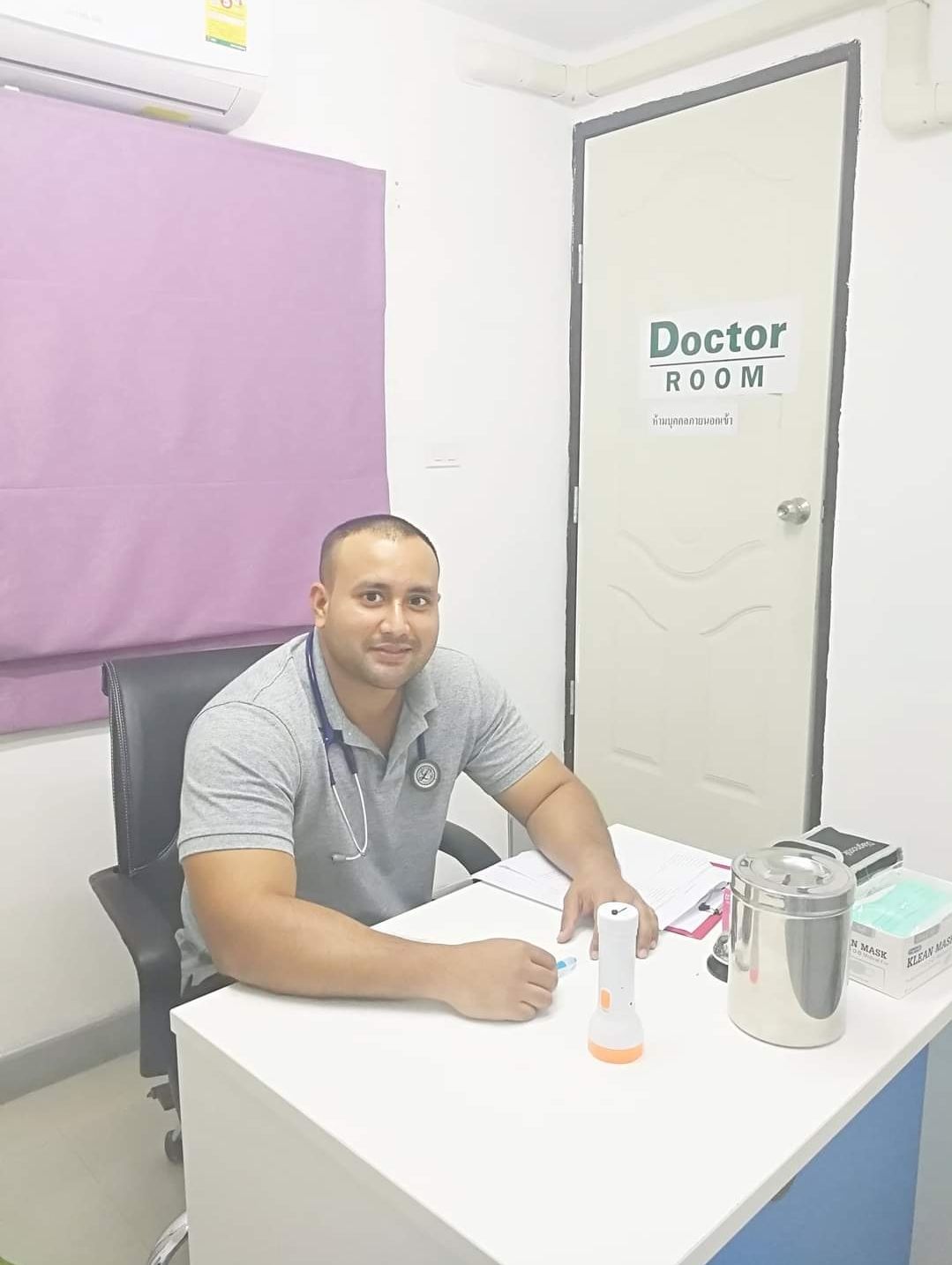
Dr. Ponlawat Pitsuwan is a physician at Doctor Bangkok, a private clinic in central Bangkok. He sees expats, residents, and medical tourists for general medicine, wellness consultations, and IV therapy. His focus is straightforward, evidence-based care delivered in plain language.