
Clinically reviewed by Dr. Ponlawat Pitsuwan, Physician, Doctor Bangkok. Last reviewed: June 2026
Thailand is a rabies-endemic country, meaning the virus is present in the animal population year-round. Stray dogs are the main source, but cats, monkeys, and bats can also carry it. If you live in Bangkok, work near animals, or spend time outdoors here, the risk is real and the vaccine is available.
If you have just been scratched by a soi dog outside your condo, or a temple monkey grabbed your hand, you are probably reading this fast. Here is what you need to know. Rabies is present in Thailand. It is not a remote jungle problem. It is in the city, including Bangkok, and it is fatal once symptoms start.
For expats who have been here a while, it is easy to get used to the stray dogs and cats and stop seeing them as a risk. That is the part that worries me most in my practice. By the time someone comes in after a bite, they have often waited a day or two. With rabies, that wait matters.

Does Thailand Have Rabies?
Yes. Thailand is classified as rabies-endemic, which means the virus is continuously present in the animal population across the country. This is not occasional or seasonal. It is a background risk that never fully goes away.
The main source is unvaccinated stray dogs. Thailand has a stray dog population in the millions, with large numbers in both rural areas and urban Bangkok. Dog bites account for the majority of post-exposure consultations at travel clinics here, according to Thai Department of Disease Control data.
Being endemic does not mean every animal you see is infected. It means the virus is circulating, and you cannot tell which animals carry it by looking at them.
Is Rabies a Risk in Bangkok Specifically?
Bangkok is not low-risk. I want to be clear about that, because I have had patients assume that city living protects them. It does not.
In September 2025, the Bangkok Metropolitan Administration declared an epidemic zone in Prawet district and surrounding eastern Bangkok areas following confirmed cases. These are residential and mixed-use neighbourhoods, not rural fringes. Stray dogs move through sois in every part of the city.
What is different in Bangkok versus rural provinces is access to care, not the presence of the virus. If you live in Bangkok, you are in a rabies-endemic environment every day.
What Does Rabies Endemic Actually Mean for Daily Life in Bangkok?
It means the risk is manageable, not negligible. Most expats walking past soi dogs every morning will never have a problem. But if one of those dogs bites you, or a stray cat scratches you while you are feeding it, the question stops being theoretical.
The practical point is this. Pre-exposure vaccination before anything happens makes your post-bite treatment simpler and faster. Without it, your options after a bite are more complicated. I will come back to that.
Do Monkeys Carry Rabies in Thailand?
Monkeys, specifically the long-tailed macaques you encounter at temples and tourist sites, are not the primary reservoir for rabies. So the direct rabies risk from a monkey bite is lower than from a dog.
That said, post-exposure treatment is still recommended after any monkey bite in a rabies-endemic country. I would not skip it.
There is also a separate concern with macaque bites: Herpes B virus. This is a rare but potentially fatal infection that requires its own assessment and treatment. A monkey bite in Thailand means a doctor needs to assess both risks. If you have been bitten at Lopburi, Koh Phi Phi, or Railay Beach, come in the same day.
Can Stray Cats in Thailand Have Rabies?
Yes. Cats are not the primary vector, but they can carry and transmit rabies. In areas where the virus circulates in the dog population, cats are exposed too. Data from Thai travel clinics show cats account for a meaningful share of post-exposure consultations.
This matters for expats who feed neighbourhood cats, have cats that go outside, or interact regularly with strays. A scratch from a cat can transmit rabies just as a bite can. A small wound does not reduce the risk.
Do Owned Cats Carry the Risk Too?
They can. An owned cat that goes outdoors in Bangkok can be bitten by an infected dog and become infected itself. If your cat bites or scratches you and then shows signs of illness, that is a reason to get a same-day medical assessment. At Doctor Bangkok, we see this concern from expat pet owners more often than you might expect.

Are Bats a Rabies Risk in Thailand?
Yes, and this one surprises most people. Bats are a documented rabies vector, and urban Bangkok has bat populations in temples, older buildings, and some hotels.
Most travellers do not think about bats because they associate rabies with dogs. But a bat scratch is small and easy to miss. If you wake up and find a bat has been in your room, even with no obvious wound, a medical assessment is still warranted. A bite from a bat can be nearly invisible.
What Happens If Rabies Is Not Treated?
This is the part I want you to understand clearly, because it drives everything else.
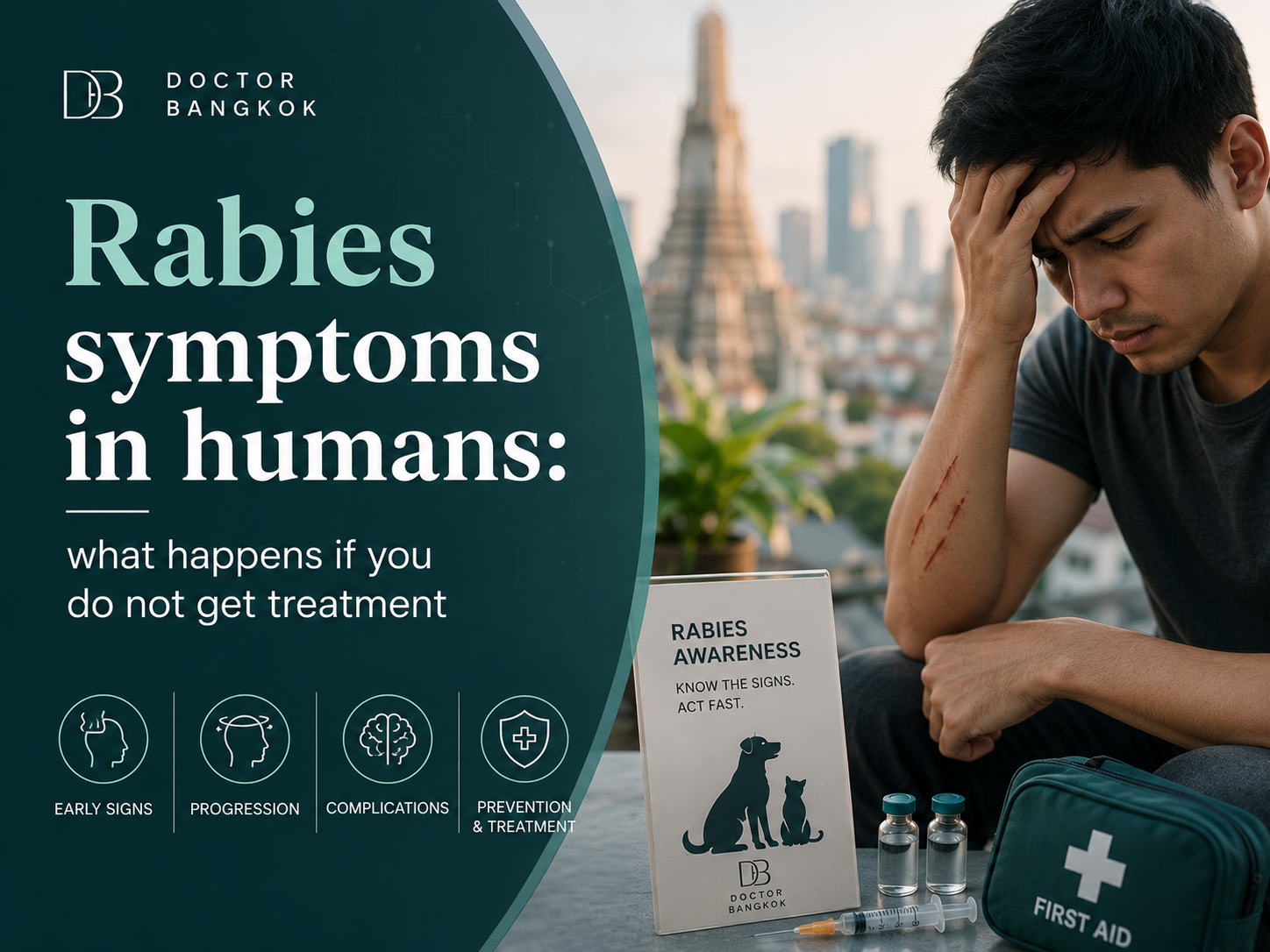
After exposure, the virus travels along nerve pathways toward the brain. You may feel nothing for weeks, sometimes longer, depending on where the bite was. Early symptoms look like flu: fever, headache, fatigue, sometimes tingling near the wound.
Then the neurological stage begins. Agitation, confusion, fear of water, difficulty swallowing. At that point, the disease is virtually always fatal. Post-exposure treatment only works before the virus reaches the brain. You cannot wait to see if symptoms develop.
What to Do Immediately After an Animal Bite in Thailand
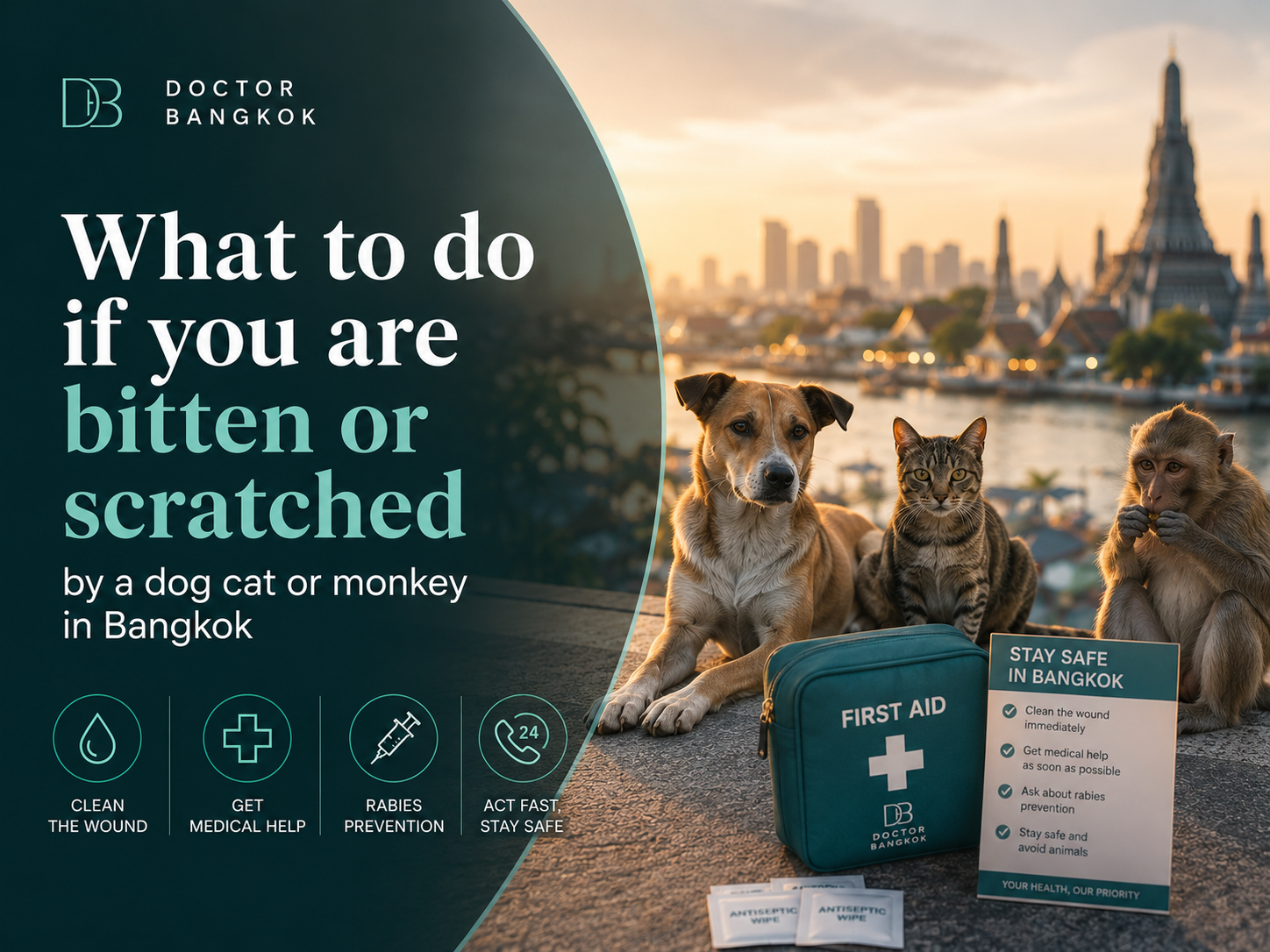
First: wash the wound with soap and running water for at least 15 minutes. This step alone reduces viral load and matters more than most people realise. Use an antiseptic if you have one.
Then: get to a clinic as fast as possible. Do not wait until the next day. Post-exposure prophylaxis, a course of rabies vaccines given after potential exposure, needs to start quickly.
If you have not had pre-exposure vaccination, you may also need rabies immunoglobulin, or RIG, injected around the wound site. RIG can be in short supply at some facilities. At Doctor Bangkok, our English-speaking team can assess your exposure and arrange treatment the same day.
Does Pre-Exposure Vaccination Change What Happens After a Bite?
Yes, significantly. This is something I explain to every expat who asks whether the rabies vaccine is worth it.
If you have had the pre-exposure series, two things change after a bite. You do not need RIG, which as I mentioned can be hard to source quickly in Bangkok. And you need only two booster shots instead of a longer course. Without prior vaccination, the post-bite process is more involved and depends on RIG being available.
For anyone living in Bangkok long-term, pre-exposure vaccination is a straightforward precaution. You can read more about the full pre-exposure series on our rabies vaccine page.
Bitten or scratched by an animal in Bangkok? Do not wait. Doctor Bangkok offers same-day rabies post-exposure assessment and treatment in central Bangkok, with English-speaking physicians and BTS access. If you want pre-exposure vaccination before any incident, we offer the full series. Book online at doctorbangkok.co.th or visit our rabies vaccine service for details.
FAQ
Is rabies in Thailand a real risk for expats living in Bangkok, or mainly a rural problem?
It is a real risk in Bangkok. Eastern districts including Prawet were declared an epidemic zone as recently as September 2025. Stray dogs are present throughout the city, and urban living does not reduce your exposure to the virus.
I was bitten or scratched by an animal in Bangkok. What do I do right now?
Wash the wound with soap and running water for at least 15 minutes, apply antiseptic if available, then get to a clinic immediately. Do not wait for symptoms to appear. Doctor Bangkok can provide same-day post-exposure assessment and start treatment during that visit.
Can a monkey bite in Thailand give you rabies?
The risk is lower than from dogs, as macaques are not the primary reservoir. Post-exposure treatment is still recommended in a rabies-endemic country, and a monkey bite also carries a separate risk from Herpes B virus. A doctor needs to assess both on the same day.
Why does it matter whether I get the rabies vaccine before a bite rather than after?
Pre-exposure vaccination removes the need for rabies immunoglobulin after a bite, which can be difficult to obtain quickly in Bangkok. It also reduces your post-bite vaccine course from a longer series to two doses. For expats here long-term, that difference matters when you are under pressure. See the rabies vaccine page for what the pre-exposure series involves.
Do stray cats in Bangkok carry rabies?
Yes, they can. Cats are exposed to the virus through contact with infected dogs, and both strays and owned outdoor cats are at risk. A scratch from a cat is enough to transmit the virus, so treat any cat scratch in Bangkok the same way you would treat a bite.
What if I woke up and found a bat in my hotel room in Bangkok?
Seek medical advice even if you see no obvious wound. Bat bites are small and easy to miss, and bats are a documented rabies vector in Thailand. A clinical assessment is warranted in this situation regardless of whether you felt anything.
Is rabies fatal every time?
Once neurological symptoms begin, it is virtually always fatal. Survival is documented but extremely rare. This is why post-exposure treatment must start before any symptoms appear. Waiting is not a safe option.
Dr. Ponlawat Pitsuwan
Physician, Doctor Bangkok
a private medical clinic in central Bangkok. He sees expats, residents, and medical tourists for travel medicine, vaccinations, animal bite assessment, and post-exposure prophylaxis. His focus is straightforward, evidence-based care delivered in plain language.

Dr. Ponlawat Pitsuwan is a physician at Doctor Bangkok, a private clinic in central Bangkok. He sees expats, residents, and medical tourists for general medicine, wellness consultations, and IV therapy. His focus is straightforward, evidence-based care delivered in plain language.