
Clinically reviewed by Dr. Ponlawat Pitsuwan, Physician, Doctor Bangkok.
Last reviewed: June 2026
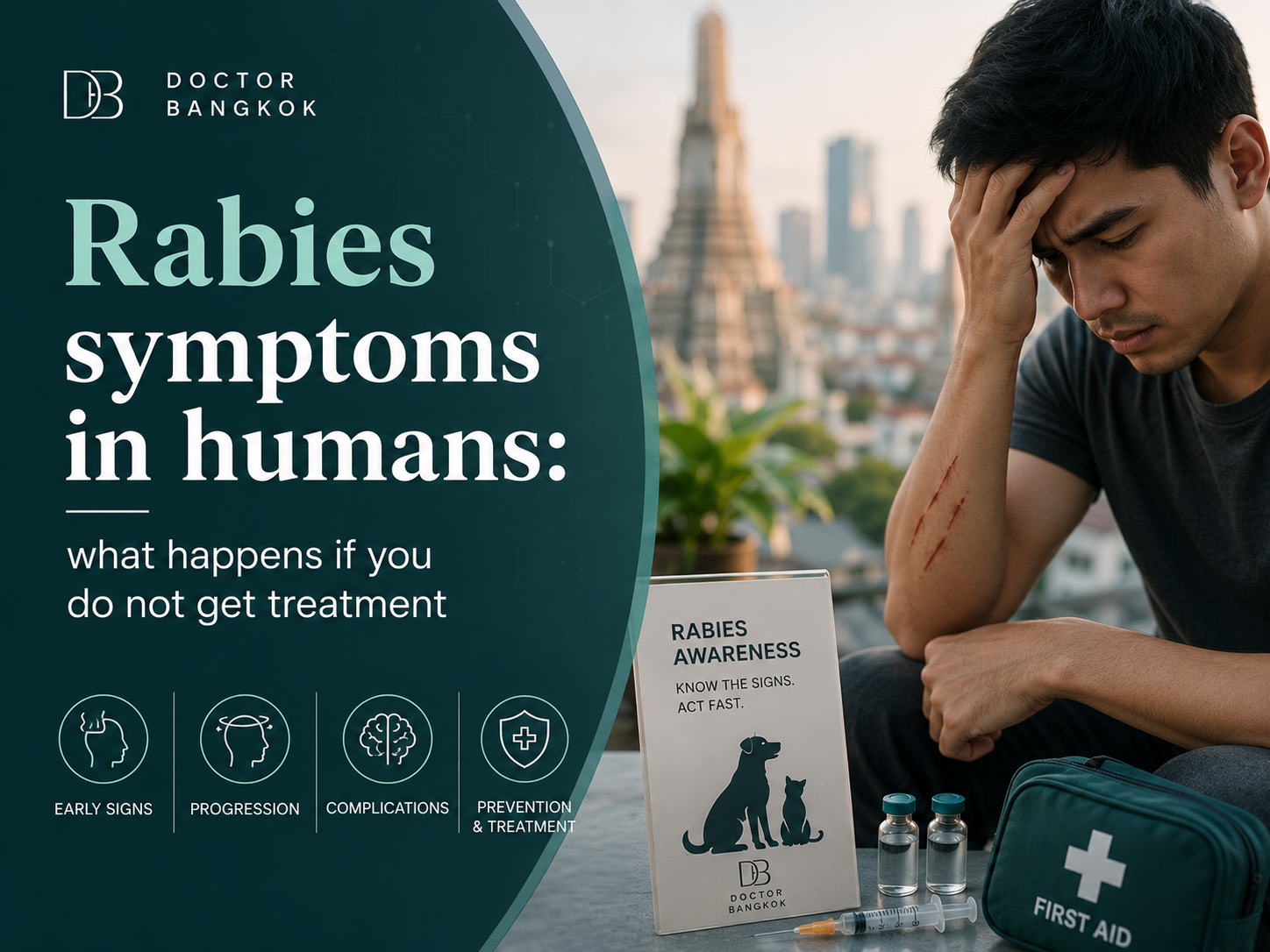
Rabies symptoms start with flu-like illness and tingling at the bite site, then rapidly progress to brain inflammation, hallucinations, and death. Once symptoms appear, rabies is virtually always fatal. If you have been bitten, scratched, or licked by an unknown animal in Bangkok, you need post-exposure treatment before symptoms start. Do not wait.
If you are reading this after a stray dog bit you on a Bangkok soi, or a cat scratched you at a street market, read the next sentence carefully. Rabies is preventable if you act fast. It is almost always fatal if you do not.
Bangkok has a large stray animal population. Rabies remains active in Thailand, and confirmed cases have occurred in city districts including Prawet. Most people who come into my clinic after an animal bite feel fine and assume they are overreacting. They are not. The virus can take weeks or months to cause symptoms, and by the time you feel sick, treatment no longer works.

What is rabies?
Rabies is a viral infection that attacks the brain and nervous system. It spreads through the saliva of an infected animal, usually through a bite. It can also pass through a scratch or through saliva contact with broken skin or the eyes, nose, or mouth.
In Thailand, dogs are the most common source of human infection. Cats, bats, and other mammals can also carry the virus.
What is the rabies incubation period?
The incubation period is the time between exposure and first symptoms. For rabies, this is typically two to three months. But it can be as short as one week or as long as a year.
The range depends on where you were bitten and how deep the wound was. A deep bite to the face or neck puts the virus close to the brain. It arrives there faster. A small scratch on the ankle means the virus has a much longer journey. A severe bite from a heavily infected animal also delivers more virus at once.
Here is the part that catches people off guard. You feel completely normal during this whole period. No symptoms, no warning. But the window for effective treatment is closing every day.

What are the early symptoms of rabies?
The first symptoms look almost exactly like flu. Fever, headache, fatigue, sore throat, and muscle aches. This phase lasts two to ten days, and most people at this stage have no idea they have rabies.
There is one early sign that is more specific. A tingling, burning, or itching sensation at or around the original wound site. Patients sometimes describe it as numbness or a crawling feeling. If you notice this at an old bite or scratch site alongside fever, go to an emergency department immediately. Do not book a routine appointment.
If you are already at this stage and you have not had post-exposure treatment, the situation is extremely serious. Go now.
What are the symptoms of rabies in humans?
After the early phase, rabies moves into one of two forms. Both are fatal in almost every recorded case.
The first is called furious rabies, which accounts for roughly 80% of human cases. Patients become agitated and restless. Confusion, hallucinations, and muscle spasms follow. The most recognised symptom is hydrophobia, a violent throat spasm triggered by attempting to swallow water. Even the sight or sound of water can cause it. Aerophobia, a similar spasm triggered by air currents, is also common. This phase progresses to coma and death within days.
The second form is paralytic rabies, sometimes called dumb rabies. It makes up around 20% of cases. Instead of agitation, the patient develops progressive muscle weakness starting near the bite site. There is no hydrophobia. Because this looks similar to other nerve conditions, paralytic rabies is often missed until it is too late. It moves more slowly than furious rabies, but the outcome is the same.
Is rabies always fatal?
In almost every case, yes. Once symptoms appear, rabies is considered virtually 100% fatal.
Fewer than 20 people worldwide have survived after symptoms began, and most experienced severe, lasting neurological damage. There is no reliable treatment once the virus reaches the brain.
I tell patients this not to frighten them but to make one point clear. The only way to survive rabies is to stop it from reaching the brain. Post-exposure prophylaxis, the course of injections given after a bite, is close to 100% effective when started before symptoms appear. Pre-exposure vaccination, taken before any exposure, provides a strong safety net and simplifies post-exposure treatment if you are ever bitten later.
At Doctor Bangkok, we offer both pre-exposure rabies vaccination and same-day post-exposure prophylaxis. If you have been bitten or scratched by an unknown animal anywhere in Bangkok, this is not something to monitor from home.
What should you do immediately after a potential exposure in Bangkok?
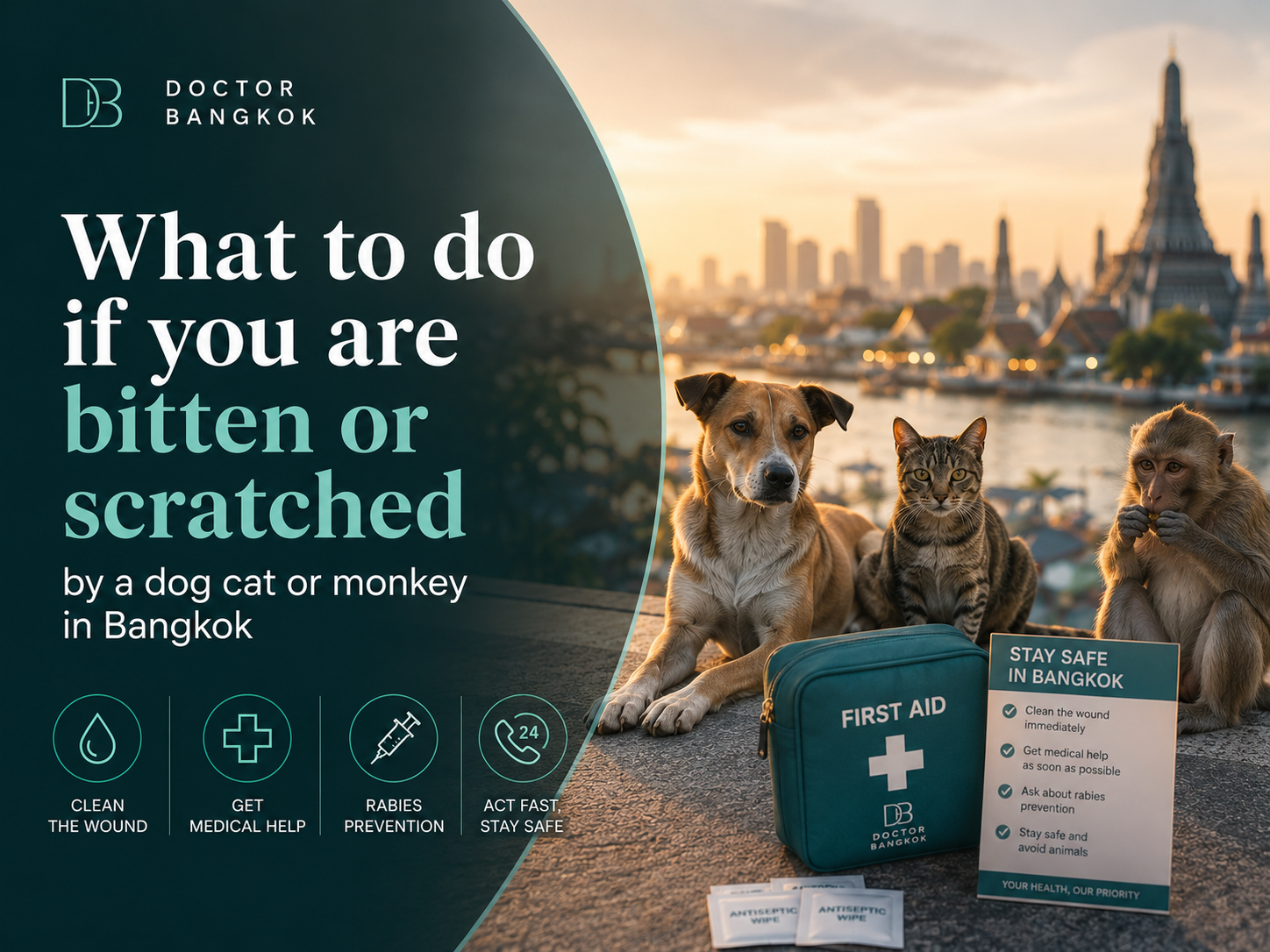
First, wash the wound. Use soap and running water for at least fifteen minutes. Do this before anything else, even before you leave the house. It makes a real difference.
Then go to a clinic or emergency department the same day. Do not wait to see if symptoms develop. The post-exposure vaccine course, and in some cases rabies immunoglobulin injected at the wound site, must start as soon as possible.
The Queen Saovabha Memorial Institute in Bangkok, run by the Thai Red Cross, is Thailand’s national centre for rabies prevention. Doctor Bangkok can also assess you, begin your post-exposure course, and coordinate your care. If you are unsure whether your exposure was significant, come in. The cost of treatment is far lower than the alternative.
You can read more about what to expect at our rabies vaccine and post-exposure prophylaxis page.
Bitten or scratched by an animal in Bangkok? Do not wait for symptoms. Rabies post-exposure treatment works, but only if you start it before the virus reaches your brain. Doctor Bangkok offers same-day assessment, post-exposure prophylaxis, and pre-exposure rabies vaccination at our central Bangkok clinic. Walk in or book an appointment at doctorbangkok.co.th. BTS accessible.
FAQ
How quickly do rabies symptoms appear after a dog bite in Bangkok?
Usually two to three months, but it can be as short as one week or as long as a year. A bite to the face or neck may shorten this significantly because the virus is already close to the brain. The absence of symptoms does not mean you are safe, and post-exposure treatment must start well before any symptoms appear to be effective.
What is the very first sign of rabies in humans?
The earliest signs are flu-like: fever, headache, and fatigue. The sign that separates rabies from ordinary flu is a tingling, burning, or itching sensation at or near the original wound site. If you notice this at an old bite or scratch alongside fever, that warrants immediate emergency assessment, not a routine clinic visit.
Is rabies always fatal once symptoms start?
In almost every case, yes. Fewer than 20 people worldwide have survived rabies after symptoms appeared, and most experienced severe neurological damage. There is no reliable treatment once the virus reaches the brain, which is why post-exposure prophylaxis started before symptoms develop is the only effective approach.
What is the difference between furious and paralytic rabies?
Furious rabies, about 80% of cases, causes agitation, hallucinations, hydrophobia, and violent spasms, progressing to death within days. Paralytic rabies, about 20% of cases, causes progressive muscle weakness starting at the bite site and moves more slowly, but is equally fatal. Paralytic rabies is commonly misdiagnosed because it resembles other nerve conditions rather than classical rabies.
I was scratched by a stray cat in Bangkok. Do I need treatment?
Yes, you should be assessed the same day. Scratches from infected animals can transmit rabies if saliva is present on the claws. In Bangkok, any scratch, bite, or saliva contact with an unknown stray animal carries a real risk. Wash the wound with soap and water for fifteen minutes, then go to a clinic. You can read about post-exposure options at our rabies vaccine page.
Can you get rabies from touching a stray dog?
Not from touching alone. Rabies requires the virus to enter the body through a bite, a scratch, or saliva contact with broken skin or mucous membranes such as the eyes or mouth. Petting a stray dog with intact skin is not considered a risk. If there is any wound or mucous membrane contact involved, treat it as a potential exposure and get assessed the same day.
Dr. Ponlawat Pitsuwan
Physician, Doctor Bangkok
a private medical clinic in central Bangkok. He sees expats, residents, and medical tourists for travel medicine, rabies vaccination, post-exposure prophylaxis, and general medical consultations. His focus is straightforward, evidence-based care delivered in plain language.

Dr. Ponlawat Pitsuwan is a physician at Doctor Bangkok, a private clinic in central Bangkok. He sees expats, residents, and medical tourists for general medicine, wellness consultations, and IV therapy. His focus is straightforward, evidence-based care delivered in plain language.