

Clinically reviewed by Dr. Ponlawat Pitsuwan, Physician, Doctor Bangkok.
Last reviewed: November 2026
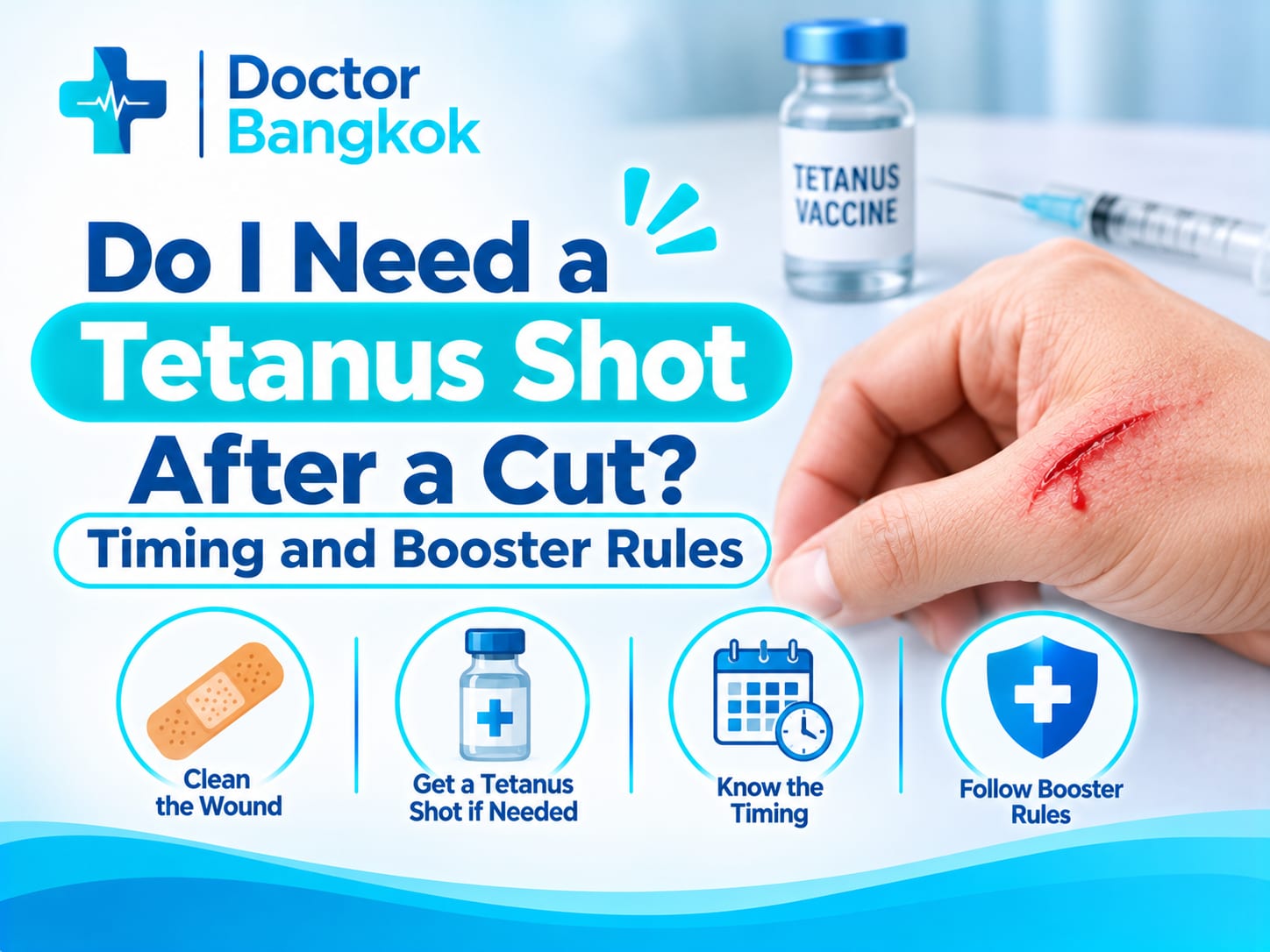
Whether you need a tetanus shot after a cut depends on two things: how dirty the wound is and when you last had a booster. For clean wounds, a booster is recommended if your last shot was more than 10 years ago. For dirty or deep wounds, that window drops to 5 years. If you cannot confirm your vaccination history, get the shot today.
You cut yourself. Maybe on a motorbike footrest scraping the kerb on Sukhumvit, maybe on a kitchen knife, maybe on something you would rather not think about too hard. The question is simple: do you need to go in? The answer depends on how the wound looks and when you last had a booster.
Tetanus spores live in soil, dust, and organic material. Bangkok has plenty of all three: grit-laden roads, wet market surfaces, and waterlogged ground during heavy rains. If spores enter a wound in the right conditions, they produce a toxin that affects your nerves. The right shot at the right time stops that from happening.

How Tetanus Gets Into a Wound
Tetanus spores are found in soil, animal waste, and street dust. They do not need a dramatic injury. A small puncture, a road-rash graze, or a thorn can let them in. Spores thrive in low-oxygen environments, which is why deep or closed wounds carry more risk than shallow cuts.
Once inside, the bacteria release a toxin that travels along your nerves and blocks the signals that keep muscles from contracting. The result is lockjaw and spasms. Symptoms can appear anywhere from three to twenty-one days after infection. That is why you cannot wait to see whether something develops before acting.
The wound can look clean and healing well while the toxin is still active. That is the detail most people miss.
Clean vs Dirty Wounds
Not all cuts carry the same tetanus risk. A clean wound is one made by a clean object, with smooth edges, no dirt, and no dead tissue. It is lower risk.
A tetanus-prone wound is a different matter. This includes puncture wounds, bites (animal or human), wounds contaminated with soil or waste, wounds with dead or crushed tissue, burns, and injuries more than six hours old when you first receive care. Motorbike road-rash on Bangkok’s grit-covered streets usually falls into this category.
If your wound has any of these features, treat it as high-risk.

Booster Timing: The 5-Year and 10-Year Rules
For a clean wound, a booster is recommended if your last tetanus-containing vaccine was more than 10 years ago. For a dirty or tetanus-prone wound, that window is 5 years.
These rules assume you have completed the standard childhood vaccination course. If you have, your immune system holds a memory for the toxoid. A booster reactivates that memory fast enough to give you protection.
Timing after the injury matters. The sooner you get the booster, the better it works. Get it as soon as possible after the injury. It still has value beyond the first day, but do not delay.
If You Cannot Remember Your Last Tetanus Shot After a Cut
This is a common situation for expats in Bangkok. You grew up somewhere else, got vaccinated as a child, moved around, and now have no paperwork. If you cannot confirm your last booster or whether you completed a full primary course, treat your status as unknown.
For anyone with an unknown vaccination history, the approach is a full primary course of tetanus-containing vaccine, usually Tdap, which covers diphtheria, tetanus, and pertussis. This is not a one-shot fix. The primary course requires multiple doses over a set schedule.
For a wound with unknown history, you will likely also need tetanus immunoglobulin alongside the first dose. A doctor assesses this based on the wound.
Tetanus Immunoglobulin for High-Risk Wounds
Tetanus immunoglobulin, or TIG, is not the same as the booster shot. The booster trains your immune system to make its own antibodies, which takes several days. TIG contains ready-made antibodies that work straight away. It is borrowed protection that covers you while your immune system catches up.
TIG is recommended for tetanus-prone wounds in patients who have not completed their primary series or have an unknown vaccination history. For people with a complete primary series whose last booster was more than 5 years ago, the standard approach is a booster dose. A doctor will assess whether TIG is also needed based on the wound and your immune status. When both TIG and a booster are needed, they are given on the same day at different injection sites. People who have had a severe allergic reaction to a prior tetanus-containing vaccine should not receive another dose without specialist assessment.
Getting a Tetanus Shot in Bangkok
If you are in central Bangkok, this is straightforward. Doctor Bangkok’s walk-in clinic on Sukhumvit Soi 13 is open 24 hours a day, every day. Walk in any time and a doctor will assess your wound, check your vaccination history, and give you the right shot, whether that is a simple booster or a booster plus TIG.
You can read more about what the tetanus vaccine for travellers involves before you come in. For full wound cleaning, irrigation, and dressing, the clinic handles this in the same visit through its wound care service in Bangkok. You do not need a separate appointment.
If you cannot travel, the doctor-on-call service comes to your hotel or condo anywhere in Bangkok, typically within one hour. The doctor arrives with everything needed to assess and treat the wound on-site, including administering the vaccine or TIG if indicated.
Cut yourself in Bangkok and not sure about your tetanus status? Doctor Bangkok is open 24/7 on Sukhumvit Soi 13. Walk in any time for wound assessment and a tetanus booster or TIG if needed. Cannot travel? Our doctor-on-call service comes to your hotel or condo anywhere in Bangkok, typically within one hour, day or night. Visit doctorbangkok.co.th to contact us or book now.
Frequently Asked Questions
Dr. Ponlawat Pitsuwan
Physician, Doctor Bangkok
a private medical clinic in central Bangkok open 24 hours a day, with a doctor-on-call service that reaches your hotel or condo within one hour. He sees expats, residents, and medical tourists for wound assessment, post-injury vaccination, travel medicine, and general medical consultations.
References
- Centers for Disease Control and Prevention. Clinical Guidance for Wound Management to Prevent Tetanus. CDC, 2024.
- Immunize.org (Immunization Action Coalition). Ask the Experts: Tetanus: Wound Management. IAC, 2024.
- Minnesota Department of Health. Tetanus Wound Management Clinical Guidance. Minnesota Department of Health, 2025.
- Centers for Disease Control and Prevention. Tetanus: Epidemiology and Prevention of Vaccine-Preventable Diseases (The Pink Book). CDC, 2021.
The information in this article is for educational purposes only and does not constitute medical advice. It should not be used to self-diagnose or replace a consultation with a qualified physician. If you have concerns about your health, contact a licensed medical professional. For appointments at Doctor Bangkok, visit doctorbangkok.co.th.
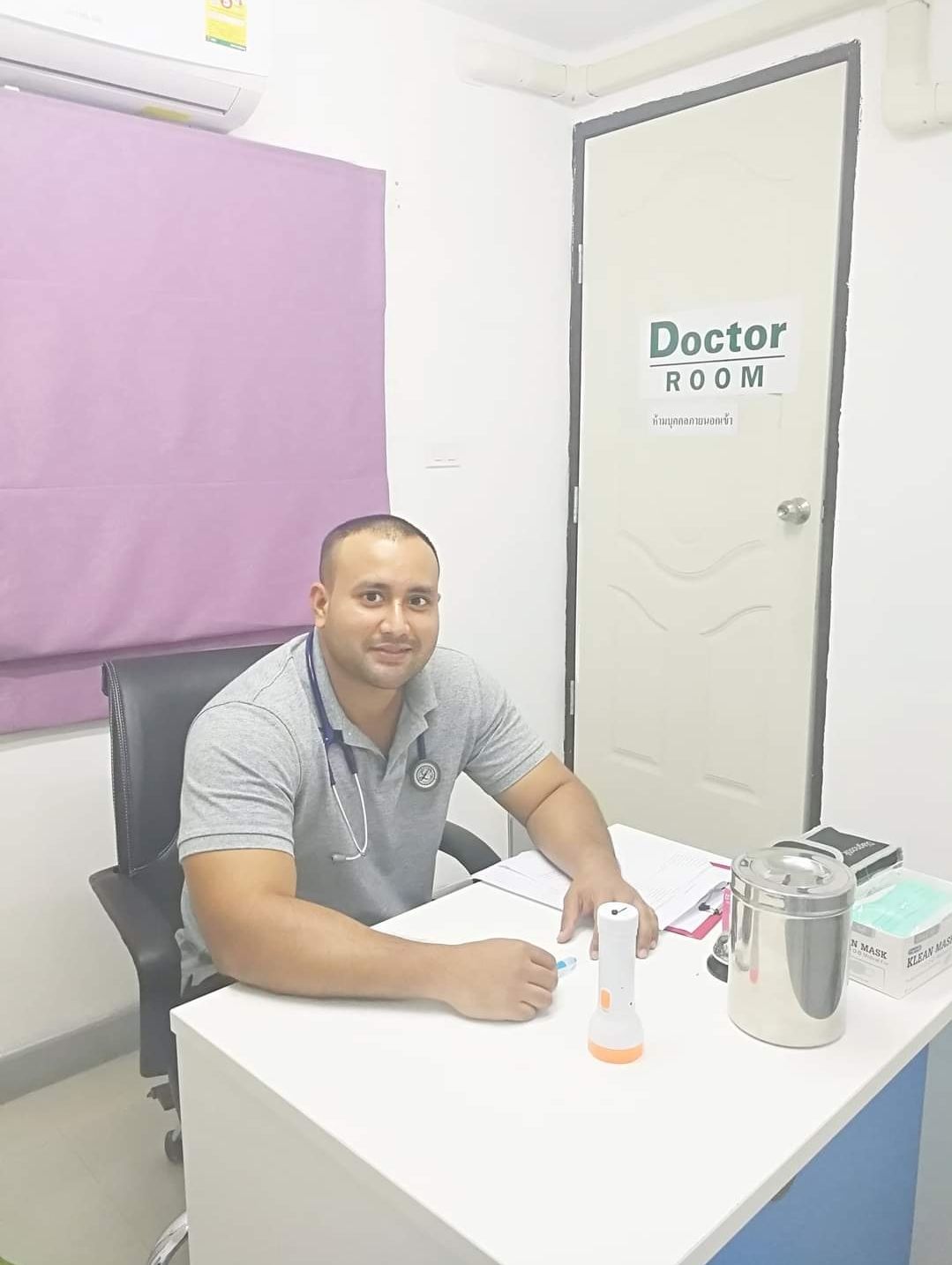
Dr. Ponlawat Pitsuwan is a physician at Doctor Bangkok, a private clinic in central Bangkok. He sees expats, residents, and medical tourists for general medicine, wellness consultations, and IV therapy. His focus is straightforward, evidence-based care delivered in plain language.