

Clinically reviewed by Dr. Ponlawat Pitsuwan, Physician, Doctor Bangkok.
Last reviewed: November 2026
Rove beetle dermatitis is a skin reaction caused by paederin, a toxin released when a small black-and-orange beetle is crushed on the skin. It is not a bite or sting. The rash appears as a burning, blistering streak and is common in Bangkok during the rainy season. Most cases heal within two to three weeks, though dark marks can persist for months. Eye or eyelid involvement needs same-day medical assessment.
You woke up in your Bangkok hotel room with a burning stripe across your arm. No wound, no scratch you remember. This pattern turns up regularly in Bangkok from May through October, and it has a specific cause: a small beetle, crushed against skin while you slept, leaving behind a toxin that burns like a chemical.
The condition is called rove beetle dermatitis, also known as Paederus dermatitis. The beetle does not bite you. The damage happens when you crush it without knowing. What you are dealing with is a contact reaction to paederin, a potent blistering toxin. Most cases resolve on their own. What matters is knowing what not to do in the first few minutes, and when the rash has crossed a line that needs a doctor.

What Rove Beetles Are
Rove beetles are small, slender insects in the genus Paederus. They look unremarkable: narrow black-and-orange bodies, usually under a centimetre long. They are not aggressive and do not bite or sting. The danger is entirely in their body fluid.
Paederin is a potent vesicant, meaning it causes blistering on contact with tissue. The beetle does not inject it. When you crush the insect against your skin, even lightly, the fluid spreads and starts breaking down skin cells within hours. You often feel nothing at first, which is why people wake up with a rash they cannot explain.
Why the Rove Beetle Rash Looks Like a Burn
Paederin damages the top layers of skin similarly to a mild acid. The result is a red, blistering streak that follows the path the crushed beetle took. You get redness first, then small blisters or fluid-filled spots, then weeping or crusting.
The rash is often linear, meaning it runs in a streak rather than spreading in a circular patch. A circular, spreading redness points more toward infection. A straight or angular streak that blisters suggests paederin exposure. The shape matters when you are trying to work out what you are looking at.
This rash is frequently mistaken for shingles, herpes simplex, or a chemical burn. Shingles follows a nerve path and usually comes with burning pain before the rash appears. Herpes simplex tends to cluster around the mouth or genitals. If neither fits and you have been in Bangkok with windows open at night, rove beetle dermatitis belongs at the top of the list. Getting the diagnosis right matters because treating a paederin rash with antiviral medication does nothing.
Kissing Lesions
Kissing lesions are a hallmark of this condition. They form when two skin surfaces touch, such as the inside of an elbow or the fold behind a knee. Paederin transfers from the original lesion to the opposing skin, creating a mirrored rash on both sides. If you see matching rashes facing each other across a skin fold, that is strong evidence you are dealing with rove beetle dermatitis.

Rainy Season and Lights at Night
Bangkok’s rainy season runs roughly from May through October. Rove beetles are more active during this period and are strongly attracted to artificial light. If you sleep with a window open and a lamp on, or if your room has gaps around the window frame, beetles can land on your pillow, sheet, or exposed skin during the night.
The pattern is predictable: warm wet months, lights on, exposed skin. If you are staying in a Bangkok hotel or condo and woke up with an unexplained burn rash during this season, the cause is usually not mysterious.
First Aid if You Crush One on Your Skin
The single most important rule: do not rub. Rubbing spreads the paederin to a wider area and makes the reaction worse. If you feel something on your skin, blow it off or slide it away without pressing down.
If you have already crushed one, rinse the area immediately with clean running water and mild soap. Blot, do not rub, to dry the skin. The goal is to remove the toxin before it penetrates further. Do not use alcohol, strong antiseptic, or abrasive scrubbing, as these can worsen skin damage and spread the toxin.
Wash your hands thoroughly after any contact with the affected area. Touching the rash and then touching your eye is how eyelid involvement starts. Keep the area clean and do not pop the blisters. Broken blisters increase the risk of secondary bacterial infection.
Treatment and Healing Time for Rove Beetle Dermatitis
Rove beetle dermatitis resolves on its own without specific treatment in most cases. The acute phase, with redness and blistering, usually settles within two to three weeks, though some cases resolve sooner and others take longer. What lingers longer is the pigmentation.
A topical corticosteroid cream reduces inflammation and itch when applied to intact skin, not broken blisters. An oral antihistamine helps with itch and discomfort. If blisters break and the area becomes yellow, crusted, or increasingly tender, a topical antibiotic may be needed to treat secondary bacterial infection.
Severe cases, particularly those involving the eye or covering a large skin area, may need a short course of oral corticosteroids. A doctor needs to prescribe these. For a detailed assessment of your rash or any post-rash skin care questions, Doctor Bangkok’s rove beetle rash treatment service covers exactly this.
Post-inflammatory hyperpigmentation, the dark mark left after the rash heals, can persist for several months or longer. Sun exposure makes it darker and slower to fade. Use SPF 50 or higher sunscreen over the healing area every day. A doctor can advise on topical agents such as niacinamide or azelaic acid if pigmentation is slow to clear.
Stop self-treating and see a doctor if: the rash is spreading after 48 hours despite first aid, you develop fever or significant swelling, pustules are increasing rather than settling, or any part of the reaction is near your eye.
Protecting Eyes and Sensitive Skin
Rove beetle dermatitis near the eye is referred to in clinical literature as periorbital Paederus dermatitis, sometimes called Nairobi eye. It causes pronounced eyelid swelling and redness and in severe cases can affect vision if mismanaged. It is often mistaken for severe allergic conjunctivitis or a bacterial eye infection.
The toxin reaches the eye most often by touch. You brush your face after crushing a beetle, or you touch your rash and then rub your eye. Using eye drops or rubbing the eye when paederin is on the periorbital skin can push the toxin further. Rinse with clean water immediately, do not rub, and get same-day medical assessment. If you are in a Bangkok hotel and cannot travel, Doctor Bangkok’s doctor-on-call service can reach you within the hour.
For general protection: use insect-proof window screens or close windows at night, switch off lights near open windows, and use a fan instead of a window for airflow. Cover arms and legs if sleeping in a room with potential gaps. Light-coloured bedding makes the dark beetles easier to spot. These are small adjustments that largely remove the exposure risk.
If you are unsure whether your rash is from a rove beetle or something else, the skin rash assessment at Doctor Bangkok can give you a clear answer the same day. For any rash near a wound or one showing signs of infection, the walk-in clinic on Sukhumvit is open around the clock.
Woke up with a burning rash in Bangkok? Doctor Bangkok is open 24/7 at Trendy Office, Soi Sukhumvit 13. Walk in any time, no appointment needed. If you cannot travel, our doctor-on-call service comes to your hotel or condo anywhere in Bangkok. We assess rove beetle dermatitis and other skin reactions, prescribe treatment on the spot, and advise on post-rash pigmentation care. Visit doctorbangkok.co.th or call to reach us now.
Frequently Asked Questions
Dr. Ponlawat Pitsuwan
Physician, Doctor Bangkok
a private medical clinic in central Bangkok open 24/7, with a doctor-on-call service that reaches your hotel or condo within the hour. He sees expats, residents, and medical tourists for skin reactions, insect exposures, allergic conditions, and general medical consultations. His approach is straightforward, evidence-based care in plain language.
References
- DermNet NZ. Paederus dermatitis. DermNet, New Zealand Dermatological Society.
- Verma S, Lal NR. Paederus dermatitis in Sierra Leone: a report of an outbreak. Dermatology Online Journal, 2004.
- Nicholls DS, Christmas TI, Greig DE. Oedemerid blister beetle dermatitis: a review. Journal of the American Academy of Dermatology, 1990. (Kissing lesions in Paederus dermatitis, PMC6609186)
- Paederus dermatitis: a 2024 review. PubMed Central PMC11288999.
- Periorbital Paederus dermatitis case series. PubMed Central PMC9905890.
- A Case Series of Paederus Dermatitis: Understanding Its Varied and Diverse Clinical Presentations. PubMed Central PMC10942126.
The information in this article is for educational purposes only and does not constitute medical advice. It should not be used to self-diagnose or replace a consultation with a qualified physician. If you have concerns about your health, contact a licensed medical professional. For appointments at Doctor Bangkok, visit doctorbangkok.co.th.
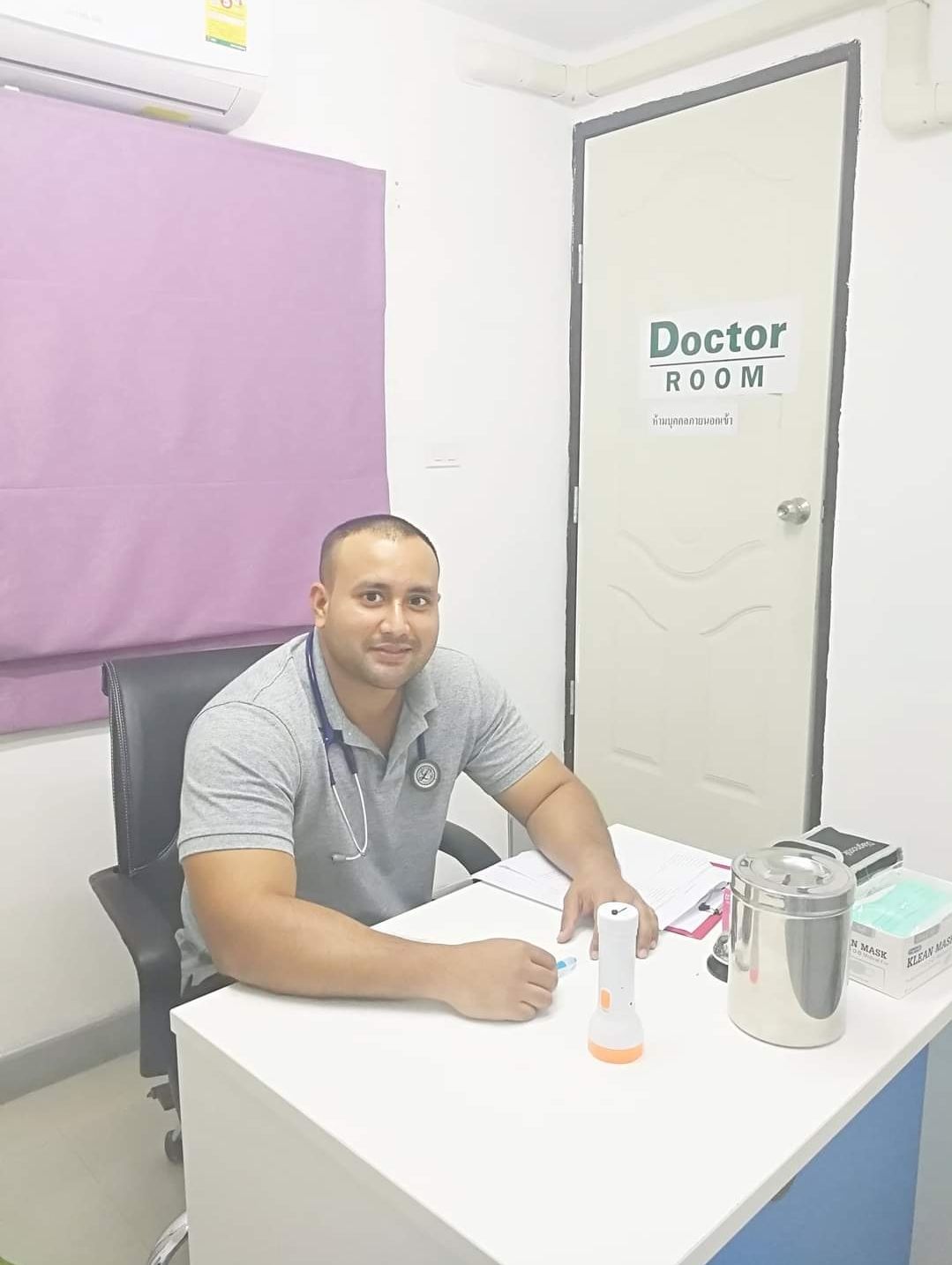
Dr. Ponlawat Pitsuwan is a physician at Doctor Bangkok, a private clinic in central Bangkok. He sees expats, residents, and medical tourists for general medicine, wellness consultations, and IV therapy. His focus is straightforward, evidence-based care delivered in plain language.